

Arc Flash PPE Requirements Under NFPA 70E
Working with energized electrical equipment is dangerous. Temperatures during an arc flash can exceed 35,000°F, causing severe injuries or death. NFPA 70E sets clear guidelines to minimize these risks, focusing on arc flash risk assessments and proper PPE selection. Here's what you need to know:
- Employers must perform an arc flash risk assessment before any energized work begins.
- Medium-voltage systems (1,000V–15,000V) typically fall under PPE Category 4, requiring a minimum arc rating of 40 cal/cm².
- PPE must match the calculated incident energy level (measured in cal/cm²) to protect workers effectively.
- NFPA 70E prohibits energized work when incident energy exceeds 40 cal/cm² - equipment must be de-energized.
- Regular PPE inspections are mandatory to ensure gear remains effective and safe.
Key PPE Requirements by Category:
- Category 1 (4 cal/cm²): Single-layer arc-rated clothing, face shield, leather gloves.
- Category 2 (8 cal/cm²): Adds a balaclava or arc hood, leather footwear.
- Category 3 (25 cal/cm²): Multi-layer protection, arc flash suit hood.
- Category 4 (40 cal/cm²): Full arc flash suit system, rubber insulating gloves.
Steps to Ensure Safety:
- Conduct incident energy calculations using IEEE 1584-2018.
- Use arc flash labels on equipment with voltage, energy levels, and PPE details.
- Follow strict lockout/tagout (LOTO) procedures before de-energizing equipment.
- Inspect PPE regularly; replace damaged or outdated gear.
Bottom Line: Properly matching PPE to the hazard, maintaining it, and prioritizing de-energization can save lives. NFPA 70E compliance isn't just about rules - it's about protecting workers from life-threatening risks.
Introduction to NFPA 70E (2021), Part 2: Arc flash risk assessment and PPE tables.
sbb-itb-501186b
Arc Flash Risk Assessment Checklist
NFPA 70E outlines a three-step process for assessing arc flash risks: identifying hazards, estimating both the likelihood and severity of an event, and determining the necessary PPE. This assessment must be updated every five years or whenever major system changes occur.
Before choosing PPE, gather precise engineering data. The process includes conducting a Short Circuit Study to measure available fault current, a Device Evaluation to confirm interrupting capacity, and a review of protective device trip settings to calculate clearing times. These inputs are essential for calculating incident energy, which measures the thermal energy (cal/cm²) a worker might encounter at a standard working distance - usually 18 inches.
NFPA 70E provides two methods for compliance: the Incident Energy Analysis Method, which calculates specific values for each piece of equipment, or the PPE Category Method, which uses predefined tables for common tasks. Stick to one method per piece of equipment - mixing methods is not allowed. For medium-voltage systems, the Incident Energy Analysis Method (based on IEEE 1584-2018) is generally necessary since category tables may lack the required precision.
Identifying Electrical Hazards
The first step is pinpointing all locations where energized work might occur. This includes documenting all medium-voltage equipment, such as switchgear, transformers, and motor control centers, along with their operating voltages, available fault currents, and protective device settings. The assessment must also consider human error, like dropping tools or using incorrect test equipment, as these can increase the likelihood of an arc flash.
The concept of "normal operation" is critical here. According to NFPA 70E, the risk of an arc flash is considered low only if the equipment is properly installed, maintained according to manufacturer guidelines, used correctly, and has all covers and doors secured with no signs of failure. If any of these conditions are unmet, the risk level rises significantly.
Once hazards are identified, the next step is to measure potential energy exposure.
Calculating Incident Energy Levels
Incident energy calculations, guided by IEEE 1584-2018, rely on available fault current and protective device clearing times. These calculations help determine the appropriate PPE with an Arc Thermal Protection Value (ATPV) or Breakopen Threshold Energy (EBT) that meets or exceeds the exposure level. Slower clearing times result in higher energy exposures.
A key threshold to remember is 12 cal/cm². Below this level, a face shield and balaclava are sufficient. Above it, a full arc flash suit hood becomes mandatory.
"If your gear is rated below [the incident energy] value, you're underprotected. There's no gray area." – Nick Zech, PE, Zech Engineering
For incident energy levels exceeding 40 cal/cm², PPE alone isn't adequate. At this point, NFPA 70E recommends de-energization or implementing engineering controls instead.
After completing the calculations, document the results to guide PPE selection and safety measures.
Documenting Assessment Results
NFPA 70E Section 130.5 requires thorough documentation of the assessment, including hazard identification, incident energy levels, PPE specifications, and control measures. Essential documentation includes:
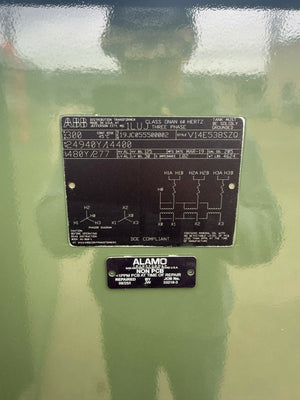
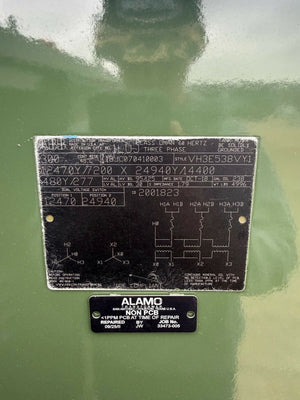
- Arc flash labels: These must be placed on every piece of equipment and display the nominal system voltage, arc flash boundary, and either the incident energy level (with working distance), minimum arc rating of clothing, or PPE category.
- Energized Electrical Work Permit (EEWP): Required for tasks within the restricted approach boundary. It must include justification for energized work, safe work practices, risk assessment results, PPE requirements, and approval signatures.
- Training records: These should demonstrate that personnel are qualified and that job briefings have been conducted.
"NFPA 70E labeling rules make sure vital details are visible at the equipment itself, not buried in a report." – R.W. Hurst, Editor, Electricity Forum
Maintain an up-to-date database for each piece of equipment, recording incident energy levels and study results. Update this documentation immediately whenever transformers are replaced, utility services are upgraded, or protective device settings are altered.
Following these steps ensures that medium-voltage systems comply with NFPA 70E for arc flash safety.
NFPA 70E PPE Categories and Requirements
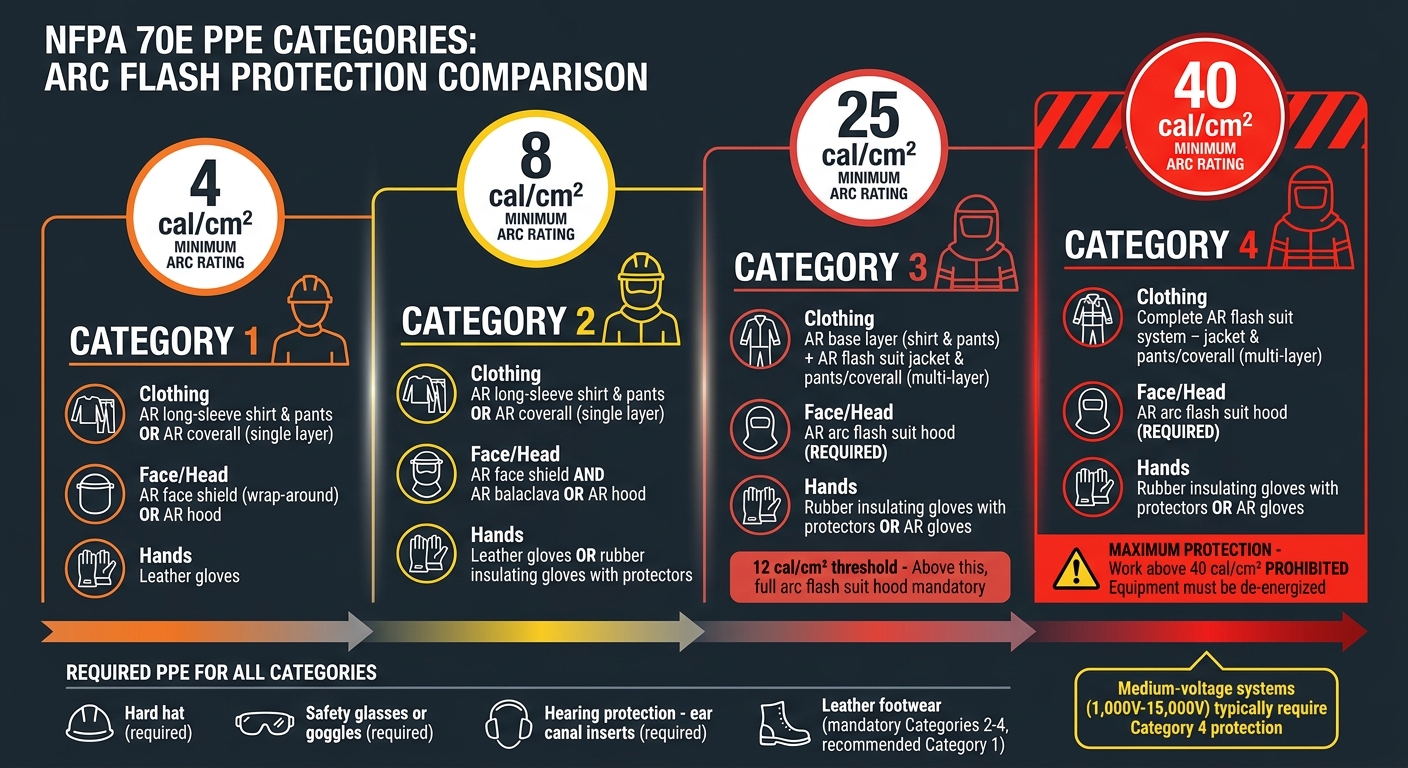
NFPA 70E PPE Categories: Arc Flash Protection Requirements by Energy Level
Choosing the right personal protective equipment (PPE) starts with an accurate incident energy assessment. This ensures that the protection level matches the risks identified during the evaluation.
NFPA 70E organizes PPE into categories based on their minimum arc rating (measured in cal/cm²). These categories define the necessary protection for clothing, face shields, gloves, and other gear. As the category number increases, so does the required level of thermal protection.
Every category mandates the use of safety glasses or goggles, hearing protection (ear canal inserts), and a hard hat. Leather footwear is required for Categories 2 through 4 and recommended for Category 1. The 2024 update also specifies that hearing protection is essential for anyone within the arc flash boundary, regardless of whether they are actively working.
When selecting clothing, opt for loose-fitting, non-melting materials that allow air gaps for insulation. Secure garments properly and avoid tight or synthetic fabrics, which can pose additional risks.
PPE Category 1: 4 cal/cm² Minimum Arc Rating
Category 1 is designed for the lowest energy exposures. Workers need a single layer of arc-rated (AR) clothing, such as a long-sleeve shirt and pants or a coverall. Face protection can be achieved with an arc-rated face shield offering wrap-around coverage or an arc flash suit hood. Leather gloves are required for hand protection.
PPE Category 2: 8 cal/cm² Minimum Arc Rating
Like Category 1, Category 2 typically uses a single layer of arc-rated clothing. However, it introduces stricter requirements for face protection. Workers must wear both an arc-rated face shield and an arc-rated balaclava (sock hood) or an arc flash suit hood. Hand protection can include leather gloves or rubber insulating gloves with protectors, and leather footwear becomes mandatory at this level.
PPE Category 3: 25 cal/cm² Minimum Arc Rating
Category 3 involves multi-layer protection. Workers must wear an arc-rated base layer (shirt and pants) combined with an arc flash suit jacket and pants, or a full suit worn over the base layer. Face protection requires a full arc flash suit hood - face shields alone are not sufficient at this energy level. For hand protection, rubber insulating gloves with protectors or specific arc-rated gloves are required, as clarified in the 2024 update.
PPE Category 4: 40 cal/cm² Minimum Arc Rating
Category 4 offers the highest level of protection under NFPA 70E standards. It requires a complete arc flash suit system, including a jacket and pants or a coverall, with a minimum arc rating of 40 cal/cm². A full arc flash suit hood is mandatory, and hand protection follows the same rules as Category 3: either rubber insulating gloves with protectors or arc-rated gloves.
"NFPA 70E does not permit energized work when the incident energy exceeds 40 cal/cm². At that level, the equipment must be de-energized before any work begins." – US Made Supply
Additionally, the use of non-flame-resistant logos or patches on arc-rated garments is restricted. Each garment can have up to 40 square inches of such heraldry, with no single piece exceeding 16 square inches.
These defined categories ensure workers are equipped with the proper gear to handle specific hazard levels safely, particularly in medium-voltage systems.
| PPE Category | Min. Arc Rating | Clothing | Face/Head Protection | Hand Protection |
|---|---|---|---|---|
| Category 1 | 4 cal/cm² | AR long-sleeve shirt & pants OR AR coverall | AR face shield (wrap-around) OR AR hood | Leather gloves |
| Category 2 | 8 cal/cm² | AR long-sleeve shirt & pants OR AR coverall | AR face shield AND AR balaclava OR AR hood | Leather gloves |
| Category 3 | 25 cal/cm² | AR flash suit jacket & pants/coverall | AR arc flash suit hood | Rubber insulating gloves with protectors OR AR gloves |
| Category 4 | 40 cal/cm² | AR flash suit jacket & pants/coverall | AR arc flash suit hood | Rubber insulating gloves with protectors OR AR gloves |
Note: All categories also require a hard hat, safety glasses or goggles, hearing protection (ear canal inserts), and leather footwear (mandatory for Categories 2–4 and recommended for Category 1).
For medium-voltage systems, PPE selection must align with incident energy analysis. Energized work is prohibited for exposures exceeding 40 cal/cm², as equipment must be de-energized in such cases.
Medium-Voltage Systems PPE Inspection Checklist
Personal protective equipment (PPE) is only as effective as its condition. Damaged, expired, or contaminated gear can fail when it's needed most. Regular inspections are key to maintaining compliance with NFPA 70E standards for medium-voltage systems. Below is a checklist to help ensure each PPE component is up to standard.
Inspecting Arc-Rated Clothing
Before using arc-rated clothing, inspect it for visible issues like tears, holes, or contamination. Confirm that all labels indicate a cal/cm² value appropriate for the equipment's incident energy level. Pay special attention to areas prone to fabric degradation.
Look for contamination from substances like oil, grease, or chemicals, as these can ignite during an arc flash regardless of the garment's rating. If laundering doesn't fully remove contaminants, the garment should be retired.
For Category 4 protection, ensure the full suit system - hood, jacket, and pants - is intact and properly rated. Avoid wearing meltable synthetic underlayers such as polyester or nylon beneath arc-rated clothing, as these materials can fuse to the skin during an arc flash.
"Under-protection is far more dangerous than over-protection. Excess PPE may reduce comfort or productivity. Insufficient PPE can permanently injure or kill." – Frank Baker, Associate Editor, Electricity Forum
Testing Insulated Gloves and Tools
PPE isn't just about clothing - tools play a critical role in safety. Insulated tools must meet ASTM F1505 or IEC 60900 standards for 1,000V AC / 1,500V DC ratings.
Inspect insulated tools before each use. If the inner yellow insulation layer is visible through the outer red or orange layer, remove the tool from service. Confirm that tools are permanently marked with the "double triangle" symbol, voltage rating, and manufacturer's identification. Standard tools wrapped in electrical tape do not meet safety requirements and should never be used.
Rubber insulating gloves require more rigorous checks. Per ASTM D120, new gloves must be put into service within 12 months of their initial test date. Once in use, gloves must be retested every 6 months. Always pair rubber gloves with leather protectors to guard against both electrical shock and mechanical damage.
"The rubber voltage rated gloves must be retested every 6 months and, if they pass, the gloves are stamped with the new test date or expiration date and put back into service for another 6 months." – Mike Enright, Enespro PPE
Verifying PPE Expiration Dates
Always check the date stamp on rubber insulating gloves before use to confirm they're within the 6-month testing window. Gloves that pass dielectric testing receive a new stamp and can be used again. Gloves that fail are permanently defaced - often by cutting off a finger - to prevent future use.
For arc-rated clothing, while no official expiration exists, replacing garments every 5 years is considered best practice. Replace items sooner if they're exposed to high heat, UV light, or humidity, as these conditions can weaken the fabric. For treated arc-rated fabrics, monitor the number of washes, as their flame-resistant properties can degrade over time.
Inspect hard hats and face shields for manufacturer dates. Remove any PPE showing significant wear or damage, regardless of its age.
| PPE Item | Verification Method | Recommended/Required Interval |
|---|---|---|
| Rubber Insulating Gloves | Check date stamp for last dielectric test | Retest every 6 months; 12 months for new stock |
| Arc Flash Suits | Visual inspection and age tracking | Replace every 5 years (best practice) |
| Face Shields/Hard Hats | Check manufacturer stamp/label | Per manufacturer's recommendation |
| Leather Protectors | Visual inspection for wear/contamination | No fixed date; replace when worn or soiled |
Steps to Establish Electrically Safe Work Conditions
Ensuring safety while working on electrical equipment starts with establishing an electrically safe work condition by completely de-energizing the equipment. According to NFPA 70E, maintenance or inspections can only begin after identifying and isolating all potential energy sources.
De-energizing Electrical Equipment
When shutting down medium-voltage equipment (601 V to 15 kV), careful planning and the use of proper PPE are essential. Tasks like racking circuit breakers in or out are some of the most hazardous operations on medium-voltage systems.
The process begins by identifying all power sources that could energize the equipment. Once identified, disconnect or open these sources following the manufacturer's recommended sequence. After de-energizing, secure isolation by implementing lockout/tagout (LOTO) procedures.
Lockout/Tagout Procedures
Immediately after de-energizing, apply lockout/tagout to prevent accidental re-energization. NFPA 70E emphasizes LOTO as a critical strategy for ensuring safety during potentially energized work. Individual locks should be placed on disconnects to ensure power cannot be restored until all locks are removed.
"Even if you shut power off and lock it out the act of verifying it is dead and applying protective grounds is 'energized work'" – Zog, Plasma Level Member, Arc Flash Forum
LOTO procedures must be documented as part of the formal Arc Flash Risk Assessment, as required by NFPA 70E Section 130.5. Documentation should detail which disconnects need locks, the correct sequence for applying them, and identify who is authorized to remove the locks.
Verifying Absence of Voltage
Once isolation is secured, verifying that all points are de-energized is the next step. Until zero voltage is confirmed, the equipment is considered energized. This verification must be performed using voltage testers rated for the system's nominal voltage. Workers must wear the same PPE used during the de-energization process, including rubber insulating gloves with leather protectors and arc-rated clothing.
Use a voltage tester rated for at least 15 kV for medium-voltage systems. Always test the voltage tester on a known energized source before and after use. Only after confirming zero voltage at all points can workers safely remove their PPE and proceed with maintenance tasks. These steps complete the safety protocol outlined in the arc flash risk assessment.
Conclusion
Effective arc flash protection starts with a detailed hazard analysis and is upheld through consistent PPE inspection. Every layer of protection matters, and the success of the safety system hinges on the precise alignment of hazard assessments, labeling, and PPE selection. PPE is the last line of defense when engineering controls can't eliminate the risk, but it only works when it’s perfectly suited to the hazard.
For medium-voltage equipment, the stakes are even higher. This type of equipment often requires PPE designed to withstand the highest levels of incident energy. Workers must ensure their protective gear meets or exceeds the calculated energy levels, with full arc flash suit systems being mandatory for hazards above critical thresholds.
Regular PPE inspections, as outlined in NFPA 70E, are non-negotiable. Outdated or worn equipment can undermine safety, no matter how well-calculated the initial protections were. Frank Baker, Associate Editor at Electricity Forum, emphasizes this point:
"Most arc flash injuries are not caused by a lack of PPE. They are caused by PPE that no longer matches the hazard."
While PPE is essential, the ultimate goal should always be to eliminate the hazard entirely. De-energization combined with strict lockout/tagout procedures remains the most effective way to protect workers. When energized work is unavoidable, treat PPE as an integrated system, ensuring every piece - from the hood to the footwear - is rated for the actual incident energy. Additionally, arc flash risk assessments should be updated every five years or after significant system changes.
This isn't just about compliance; it’s about survival. Temperatures during an arc flash can soar to 35,000°F - roughly four times hotter than the surface of the sun. Properly matching PPE to the hazard, inspecting it before each use, and prioritizing de-energization are critical steps in ensuring worker safety.
FAQs
How do I know if I should use the incident energy method or the PPE category tables?
When determining the appropriate protective gear for arc flash hazards, you have two main approaches:
- Incident Energy Method: This method involves performing a detailed arc flash study to calculate the incident energy in cal/cm². It’s a precise way to select the right Personal Protective Equipment (PPE) based on the specific energy levels present.
- PPE Category Tables: If conducting a detailed analysis isn’t possible, the PPE category tables provide a simpler alternative. These tables assign predefined categories to tasks and equipment, helping you choose suitable PPE without complex calculations.
Both methods offer valuable options depending on the level of detail and resources available.
What should I do if the arc flash label shows more than 40 cal/cm²?
If the arc flash label shows an energy level above 40 cal/cm², make sure to wear PPE that is rated to handle at least that level of energy. This generally involves using PPE Category 4 or higher. To stay safe, always adhere to NFPA 70E guidelines, which outline the necessary protective measures.
What are the most common PPE inspection failures that make gear unsafe to use?
The most common PPE inspection issues involve damaged or defective arc-rated clothing and gloves, poor fit, missing leather protectors, and unverified arc ratings. These problems can seriously undermine safety during electrical tasks. To maintain protection and meet safety standards, conducting regular inspections and ensuring proper maintenance is critical.