Arc Flash Clothing vs. Standard Workwear
When working near electrical systems or high-risk environments, choosing the right protective gear is critical. Arc flash clothing and flame-resistant (FR) workwear may seem similar, but they serve different purposes:
- Arc Flash Clothing (AR): Designed to protect against extreme heat and energy from electrical arc flashes. It’s flame-resistant but also insulates against thermal energy. Required for tasks with potential energy exposure over 1.2 cal/cm².
- Flame-Resistant Workwear (FR): Protects against flash fires by self-extinguishing flames. However, it doesn’t provide the same level of insulation against arc flash energy.
Key Takeaway: All arc-rated clothing is flame-resistant, but not all flame-resistant clothing is arc-rated. The choice depends on workplace hazards like flash fires or arc flashes.
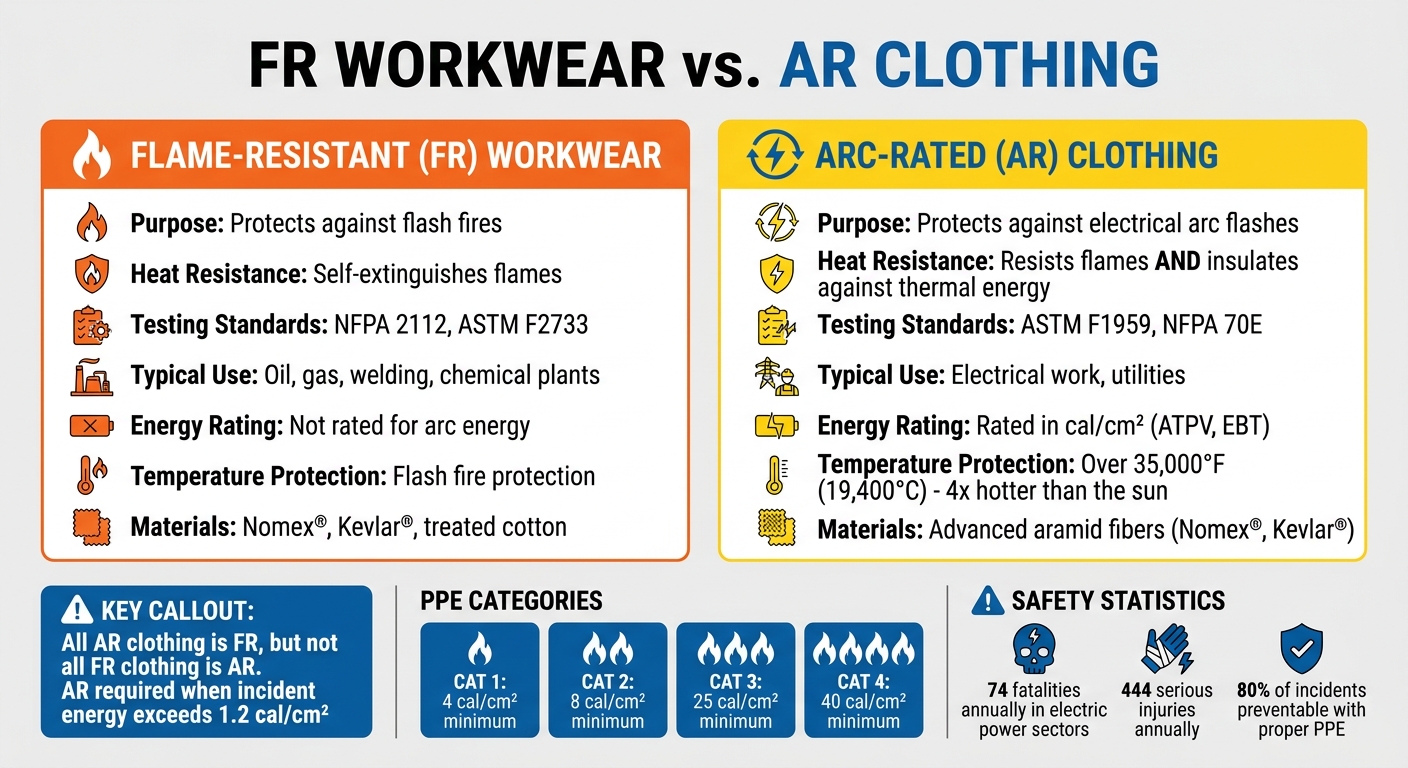
Quick Comparison
| Feature | Flame-Resistant (FR) Workwear | Arc-Rated (AR) Clothing |
|---|---|---|
| Purpose | Protects against flash fires | Protects against electrical arc flashes |
| Heat Resistance | Self-extinguishes flames | Resists flames and insulates against thermal energy |
| Testing Standards | NFPA 2112, ASTM F2733 | ASTM F1959, NFPA 70E |
| Typical Use | Oil, gas, welding, chemical plants | Electrical work, utilities |
| Energy Rating | Not rated for arc energy | Rated in cal/cm² (e.g., ATPV, EBT) |
Wearing the right gear ensures compliance with safety standards and reduces the risk of serious injury. Always check certifications like NFPA 2112 for FR or NFPA 70E for AR clothing.
FR vs AR Clothing: Key Differences and Protection Levels
What Are the Differences Between FR and Arc Flash Clothing?
sbb-itb-501186b
What is Flame-Resistant (FR) Workwear?
Flame-resistant workwear is designed to protect workers by either using materials that naturally resist fire or applying chemical treatments that cause the fabric to self-extinguish once the flame source is removed. The key goal? To prevent the clothing itself from fueling the fire. Unlike regular workwear, which can ignite and continue burning, FR garments stop burning as soon as the flame is gone. While FR clothing provides essential fire protection, arc-rated clothing takes it a step further to handle extreme thermal hazards.
Nick Warrick, Sales Manager at All Seasons Uniforms, emphasizes the importance of FR clothing in workplace safety:
Flame-resistant (FR) personal protective equipment (PPE) clothes are the first and last line of defense against serious injury.
Main Features of FR Workwear
FR clothing offers protection through three essential properties:
- No Melting or Dripping: The materials won’t melt or drip onto the skin, reducing the risk of severe burns.
- Heat Transfer Limitation: These fabrics stop the burning process immediately by limiting heat transfer.
- Thermal Stability: Designed to maintain integrity under intense heat, giving workers valuable time to escape.
Common materials include Nomex®, Kevlar, and treated cotton. Some fabrics, like Nomex, are naturally flame-resistant, while others, such as cotton, rely on chemical treatments to achieve the same effect. For maximum safety, loose-fitting FR clothing is recommended because the air gap helps slow heat transfer to the skin. Layering multiple FR garments can also enhance protection. If the outer layer fails, the inner layers continue to shield the wearer.
Testing and Certification Standards
FR garments must meet strict standards to ensure their effectiveness. Key certifications include:
- NFPA 2112: The gold standard for FR clothing in industrial environments, ensuring garments won’t ignite or keep burning after exposure to a flash fire.
- ASTM F2733-21: Covers FR rainwear, specifically for wet conditions where hydrocarbon or petrochemical fires are a threat.
- ASTM F1506-22: Applies to both flame-resistant and arc-rated clothing, covering flame resistance, durability, construction quality, and proper labeling.
Always check certification labels and follow laundering instructions carefully to maintain the garment’s protective properties.
Common Uses for FR Workwear
FR clothing is essential in industries like oil and gas, chemical plants, foundries, and welding. These environments often face flash fire hazards - sudden bursts of flammable gases, vapors, or dust that burn at extreme temperatures for short durations. The need for protection is clear: in the electric power generation, transmission, and distribution sectors alone, there are an estimated 74 fatalities and 444 serious injuries annually. OSHA estimates that complying with updated safety standards could prevent nearly 80% of these incidents.
| Garment Type | Application |
|---|---|
| FR Coveralls | Full-body protection in oil, gas, and chemical plants |
| FR Jackets | Upper body protection for welders and maintenance crews in cold conditions |
| FR Safety Vests | Combines high visibility with flame resistance for construction workers |
| FR Sweatshirts | Ideal for layering in outdoor work with variable thermal conditions |
This foundation in FR workwear sets the stage for understanding how arc-rated clothing provides even greater protection in high-risk environments.
What is Arc-Rated (AR) Clothing?
Arc-rated clothing builds on the basics of flame-resistant (FR) workwear by adding an extra layer of protection against the intense heat generated by an electrical arc flash. Unlike standard FR clothing, AR garments are specifically designed to shield wearers from the extreme energy of an arc flash, reducing the risk of second-degree burns.
Arc flashes can produce plasma fireballs that reach temperatures of over 35,000°F (19,400°C) - about four times hotter than the surface of the sun. AR clothing is engineered to resist ignition, melting, or dripping when exposed to such extreme heat. Its protective capacity is measured in calories per square centimeter (cal/cm²), which gauges the energy the fabric can absorb.
AR Clothing Testing and Rating Methods
To ensure effectiveness, AR clothing undergoes rigorous testing based on the ASTM F1959/F1959M standard. This test measures how well a material can block heat during a controlled arc flash. Before arc testing, materials must pass flame-resistance tests (ASTM D6413), which check for factors like afterflame duration and char length, and they are laundered three times for consistency.
The arc rating of a garment reflects how much energy it can handle before there’s a 50% chance of either a second-degree burn or the fabric breaking open. This rating is expressed in two key ways:
- Arc Thermal Performance Value (ATPV): The energy level at which there’s a 50% chance of a second-degree burn through the fabric.
- Energy Breakopen Threshold (EBT): The energy level at which the fabric has a 50% chance of tearing or cracking before causing a second-degree burn.
The final arc rating of a garment is the lower of its ATPV or EBT. For instance, an ATPV of 8 cal/cm² means the wearer has a 50% chance of a second-degree burn if exposed to that energy level. While ASTM F1959 focuses on material testing, ASTM F1506 ensures the finished garment meets performance and labeling standards for electrical work.
Why All AR Clothing is FR, But Not All FR Clothing is AR
The distinction lies in the testing and insulation properties. FR clothing is designed to self-extinguish after exposure to flames, while AR clothing goes a step further by insulating against the heat and energy of an arc flash. AR materials are specifically tested under ASTM F1959 to measure how much heat they block, making them suitable for electrical hazards.
According to NFPA 70E standards, AR clothing is required for tasks where potential energy exposure exceeds 1.2 cal/cm². As of the 2018 NFPA 70E update, even the lowest hazard categories now mandate AR/FR protection, eliminating the use of non-FR natural fibers near energized equipment. Always check for an arc rating (ATPV or EBT) on the garment label to ensure it meets safety requirements for electrical work.
Common Uses for AR Clothing
AR clothing is essential for jobs in utilities, electrical maintenance, and other high-risk environments.
In industries like oil and gas, where workers face both flash fire and electrical hazards, dual-rated garments certified for both NFPA 2112 (FR) and NFPA 70E (AR) are recommended. Layering AR garments can boost the total arc rating, but it’s best to test the entire system to confirm the combined protection level. Additionally, avoid wearing undergarments made from materials like acetate, nylon, polyester, or polypropylene, as these can melt and cause severe injuries even under AR/FR clothing. Knowing these details helps workers choose the right protective gear for the job, ensuring greater safety in hazardous electrical environments.
Main Differences Between FR and AR Clothing
Types of Hazards Protected Against
The core distinction between FR (Flame-Resistant) and AR (Arc-Rated) clothing lies in the specific hazards they are designed to handle. FR clothing is primarily engineered to protect against flash fires - sudden and intense bursts of flames caused by combustible dust, flammable liquids, or hydrocarbon vapors. These types of fires are common in environments like oil refineries or foundries.
On the other hand, AR clothing is specifically designed to guard against electrical arc flash hazards. These occur when electrical faults in power systems create plasma fireballs that can reach temperatures over 35,000°F - four times hotter than the sun’s surface. AR garments not only resist ignition but also provide essential thermal insulation to shield the wearer from the intense radiant energy. As IndustrialSafety.com describes:
Arc-rated clothing is a specific type of FR clothing that has been tested to protect against arc flash hazards, which are intense releases of electrical energy caused by faults in electrical systems.
To put it in perspective, just 1.2 cal/cm² of incident energy is enough to cause a second-degree burn. AR clothing is rated with specific energy performance levels, such as ATPV (Arc Thermal Performance Value) or EBT (Energy Breakopen Threshold), to indicate how much energy the fabric can absorb before a burn occurs. These ratings highlight the distinct hazard protections offered by AR clothing and necessitate different compliance standards.
Compliance Standards and Requirements
Though both FR and AR clothing must meet fundamental safety standards, AR clothing is subject to stricter requirements due to the heightened risks associated with electrical arc hazards. FR clothing is certified under NFPA 2112 for flash fire protection, while AR garments must also meet ASTM F1506 and NFPA 70E standards to ensure they can handle arc flash scenarios. NFPA 70E, in particular, defines PPE Categories 1 through 4 based on the energy levels workers might encounter. For example:
- Category 1: Requires protection of at least 4 cal/cm²
- Category 2: Requires protection of at least 8 cal/cm²
- Category 3: Requires protection of at least 25 cal/cm²
- Category 4: Requires protection of at least 40 cal/cm²
Additionally, OSHA regulation 29 CFR 1910.269 prohibits the use of meltable materials like nylon, polyester, rayon, or acetate for workers exposed to electric arcs. As Triple Crown Products emphasizes:
If the tag doesn't say FR or arc-rated to ASTM F1506, it doesn't belong on the jobsite.
Materials and Durability
The materials used in FR and AR clothing further underscore their differences. FR garments are often made from treated cotton or blends, such as an 88% FR cotton and 12% high-tenacity nylon combination. These materials are chemically treated to provide flame resistance.
In contrast, AR clothing typically incorporates advanced synthetic fibers like aramids, such as Nomex® and Kevlar®. These fibers excel in providing thermal insulation and durability. According to Arc Flash Wear:
Aramid fibres are renowned for their high tensile strength. Aside from their resistance to abrasion and piercing, they also have high resistance to organic solvents and intense heat.
The superior insulation properties of AR fabrics make them better suited for arc flash scenarios. As the PK Safety Team explains:
To increase protection, AR materials usually offer more insulation, thus reducing the amount of heat and energy moving through the fabric.
Another key difference lies in how these materials retain their protective properties over time. Inherent fibers like aramids maintain their resistance throughout the garment's lifespan because the protection is embedded at a molecular level. In contrast, treated fibers can lose effectiveness if not properly laundered or maintained.
How to Choose the Right Protective Clothing
Performing a Workplace Hazard Assessment
Start by identifying workplace hazards and determining if the incident energy exceeds 1.2 cal/cm². This level is critical because exposure above it can lead to second-degree burns. If the energy surpasses this threshold, arc-rated clothing is mandatory.
There are two key hazard types to consider. Flash fire risks are common in environments like oil, gas, and chemical plants, where flammable substances or combustible dust are present. On the other hand, arc flash risks are typically associated with electrical maintenance or utility work, especially when workers operate near live conductors or conductive tools [1,10,11]. When assessing these risks, also factor in the voltage levels of the electrical systems and how close employees are to energized equipment.
It's important to note that standard non-FR/AR clothing, even natural fibers, no longer meets modern safety standards under NFPA 70E - even for the lowest risk levels. In some workplaces, such as refineries where both hydrocarbon flash fires and electrical arc hazards are concerns, dual-rated clothing is often required.
This hazard assessment not only guides your safety decisions but also helps address cost and durability considerations.
Balancing Safety, Durability, and Budget
The type of fabric you choose impacts protection, comfort, and cost. To simplify decision-making, many companies consolidate their PPE categories. As Rich Gojdics from Enespro PPE explains:
The majority of companies with exposures requiring CAT 1 typically opt for CAT 2 clothing to cover both categories. Today, the comfort of PPE CAT 1 and 2 is comparable so it makes more sense to choose CAT 2 clothing.
By choosing CAT 2 (8 cal/cm²) clothing for tasks that fall under either CAT 1 or CAT 2, you gain an extra layer of safety without sacrificing comfort. Look for dual-rated (AR/FR) garments certified under NFPA 2112 or NFPA 70E, and opt for fabrics that maintain their protective qualities even after repeated washing [11,17].
Here’s a quick reference for PPE categories:
| PPE Category | Minimum Arc Rating | Typical Clothing Requirements |
|---|---|---|
| CAT 1 | 4 cal/cm² | AR long-sleeve shirt and pants or AR coverall |
| CAT 2 | 8 cal/cm² | AR long-sleeve shirt and pants or AR coverall, AR face shield/balaclava |
| CAT 3 | 25 cal/cm² | AR flash suit jacket and pants/coverall, AR flash suit hood |
| CAT 4 | 40 cal/cm² | AR flash suit jacket and pants/coverall, AR flash suit hood (higher rating) |
To maximize efficiency and safety, dual-rated garments are often the best choice, addressing multiple hazards while remaining cost-effective and durable.
Using Dual-Rated Clothing for Multiple Hazards
Once you’ve balanced safety and budget, dual-rated clothing becomes an excellent option for environments with overlapping hazards. Industries like oil and gas or chemical processing, where electrical maintenance is also common, benefit from dual-rated (AR/FR) garments. These provide protection against both flash fires and arc flashes. This approach simplifies safety protocols, reducing the likelihood of errors. As goSafe highlights:
Investing in AR/FR clothing eliminates the need for workers to switch between different types of protective garments, streamlining safety protocols and reducing the chance of error.
Standardizing on dual-rated clothing minimizes the risk of workers accidentally wearing FR-only garments in arc flash zones. While FR-only clothing may self-extinguish, it won't provide adequate thermal insulation for arc flash protection. Always check labels for certifications like NFPA 2112 for flash fire protection and NFPA 70E/ASTM F1506 for arc flash protection. Additionally, layering AR garments can enhance the total Arc Thermal Performance Value (ATPV), but ensure the layers are tested together for effectiveness [1,18].
Conclusion
Choosing the right PPE isn’t just a regulatory requirement - it’s about protecting lives. As Rich Gojdics from Enespro PPE explains:
Personal protective equipment (PPE) has long been considered the last line of defense for workers, and often draws the line between a 'near miss' and a life-changing injury or fatality.
Arc flashes can reach temperatures of over 35,000°F (19,400°C), and as little as 1.2 cal/cm² of energy is enough to cause a second-degree burn. This underscores why PPE designed to meet rigorous arc flash protection standards is non-negotiable.
It’s also important to note that AR clothing provides thermal insulation beyond what standard FR garments can offer, making it essential for electrical hazard protection. Everyday workwear simply doesn’t meet the ASTM F1506 certification required for these risks.
Compliance with standards like NFPA 70E and OSHA 29 CFR 1910.269 ensures that PPE aligns with calculated incident energy levels. These guidelines also strictly forbid meltable fabrics, which can dangerously fuse to the skin during an arc flash. Always check garment labels to confirm proper certifications and arc ratings.
FAQs
How do I know what cal/cm² rating I need?
When picking the proper cal/cm² rating for arc flash protective gear, it's crucial to assess the potential incident energy levels you might encounter. This rating indicates the amount of heat energy the clothing can withstand before it fails to provide protection.
For instance:
- 4 cal/cm² suits are suitable for lower-risk environments.
- 25 cal/cm² or higher is necessary for areas with greater hazards.
To ensure you're making the right choice, consult NFPA 70E standards or conduct a detailed hazard analysis for accurate guidance.
Can I wear FR clothing in an arc flash zone?
Yes, flame-resistant (FR) clothing can be used in an arc flash zone, but arc-rated (AR) clothing is specifically designed to protect against arc flash hazards. While FR clothing is made to self-extinguish and resist flames, AR clothing is rigorously tested to withstand the intense thermal energy produced by an arc flash. For optimal safety, AR garments are the better choice, as they comply with OSHA standards for arc flash protection.
Does layering AR clothing increase protection?
Layering arc-rated (AR) clothing the right way can boost protection, but it’s not as simple as stacking garments and adding up their ratings. To meet NFPA 70E standards, the combined arc rating of the layers must be tested and certified as a system. Without proper testing, there’s no guarantee that layering will provide the additional safety needed. Tested combinations, however, can help address different hazard levels more effectively.