



New & Used Transformers for Sale
In Stock Now
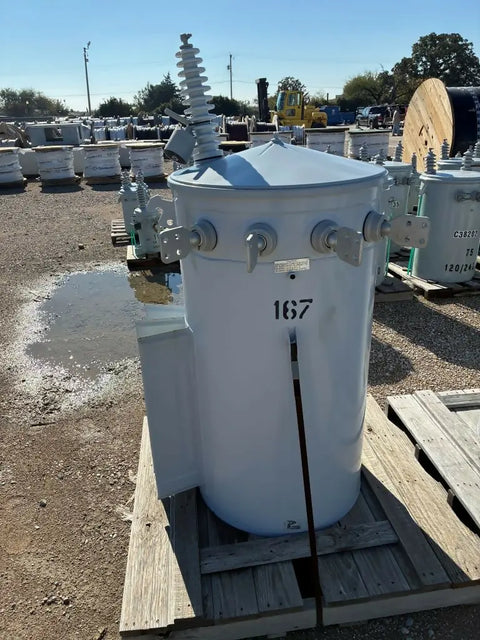
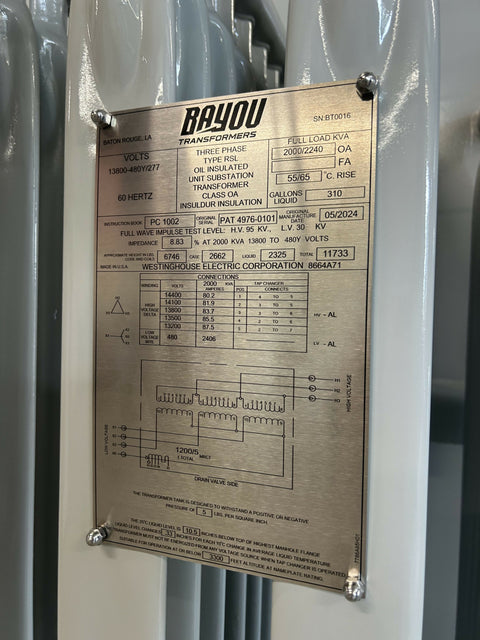
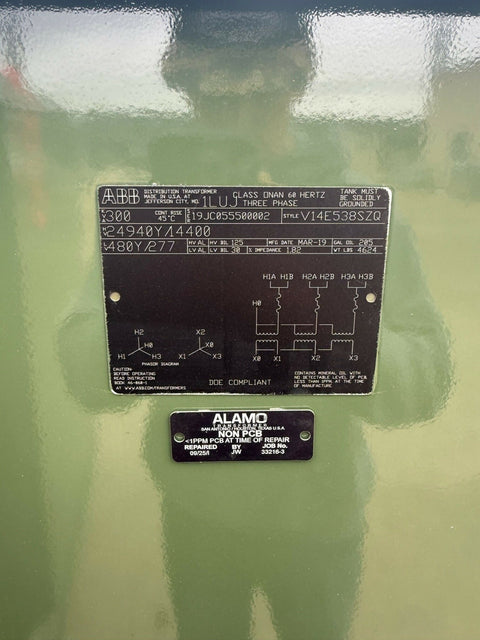
4 units · pulled live from inventory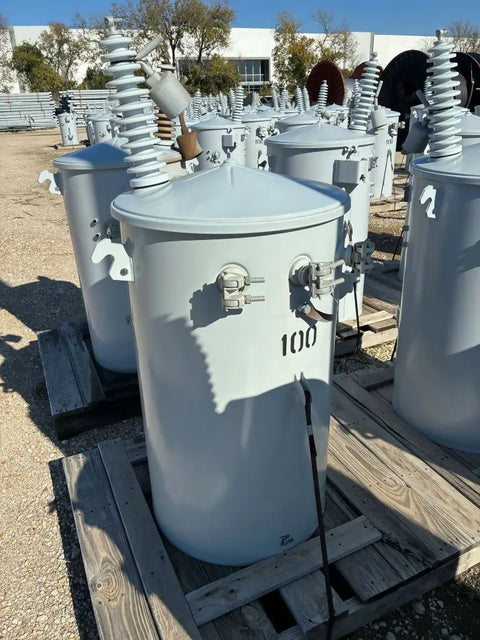
Tell us what you need
Tell us the kVA or MVA rating, primary and secondary voltage, phase, and oil-filled or dry-type — plus when you need it. We'll match you with consignment and new-surplus transformers before they're listed publicly, or source one through our seller network.
What to Check Before Buying a Transformer
kVA rating & load
Size to the connected load with room for growth. Undersized units overheat; oversized units waste no-load energy around the clock. Check the nameplate kVA and cooling class (AA, FA, ONAN, ONAF), not the listing title.
Voltage, phase & connection
Match primary and secondary voltage exactly (480 V delta to 208Y/120 V, 13.8 kV to 480Y/277 V) and single- vs three-phase. Primary taps (usually ±2 × 2.5%) give a small adjustment range; they don't fix a wrong voltage class.
Impedance (%Z) & fault current
The nameplate %Z sets the available fault current on the secondary. Enter kVA, secondary voltage and %Z into our Fault Current Calculator and confirm downstream breakers have the interrupting rating to match.
Dry-type vs liquid-filled
Dry-type suits indoor, lower-kVA distribution with minimal maintenance. Pad-mount and substation units are usually liquid-filled (mineral oil or FR3 ester) for higher kVA; budget for containment and periodic oil testing.
Enclosure, temperature rise & efficiency
NEMA 1 indoor vs NEMA 3R outdoor; 80, 115 or 150 °C rise; K-factor rating for nonlinear loads. New units built since 2016 meet DOE efficiency levels — older surplus may not.
Condition & test records
For used or reconditioned units ask for turns-ratio (TTR), insulation-resistance and winding-resistance results, plus oil dielectric and DGA on liquid-filled units. Nameplate photos and manufacture year at minimum.