RCD Testing Training vs. On-the-Job Learning
RCD testing ensures safety by verifying that Residual Current Devices (RCDs) or Ground Fault Circuit Interrupters (GFCIs) function correctly. Accurate testing prevents electrical hazards like shocks or fires. But how should technicians learn this skill? Two main paths exist: formal training programs and on-the-job learning.
- Formal training offers structured lessons, covering RCD types, testing methods, and safety standards. It ensures compliance with regulations and provides certifications, but it requires upfront costs and time.
- On-the-job learning involves hands-on practice under supervision. It’s cost-effective and immediate but can lack consistency and safety if mentors are inexperienced.
Key Takeaway: Formal training is better for safety-critical roles requiring certifications, while on-the-job learning suits workplaces prioritizing practical skills. Combining both methods can balance knowledge and experience effectively.
Quick Comparison
| Factor | Formal Training | On-the-Job Learning |
|---|---|---|
| Cost | Higher ($1,071–$1,678/learner) | Lower (uses existing resources) |
| Knowledge Depth | Broad, covering theory and standards | Task-specific, mentor-dependent |
| Time to Productivity | Slower (avg. 64 hours of training) | Immediate contribution |
| Compliance | Provides certification | Often lacks formal proof |
| Safety | Standardized, lower risk | Higher risk without oversight |
This overview highlights the strengths and challenges of each approach, helping you choose the right path for your goals.
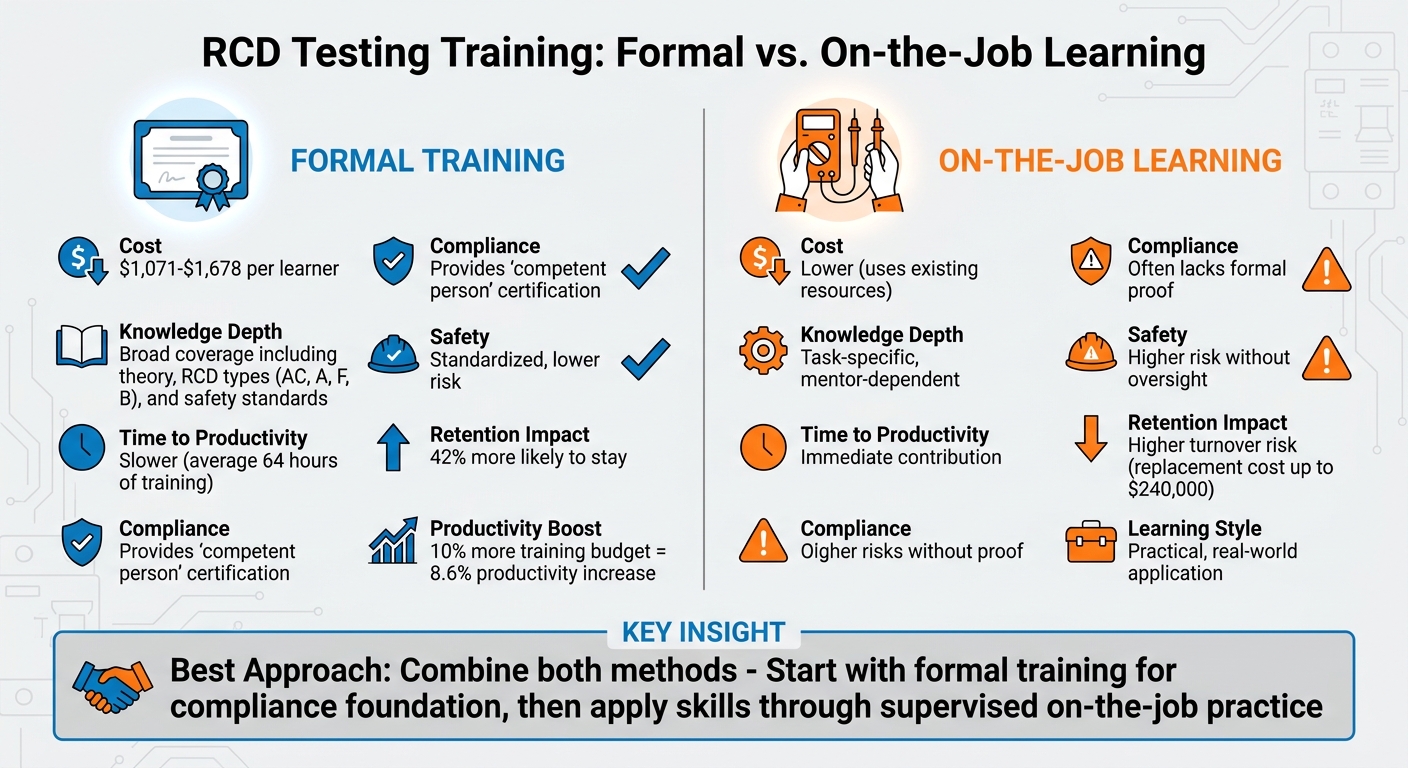
RCD Testing Training Comparison: Formal Training vs On-the-Job Learning
Formal RCD Testing Training Programs
Formal training programs combine theoretical lessons with hands-on practice to ensure participants meet regulatory standards. Many of these courses are tailored to align with NERC reliability standards and other regulatory requirements.
What Training Programs Cover
These programs emphasize standardized testing procedures that prioritize safety and compliance. Participants learn how to test the continuity of earthing systems, measure insulation resistance, and confirm polarity and circuit connections before conducting final RCD functional checks. Key tests covered include the push-button test, trip time measurements, and ramp tests.
Courses also delve into the physics behind RCDs, explaining how magnetic fields and current imbalances trigger trips. Technicians are trained to differentiate between RCD types, such as:
- Type AC: For standard AC circuits.
- Type A: For pulsating DC applications.
- Type F: For variable speed drives.
- Type B: For more complex commercial setups.
Additionally, visual inspection techniques are taught to help technicians identify damage, wear, or non-compliance issues before energizing equipment.
Training formats can vary significantly. Options range from 90-minute sessions designed for licensed practitioners to more comprehensive courses that include compliance documentation and certification. Advanced modules might cover topics like forensic investigations of electrical shock incidents or systematic root cause analysis. For instance, TRC Power Academy in Lancaster, Pennsylvania, offers advanced facilities where utility personnel can earn PDH and CTD credits.
This robust curriculum highlights why formal training is so beneficial.
Benefits of Formal Training
One of the main advantages of formal training is that it leads to standardized certification, meeting legal and regulatory requirements. In many areas, technicians must be officially recognized as a "competent person" through accredited training and assessment before performing RCD tests. Programs approved by the International Electrical Testing Association (NETA) ensure certifications are widely recognized within the industry.
"Our training program is aligned to industry standards, regulatory requirements and evolving technology and equipment specifications." – TRC Power Academy
Formal training also provides a depth of knowledge that on-the-job experience alone often cannot. For example, understanding the technical differences between RCD types and knowing that a standard 30 mA RCD must trip within 300 milliseconds, while a 10 mA RCD must trip within 40 milliseconds, equips technicians to make more accurate decisions during testing. Research also indicates that formal training often yields greater overall benefits compared to learning by doing, as the reduction in operational errors typically outweighs the temporary loss of productivity during the training period.
Drawbacks of Formal Training
The biggest drawback is cost. Professional RCD testing equipment can range from about $30 for basic models to over $950 for advanced digital testers. On top of that, tuition fees, training materials, and time away from work add to the financial burden. The time required for certification also means technicians may lose out on revenue-generating opportunities during the training period.
sbb-itb-501186b
On-the-Job Learning for RCD Testing
How On-the-Job Learning Works
On-the-job learning places technicians directly in real-world testing environments under the guidance of experienced mentors. Here, they perform actual tasks while receiving immediate feedback. This hands-on method allows employees to dive into their roles right away, gaining practical skills through repetition. Mentors play a crucial role by correcting mistakes on the spot and demonstrating proper testing techniques, making learning an integral part of daily work activities.
Benefits of On-the-Job Learning
One of the biggest perks of on-the-job learning is its cost-effectiveness. Companies can use their existing resources, like equipment and facilities, which eliminates the need for expensive external training programs or certifications. Trainees also benefit from applying their skills to real tasks immediately, which helps them retain practical knowledge more effectively. Since the training is tailored to the organization’s specific tools, processes, and safety protocols, technicians become well-versed in exactly what they’ll need to perform on the job. That said, while this approach has clear advantages, it’s not without its challenges.
Drawbacks of On-the-Job Learning
Despite its practical benefits, on-the-job learning has some notable downsides. The quality of training can vary greatly, as it heavily depends on the mentor’s expertise and ability to teach. Being a skilled technician doesn’t always translate to being an effective instructor, which can lead to inconsistent training or even the reinforcement of poor practices. Another concern is safety - working with live electrical equipment can be risky, especially for trainees who lack a solid theoretical foundation or adequate supervision. Without these, they may fail to recognize hazards or fully understand why certain testing protocols are necessary. Studies also suggest this method can sometimes limit exposure to broader industry practices and, in some cases, encourage avoidance of responsibilities.
Formal Training vs. On-the-Job Learning
When deciding between these two approaches, it often comes down to priorities: Do you need immediate productivity, or are you aiming for long-term compliance and skill development? Each method has its strengths, tailored to different goals and organizational needs.
Formal training involves a bigger upfront investment. For instance, in 2021, U.S. companies spent an average of $1,071 per employee on training, with small businesses paying even more - between $1,433 and $1,678 per learner. This method focuses on theoretical knowledge, covering topics like RCD types (AC, A, F, B), trip time standards, and compliance with regulations such as BS 7671. Interestingly, adding 10% more to formal training budgets can lead to an 8.6% boost in productivity. Additionally, certifications from formal programs serve as proof that technicians meet the "competent person" criteria required by industry regulations.
On-the-job learning, on the other hand, allows employees to dive into work right away, gaining experience as they go. This approach is less expensive upfront since it leverages existing resources, but it comes with risks. Without structured guidance, learners may miss critical foundational knowledge - like why certain protocols or standards are essential. The effectiveness of this method often depends on the mentor’s ability to teach, which can vary widely. These gaps in training might lead to costly consequences, such as high turnover. Replacing a worker can cost up to $240,000, factoring in recruitment and onboarding expenses.
"Formal training can provide higher net benefits to the training firm than learning by doing because the savings from the reduction in shirking can be greater than the cost of foregone output." - Kevin Siqueira, School of Economic, Political & Policy Sciences, University of Texas at Dallas
Here’s a breakdown of how the two methods compare across key factors:
| Factor | Formal Training Programs | On-the-Job Learning |
|---|---|---|
| Upfront Cost | Higher ($1,071-$1,678 per learner) | Lower (integrated into daily operations) |
| Knowledge Depth | Broad and detailed; includes RCD types, fault detection, and regulations | Limited; depends on specific tasks and mentor expertise |
| Time to Productivity | Slower (average 64 hours of training) | Immediate contribution |
| Compliance & Certification | Provides "competent person" status for standards like AS/NZS 3760 or BS 7671 | Often lacks formal proof for audits |
| Employee Retention | Employees are 42% more likely to stay with strong training programs | Higher turnover risk without structured development |
| Safety & Risk | Lower risk; standardized safety protocols from the start | Greater risk of errors and non-compliance early on |
Many organizations now combine these approaches to maximize benefits. In areas like RCD testing, where compliance is non-negotiable and errors can have serious safety implications, formal training often serves as a critical foundation. Blended strategies can help bridge the gap between immediate productivity and long-term expertise.
Combining Both Approaches
Mixing formal training with on-the-job learning creates technicians who not only understand the "why" behind procedures but also perform them effectively in practical settings. This combination connects theoretical knowledge with hands-on application, ensuring accurate and safe testing.
How to Combine Training Methods
Start with formal instruction on AS/NZS 3760:2022 to build a solid foundation. This training ensures technicians meet the "competent person" standard required before handling testing equipment in the field. Follow up immediately with supervised fieldwork to keep their knowledge fresh and actionable.
Pair newly certified technicians with experienced mentors for tasks like Trip Time and Ramp tests. These advanced procedures rely on specialized Portable Appliance Tester (PAT) equipment and require practical guidance. This mentoring phase helps technicians adapt testing protocols to real conditions. It also teaches them how to reduce disruptions, such as scheduling tests early or late in the workday to avoid interrupting power during peak hours, which typically lasts 10–20 minutes.
Ongoing development is key to maintaining high standards. Regular refresher sessions reinforce safety protocols and keep teams updated on any regulatory changes. This approach ensures technicians not only pass tests but also grasp the importance of detecting milliamps-level imbalances. Combining these elements creates a structured system that supports compliance through meticulous record-keeping.
Keeping Records for Compliance
Accurate documentation is non-negotiable. Every test record must detail the date, tester’s identity, detected faults, and corrective actions taken to meet AS/NZS 3760:2022 standards. These records prove adherence to safety protocols.
Beyond meeting regulations, maintaining thorough records enhances career opportunities. When auditors or potential employers review credentials, they’ll see evidence of both theoretical training and practical experience. Use standardized templates to document key metrics like trip time (in milliseconds), leakage current (in milliamps), and pass/fail outcomes. This consistency simplifies compliance reviews and highlights a professional commitment to precision in every test conducted.
Finding Quality RCD Testing Equipment
Why Equipment Quality Matters
The reliability of your test results hinges on the quality of your equipment. For example, dependable RCD testers provide accurate trip time measurements, such as ensuring a 30 mA device trips within 300 milliseconds or a 10 mA device within 40 milliseconds. These precise readings are critical for identifying potential faults early and reducing the risk of electric shocks.
Professional-grade testers stand out due to features like microprocessors for enhanced accuracy, adjustable tripping current settings (ranging from 10 mA to 1,000 mA), a 0°/180° phase angle switch, wiring status LEDs, and built-in automatic lock-out mechanisms to prevent overheating.
Additionally, it’s crucial that the equipment complies with standards such as EN 61557 and BS 7671, with UKAS calibration ensuring traceable and reliable measurements. Under normal operating conditions, the leakage current should not exceed one-third of the RCD’s tripping current rating.
Investing in high-quality, compliant equipment not only guarantees accurate testing but also enhances both training and field performance. Reliable tools form the backbone of effective learning, whether during formal training sessions or hands-on work.
Sourcing Equipment Through Electrical Trader
When searching for reliable RCD testers, Electrical Trader (https://electricaltrader.com) offers a convenient platform for both new and pre-owned electrical components. Their range includes options that cater to various budgets, from entry-level models priced around $30 to advanced industrial-grade testers costing over $1,000.
While shopping, ensure the tester is compatible with the specific RCD types you work with, such as Type AC, Type A (pulsating DC), Type F, or Type B (three-phase rectifiers). Look for features like large digital LCD displays for clear visibility of tripping times and robust casings made from modern plastics to handle daily wear and tear. This balance of durability, functionality, and affordability makes Electrical Trader an ideal resource for both training environments and professional use.
Conclusion
Deciding between formal training and on-the-job learning comes down to your specific career goals and workplace demands. Each approach has its strengths, and understanding them can help you craft a training plan that fits your needs.
Formal training provides a structured foundation, ensuring you gain essential compliance knowledge and minimize procedural errors right from the start. It’s particularly crucial in high-risk environments or when pursuing certifications, as it covers critical requirements like the 300-millisecond trip time mandate and regular testing intervals. However, it does require an upfront investment of both time and resources, which can temporarily pull you away from hands-on work.
On the other hand, on-the-job learning allows you to dive right into practical work, building skills naturally through daily tasks. While this method gets you started quickly, it may lack the structured knowledge base needed for roles with strict regulatory demands.
For those in regulated industries or aiming for certifications, starting with formal training often makes the most sense. It lays the groundwork for safety and compliance, which you can then strengthen through practical, on-the-job experience. For less regulated roles, on-the-job learning might suffice, but keeping detailed records is essential to avoid compliance gaps.
Ultimately, the best approach may combine both methods - formal training to establish a solid knowledge base and hands-on experience to refine your skills. Align your training choices with your career aspirations and the complexity of your work environment to ensure both safety and long-term success.
FAQs
When is formal RCD testing certification required?
Formal RCD testing certification is necessary when safety regulations demand it. For instance, standards such as AS/NZS 3760:2022 outline the need for regular testing to ensure both compliance and electrical safety. It's crucial to check the specific requirements relevant to your region or industry to stay aligned with legal and safety obligations.
What should a mentor cover during on-the-job RCD testing training?
A mentor plays a crucial role in guiding trainees through the essential aspects of Residual Current Device (RCD) testing. This includes teaching how to perform systematic checks to ensure RCDs trip consistently and reliably during faults. Mentors should also cover:
- Recording trip times: Accurately documenting the time it takes for an RCD to trip.
- Verifying current ratings: Ensuring the device matches the system's requirements.
- Documenting test actions: Keeping clear records of all testing steps and results.
Additionally, mentors should explain the testing frequency requirements, the operational principles behind RCDs and Residual Current Breaker with Overcurrent (RCBOs), and emphasize proper safety procedures to minimize risks. This comprehensive approach ensures trainees understand both the technical and safety aspects of RCD testing.
Which RCD tester features matter most for accurate results?
For reliable RCD testing, certain features are essential. Look for devices with adjustable test current settings to accommodate different requirements, and clear digital displays that make reading results straightforward. The ability to test various RCD types is another must-have, ensuring versatility.
Compliance with legislative standards is non-negotiable, as it guarantees the device meets safety and performance benchmarks. Built-in safety features and a durable design further enhance accuracy, consistency, and safety during RCD functionality assessments.