OSHA vs. NFPA: Backup Power Safety Standards
If you work with backup power, here’s the short answer: OSHA covers worker safety, and NFPA covers system rules. That means one set of rules focuses on how people work on generators, ATS units, batteries, UPS systems, and switchgear, while the other focuses on how that equipment is installed, tested, and maintained.
I’d break it down like this:
- OSHA is law for worker safety and can lead to citations and fines.
- NFPA codes become enforceable only when adopted by a state, local code, or AHJ.
- Both can apply at the same time during generator testing, ATS service, battery work, and outage response.
- OSHA centers on lockout/tagout, guarding, grounding, training, and live-work limits.
- NFPA centers on installation rules, arc-flash work practices, and test schedules.
- NFPA 110 calls for monthly generator exercise for at least 30 minutes at no less than 30% load.
- Healthcare sites face added rules under NFPA 99, including EPSS testing intervals tied to patient care loads.
If I had to sum up the article in one line, it would be this: safe workers and safe backup power systems are not the same thing, and you need both.
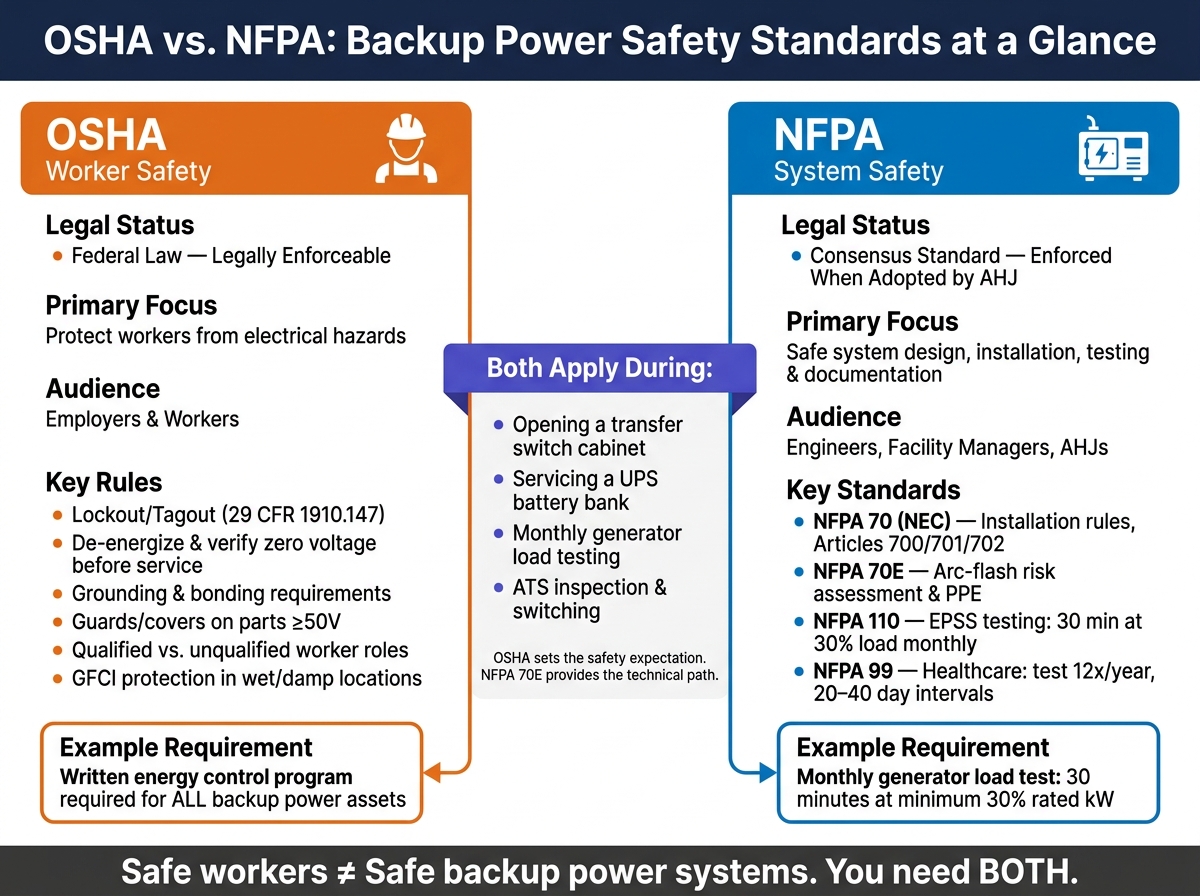
OSHA vs. NFPA: Backup Power Safety Standards at a Glance
Critical Power: NFPA 110: Standard for Emergency and Standby Power Systems
Quick Comparison
| Topic | OSHA | NFPA |
|---|---|---|
| Main role | Worker safety | System design, testing, and maintenance |
| Legal status | Federal enforcement | Enforced only when adopted |
| Main backup power focus | LOTO, shock, guarding, training | NEC rules, arc-flash practices, EPSS testing |
| Common equipment | Generators, ATS, batteries, switchgear | Same equipment, but from the system side |
| Example rule | De-energize and verify zero voltage before service | Monthly generator test: 30 minutes at 30% load |
| Healthcare role | Worker protection | NFPA 99 branch and testing rules |
So if you’re asking, “Which one applies to my backup power job?” the answer is often both. OSHA tells me how to protect people doing the work. NFPA tells me how the backup power setup should be built, checked, and documented.
OSHA Requirements for Backup Power Work
OSHA sets the rules for how workers handle backup power systems. Those rules come from 29 CFR 1910 Subpart S, 29 CFR 1926 Subpart K, and 29 CFR 1910.147. They apply when workers install, inspect, maintain, test, or troubleshoot backup power equipment.
De-Energizing, Lockout/Tagout, and Safe Condition Verification
At the heart of 29 CFR 1910.147 is a simple rule: before anyone services backup power equipment, employers must prevent unexpected energization or start-up. In plain English, the equipment has to stay OFF while work is being done. That calls for written energy-control procedures for each device, with clear steps for shutdown, isolation, lockout, and verification.
For an ATS, workers need to lock out both source breakers. Then they must test all phase conductors on the source and load sides to confirm zero voltage before work starts. Battery systems bring another hazard: stored energy. In those cases, workers must verify isolation at the terminals and disconnects with a properly rated meter.
OSHA also expects this verification to be done by trained, qualified persons using the right PPE. That matters because equipment can still be energized if any step in the lockout process was missed.
Grounding, Guarding, and Portable Generator Safety
Shutting equipment down is only part of the job. OSHA also requires physical safeguards around backup power systems. One key point: OSHA treats bonding and grounding as different things.
Portable generators have their own set of rules. On construction sites, 29 CFR 1926.404(f)(3)(i) allows the generator frame to serve as the grounding electrode without a separate ground rod when all of the following are true:
- The generator supplies only cord-and-plug-connected equipment through receptacles mounted on the generator.
- The non-current-carrying metal parts are bonded to the frame.
In that setup, adding a ground rod can create dangerous touch voltage.
If a portable generator is connected to a structure through a transfer switch, the rules change. The generator must be connected to a grounding electrode system and installed under manufacturer instructions by a qualified electrician. OSHA does not allow direct connection to a structure's wiring. A properly installed transfer switch is required instead.
OSHA also requires guarding for parts at 50 volts or more. Those parts must be protected by enclosures, barriers, or covers, and covers should remain in place during normal operation. Flexible cords need protection from traffic, sharp edges, and wet surfaces. For temporary receptacles in damp or wet locations, OSHA requires GFCI protection or an Assured Equipment Grounding Conductor Program (AEGCP).
Training and Qualified Work Practices
Procedures on paper don't do much unless workers know how to use them. OSHA splits workers into two groups with different duties. Qualified persons have shown they can work safely on or near exposed energized parts. They understand how the equipment is built, can spot hazards, and know how to use insulating tools and PPE.
Unqualified persons have a narrower role. They may operate clearly labeled controls only when the procedure removes exposure to live parts. Even then, they still need training on hazard recognition and emergency response.
For backup power systems, documented safe work practices should cover job briefings, hazard assessments, PPE selection, LOTO steps for each equipment type, portable generator inspection checklists, and response procedures. Troubleshooting energized backup power components during testing and switching is limited to qualified workers only.
Those worker-safety rules set the stage for the NFPA standards that govern installation, operation, and testing.
sbb-itb-501186b
NFPA Standards That Apply to Backup Power Systems
OSHA covers how workers handle backup power equipment. NFPA covers how the system gets designed, installed, tested, and maintained. With backup power, those rules usually overlap and support each other.
NFPA 70 and NFPA 110: Installation, Operation, and Testing
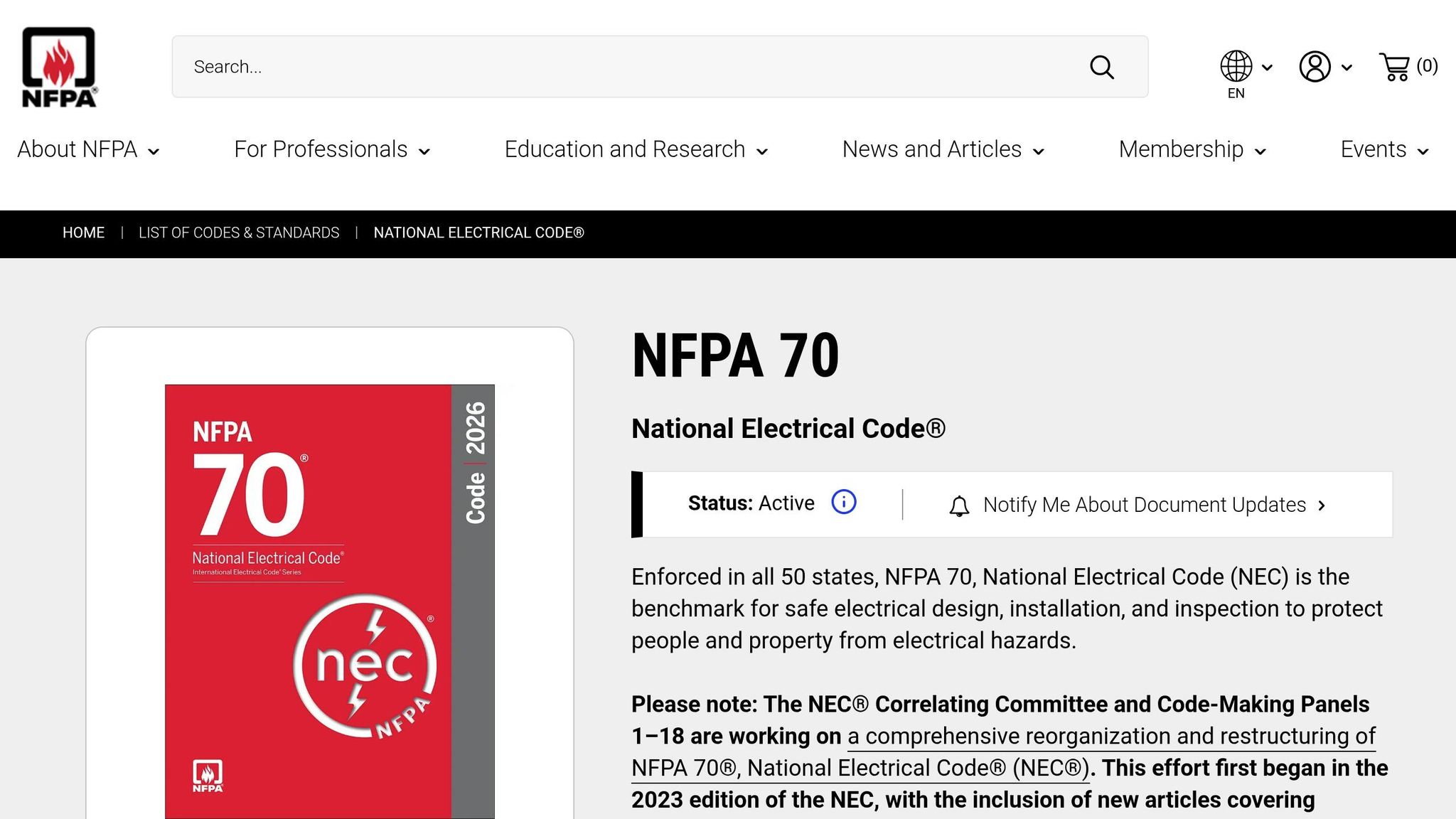
NFPA 70 (National Electrical Code) is the main installation standard for backup power systems. Articles 700, 701, and 702 cover emergency systems, legally required standby systems, and optional standby systems. These sections deal with wiring, separation, overcurrent protection, transfer equipment, and selective coordination.
NFPA 110 focuses on the emergency power supply system (EPSS). It sets rules for performance, inspection, maintenance, and testing for generators, transfer switches, switchgear, fuel systems, controls, and related accessories. NFPA 110 sorts systems by Type, Class, and Level. Type tells you how fast power has to come back. Class sets the minimum run time without refueling. Level shows how critical the loads are for life safety.
On the maintenance side, NFPA 110 Chapter 8 requires weekly inspections and monthly load tests for at least 30 minutes at no less than 30% of rated kW. No-load runs do not satisfy the test requirement. Facilities also need records of inspections and tests, including key operating data and any deficiencies found.
That gives you the base layer: install the system correctly, then prove it can perform when it matters.
NFPA 70E: Electrical Safe Work Practices
NFPA 70E is the standard many technicians use when working on or near energized backup power equipment. It requires an arc-flash risk assessment before that work starts. That assessment is then used to determine incident energy, PPE needs, and task-specific controls. In plain terms, it helps teams decide what arc-rated clothing, face shields, gloves, and insulated tools are needed.
The standard also sets shock protection boundaries and requires an energized work permit when de-energizing is not feasible. OSHA may reference NFPA 70E when judging electrical safe work practices. In day-to-day facility work, many teams build NFPA 70E into electrical safety programs for generator rooms, emergency switchboards, ATS enclosures, and battery banks.
In healthcare settings, those rules sit on top of the tighter backup power demands in NFPA 99.
NFPA 99: Healthcare Backup Power Requirements
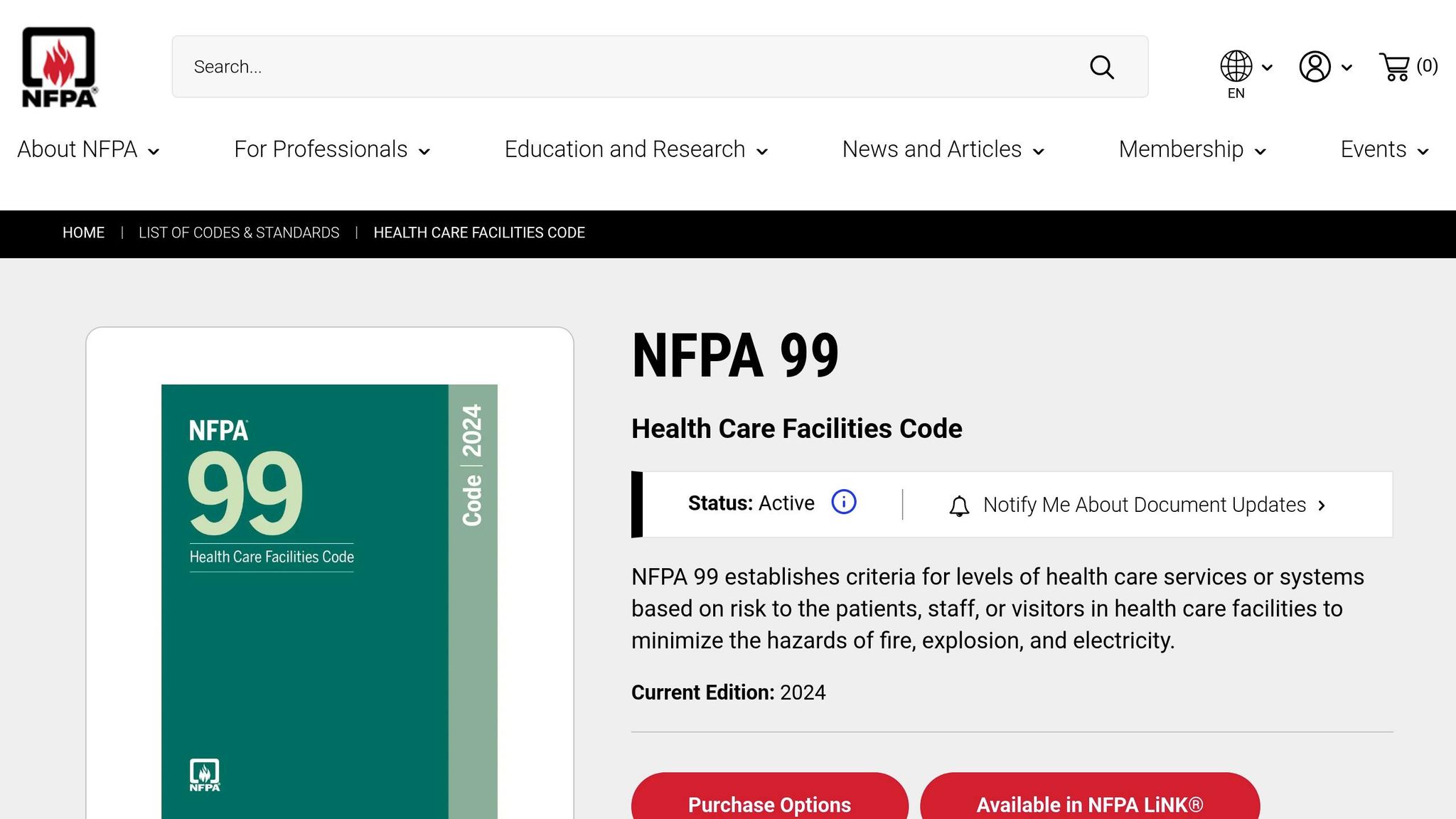
Hospitals and similar medical settings deal with a more layered compliance setup. NFPA 99 defines essential electrical system requirements tied to patient care. It splits backup power into life safety, critical, and equipment branches. It also points to NFPA 110 for backup power source characteristics and testing expectations, including weekly inspections and monthly exercise under load for EPSS components in hospital applications. For downstream wiring from transfer switches to patient-care areas, NFPA 99 points back to NFPA 70 for installation details.
In healthcare, compliance can also affect licensure, accreditation, and CMS status. That’s where the split between OSHA and NFPA becomes clearer: OSHA focuses on worker safety and enforcement, while NFPA sets the system rules and performance expectations.
OSHA vs. NFPA: Key Differences and Where They Overlap
Differences in Enforcement, Scope, and System Focus
Once you know the basics of OSHA and NFPA, the next step is simple: where does enforcement stop, and where do technical rules start?
OSHA covers how workers are kept safe during backup power work. NFPA covers how the backup power system is designed, installed, tested, and documented. Put plainly, OSHA deals with worker exposure, while NFPA deals with system rules.
| Category | OSHA | NFPA |
|---|---|---|
| Authority | Federal regulator; legally enforceable | Consensus standards body; not self-enforcing |
| Primary purpose | Protect workers from recognized hazards | Reduce electrical and fire hazards through technical guidance |
| Audience | Employers and workers across all industries | Engineers, facility managers, AHJs, safety professionals |
| Equipment focus | Worker exposure to generators, transfer switches, batteries, switchgear | System design, installation, classification, and performance |
| Maintenance/testing emphasis | Are workers protected during the work? | What gets tested, how often, and how is it documented? |
OSHA’s electrical safety rules, mainly Subpart S (29 CFR 1910.331–335), are hazard-centered. NFPA standards are more equipment- and performance-centered.
That means the same generator room or battery bank can fall under both at once. A team may need OSHA-compliant work practices while also meeting NFPA rules for design, testing, and recordkeeping. In the field, that split matters a lot.
Where Backup Power Safety Requirements Overlap
Even though OSHA and NFPA play different roles, they meet in many day-to-day backup power tasks.
Both limit energized electrical work to qualified persons. Both focus on shock and arc-flash risk. And both come into play during routine work like:
- Opening a transfer switch cabinet
- Servicing a UPS battery bank
- Running a monthly generator load test
Here’s the practical difference: OSHA sets the safety expectation, and NFPA 70E gives the technical path. That path includes arc-flash risk assessment, shock boundaries, PPE selection, and energized work permits.
Written switching and isolation procedures matter here too. If they’re documented well and followed the same way every time, they can help meet both OSHA’s general duty requirement to protect workers from recognized hazards and NFPA-based program rules.
OSHA explicitly recognizes NFPA 70E as an industry consensus standard that employers can use to make the assessments and equipment selections required by OSHA's electrical safety standards. OSHA enforces its own standards and general duty requirement, but it may look to NFPA 70E when judging whether work practices were reasonable.
For facilities, that makes NFPA-based records more than paperwork. Arc-flash labels, inspection logs, generator test records, training records, and written lockout procedures can all serve as evidence that backup power hazards are being controlled.
That split leads directly into the backup power compliance checklist below.
Backup Power Compliance Checklist and Conclusion
Checklist for Generators, Transfer Switches, Batteries, and Related Equipment
Use this checklist to tie each task to its main OSHA or NFPA driver. Put simply, it turns the OSHA vs. NFPA split into work your team can act on in the field.
| Checklist Item | Primary driver |
|---|---|
| Develop a written energy control program for all backup power assets | OSHA 29 CFR 1910.147 |
| Identify all energy sources before any servicing (electrical, mechanical, stored) | OSHA 29 CFR 1910.147 |
| Apply locks and tags at isolation points; authorized employees only | OSHA 29 CFR 1910.147 |
| Verify absence of voltage with a rated test instrument before contact with conductors | OSHA / NFPA 70E |
| Verify qualified worker training records are current and reviewed at least annually | OSHA / NFPA 70E |
| Inspect guards, covers, and interlocks; verify operation | OSHA Subpart S |
| Post carbon monoxide warnings near portable and standby generators | OSHA |
| Confirm grounding and bonding are intact on generators and transfer switches | NFPA 70 (NEC) |
| Verify arc-flash labels reflect the current assessment | NFPA 70E |
| Perform monthly generator load exercise: 30 minutes at 30% load minimum | NFPA 110 Ch. 8 |
| Use load bank testing when site load cannot meet the required test load | NFPA 110 Ch. 8 |
| Test battery systems monthly; inspect for physical defects | NFPA 110 |
| Test automatic transfer switches at defined intervals; document results | NFPA 110 |
| Maintain fuel supply for required runtime | NFPA 99 / NFPA 110 |
| Healthcare facilities: test generator sets 12 times per year, with intervals no less than 20 days and no more than 40 days | NFPA 99 |
Records are part of compliance, not just paperwork. If logs are missing or incomplete, inspections can stall and corrective action can follow.
For replacement breakers, transfer switches, batteries, and distribution gear, Electrical Trader can help source new and used equipment.
Key Takeaways for Facility Teams and Buyers
OSHA sets the minimum worker safety bar. Its rules on lockout/tagout, de-energized verification, grounding, guarding, and qualified personnel are federal requirements that can be enforced by law.
NFPA standards spell out how systems should be installed, tested, and maintained. NFPA 70, 70E, 99, and 110 do not enforce themselves, but local jurisdictions adopt them, and accreditation bodies point to them. Miss NFPA 110 testing intervals or ignore NFPA 70E work practices, and you can end up with regulatory findings and life-safety failures.
These two systems don't compete with each other. OSHA covers safe work. NFPA covers safe system performance. Your records show whether both are being met. So when a facility runs monthly load tests, keeps complete logs, trains qualified workers, and follows written LOTO procedures, it's meeting what OSHA and NFPA both expect at the same time.
FAQs
Which standard applies first?
OSHA comes first on compliance because it enforces mandatory federal rules. NFPA standards are usually voluntary, but OSHA often points to them during inspections.
In day-to-day use, following NFPA standards like NFPA 70E or NFPA 110 is often accepted by OSHA as a way to deal with hazards. You should also check local building codes and your Authority Having Jurisdiction, since they decide what applies to your facility.
When does NFPA become enforceable?
NFPA standards become enforceable when local, state, or federal codes and rules adopt them. By themselves, they are technical guidelines and industry-agreed standards, not law.
Once adopted, the Authority Having Jurisdiction (AHJ) - often a local official like a fire marshal - can require compliance, run inspections, and enforce penalties.
Who counts as a qualified worker?
A qualified worker has specific training and has shown the skills and knowledge needed to understand the construction, operation, and hazards of certain electrical equipment.
Under OSHA, qualification is equipment-specific. That means a worker may be qualified for one system, but not for another. NFPA 70E says the same thing in plain terms: classroom training by itself is not enough. Workers also need to show they can do the job safely in practice.