

IEC vs. IEEE: Which Standard Fits Your Needs?
If your project is in the U.S., IEEE/ANSI is usually the safer pick. IEC is common on imported equipment, but that does not mean it will match U.S. submittal, testing, or fit-up needs.
I’d boil it down like this:
- Use IEEE/ANSI when the job is in the U.S. and the spec, AHJ, or utility expects North American ratings.
- Use IEC when the project is tied to export work, multinational specs, or equipment built for non-U.S. markets.
- Before I approve a PO, I would check 3 things first:
- BIL rating
- temperature-rise test method
- mechanical dimensions
A lot of the gap is not the core equipment itself. It usually shows up in test methods, voltage assumptions, insulation levels, and physical fit. For example, IEC transformer thermal testing may use a stabilization rule of less than 1 K per hour over 3 hours, while U.S. reviews often look through an IEEE/ANSI lens. That can slow approval if the paperwork does not line up.
Electrical Safety & Standards Explained | IEC & IEEE Basics
Quick comparison
| Item | IEC | IEEE/ANSI |
|---|---|---|
| Main use | Global markets | U.S. and North America |
| Main focus | Product-level rules | System-level use and acceptance |
| Units | Metric, °C | U.S.-aligned project practice |
| Transformer basis | International voltages and tolerances | U.S. voltages and BIL levels |
| U.S. submittal fit | Often needs extra review | Usually matches project expectations |
| Common friction points | BIL, thermal test method, dimensions | Fewer gaps on U.S. jobs |
If I’m buying for a U.S. site, I’d treat an IEC mark as a starting point, not final proof of acceptance. The right move is to match the standard to the spec, the site, and the approval path before the equipment ships.
IEC Standards: Equipment Rules Used Across Global Markets
IEC standards set product-level rules for imported equipment. They cover things like impedance, temperature rise, tolerances, and dielectric insulation levels. In practice, imported equipment often shows up with IEC markings, test reports, and datasheet references. That sounds reassuring, but buyers still need to check what those references actually cover before submittal review or acceptance. That step matters even more when the project spec was written around U.S. acceptance criteria.
IEC Standards Found on Transformers, Power Quality Devices, and Industrial Equipment
Common references include IEC 60076, the IEC 61000 series, IEC 61869-10, and IEC 61850.
IEC 60076 is the main international standard for power transformers. It covers impedance, temperature rise, dielectric insulation levels, and short-circuit withstand capability. The IEC 61000 series deals with electromagnetic compatibility, including harmonics, voltage disturbances, and measurement methods. IEC 61869-10 applies to low-power current transformers, and IEC 61850 covers communication networks for power utility automation.
The key point is simple: these standards spell out how equipment is tested, not just how it is labeled.
How IEC Testing Addresses Reliability and Performance
IEC testing checks a specific product against set limits under stated conditions. That can include temperature-rise testing under IEC 60076-2 and short-circuit withstand verification under IEC 60076-5. For temperature-rise testing, one common stabilization rule is a change of less than 1 K per hour over a 3-hour period. That gives manufacturers and test labs a clear benchmark they can repeat from one test to the next.
IEC documentation also uses metric units and °C. So if the project documents are in imperial units or Fahrenheit, that extra conversion step can slow down spec review. In U.S. procurement, that means the IEC label is just the starting point, not the finish line.
When IEC Standards Come Up in U.S. Equipment Sourcing
IEC references come up all the time when sourcing imported transformers, switchgear, drives, or power-quality equipment. Before buying, match those IEC references against the project specification, with close attention to dielectric insulation levels and BIL ratings, since those can differ from IEEE/ANSI expectations.
An IEC marking does not confirm that the equipment matches U.S. project assumptions. That’s the gap buyers need to watch for. IEEE tends to take a more U.S.-oriented, system-level approach.
sbb-itb-501186b
IEEE Standards: U.S.-Focused Guidance for System Reliability and Acceptance Testing
Where IEC starts with the product, IEEE starts with the system. For U.S. acceptance and maintenance, that difference matters.
IEEE standards line up with North American voltages, BILs, and acceptance practices. So on U.S. projects, they’re usually the baseline. For buyers, that often means fewer mismatches during submittal review and commissioning.
IEEE Standards Commonly Referenced in U.S. Electrical Projects
The IEEE/ANSI C57 series is the main standard family for power and distribution transformers in the U.S. market. It covers service conditions, impedance, temperature rise, dielectric insulation levels, and short-time characteristics.
That’s why it tends to be the default reference when a U.S. submittal calls for transformer acceptance under system assumptions engineers already know well. For oil-immersed units, IEEE C57.12.20 specifically covers distribution transformers that are common in U.S. utility and commercial applications.
IEEE standards for instrument transformers also set the electrical, dimensional, and mechanical characteristics needed for performance, interchangeability, and safety in utility and industrial settings.
How IEEE Evaluates Performance at the System Level
IEEE standards support system compatibility, safety, and interchangeability, not just stand-alone device testing. In day-to-day project work, that gives engineers a basis for equipment selection and evaluation within existing power systems.
They also define standardized commissioning tests for ratio, phase angle, impedance, and dielectric performance. In other words, the focus isn’t only on whether a device passes a lab test. It’s also about whether that device fits and performs as expected once it’s part of the larger system.
Why IEEE Aligns More Directly with U.S. Project Specifications
IEEE matches North American system assumptions, so its test levels and component criteria fit U.S. engineering practice more directly. That makes life easier during selection, submittal review, commissioning, and later maintenance across the full project lifecycle.
IEC vs. IEEE: Direct Comparison of Scope, Testing, and Purchasing Impact
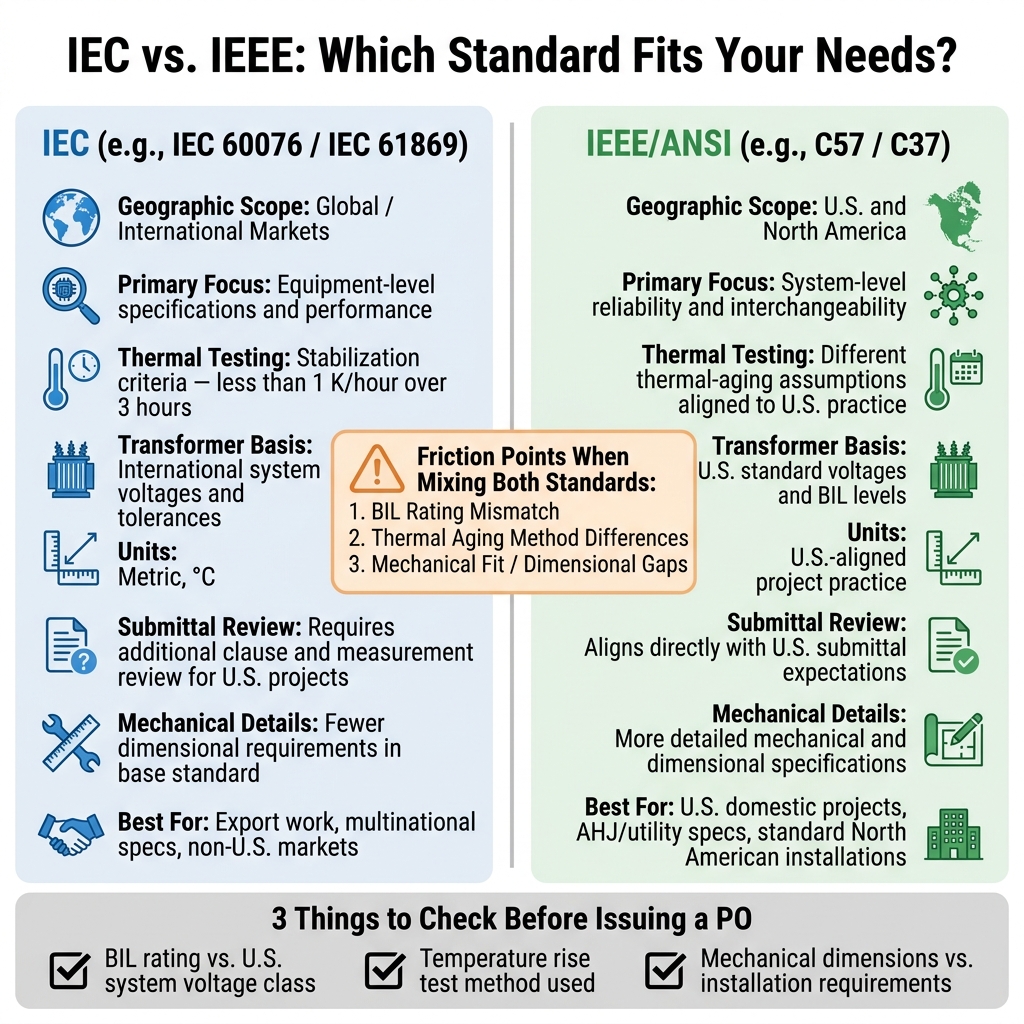
IEC vs. IEEE Standards: Key Differences for U.S. Electrical Buyers
Knowing where IEC and IEEE part ways can save time during procurement and cut down on back-and-forth in submittal review.
Comparison Table: IEC vs. IEEE for Reliability and Performance
| Factor | IEC (e.g., IEC 60076 / 61869) | IEEE (e.g., C57 / C37) |
|---|---|---|
| Procurement Scope | International markets; requires U.S. alignment review | U.S. and North America; fits standard project specs |
| Primary Focus | Equipment-level specifications and performance | System-level reliability and interchangeability |
| Submittal Review Burden | Additional clause and measurement review required for U.S. projects | Aligns directly with U.S. submittal expectations |
| Mechanical Details | Fewer dimensional requirements in the base standard | Mechanical and dimensional specs are more detailed |
| Transformer Testing | Based on international system voltages and tolerances | Based on U.S. standard voltages and BIL levels |
| Thermal Testing Basis | Stabilization criteria (1 K/h for 3 hours) | Uses different thermal-aging assumptions |
| Acceptance Testing Fit | Requires additional review for U.S. project alignment | Matches U.S. utility and project specifications |
For U.S. buyers, the main issue isn't which standard covers more ground. It's which one lines up with the project spec and the acceptance path.
What the Differences Mean for Mixed Equipment Installations
This is where things can get sticky. When IEC-tested equipment moves into a U.S.-spec installation, small differences on paper can turn into delays in the field.
Mixed IEC/IEEE setups often create friction in three places:
- BIL
- Thermal aging
- Mechanical fit
"Core and coil specifications show minimal differences; testing and tolerances vary more significantly." - Jay Tobias
That quote gets to the heart of it. The equipment may look close enough at first glance, but the trouble usually shows up in test methods, rating assumptions, and fit-up details.
How Standard Choice Affects Procurement Review
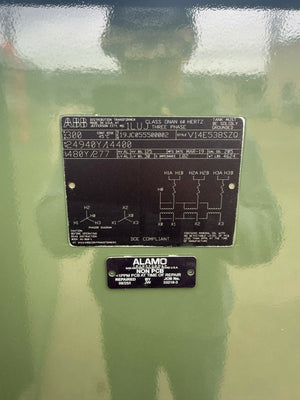
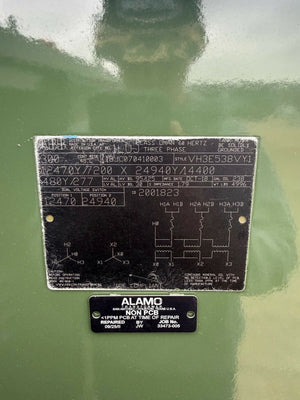
Before you issue a purchase order, check the nameplate and test report against your project requirements.
Focus on three items:
- The BIL rating versus your U.S. system voltage class
- The temperature rise method used in testing
- Whether the mechanical dimensions fit your installation
Those three checks usually tell you if the unit can move forward or if it needs another round of review.
Which Standard Fits Your Needs? A Decision Guide for U.S. Buyers
Choose Based on Project Specifications, Site Location, and Approval Requirements
After you compare scope and testing, the last step is simple: line the standard up with the project’s approval path.
Start with the contract documents, the AHJ, and the utility interconnection rules. If any of those call out a specific standard, use that one. Going off-spec can slow down inspection or hold up interconnection approval.
For most U.S. projects, IEEE/ANSI is the default. IEC tends to make more sense for export work, multinational specs, or OEM-led purchasing.
Choose Based on Equipment Type, Testing Needs, and Lifecycle Support
Once the approval side is clear, narrow the choice by equipment type and long-term support.
The standard also needs to match the equipment class. Before you buy, check the standard first, then confirm voltage, BIL, tolerances, and mechanical fit. Do the same for switchgear, drives, and power-quality equipment.
Even when the main equipment looks close across both standards, accessories and mechanical interfaces can differ a lot. That can make later maintenance and replacement parts harder to line up. For many U.S. teams, IEEE-based equipment is also easier to support because the documentation is often easier to work through.
Conclusion: Key Takeaways for Reliability-Focused Purchasing
IEC is more equipment-focused and geared toward global use. IEEE is more system-focused and built around U.S. projects.
Before issuing a purchase order, do one last check: confirm the exact standard on the listing and in the submittal package. Review the standard designation, test reports, and nameplate data first. Electrical Trader listings include the technical documentation needed for that review.
FAQs
Can IEC equipment be approved for a U.S. project?
Yes, but it often needs extra verification before a local Authority Having Jurisdiction will sign off on it.
In the U.S., inspectors usually look for a Nationally Recognized Testing Laboratory mark, such as UL or CSA. On their own, IEC test reports are often not enough. In many cases, you may need dual-certified equipment or a field evaluation to show the product meets U.S. safety codes and performance requirements.
Why do BIL ratings matter so much?
BIL (Basic Insulation Level) is an IEEE rating that shows how much high-voltage stress an electrical device’s insulation can take.
Why does that matter? Because it tells you whether the equipment can ride through surges from lightning or system switching without dielectric failure.
In the U.S., BIL is a common benchmark for transformers and other power distribution equipment under IEEE design practices.
What should I verify before issuing a PO?
Before issuing a purchase order for electrical equipment, check that it fits your project specs and local code rules. That simple step can help you avoid failed inspections, change orders, and schedule slips.
Start by confirming the needed NRTL marks, such as UL or CSA, since U.S. inspectors often look for them.
Then make sure the submittals, test records, and certification labels all line up. If one document says one thing and the nameplate says another, that can turn into a problem fast.
Last, verify technical equivalency against the governing standards for your use case, such as UL 489, IEEE 1547, and UL 1741.