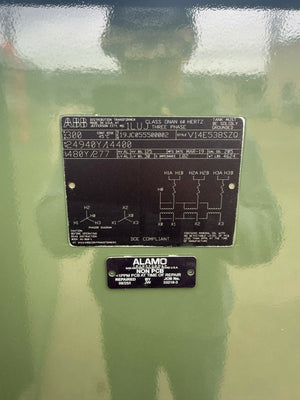
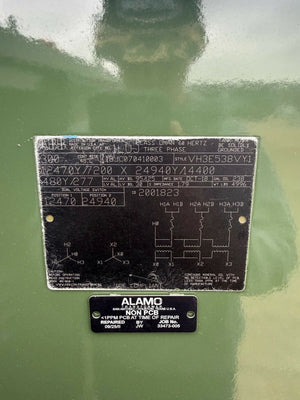
High Voltage Equipment Safety: Buyer Checklist
A bad buy can fail on paper before anyone opens a panel. If I were checking high voltage gear today, Aug. 20, 2026, I’d make the call with five checks first: records, grounding, labels, access controls, and site fit.
Here’s the short version: I should not buy, ship, install, or energize equipment unless each check ends in Pass, Fail, or Engineering Review Required. The biggest stop signs are simple: missing test records, report data that does not match the nameplate, broken or missing grounding parts, stale or missing arc-flash labels, bypassed interlocks, tight working space, and signs of insulation damage.
In plain terms, I’d use this checklist to answer one question: Is this unit safe enough to move forward, or should I stop?
What I need to check:
-
Records and test history
- Nameplate photo or data sheet
- Factory and field test reports
- Manuals, wiring diagrams, and service logs
- Insulation resistance, PI, dielectric, and oil test data where needed
-
Match between paperwork and the actual unit
- Manufacturer
- Model
- Serial number
- Voltage class
- BIL
- Interrupting rating
-
Grounding and bonding
- Lugs, pads, jumpers, and conductors in place
- Tight connections on bare metal
- No corrosion, heat damage, or makeshift repairs
-
Labels and access safety
- Arc-flash label present and readable
- Nominal voltage and boundary shown
- Interlocks, doors, covers, and barriers working as designed
-
Clearance and physical condition
- Working space meets NEC 110.26
- Doors open at least 90°
- No cracks, tracking, leaks, burn marks, or missing barriers
A few points should lead to an immediate no:
- Missing or broken grounding parts
- Missing nameplate
- Exposed live parts
- Defeated interlocks
- Failed insulation or dielectric tests with no follow-up
- Heavy carbon tracking or major insulation damage
And some issues should go to a PE, OEM field engineer, or NETA testing firm:
- Missing records on used gear
- Field changes with no drawings
- Tight clearance questions
- Test results that look off but are not conclusive
One fact stands out: some sites use ground resistance targets such as ≤ 5 Ω for substations and pad-mounted gear and ≤ 3 Ω for systems above 1,000 kVA. That kind of number gives me a hard line to check instead of guessing.
Bottom line: if one item stays unresolved, I stop the approval or send it for engineering review. That keeps a low-price purchase from turning into a high-cost problem later.
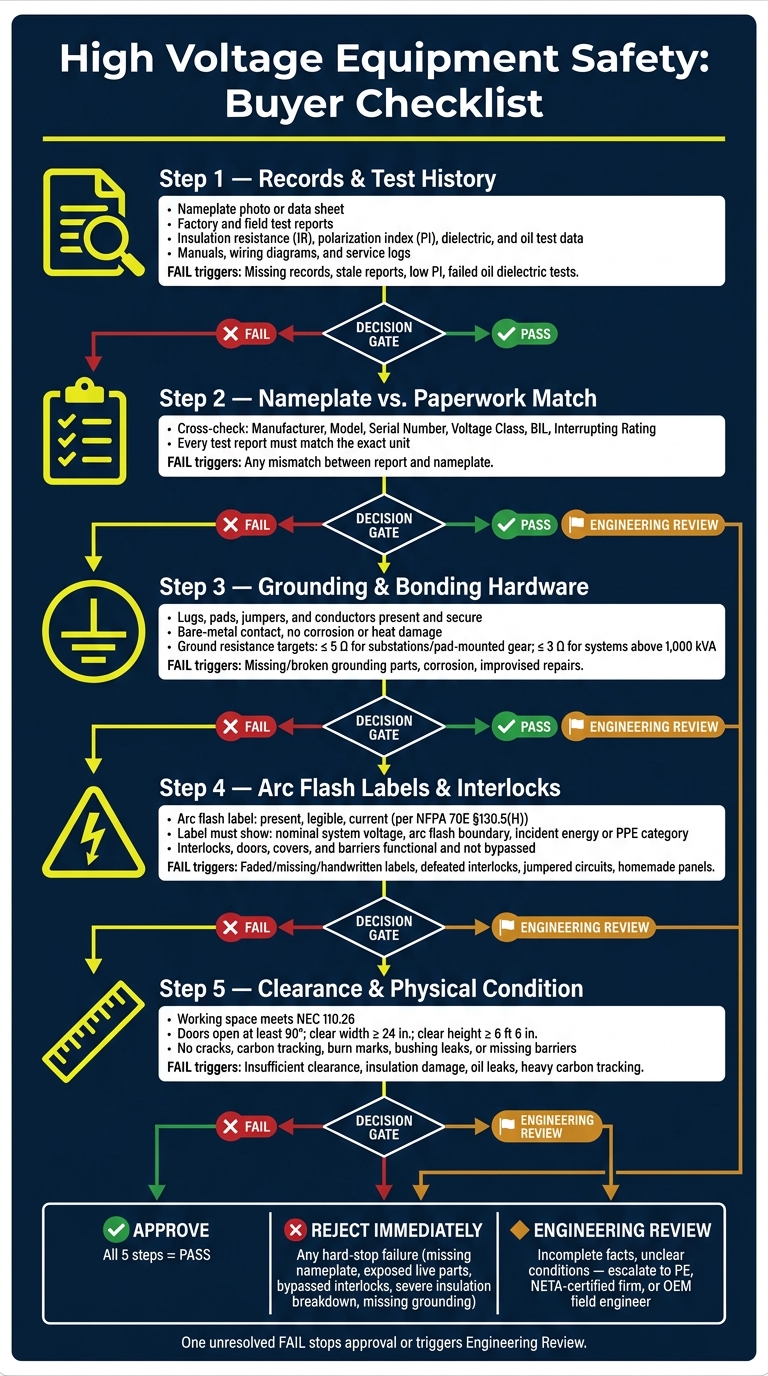
High Voltage Equipment Safety Buyer Checklist: Pass/Fail Decision Flow
High Voltage Safety | Part 2: Arc Flash Awareness
sbb-itb-501186b
1. Verify Records Before You Inspect the Equipment
Start with the paperwork. Ask the seller for the full document package: nameplate data sheet or a clear nameplate photo, factory test reports, recent field test reports, operating manuals, inspection logs, service history, and, if they have them, as-built drawings and wiring diagrams.
This step matters more than it may seem. Missing records can point to safety and compliance problems. And if the paperwork doesn’t match the exact asset you’re planning to buy, stop right there and escalate before anyone inspects the equipment.
Insulation Records and Test History
Once you have the records, check whether the test data still supports the purchase. Request insulation resistance (IR) tests, polarization index (PI) results, dielectric withstand data, and, for oil-filled equipment, oil dielectric strength test values. Those results should be checked against recognized standards.
A few red flags should jump out fast:
- Low PI
- Uneven IR readings
- Failed oil dielectric tests
Any of those issues calls for engineering review. Use the most recent valid test set. If the equipment has been sitting in storage, don’t accept stale reports. Push for pre-shipment testing as a condition of sale.
Test Reports That Match the Nameplate
Every report needs to match the exact unit you’re buying. No exceptions.
Cross-check the manufacturer name, model number, serial number, voltage class, BIL rating, and interrupting capacity on the nameplate against every report in the package. Then confirm that the test voltages used make sense for the equipment’s actual voltage class.
If even one report points to a different unit, pause the purchase until corrected documentation is provided. This isn’t paperwork for paperwork’s sake. It’s how you avoid buying the wrong asset with the right-looking file.
Manuals, Inspection Logs, and Service Records
After that, look at how the equipment was maintained, changed, and handled over time. NFPA 70B calls for complete maintenance history per asset, including inspection and test dates, lubrication, repairs, replacement parts, and drawings for assembly, repair, and operation.
Pay close attention to patterns in the records, such as:
- Recurring faults
- Repeated component overhauls
- Long gaps between maintenance intervals
Also watch for notes about bypassed interlocks, jumpered relays, or undocumented field modifications. Those aren’t minor details. They’re direct decision triggers.
If manuals or logs are missing, treat the equipment as unverified and require full acceptance testing.
2. Inspect Grounding, Labels, and Safety Controls
Once the records line up, check that the equipment in front of you still matches the paperwork. This part is simple in theory: the safety hardware you expect to see should be there, intact, and doing its job.
Grounding and Bonding Hardware Condition
Begin at the grounding points. Verify that all required grounding and bonding points are present, sized correctly for the equipment, and mechanically secure. All noncurrent-carrying metal parts that could become energized should be bonded, including panels, frames, doors, supports, and internal components.
Pay close attention to ground pads, lugs, bonding jumpers, and the conductors tied to them. Connections should be tight. Contact surfaces should be bare metal, with no paint or corrosion getting in the way of continuity. Conductors should show no broken strands or heat damage at crimp points.
Some issues should stop the inspection cold. Treat visible corrosion on lugs, missing bonding jumpers, undersized conductors, stripped bolt threads, and improvised repairs - like wire wrapped around a frame or nonstandard fasteners added with no documentation - as fail conditions. If you can't confirm grounding continuity by sight or through records, fail the unit until it's corrected.
If the site has its own standards, ask the seller for documented ground resistance test results and compare them with the facility's acceptance criteria. For example, some facilities use ≤ 5 Ω for substations and pad-mounted equipment and ≤ 3 Ω for systems above 1,000 kVA.
If grounding fails, stop here. Don’t move on to labels or access controls.
Arc Flash Labels and Warning Markings
Equipment that may need examination, adjustment, servicing, or maintenance while energized should have an arc flash label under NFPA 70E and NEC 110.16. During inspection, verify that the label is present, easy to read, and current.
Under NFPA 70E §130.5(H), a compliant label should include:
- The nominal system voltage
- The arc flash boundary
- Either incident energy with working distance or a PPE category/level
In short, the label must show the arc flash boundary and the exposure data needed for safe work.
If the system or its protective devices changed after the label was applied, treat that label as stale. Faded, peeling, handwritten, or missing labels should fail inspection.
Also ask the seller for the date of the arc flash study and the system assumptions used. That tells you whether the label still means anything or if it’s just old paper stuck on a door.
Interlocks, Doors, Covers, and Access Barriers
Mechanical and electrical interlocks are there for a reason: they keep people away from energized parts. If they’ve been defeated, the equipment may have been run in a way that put people at risk.
Check each door latch, hinge, cover bolt, and access panel. Doors should close all the way with no gaps. Hinges should show no sagging or heavy wear. All fasteners should be in place. Then test the interlocks themselves. Confirm they block access as designed and haven’t been bridged, taped down, or jumpered across.
Red flags here are pretty easy to spot:
- Taped interlock switches
- Jumpers across door-closed circuits
- Missing lockout provisions
- Covers replaced with homemade panels
If any interlock or barrier looks modified from its original design, escalate it for engineering review before accepting the unit.
| Safety Component | Pass Criteria | Fail / Escalate |
|---|---|---|
| Ground pads, lugs, bonding jumpers | Secure, clean, bare-metal contact | Corrosion, missing parts, improvised repairs |
| Arc flash label | Present, legible, current | Faded, missing, outdated, or handwritten |
| Doors and latches | Close fully, no gaps, hinges intact | Broken latches, warped doors, sagging hinges |
| Interlocks | Functional, not bypassed or modified | Defeated, jumpered, taped, or missing |
| Covers and barriers | All fasteners present, no exposed openings | Missing hardware, homemade panels, arcing marks |
3. Confirm Clearances, Physical Condition, and Installation Fit
Once grounding, labels, and interlocks check out, the next step is simple: make sure the unit can be installed and worked on safely. A piece of equipment may still be unusable if it won't fit the space, open all the way, or leave enough room for service.
Clearance Data and Working Space Requirements
Ask the seller for the manufacturer drawings that show phase-to-phase clearances, phase-to-ground clearances, and service access. Use the manufacturer's minimum air-clearance values as your baseline. Then compare those numbers to the actual site dimensions. Before you sign off, check the location against NEC 110.26 working-space rules and NFPA 70E approach boundaries.
Door swing is one of those details that trips people up. Hinged panels should open at least 90°, and an open door can't cut the clear access width below 24 in. or the clear height below 6 ft 6 in. On paper, a used or moved unit may look fine. In the field, that same unit can fail the moment a door blocks access.
If the layout checks out, move on to the condition of the insulation system and enclosure. That's where hidden trouble often shows up.
Insulation, Bushings, Barriers, and Enclosure Condition
Start with bushings and insulators. Look for cracks, chips, dirt buildup, or treeing. Those can point to partial discharge or tracking and can push flashover risk higher at higher voltages. Carbon tracks, burn marks, and discoloration on insulation surfaces are red flags too. They often point to an earlier fault or a contamination event.
Oil-filled bushings need a closer look. Check for leaks, swelling, or distortion around the bushing body and gaskets. Those signs can mean moisture is getting in or pressure is building inside, which can lead to tank rupture or fire.
Also inspect internal insulating barriers and shutters. If anything is missing, bent, rusted, or loose, that's a problem. These parts keep phases separated and help limit arc-flash exposure. If they're damaged, the equipment may not contain a fault the way it was meant to. Take a hard look at any fresh paint near high-voltage parts too. Touch-up paint can cover cracks or tracking.
These fit and condition checks belong in the approval decision itself, not after the deal is already done.
4. Apply a Pass/Fail Checklist Before Final Approval
At this point, the inspection needs to turn into a clear buy-or-don’t-buy call. The easiest way to do that is to run each item through a simple Pass / Fail / Engineering Review check.
Checklist Table for Final Review
| Item to Verify | What to Look For | Acceptable Evidence | Decision |
|---|---|---|---|
| Insulation Records | Recent insulation tests show no deterioration | Insulation resistance test sheets with test voltage, date, and technician name | Pass / Fail / Engineering Review |
| Test Reports vs. Nameplate | Reports match nameplate data | Test results tied to the same model, serial number, and ratings; test standard cited | Pass / Fail / Engineering Review |
| Grounding and Bonding Hardware | Grounding hardware present, intact, and documented | Photos or inspection forms and a recent ground resistance or continuity test | Pass / Fail / Engineering Review |
| Arc Flash Labels and Warning Markings | Label is visible and current | Label shows nominal voltage, arc-flash boundary, and incident energy or PPE information; label matches the study | Pass / Fail / Engineering Review |
| Interlocks, Doors, Covers, and Barriers | Safety devices function and are not bypassed | Written functional test results from a qualified technician and photo or video evidence of closed and latched panels | Pass / Fail / Engineering Review |
| Clearance and Working Space Data | Site dimensions meet required working space | Dimensional drawings in feet and inches verified against NEC and NFPA 70E requirements | Pass / Fail / Engineering Review |
| Service and Maintenance History | No unexplained gaps; corrective actions documented | Dated maintenance logs and corrective actions; if history is unknown or incomplete, escalate for engineering review | Pass / Fail / Engineering Review |
If even one row can’t be closed out, don’t guess. That item should be marked Fail or Engineering Review. And if the issue can be fixed, add the remediation cost right next to it so the purchase decision reflects the full picture.
When to Approve, Reject, or Escalate for Engineering Review
Approve only when every row is a Pass. That means the paperwork is complete, the records match the nameplate, the safety hardware is in place and working, and the clearance data shows the equipment will fit safely in the intended space.
Reject immediately if you find any of the following:
- Severe insulation breakdown or carbon tracking with no documented repair
- Missing or broken grounding provisions
- Exposed live parts due to missing barriers or covers
- An absent or illegible nameplate
- Bypassed interlocks or unauthorized modifications
- Failed dielectric or insulation tests with no corrective follow-up
Those are hard-stop issues. Don’t talk yourself into “maybe it’s fine.”
Escalate for engineering review when the facts are incomplete or the condition is unclear. In those cases, bring in a licensed Professional Engineer (PE) with power systems experience, a NETA-certified testing firm, or an OEM field engineer for complex gear. Mark that row exactly as: Engineering Review Required.
If you’re buying used gear through Electrical Trader, ask for nameplate photos, test reports, maintenance logs, plus grounding, label, and interlock photos before you buy.
Conclusion: Safety Items Buyers Should Never Skip
This checklist ends at the exact point where the buying decision starts: move forward only if the records, hardware, and fit all check out. High-voltage equipment can look fine at a glance and still fail on paperwork or safety. That’s why this checklist is for checking the unit before purchase, before shipment, and before energization.
In plain terms, the purchase should rest on proof, not looks. The best buy is the one that passes every check. If records are missing or don’t match, stop the purchase. Documentation, grounding, labels, interlocks, and clearance data are what tell you whether the unit is ready to buy - or not ready at all.
If you buy through Electrical Trader, ask for:
- Nameplate photos
- Test reports
- Maintenance logs
- Photos of grounding, labels, and interlocks
Treat each item like a stop-go call. One unresolved fail should stop approval or trigger engineering review.
FAQs
What documents should I request first?
Request test and compliance documentation first. That includes insulation integrity reports with:
- dielectric strength and insulation resistance results
- test method
- applied voltage
- test duration
- leakage limits
- standard used
- pass/fail result
Also ask for any factory certificates or type-test certificates.
Then ask for maintenance and safety records, including service and inspection history, mechanical operation counts, timing test results, contact resistance data, SF6 gas quality and leak history where relevant, and grounding compatibility or other compliance documents.
When should I reject the equipment outright?
Reject it outright if it doesn’t have a verifiable record of testing, repairs, or component replacements. The same goes for any unit that was modified after it left the factory, because that voids the original UL certification.
You should also walk away if there’s any sign of unlicensed installation, missing permits, non-approved parts, physical damage, insulation wear, or major internal defects that can’t be fully fixed or documented.
When is engineering review required?
Engineering review is a must when buying used high-voltage circuit breakers. These units sit at the heart of power system protection, so there’s not much room for guesswork.
The same applies to used high-voltage switchgear. An engineering review should also happen again when the equipment arrives. That second check helps confirm the condition of the insulation, mechanical parts, and control systems. It also verifies safety, day-to-day function, and compliance with standards such as the NEC.