When to Buy Used Electrical Equipment: A Guide
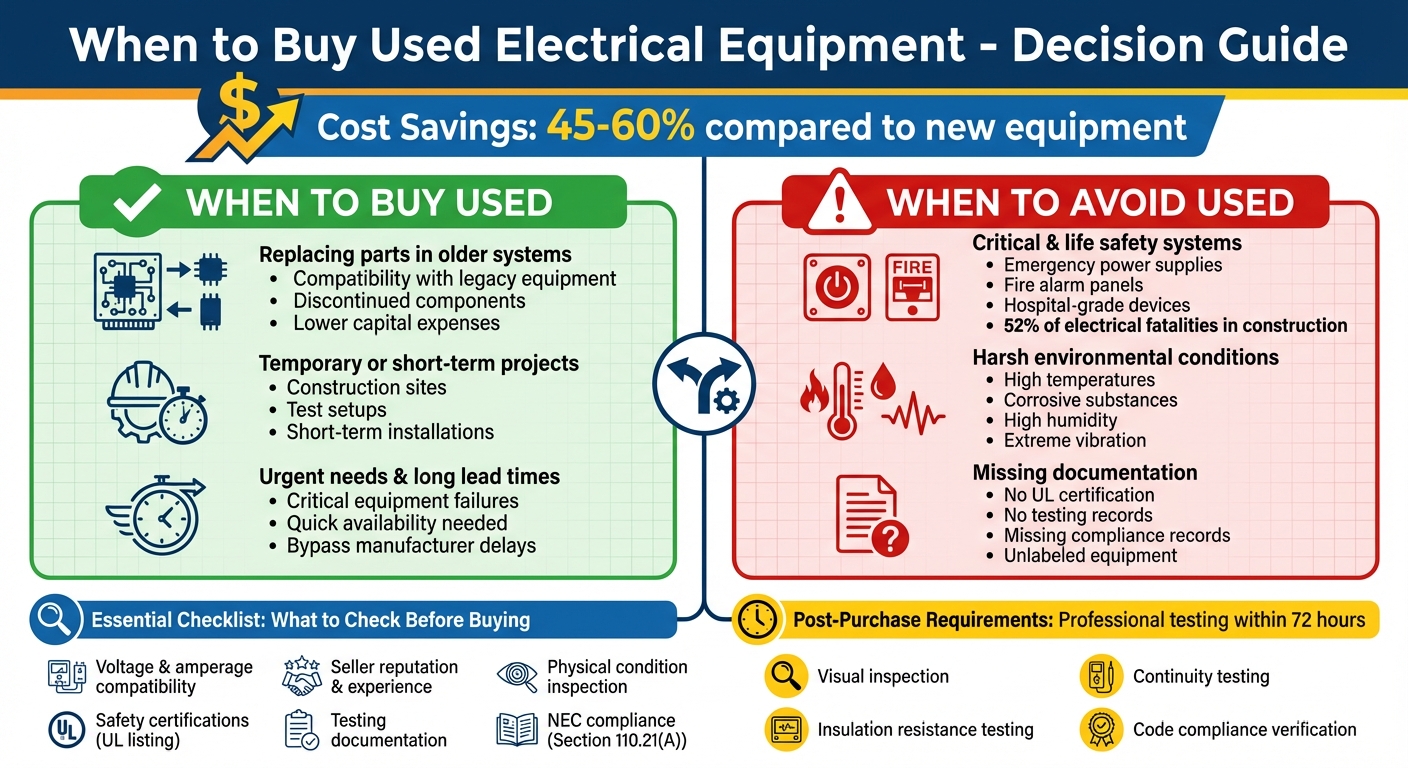
Buying used electrical equipment can save you 45% to 60% compared to new items, reduce waste, and bypass long lead times. It's ideal for replacing parts in older systems, temporary setups, or urgent repairs. However, it's not suitable for critical safety systems, harsh environments, or when documentation/testing records are missing.
Key Takeaways:
- When to Buy Used: For older systems, short-term projects, or urgent needs.
- When to Avoid Used: For life safety applications, extreme conditions, or missing compliance records.
- What to Check: Voltage, amperage, safety certifications, and seller reputation.
- Post-Purchase Steps: Test equipment professionally and ensure compliance with current codes.
Used equipment offers cost savings and quick availability but requires thorough evaluation to ensure safety and compatibility.
When to Buy vs Avoid Used Electrical Equipment: Decision Guide
Used Electrical Equipment, Quality Used, Buyers/Sellers - Surplus Industrial Supply
sbb-itb-501186b
When Buying Used Electrical Equipment Makes Sense
Opting for used electrical equipment can be a smart move, especially when cost savings and compatibility are key factors. Here are some situations where going with pre-owned components can be the best solution:
Replacing Parts in Existing Systems
If you're managing older electrical systems, used equipment might be your best - or even only - option. Newer models often don't match the specs of legacy systems, which can lead to compatibility headaches.
When manufacturers discontinue parts, the used market becomes a lifeline for finding those hard-to-get components. This lets you keep older systems running without the hefty price tag of a full upgrade. Plus, used equipment is generally much cheaper than new, helping you cut down on capital expenses. Many facilities even keep a stockpile of essential used parts on hand to avoid downtime during unexpected failures.
That said, safety is non-negotiable. Make sure any used component you buy has proper certifications like UL listing, and check it thoroughly for signs of wear, corrosion, or tampering before installing it.
This cost-effective approach also works well for temporary setups.
Temporary or Short-Term Projects
For short-term needs - whether it's a temporary installation, a test setup, or a construction site - buying brand-new equipment often doesn’t make financial sense. Used electrical components let you meet these needs at a much lower cost.
The used market offers a wide variety of items like circuit breakers, transformers, panels, switches, motor starters, and fuses. These are typically available on short notice, which helps keep your project on track.
Just make sure the equipment you choose matches your setup in terms of voltage, amperage, and physical dimensions. It's also wise to stick with trusted surplus dealers or salvage companies that specialize in industrial-grade gear.
Another scenario where used equipment shines is during emergencies.
Urgent Needs and Long Lead Times
When critical equipment fails and waiting for new parts isn't an option, used components can save the day. Long lead times from manufacturers can disrupt operations, leading to costs far greater than the price of a used replacement.
Reliable surplus dealers and salvage companies often have extensive inventories of industrial-grade parts ready to ship. This is especially helpful for older systems that depend on discontinued components.
Before purchasing, confirm that the equipment has been tested and meets safety standards. Double-check that its specifications - like voltage, amperage, and size - align perfectly with your system’s requirements. A visual inspection is also crucial to spot any signs of wear, corrosion, or tampering.
These scenarios highlight how used electrical equipment can be a practical, budget-friendly choice when matched to specific project needs or operational priorities.
When to Avoid Buying Used Electrical Equipment
While buying used electrical equipment can save money, there are situations where the risks to safety and reliability outweigh the cost benefits. In these cases, prioritizing safety, compliance, and functionality is essential.
Critical Systems and Life Safety Applications
For systems where safety is paramount, new equipment is non-negotiable. This includes emergency power supplies, fire alarm panels, fire pump controllers, and hospital-grade devices. The potential for failure in these systems could result in catastrophic consequences, such as loss of life or damage to property.
Take circuit breakers as an example. If a used breaker fails to trip during an overload, it loses its primary protective function, creating a heightened risk of fires or explosions. Alarmingly, the construction industry alone accounts for 52% of all electrical fatalities in U.S. workplaces. A tragic case in the UK involved a fatal electrocution caused by a poorly fitted 13A plug, underscoring the dangers of compromised equipment.
Visual inspections aren't enough to detect internal faults or insulation wear caused by factors like age, moisture, heat, or vibration. When lives are at stake, the gamble is simply too great to justify.
In addition to safety-critical systems, environmental factors play a major role in deciding whether used equipment is appropriate.
Harsh Environmental Conditions
Extreme conditions can accelerate the degradation of used equipment, making it unsuitable for environments with high temperatures, humidity, or exposure to corrosive substances. Internal wear, such as wall thinning or degraded insulation, increases the likelihood of fire, explosions, or energy hazards.
For example, older equipment is particularly vulnerable in industrial settings where heat and combustible dust are present. In power generation facilities, feed water pipe failures have been linked to erosion and corrosion, leading to the dangerous release of pressurized steam and hot water. These risks are magnified when equipment has already endured years of service in harsh conditions.
If your installation involves wet locations, chemical exposure, extreme temperatures, or high-vibration areas, investing in new equipment specifically designed for those environments is the safer choice.
Beyond physical wear and environmental challenges, the absence of proper documentation introduces another layer of risk.
Missing Documentation or Testing Records
Used equipment without documentation should be avoided. The presence of a UL Certification Mark indicates the product originally met compliance standards, but any modifications made after manufacturing void that guarantee unless supported by updated records.
"The Certification (Listing) Mark from UL is the manufacturer's declaration that the product was manufactured in accordance with the applicable certification requirements... When equipment is modified, rebuilt or reconditioned after it leaves a factory, UL does not know if a product continues to meet the applicable certification requirements." - UL Solutions
According to NEC Section 110.21(A), reconditioned equipment must include the name or trademark of the organization responsible for reconditioning, along with the date of the work. Without this information, the equipment violates modern electrical codes, and Authorities Having Jurisdiction (AHJs) may reject it for use.
Certain components, such as GFCIs, AFCIs, molded-case circuit breakers, and fire pump controllers, cannot legally be reconditioned under the 2020 NEC. Without a documented history, you risk installing equipment that is both non-compliant and hazardous. Labels providing critical information like voltage and short circuit ratings are also essential. If these are missing, the equipment cannot be safely incorporated into an electrical system.
Specifications to Define Before Shopping
When shopping for used electrical equipment, having a clear set of technical requirements is non-negotiable. Without defined specifications, you risk ending up with equipment that doesn’t fit your needs, creates safety issues, or wastes money. These details help align your system’s requirements with the options available on platforms like Electrical Trader.
Voltage, Amperage, and Load Requirements
Matching voltage compatibility is critical - your equipment’s voltage rating must align perfectly with your facility’s electrical supply. Using equipment with the wrong voltage can lead to immediate failure or even dangerous situations. Always check the rating plate on the equipment to confirm its power needs, fuse ratings, and voltage requirements.
Amperage is just as important. Your electrical system must be capable of delivering the specific current the equipment needs, as indicated on its rating plate. Additionally, the equipment should handle operational stresses without compromising safety. Make sure the installed fuse matches the ratings outlined in the instruction manual or on the rating plate to avoid overheating or other hazards.
Environmental and Installation Factors
The equipment’s enclosure and dimensions must suit your installation environment. For damp areas, select equipment designed to operate safely in such conditions and ensure the necessary power modifications are in place. In explosive environments - those with flammable aerosols, vapors, gases, or dust - equipment must carry specific ratings to ensure safety. When inspecting used equipment, check for signs like burn marks or discoloration, which may indicate previous overheating or thermal stress.
Once you’ve accounted for physical and environmental factors, verify that the equipment complies with current codes and standards.
Code Compliance and Safety Standards
To legally install used equipment, it must meet current electrical codes and safety standards. Look for UL-listed marks or other recognized safety certifications, and request documents like test results or proof of compliance. For example, NEC Section 110.21(A) requires reconditioned equipment to display the name or trademark of the reconditioning organization along with the date the work was performed. Common components that require close code scrutiny include circuit breakers, transformers, panels, switches, motor starters, and fuses. If the equipment is for personal protection, ensure it works with Residual Current Devices (RCDs) that have a tripping current of no more than 30 milliamps (mA).
Defining these specifications upfront simplifies the evaluation process, helping you make informed decisions that balance your project’s requirements with your budget.
How to Evaluate Sellers and Equipment Quality
Once you’ve nailed down your specifications, the next big step is to evaluate both the seller and the quality of the used electrical equipment. This is where you ensure your investment is both cost-effective and safe. A thorough assessment can save you from expensive missteps and potential safety risks.
Checking Seller Reputation and Experience
Start by looking into the seller’s background and expertise. A reliable seller will have certified staff who handle safety checks and maintenance on their inventory. Ask about their inspection processes - trustworthy sellers in the resale market typically perform both visual inspections and combined tests before listing equipment for sale. Platforms like Electrical Trader can connect you with sellers who understand the technical and safety standards for power distribution equipment.
Don’t hesitate to ask for references or reviews from past buyers, especially for high-ticket items like transformers or switchgear. A dependable seller should also provide recent inspection reports and be able to explain their testing procedures. If they can’t or won’t, consider it a red flag.
Requesting Documentation and Test Results
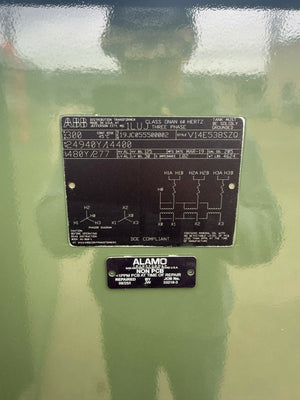
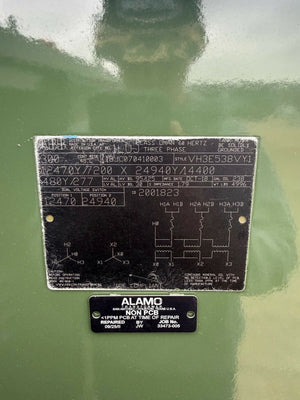
Always request up-to-date inspection and testing documents (like PAT results) to confirm the equipment’s condition and compliance. These documents should detail voltage compatibility, current requirements, and any repairs or reconditioning done. If the rating plate is missing or illegible, it’s best to walk away from the deal.
For equipment previously used in demanding environments - like construction sites or heavy industrial settings - ask for maintenance records. Equipment from these settings requires regular inspections: weekly for heavy industrial gear and monthly for construction equipment operating at 110 V. Missing documentation could hint at poor upkeep or hidden problems.
Identifying Warning Signs in Used Equipment
A physical inspection can uncover issues that paperwork might miss. Look for burn marks, taped cables, damaged covers, strange odors, or sparking connections. Power up the equipment briefly and listen for abnormal buzzing or humming, which could signal loose connections or current arcing. Performance issues like flickering lights on startup or frequent breaker trips might indicate excessive current draw or internal faults.
After running the equipment for a short time, check if the power cord and plug remain cool to the touch. Also, keep an eye out for mismatched labels, inconsistent specs, or a seller who can’t clearly explain the equipment’s history. These are all signs to reconsider the purchase. Taking these steps will better prepare you for the final inspection and testing phase.
Post-Purchase Steps: Inspection, Testing, and Compliance
Receiving your equipment is just the beginning. To ensure safety and functionality, professional verification is essential. Skipping these steps can have serious consequences - according to IEEE, 25% of failures in used circuit breakers stem from poor maintenance or missed post-purchase testing, compared to only 8% in new equipment. Thorough testing is critical to confirm performance and meet compliance standards.
Professional Testing and Verification
Testing should be scheduled within 72 hours of delivery. Start with a visual inspection to check for corrosion, burn marks, or oil leaks. Then, move on to technical tests. For instance, insulation resistance testing with a megohmmeter should yield readings above 100 MΩ at 500V DC for low-voltage equipment. Continuity testing ensures wiring integrity, with resistance levels below 1 Ω for conductors, while hi-pot testing checks dielectric strength - usually at twice the rated voltage plus 1,000V AC for one minute.
It's best to hire professionals, such as NETA-accredited testing firms or NICET-certified electricians, as they often uncover issues that visual inspections alone cannot. In fact, professional acceptance testing identifies problems in 15–20% of cases [12, 13]. For a 1,000A switchboard, testing costs typically range from $1,500 to $4,000, with results ready in 3–7 days.
Code Compliance and Labeling Updates
Once testing is complete, confirm that your equipment complies with the most recent National Electrical Code (NEC) (NFPA 70, 2023 edition) and any local regulations. Article 110.3 focuses on installation conditions, and failing to meet these requirements can lead to fines of up to $10,000. Update outdated labels with new arc flash labels that include incident energy (cal/cm²), voltage ratings, and updated panel directories. Use durable, weatherproof materials like engraved laminate. Before applying, power down the equipment, clean the surfaces, and attach the labels securely with adhesive or rivets. In some cases, you may need an inspection from the Authority Having Jurisdiction (AHJ) before re-energizing the equipment.
Documentation Retention for Future Use
Keeping detailed records is a critical part of the process. Store all relevant documents, including test reports (with dates and results), purchase invoices, photographs of the equipment's condition upon arrival, modification logs, NEC compliance certificates, and maintenance schedules. Use a digital folder or physical binder to organize these materials. These records can be invaluable during insurance claims, audits, or resale, potentially increasing the equipment’s value by 20–30%.
Additionally, OSHA data shows that firms with complete records experience 40% fewer citations during inspections. If your equipment came with seller-provided test certificates or serial number traceability, download these immediately and add them to your files. Platforms like Electrical Trader often include these documents, making it easier to maintain a thorough record from the start.
Conclusion
This guide highlights how buying used electrical equipment can help reduce costs, support eco-friendly practices, and provide access to hard-to-find components. But these advantages only come to life when you carefully balance affordability with safety, compliance, and quality. Skipping essential steps like thorough inspections, technical checks, or professional testing can turn potential savings into serious risks.
Used equipment works well for replacing parts in existing systems, tackling temporary projects, or avoiding long OEM lead times. However, for critical systems, life safety applications, or demanding environments, new equipment is often the safer bet. Always ensure that the equipment aligns with your system's needs and carries up-to-date safety certifications.
Choose sellers you can trust - those who offer testing documentation, certifications, and detailed product histories. Platforms like Electrical Trader provide access to both new and pre-owned electrical components, such as breakers, transformers, and power distribution equipment, with the transparency needed to make informed decisions.
Once you've selected suitable equipment, don’t overlook the importance of post-purchase verification. Professional testing and updated documentation are key steps to ensure everything works as expected.
When approached thoughtfully, purchasing used electrical equipment can be a practical and budget-friendly solution. By focusing on safety, confirming compatibility, and working with reliable sellers, you can integrate used components into your projects without compromising on safety or compliance.
FAQs
What used electrical equipment is too risky to buy?
Used electrical equipment with visible defects - like cracked casings, frayed cords, or broken plugs, switches, or receptacles - poses serious safety risks. If the equipment is excessively old, worn out, or damaged, it increases the chances of electrical failures or even fire hazards. It's simply not worth the risk to purchase items in such poor condition.
How can I verify a used part will match my system?
To make sure a used part works with your system, start by checking the rating label or manual to confirm it matches your system's voltage, current, and type. Take a close look at the part for any visible damage - things like insulating tape fixes or problems with the wires could be red flags. If you're dealing with panels or breakers, double-check the model codes or labels to ensure they're a fit. Verifying both the specifications and the physical condition is key to keeping everything running safely and smoothly.
What tests should be done before energizing used equipment?
Before powering up previously used electrical equipment, it's essential to run a series of tests to ensure both safety and functionality. These tests include:
- Visual inspection: Check for any visible damage or signs of wear.
- Continuity testing: Confirm that electrical paths are intact.
- Insulation resistance testing: Assess the integrity of insulation to prevent electrical leakage.
- Ground/earth testing: Verify proper grounding for safety.
- Polarity testing: Ensure wiring connections are correctly aligned.
- Loop impedance testing: Measure the impedance of the electrical loop for proper circuit operation.
- RCD testing: Evaluate residual current devices to confirm they respond correctly to faults.
Performing these checks reduces the risk of accidents and helps avoid equipment malfunctions when energized.