How to Extend Portable Generator Lifespan
Portable generators can last 15–30 years with proper care, but neglecting maintenance may reduce their life to just 5–10 years. To ensure your generator runs efficiently and reliably, follow these key steps:
- Routine Maintenance: Change oil every 50–100 hours, clean air filters, and replace spark plugs regularly.
- Fuel Care: Use ethanol-free gasoline or add stabilizers to prevent fuel degradation.
- Safe Operation: Avoid overloading and always run the generator at 50–75% capacity.
- Proper Storage: Drain fuel, use a breathable cover, and store in a dry, ventilated area if unused for 30+ days.
- Monthly Testing: Run the generator for 15–30 minutes under load to keep it in working order.
Investing $75–$200 annually in DIY maintenance can save you thousands in repair costs and ensure your generator performs when you need it most.
How to Maintain a Portable Generator [Part 4]
sbb-itb-501186b
Factors That Affect Portable Generator Lifespan
Portable Generator Lifespan by Type: Hours, Years & Key Factors
How Long Do Portable Generators Last?
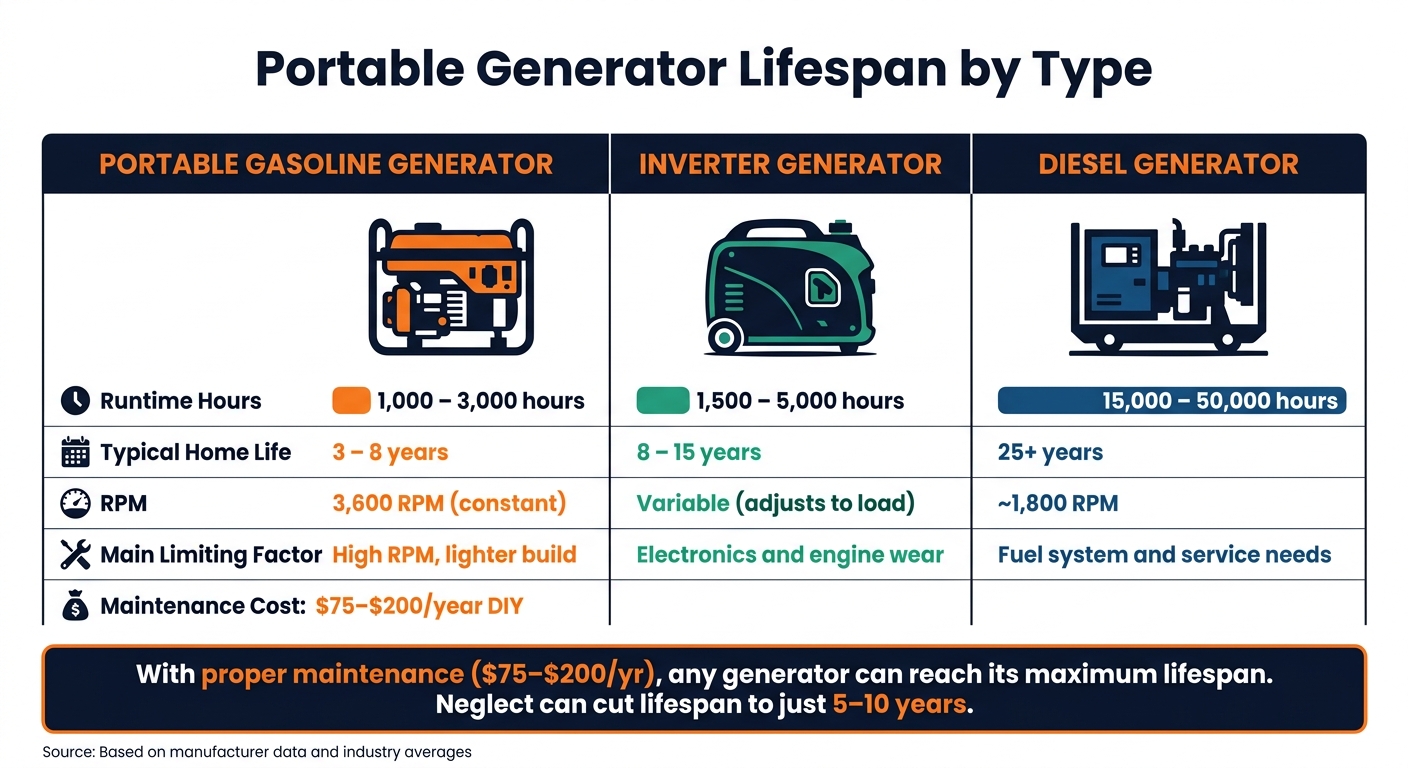
The lifespan of a portable generator depends on its type and how well it’s maintained. For a typical portable gasoline generator, you can expect between 1,000 and 3,000 hours of runtime. For homeowners who use their generator occasionally - like during power outages or weekend trips - that usually means around 3 to 8 years of service.
Inverter generators tend to last longer, providing 1,500 to 5,000 hours of runtime, which translates to about 8 to 15 years for home use. Diesel generators, however, take the durability crown, often reaching 15,000 to 50,000 hours.
| Generator Type | Lifespan (Hours) | Typical Home Backup Life | Main Limiting Factor |
|---|---|---|---|
| Portable Gasoline | 1,000 – 3,000 | 3 – 8 years | High RPM, lighter build |
| Inverter | 1,500 – 5,000 | 8 – 15 years | Electronics and engine wear |
| Diesel | 15,000 – 50,000 | 25+ years | Fuel system and service needs |
Now, let’s take a closer look at what causes wear and tear that can shorten a generator’s lifespan.
Common Causes of Wear and Tear
Generators often fail due to avoidable problems, and knowing these issues can help you take better care of your equipment.
One major issue is improper load management. Running a generator either at full capacity or at very low capacity can lead to overheating, stress on seals, and moisture buildup. The sweet spot for most generators is operating between 50% and 75% of their rated capacity.
Another common problem is fuel degradation. Gasoline containing ethanol absorbs moisture, which can lead to the formation of gums and varnish. These deposits clog carburetors and fuel injectors, causing performance issues. On top of that, neglecting routine maintenance is a fast track to premature engine failure.
"Most generator failures happen because of neglect, not because the machine simply wore out." - Robert Caldwell, Generator Expert
Environmental factors also take a toll. Dusty conditions clog air filters, while high humidity and salty air speed up corrosion on electrical components and metal parts. Poor ventilation - like blocked cooling fins or exhaust paths - can cause overheating, damaging internal parts.
How Generator Type Affects Longevity
The design of a generator plays a big role in how long it lasts. Conventional gasoline generators run at a constant 3,600 RPM, which creates more friction and heat, wearing out internal parts faster.
Inverter generators, on the other hand, are more efficient. They adjust engine speed to match the load, which reduces wear. As Erayak Power explains:
"Inverter generators automatically adjust RPM according to load: low load → low RPM → minimal wear."
Diesel generators are built for durability. They operate at a slower speed, around 1,800 RPM, and the diesel fuel itself provides lubrication for key engine components. As Rodney Nestor from Propaneva notes:
"Diesel fuel acts as a top-end lubricant for the sleeve and valve stems and the lower operating speeds reduce the wear and tear on the powerplant."
If you’re looking for a generator that will last the longest and budget isn’t a concern, an inverter or diesel model is a smart choice over a standard gasoline generator.
How to Set Up Your Generator for Long-Term Use
First-Time Setup Checklist
When you first unbox your portable generator, there’s a critical step you can’t skip: adding engine oil. Most generators ship without oil, so make this your first task. Add the oil slowly, checking the dipstick often. Too much oil can cause just as many problems as too little. For fuel, go with clean, fresh unleaded gasoline that’s at least 87 octane. Stick to blends with 10% ethanol (E10) or less, as higher ethanol levels can absorb moisture and degrade quickly, potentially damaging the fuel system.
The first 5–10 hours of use are the break-in period. During this time, small metallic particles from the new engine components will circulate in the oil.
"After the initial 5–10 hours of operation, the first maintenance must be completed. This is crucial for extending the engine's lifespan." - NOVUS
Once the break-in period is over, change the oil immediately. Don’t wait for the standard maintenance schedule to kick in.
After handling oil and fuel, focus on where and how you’ll set up the generator to ensure safe and efficient operation.
Placement and Ventilation Guidelines
Where your generator sits plays a huge role in both safety and performance. The golden rule: always use it outdoors. Even with open doors or windows, garages, sheds, carports, and covered porches are off-limits. Why? Generator exhaust contains carbon monoxide - a deadly, invisible, and odorless gas.
"Using a generator indoors CAN KILL YOU IN MINUTES. Generator exhaust contains carbon monoxide. This is a poison you cannot see or smell." - Generac
Keep the generator at least 20 feet away from doors, windows, and vents, with the exhaust directed away from your home. Leave 3 to 5 feet of clearance on all sides to allow for proper airflow and cooling. For the surface, choose something flat, stable, and non-flammable, like concrete, paving stones, or compacted gravel. If you’re using the generator in rain or snow, invest in a generator-rated canopy. These canopies shield the top while leaving the sides open for ventilation.
Once you’ve nailed the placement, the next step is to manage grounding and load effectively.
Grounding and Load Management
Before plugging anything in, let the generator run for 1–2 minutes. This gives the engine time to stabilize its speed and voltage. After that, connect a surge protector, then plug in your devices. When shutting down, reverse the process: unplug high-draw appliances first, then disconnect the main cord, and finally turn off the engine.
For extension cords, always use outdoor-rated cords with an amperage rating that matches or exceeds the devices you’re powering. Thicker cords - like 12-gauge - are better for reducing resistance and heat buildup. Undersized cords can stress the generator unnecessarily. And whatever you do, never plug a generator directly into a wall outlet to "backfeed" your home’s wiring. This can send electricity into utility lines, endangering repair crews.
To keep your generator running efficiently, aim to operate it at 70%–80% of its load capacity. Avoid maxing it out. If you’re powering multiple appliances, prioritize high-demand items like refrigerators (about 700 running watts, 2,100 surge watts) or 12,000 BTU air conditioners (around 1,700 running watts, 5,100 surge watts). Plan your total load carefully to stay within the recommended range. These practices not only protect your generator but also help it last longer.
Routine Maintenance and Safe Operating Practices
Pre-Use Inspection Checklist
Before firing up your generator, take a few moments to run through this checklist:
| Inspection Area | What to Check | What to Look For |
|---|---|---|
| Engine Oil | Level and color (check when cold) | Ensure the level is between dipstick marks; avoid milky foam or gasoline odors |
| Fuel System | Fuel level and condition of lines | Keep fuel above 25% capacity; check for cracks or leaks |
| Air Filter & Vents | Filter cleanliness and vent pathways | No heavy dirt buildup or debris clogging airflow |
| Electrical | Cords, sockets, and grounding terminal | Inspect for frays, burn marks, or loose connections |
| Placement | Surface stability and surroundings | Ensure the unit is on level ground with a 3-foot clearance zone |
The Electric Power Research Institute highlights that over 70% of generator failures during power outages are due to poor maintenance, not mechanical defects or age. Most of these failures can be avoided with routine checks.
For accurate readings, always check the oil level when the engine is cold. If the oil appears milky or smells like gasoline, don't start the engine - this could indicate contamination from water or fuel. Keep in mind, a dirty air filter can reduce power and increase fuel consumption by up to 15%.
Once you've completed these checks, you're ready to move on to safe operation practices.
Safe Operation Tips
Always let the engine warm up for 1–2 minutes before connecting any devices. Once the engine is running smoothly, you can safely add the load.
"Never allow the unit to run out of fuel while supporting a load. Doing so can damage the unit and/or any connected loads." - Generac
Running out of fuel while the generator is under load is a common and avoidable cause of damage. To prevent this, Generac advises shutting down the generator every 8 hours for a quick inspection and safe refueling. Never refuel while the engine is running or still hot; spilled fuel can ignite on hot surfaces.
Shutdown and Storage Procedures
When you're done using the generator, proper shutdown and storage steps are crucial to keeping it in good shape. Start by disconnecting all loads, then let the engine run without a load for 2–3 minutes to cool down. After that, turn the fuel valve to the OFF position and shut off the engine.
For storage longer than 30 days, take extra precautions. Run the engine until it stalls after turning off the fuel valve to clear fuel from the carburetor and lines. This prevents the buildup of gum and varnish, which can make restarting the generator difficult. If you're storing the unit for 3 months or more, change the oil beforehand to avoid issues caused by moisture and contaminants in old oil. Store the generator in a dry, ventilated area, elevated off concrete floors, and cover it with a breathable fabric cover (not plastic) to prevent rust caused by trapped moisture.
Fuel, Oil, and Storage Management
How to Choose and Store Fuel
The type of fuel you use and how you store it can significantly impact the lifespan of your generator. For most portable generators, ethanol-free unleaded gasoline with an octane rating of 87 or higher is the best option. Ethanol-blended fuel (E10), on the other hand, absorbs moisture, which can lead to phase separation. This process causes damage to carburetors and fuel lines over time.
"The biggest mistake generator owners make is thinking 'fuel is fuel.' The question is not simply whether old fuel will burn. The question is whether it will start quickly, run reliably, and protect your equipment." - Erik Bjornstad, Bell Performance
Keep in mind that untreated gasoline starts to degrade after just 30–90 days. To extend its shelf life, add a fuel stabilizer to fresh gasoline and store it in OSHA/DOT-approved containers in a cool, well-ventilated area. Be sure to label each container with the fill date - this can extend the fuel's usability to 12–24 months. If you’re not using a stabilizer, rotate your gasoline every 90 days. Stabilized fuel, however, can last 6–12 months.
For those looking for a longer-term solution, propane is worth considering. Unlike gasoline, propane doesn’t degrade, has an indefinite shelf life, and won’t clog your carburetor. However, it does come with a tradeoff - a 5–10% reduction in power output compared to gasoline.
Once your fuel is properly stored, the next step is to focus on maintaining the quality of your engine oil.
Oil and Filter Maintenance
Engine oil is critical to keeping your generator running smoothly. Air-cooled engines, in particular, can lose up to 0.25 quarts of oil during 24 hours of continuous operation. Running the engine with insufficient oil can cause it to seize in just minutes, so it’s important to check oil levels every 8 hours during extended use.
"Follow the manufacturer's guidelines exactly on break-in. Miss this one service and you can cut engine life in half." - Mighty Generators
After the break-in period, plan to change the oil every 50–100 hours of runtime during regular use. For moderate weather, use 10W-30 oil, while full-synthetic 5W-30 is better for starts below 40°F. Don’t forget to replace the oil filter every 100–200 hours during major oil changes, and clean or replace the air filter every 50 hours or once a month.
Preparing Your Generator for Storage
Proper storage is essential to prevent corrosion and wear, especially if your generator won’t be used for an extended period. For short-term storage (a few weeks), preparation is minimal: stabilize the fuel, check oil levels, and cover the generator. However, if you’re storing it for longer than 30 days, a more thorough approach is required:
| Task | Short-Term (A Few Weeks) | Long-Term (30+ Days) |
|---|---|---|
| Fuel | Add a stabilizer or use fresh fuel | Drain the tank and carburetor, or use a heavy-duty stabilizer |
| Oil | Check oil levels | Change the oil to remove acidic contaminants |
| Battery | Periodically check the charge | Disconnect or use a trickle charger |
| Cleanliness | Basic wipe-down | Thorough cleaning and leak inspection |
| Protection | Lightly cover the unit | Elevate off concrete, use a breathable cover, and block the exhaust with steel wool to deter rodents |
One critical but often overlooked step is changing the oil before storage. Used oil contains acidic byproducts that can corrode internal engine parts if left sitting. Changing the oil beforehand helps protect the engine during downtime.
For electric-start models, battery maintenance is equally important. A disconnected battery can sulfate over time, leading to permanent capacity loss. To avoid this, use a trickle charger or battery maintainer if the generator will be unused for more than a month.
Finally, to keep your generator in good working condition, run it under load for 10–15 minutes every 3–6 months. This helps lubricate components and ensures proper fuel circulation.
Inspection Schedules and Part Replacements
Routine Inspection Schedule
As discussed earlier, maintaining a structured inspection routine is crucial for keeping your generator in top condition. Regular check-ups not only extend its lifespan but also reduce the risk of failure during critical moments. Generators that lack consistent maintenance face a 15–25% failure rate during power outages - precisely when reliability matters most.
Here’s a straightforward inspection schedule to follow:
| Frequency | Key Tasks |
|---|---|
| Weekly | Check for leaks, loose wires, debris, and warning lights; confirm fuel levels. |
| Monthly | Run the generator for 20–30 minutes under partial load; check oil level; inspect battery terminals and voltage (12.4–12.7V). |
| Quarterly | Clean the air filter; inspect spark plugs; check fuel lines for any cracks or damage. |
| Annually | Perform a full oil and filter change; replace spark plugs and air filter; schedule a professional load test. |
| Every 3–5 Years | Replace the battery; flush the coolant system; adjust valve clearance. |
Running your generator monthly helps lubricate seals, circulate fresh oil, and prevent moisture buildup - all essential for keeping the engine healthy and functional.
Replacement Parts and Signs of Wear
Certain components, like spark plugs, air filters, and batteries, require routine replacement to keep the generator running smoothly. Replace these parts as soon as you notice signs of wear.
- Spark Plugs: Inspect them every 50 hours and replace annually or after 100–200 hours of runtime. Healthy spark plugs have a light brown or gray electrode. If you see black carbon deposits, oil residue, or improper gaps (should be 0.7–0.8 mm), replace them promptly.
- Air Filters: Clean or replace them every 50 hours or monthly. If the filter looks black, damaged, or if the engine runs hotter than usual, it’s time for a new one. Replacement air filters typically cost $10–$30.
- Battery: Look out for white, crusty buildup on terminals or a voltage reading below 12.4V when the generator is off. Even if the battery seems fine, replace it every 3–5 years to avoid unexpected failures.
"The battery is the single most frequent point of failure when maintenance is ignored." - David Meyer, Vice President, Courtesy Electric
Taking care of these replacements doesn’t have to break the bank. DIY annual maintenance - including oil, filters, and spark plugs - usually costs between $75 and $200. This is a small price compared to the $1,500–$5,000+ in repair costs caused by neglect.
If you’ve replaced parts but still notice issues, it may be time to bring in a professional.
When to Call a Professional
While basic maintenance is manageable for most owners, certain symptoms signal the need for expert help. Reach out to a technician if you experience any of the following:
- Metallic grinding or knocking sounds
- Persistent abnormal exhaust smoke (black, blue, or white)
- Voltage fluctuations or flickering lights
- Engine instability while under load
- Frequent circuit breaker trips
Tasks like valve clearance adjustments, compression testing, or alternator diagnostics require specialized tools and expertise. Attempting these repairs without proper training can worsen the situation. Professional annual maintenance for portable generators typically costs $150–$350, which is a worthwhile investment compared to replacing an entire engine.
"For minor faults, conduct simple troubleshooting first. For complex issues, seek professional after-sales service. Do not blindly disassemble the machine." - Novus
If you’re looking for replacement parts, Electrical Trader is a helpful resource. They offer a wide selection of new and used power generation equipment and components, making it easier to find what you need for your unit.
Conclusion: Key Steps to Extend Your Generator's Lifespan
With the right care, a portable generator can serve you for 15–30 years. On the flip side, neglecting maintenance might cut that lifespan down to just 5–10 years - and often, it’ll fail when you need it the most. The difference lies in a few straightforward habits done regularly.
Some key tips include: changing the oil every 50–100 hours, cleaning the air filter, replacing spark plugs every 100–200 hours, and using a fuel stabilizer for gasoline stored longer than 30 days. Before storing your generator for an extended period, either drain the fuel system or treat it with a stabilizer that preserves fuel for up to 12–24 months. To prevent rust, add 2–3 drops of engine oil into the cylinder before long-term storage.
Running your generator for 15–30 minutes each month under a partial load is another essential step. This keeps seals lubricated, circulates fresh oil, and prevents moisture buildup. Also, remember the 80% Rule: avoid exceeding 80% of the generator’s rated capacity. This simple practice reduces strain on the system and helps protect your equipment.
"A generator is a significant investment in your family's safety and comfort. By taking thirty minutes to store it correctly, you're practicing good stewardship of your equipment." - Dylan Brown, BrownCo Power Solutions
As highlighted throughout this guide, these maintenance habits not only help your generator last longer but also save you money. Spending $50–$125 annually on DIY upkeep is a small price compared to repair costs that can range from $1,500–$5,000. Keeping up with these steps ensures your generator is ready whenever you need it most.
FAQs
What signs tell me my generator needs professional service?
If your portable generator is acting up, it might be time to call in a professional. Common issues to watch for include a damaged AVR, a failed capacitor, or burnt stator and rotor windings. Other red flags are hard starting, loss of power under load, engine surging, loud knocking sounds, unusual vibrations, excessive smoke, or finding metallic particles in the oil. For replacement parts or expert repairs, Electrical Trader provides a trusted marketplace for power generation tools and components.
How do I calculate the right load to avoid overworking my generator?
To figure out the load for your generator, start by adding up the running watts of all the devices you plan to use simultaneously. Next, account for the starting wattage of the largest motor-driven device - this is typically 3 to 5 times its running wattage. For safety, add a buffer of 20–25% to your total to avoid overloading the generator. If you're calculating for continuous loads, like HVAC systems, multiply the running watts by 1.25 before adding them to the total. This helps prevent overheating and extends the life of your generator.
What’s the best way to store fuel safely for generator use?
To store fuel safely, use UL-listed HDPE plastic or metal containers equipped with flame arrestors and pressure-relief vents. Make sure to leave about 5% of the container empty to allow for fuel expansion. Adding a fuel stabilizer is also a smart move - it helps prevent degradation and reduces moisture-related problems.
Organize your storage by following a first-in, first-out system to ensure older fuel is used first. Clearly label each container with the purchase date for easy tracking. Store fuel in a cool, dry, and well-ventilated area, like a shed or garage, keeping it far away from living spaces and ignition sources to minimize risks.