

Natural Gas Generator Maintenance Checklist
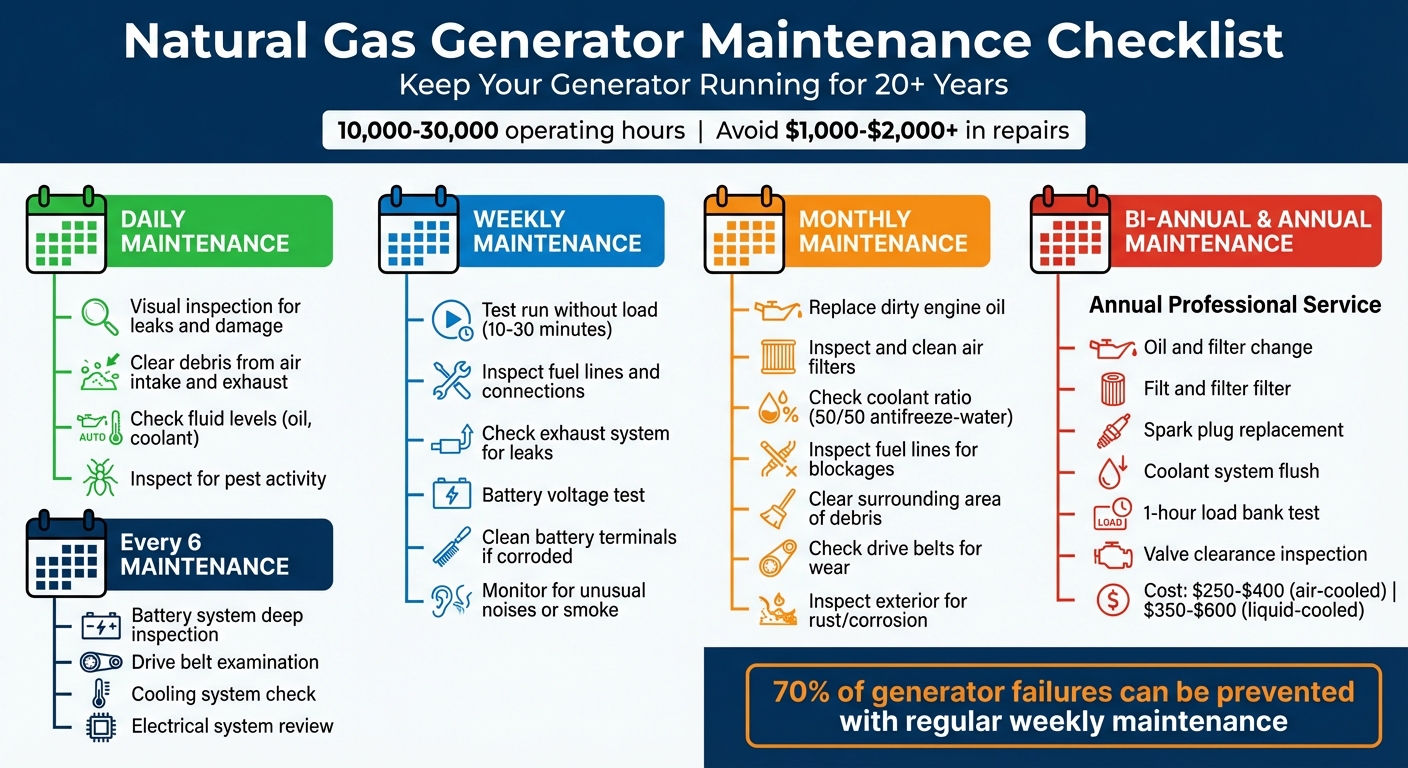
Want your generator to last longer and avoid costly repairs? Consistent maintenance is the key. A well-maintained natural gas generator can operate for 10,000–30,000 hours or even last over 20 years. Neglecting it? That could lead to expensive repairs exceeding $1,000–$2,000.
Here’s a quick breakdown of what to do:
- Daily: Inspect for leaks, clear debris, check fluids, and ensure the system is on “Auto” mode.
- Weekly: Test-run without a load, inspect fuel and exhaust systems, and check the battery.
- Monthly: Replace dirty oil, inspect air filters, and check for blockages or wear.
- Bi-Annual/Annual: Schedule professional servicing for deeper inspections, spark plug replacements, and load bank testing.
Bottom line: Regular care saves money, extends lifespan, and ensures your generator is ready when you need it most.
Natural Gas Generator Maintenance Schedule: Daily, Weekly, Monthly & Annual Tasks
✅ Annual Maintenance On Whole Home Standby Generator - Natural Gas Carrier Generac Kohler
Daily Maintenance Tasks
Daily maintenance keeps your generator in top shape, ready to perform when the power goes out. By catching potential issues early, you can avoid costly repairs and ensure reliable operation.
Visual Inspection
Take a walk around the generator to look for any signs of trouble. Check for puddles or stains beneath the unit, which could signal oil, coolant, or fuel leaks from hoses, connectors, or the engine block. Look for loose or damaged parts that might fail during use.
Make sure the air intake and exhaust stack are clear of debris to avoid blocked airflow and overheating. Ensure the area around the generator is free of flammable materials that could pose a fire risk during operation. Watch for signs of pests - like nesting materials or chewed wires - especially in enclosed units. Lastly, inspect the exterior casing and battery terminals for rust or corrosion.
Once you’ve completed the visual check, move on to verifying fluid levels.
Fluid Level Checks
Check the engine oil daily or before each use using the dipstick. Wipe it clean, reinsert it, and compare the oil level to the recommended mark. The oil should be clear or amber in color. If it appears dark, thick, or smoky, it may be contaminated and require replacement.
For liquid-cooled generators, inspect the coolant overflow tank only when the generator is cool and turned off to avoid burns. Maintain a 1:1 mix (50%) of purified water and antifreeze; in colder climates, increase antifreeze to 60%. If your generator uses standard flooded batteries, make sure the electrolyte levels are at full charge.
System Status
Set the control panel to "Auto" mode so the generator can start automatically during a power outage. Address any warning lights, error codes, or alarms on the control panel immediately. For natural gas models, confirm the fuel supply valve is open and that there’s at least 3 feet of clearance around the unit for proper airflow and easy access during maintenance.
These daily tasks lay the groundwork for more in-depth weekly and monthly maintenance routines.
Weekly Maintenance Tasks
Performing weekly inspections can help you spot small issues before they turn into costly problems. These quick checks, which usually take about 30 minutes, can help you avoid nearly 70% of common generator failures.
Test Run Without Load
Running your generator weekly ensures it’s in good working order, even without a load. You can either start it manually or confirm that the automatic exercise cycle is functioning as it should. For example, many modern models, like the Generac Guardian series, automatically perform a 12-minute self-test each week. If the automatic feature isn’t enabled, manually run your generator for 10–30 minutes. Pay attention to smooth and steady operation, and watch for any unusual noises or exhaust emissions. Blue smoke could mean the engine is burning oil, while black smoke might point to a fuel mixture issue. Keep an eye out for excessive vibrations or strange odors, and check the control panel for alarms, warning lights, or error codes.
"Your home generator is like an insurance policy - you hope you never need it, but when you do, it needs to work perfectly."
– Michael Davis, Generator Service Technician
Fuel and Exhaust System Inspection
Inspecting the fuel and exhaust systems together can help you avoid unexpected failures. Start by checking fuel lines, hoses, and fittings for leaks, cracks, or loose connections. Ensure everything is clean, secure, and free of grease or debris. While the generator is running, take a close look at the muffler, manifold, and exhaust pipes for leaks or signs of overheating in nearby components. Also, make sure the exhaust stack and intake areas are clear of obstructions like leaves, debris, snow, or even pest nests.
"A malfunctioning exhaust system can also cause a generator to overheat and fail prematurely."
– Brian Eib, GeneratorXpert
Once you’ve finished inspecting the exhaust system, move on to checking the battery to wrap up your weekly maintenance.
Battery Maintenance
Use a voltmeter to measure the battery’s voltage and confirm it has a proper charge. Examine the terminals and cables for signs of corrosion, which may appear as white or greenish buildup, as well as any loose connections or damage. If you spot corrosion, clean it using a mix of baking soda and water with an old toothbrush. After cleaning, apply a thin layer of petroleum jelly to the terminals to help prevent future buildup. For flooded batteries, check the electrolyte levels and add distilled water if necessary.
Monthly Maintenance Tasks
Expanding on weekly checks, monthly maintenance involves more in-depth inspections to help extend the lifespan of your generator. In fact, a properly maintained generator can last two to three times longer than one that's neglected.
Engine and Fluid Inspections
Start by checking the oil using the dipstick and inspecting the coolant in the overflow tank. If the oil appears dark, smoky, or overly thick, replace it immediately. For the coolant, ensure it maintains a 50/50 antifreeze-to-water ratio. In colder climates, check that antifreeze levels provide protection down to at least -20°F, and confirm the block heaters are working properly. Once the engine fluids are in order, move on to auxiliary components. Look over the alternator for wear and make sure the battery charger is functioning as it should - these steps are key to keeping the generator running smoothly.
Air Filters and Fuel Lines
Before inspecting the air filter, ensure the engine is cool and the spark plug is disconnected. Check the filter for debris or damage. If you’re using a foam filter, wash it with soapy water, rinse it thoroughly, and let it air dry flat. Once dry, apply a few drops of engine oil evenly across the surface, wipe away any excess, and reinstall the filter. Don’t forget to clean out the air filter housing to avoid immediate contamination. For fuel lines, examine all connectors and hoses for leaks, cracks, or blockages. While you’re at it, confirm the gas supply valve is fully open and check for any obstructions in the fuel lines.
Enclosure and Surroundings
Clear away any leaves, grass, snow, or debris around the generator to ensure proper airflow and reduce fire risks. Avoid storing anything on or against the enclosure. Check for signs of pests, such as chew marks, droppings, or nests, particularly around the exhaust and intake areas. Inspect the exterior for rust or corrosion and address any issues with repairs or a fresh coat of paint to protect the unit. Additionally, verify that all mounting hardware, bolts, and connectors are secure. Check the drive belts for proper tension and signs of wear. Finally, make sure vents, air inlets, and exhaust stacks are free of blockages like snow, debris, or vegetation to keep the generator operating efficiently.
sbb-itb-501186b
Bi-Annual and Annual Maintenance
Bi-Annual Inspections
Every six months, give your generator a thorough check to spot and address potential problems early. Start with the battery system - ensure the electrolyte levels are correct, measure the specific gravity, and inspect cables and connections for any signs of corrosion. Next, take a close look at the drive belts for cracks, wear, or improper tension. A damaged or loose belt can fail when you need power the most.
Move on to the cooling system. Check the coolant heater, lines, and connections for leaks or signs of wear. Examine the exhaust system, including the muffler and pipes, and inspect the air induction piping for any blockages or damage. Finally, review the electrical systems by inspecting the DC wiring, control panel, and AC connections. Once you’ve completed these bi-annual checks, you’ll be ready to tackle the essential tasks that come with annual maintenance.
Annual Maintenance Tasks
Annual maintenance dives deeper into critical components to keep your generator running smoothly. Leading manufacturers like Generac, Kohler, Briggs & Stratton, and Cummins require professional annual servicing to maintain warranties. For air-cooled home generators (8–22 kW), you can expect costs to range between $250 and $400. Liquid-cooled units (20–60 kW) typically run between $350 and $600.
Key annual tasks include changing the oil and filter, replacing spark plugs, flushing the cooling system, and cleaning the crankcase breather. A one-hour load bank test is also essential to confirm your generator can handle its rated capacity. Ideally, schedule this service just before your area’s peak outage season - May or June for hurricane-prone regions, or September through October in areas with harsh winter storms.
During the annual check, professional technicians will also inspect valve clearance, test the alternator, and calibrate the governor to ensure proper speed and voltage under varying loads. Keeping up with yearly maintenance not only ensures reliability but can also significantly extend your generator’s lifespan. With consistent care, a natural gas generator can operate reliably for 10,000 to 30,000 hours before needing a major overhaul.
Maintenance Logs and Professional Support
Effective generator maintenance revolves around keeping detailed records, seeking professional expertise when needed, and using quality parts to ensure reliable performance over time.
Tracking Maintenance Activities
Think of a maintenance log as your generator's medical file - it’s essential for tracking its health and avoiding warranty issues. Every service, from weekly tests to annual professional checkups, should be documented. Include the service date, technician’s name, total run hours, and the tasks performed. For oil changes, note the oil grade used, any replaced parts (with part numbers), and observations like leaks, error codes, or unusual noises.
| Maintenance Log Category | Specific Details to Record |
|---|---|
| General Info | Date, Technician Name, Service Company, Total Run Hours |
| Fluid Services | Oil change date, Oil grade used, Coolant flush date, Coolant concentration |
| Component Replacement | Spark plug change, Air filter replacement, Battery install date |
| Testing Results | Exercise run success/failure, Load bank test results, Battery voltage |
| Issues & Repairs | Error codes, Leak locations, Unusual noises, Corrective actions taken |
Many modern generators simplify this process with apps like Generac's Mobile Link™, Kohler's OnCue Plus™, or Cummins' Connect Cloud. These tools can automatically log run hours and send maintenance reminders. Be sure to save receipts and invoices for parts and services - they’re critical for warranty claims.
While routine tasks like fluid checks might be manageable on your own, more advanced maintenance calls for professional expertise.
Professional Service Recommendations
Some maintenance tasks are straightforward - visual inspections or air filter replacements, for example. But when it comes to more complex jobs like valve adjustments, electrical diagnostics, fuel system servicing, or transfer switch testing, it’s best to leave it to certified technicians. Major brands like Generac, Kohler, Briggs & Stratton, and Cummins generally recommend professional servicing at least once a year to keep your warranty intact.
Timing is everything. If you live in a hurricane-prone area, schedule your annual service in May or June. For regions with harsh winters, aim for September or October. During these visits, technicians typically handle vital tasks like oil and filter changes, spark plug replacements, coolant system flushes, and a one-hour load bank test to verify your generator’s capacity.
Once your maintenance plan is in place, make sure you have access to high-quality replacement parts.
Sourcing Replacement Components
Using the right parts is non-negotiable. Stick to manufacturer-recommended oils and filters - for instance, Generac requires their branded products to maintain warranty coverage. For other components like breakers, transformers, or power generation equipment, Electrical Trader (https://electricaltrader.com) is a trusted source. Whether you’re replacing a battery, upgrading your system, or stocking up on spares, having access to reliable OEM and aftermarket parts ensures your generator is ready for any emergency.
Conclusion
The reliability of a natural gas generator hinges on how well you maintain it. Sticking to a regular routine - like daily visual checks, weekly exercise runs, monthly fluid inspections, and yearly professional servicing - can make all the difference. This consistent care not only safeguards your investment but also ensures your generator is ready to perform when power outages hit.
A well-maintained generator proves its worth through dependable operation, and the numbers back it up: preventive maintenance is far more cost-effective than dealing with emergency repairs. By prioritizing regular servicing, you’re protecting both your generator’s functionality and your budget in the long run.
Another critical factor is maintaining your warranty. Using approved components is key, and for parts like breakers, transformers, and batteries, Electrical Trader (https://electricaltrader.com) offers a wide selection of OEM and high-quality aftermarket options. Having the right replacement parts on hand - especially before severe weather - ensures your generator stays prepared when it matters most.
FAQs
How often should I have my natural gas generator professionally serviced?
To ensure your natural gas generator stays in top working order, it’s a good idea to have it professionally serviced at least once a year. Routine maintenance can catch potential problems early, keep the generator running efficiently, and help extend its lifespan.
For generators that see heavy use or operate under tough conditions, scheduling check-ups more often can help maintain their performance and ensure safe operation.
What happens if I don’t maintain my natural gas generator regularly?
Regular maintenance for your natural gas generator isn't just a good idea - it's essential. Ignoring routine tasks like oil changes, fluid checks, and system inspections can lead to engine damage, fuel system issues, and even total system failure. Plus, unexpected breakdowns and reduced efficiency can quickly rack up repair costs.
The solution? Stick to a consistent maintenance schedule. Taking care of your generator not only keeps it running smoothly but also extends its lifespan and helps you avoid costly downtime or emergency fixes. A little proactive care goes a long way.
What should I do if my generator's control panel shows warning lights or error codes?
If your generator’s control panel is showing warning lights or error codes, the first step is to figure out what those indicators mean. Your generator’s manual is your go-to resource for decoding these signals and understanding what they’re trying to tell you.
Once you’ve identified the issue, take a closer look at the generator itself. Check for loose connections, listen for any unusual sounds, and look for visible signs of trouble. Regular inspections of the control system and electrical connections are essential to catch potential problems early and ensure that safety features, like automatic shutdowns, are working as they should.
If the warning lights or error codes don’t go away after basic troubleshooting, it’s time to call in a professional. A qualified technician can perform a detailed inspection and handle any repairs needed to keep your generator running smoothly and prevent unexpected breakdowns.