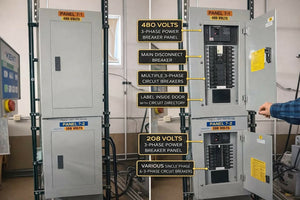
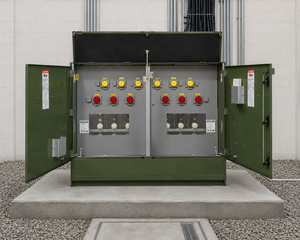
Energy Efficiency Standards for Low-Voltage Equipment
Energy efficiency standards for low-voltage equipment ensure that transformers, power supplies, and control gear operate with reduced energy waste. These standards, established by the U.S. Department of Energy (DOE) and others, set minimum performance requirements for equipment used nationwide. Here's what you need to know:
- Why It Matters: Low-voltage equipment often runs continuously. Even small efficiency improvements can lead to significant energy and cost savings over time.
- Key Regulations: Since January 1, 2016, all low-voltage dry-type transformers sold in the U.S. must meet DOE-2016 efficiency standards, focusing on reducing energy losses even when idle.
- Efficiency Targets: For example, a 75 kVA three-phase transformer must achieve 98.6% efficiency, while a 1,000 kVA model must meet 99.28%.
- Testing Standards: Compliance is verified through rigorous testing at 35% load, ensuring real-world performance aligns with regulatory benchmarks.
- Global Alignment: U.S. standards complement international frameworks like IEC 60364-8-1, which assesses efficiency over variable load ranges, and UL 62368-1, which integrates safety with performance.
Power Supply efficiency improvements at low load conditions
sbb-itb-501186b
U.S. Energy Efficiency Standards for Low-Voltage Equipment
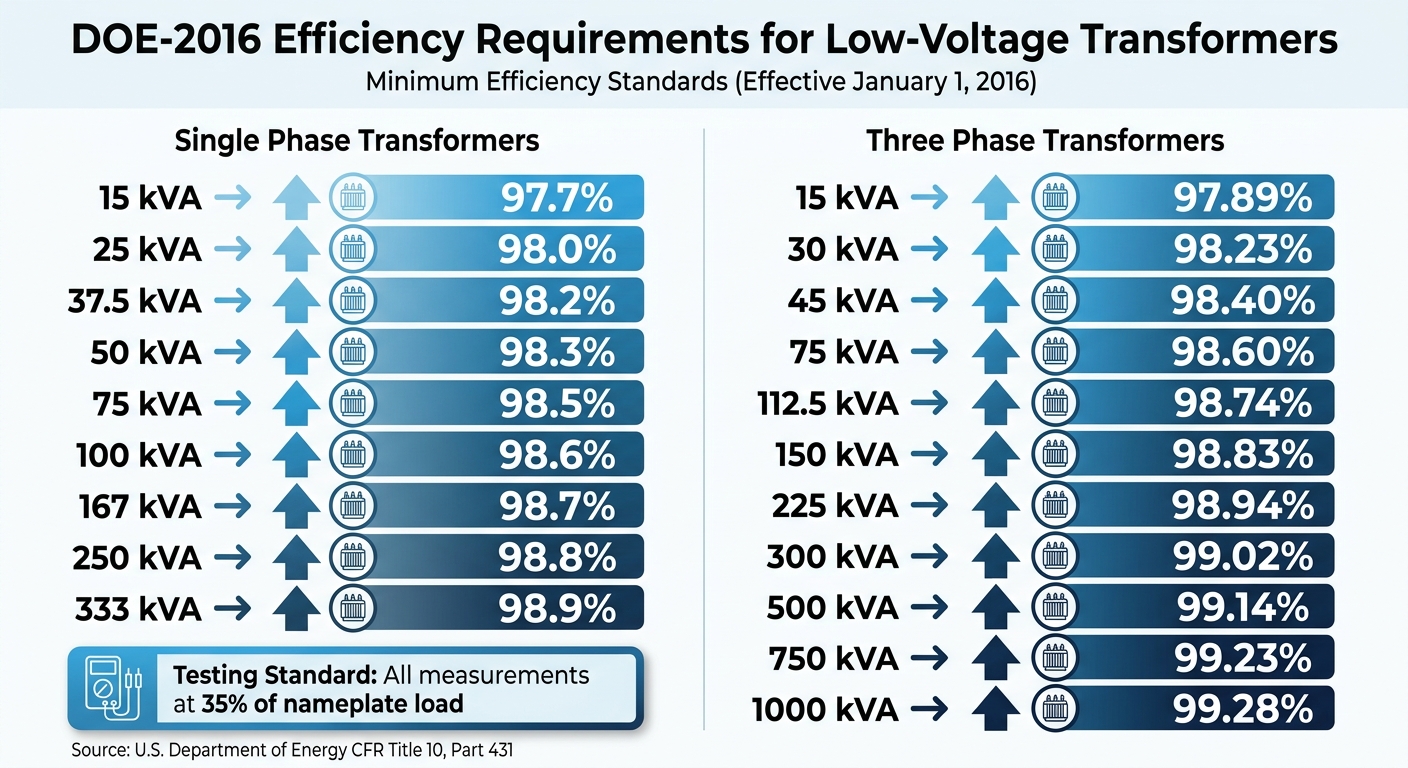
DOE-2016 Energy Efficiency Standards for Low-Voltage Transformers by kVA Rating
The U.S. Department of Energy (DOE) regulates the energy efficiency of low-voltage dry-type distribution transformers through a structured framework to ensure that only efficient products are available in the market. These regulations apply to equipment manufactured and sold within the U.S., creating a consistent efficiency standard nationwide.
This framework is based on Trial Standard Levels (TSLs), which establish efficiency benchmarks. Higher TSL numbers represent stricter requirements, carefully balancing technological feasibility with economic considerations. This approach ensures manufacturers can meet these standards while achieving meaningful energy savings. While federal regulations set a baseline, states like California often implement "backstop" provisions to maintain efficiency levels, even if federal standards are repealed or weakened.
DOE-2007 and DOE-2016 Requirements
The Energy Independence and Security Act of 2007 provided the foundation for the DOE's regulatory framework, which was further refined in 2016. Under the DOE-2016 standards, the efficiency of low-voltage dry-type transformers is measured at 35% of the nameplate load, reflecting typical operating conditions rather than peak capacity.
The 2016 standards specify efficiency targets based on kVA ratings and phase configurations. For instance, a 75 kVA single-phase transformer must achieve 98.5% efficiency, while a 75 kVA three-phase transformer must meet 98.6% efficiency. These requirements apply to all transformers manufactured on or after January 1, 2016, pushing manufacturers to adopt energy-efficient technologies.
Beyond meeting regulatory requirements, high-efficiency transformers offer several practical benefits. They tend to run cooler, improve reliability, and require less physical space. These advantages lead to lower operational costs and fewer maintenance needs over the equipment's lifespan, making the initial investment in DOE-2016-compliant transformers worthwhile.
Here’s a summary of the DOE-2016 efficiency targets for various transformer ratings:
| Single Phase kVA | Efficiency (%) | Three Phase kVA | Efficiency (%) |
|---|---|---|---|
| 15 | 97.7 | 15 | 97.89 |
| 25 | 98.0 | 30 | 98.23 |
| 37.5 | 98.2 | 45 | 98.40 |
| 50 | 98.3 | 75 | 98.60 |
| 75 | 98.5 | 112.5 | 98.74 |
| 100 | 98.6 | 150 | 98.83 |
| 167 | 98.7 | 225 | 98.94 |
| 250 | 98.8 | 300 | 99.02 |
| 333 | 98.9 | 500 | 99.14 |
| - | - | 750 | 99.23 |
| - | - | 1000 | 99.28 |
NEMA TP 1-2002 Efficiency Measurement Guidelines
In addition to DOE standards, the NEMA TP 1-2002 guidelines provide a standardized testing method to verify efficiency levels. Developed by the National Electrical Manufacturers Association, this standard is incorporated into CFR Title 10, Part 431, making it the official procedure for determining compliance with federal requirements. By standardizing testing methods, NEMA TP 1-2002 ensures consistency across manufacturers and eliminates ambiguity about whether equipment meets the required standards.
The guidelines also include provisions for linear interpolation to handle intermediate kVA ratings not explicitly listed in the DOE tables. For example, when evaluating a 60 kVA three-phase transformer, you can interpolate between the 45 kVA efficiency (98.40%) and the 75 kVA efficiency (98.60%) to determine the appropriate target. This flexibility allows manufacturers to account for diverse equipment sizes without requiring exhaustive specifications for every possible rating.
International Standards and U.S. Applications
U.S. regulations set the foundation for low-voltage equipment efficiency, but international standards like IEC 60364-8-1 and IEC 62368-1 provide additional frameworks that professionals in the U.S. should be aware of. These standards don’t replace DOE requirements but offer complementary insights into efficiency and safety that can enhance equipment selection and installation practices. By understanding these global standards, U.S. practitioners can better align their work with DOE guidelines while improving practical applications.
IEC 60364-8-1: Transformer Efficiency Across Load Ranges
The IEC 60364-8-1 standard evaluates transformer efficiency over a load range of 25% to 50%. This approach reflects real-world scenarios where transformers rarely operate at a fixed load, instead facing fluctuating demands in power distribution systems.
For U.S. professionals, incorporating insights from IEC 60364-8-1 can improve planning for power distribution, especially in settings with variable loads. While DOE standards focus on performance at 35% load, understanding efficiency across the broader 25%-50% range helps optimize energy use under actual operating conditions. This is particularly valuable for installations with dynamic load profiles. Applying these insights alongside DOE criteria can lead to more efficient power distribution strategies.
IEC 62368-1: Safety and Efficiency in Components and Power Supplies
Safety considerations for low-voltage components and power supplies are addressed by IEC 62368-1, which takes a different approach to integrating safety and efficiency. This standard employs Hazard-Based Safety Engineering (HBSE) to mitigate risks like fire, electrical shock, and burns in audio/video and ICT equipment. In the U.S., this standard is implemented as UL 62368-1, which includes "National Differences" outlined in Annex DVA to align with the National Electrical Code (NEC).
The latest Edition 4 (IEC 62368-1:2023) introduces an important update: power supplies certified under older standards (IEC 60950-1 or IEC 60065) now require re-certification. Ole Morten Aaslund, a Safety Laboratory Expert at Nemko, highlighted the impact of this change:
"Since the documentation of components/parts to IEC 60065 or IEC 60950-1 will no longer be accepted, it is important that new/updated documentation for such is provided".
This update directly affects U.S. manufacturers, who must ensure their components comply with both UL 62368-1 safety requirements and DOE efficiency standards. Navigating these dual compliance pathways is essential for meeting both safety and energy efficiency goals.
Testing and Certification Processes
Testing low-voltage equipment for energy efficiency compliance follows a structured approach defined by 10 CFR Part 431 Subpart K. This regulation outlines federal requirements for distribution transformers. To meet Department of Energy (DOE) standards, manufacturers must adhere to specific measurement protocols, demonstrating compliance based on performance at 35% of the nameplate rated load for low-voltage dry-type transformers. These detailed protocols ensure precise and consistent assessment of key parameters.
During testing, several factors are measured, including winding temperature, the direct current (DC) resistance of windings, and both no-load and load losses. To ensure consistency, measured losses are adjusted to reference temperatures - 20°C for no-load losses and 75°C for load losses. All testing is conducted at a standard frequency of 60 hertz.
Todd Benadum from ELSCO emphasizes that test procedures evaluate a transformer's energy use, efficiency, and estimated annual operating cost. This makes routine instrument calibration and robust quality assurance critical. Testing requires advanced instruments - such as ammeters, voltmeters, wattmeters, and thermocouples - that can detect changes in winding resistance as small as 0.1%. Accurate calibration and thorough documentation are essential, especially for DOE audits.
DOE-2007 vs. DOE-2016 Efficiency Levels
The shift from DOE-2007 to DOE-2016 brought stricter efficiency standards for low-voltage dry-type transformers. While DOE-2007 relied on the NEMA TP 1-2002 measurement guidelines, DOE-2016 is outlined in 10 CFR Part 431 and enforces higher minimum efficiency thresholds. Both standards require efficiency to be measured at a 35% load factor.
In California, manufacturers must certify products through the Modernized Appliance Efficiency Database System (MAEDbS). Additionally, some states have implemented "backstop" provisions to maintain standards in case federal regulations are repealed.
Finding Compliant Low-Voltage Equipment on Electrical Trader
Sourcing low-voltage equipment that meets U.S. energy efficiency standards is straightforward with Electrical Trader. By following established testing protocols and verifying compliance documentation, buyers can ensure the equipment aligns with regulatory requirements. Electrical Trader (https://electricaltrader.com) serves as a marketplace for various electrical components, including low-voltage dry-type distribution transformers, breakers, and power distribution equipment.
Transformers listed on Electrical Trader manufactured after January 1, 2016, are clearly marked to indicate compliance with the Department of Energy's regulations outlined in CFR Title 10, Part 431. This includes both single-phase and three-phase low-voltage transformers. When browsing listings, buyers should look for labels such as "DOE 2016" or "10 CFR 431" and review specification sheets for efficiency ratings at common load levels (25%, 50%, 75%, 100%).
Beyond transformers, Electrical Trader offers a wide range of compliant equipment, including circuit breakers, switchgear, and power generation tools. The platform's categorized listings allow users to filter products by voltage class, phase configuration, and capacity. This helps buyers quickly find equipment tailored to their project needs while ensuring it meets federal efficiency standards.
Conclusion
Meeting both U.S. and international efficiency benchmarks is key to improving performance and achieving long-term benefits. Implementing energy efficiency standards for low-voltage equipment not only lowers operational costs but also enhances reliability and supports environmental goals.
Since January 1, 2016, the U.S. Department of Energy has required that a 15 kVA three-phase low-voltage dry-type transformer achieve a minimum efficiency of 97.89%. For 1,000 kVA three-phase models, the standard is even higher at 99.28%. These rigorous efficiency requirements do more than ensure compliance - they provide tangible operational benefits. Energy-efficient equipment reduces utility costs, aligns with sustainability objectives, and contributes to grid stability. The American Council for an Energy-Efficient Economy emphasizes:
"The long-term goals associated with an EERS send a clear signal to market actors about the importance of energy efficiency in utility program planning, creating a level of certainty that encourages large-scale investment in cost-effective energy efficiency".
Industry professionals should ensure that low-voltage transformers comply with DOE CFR Title 10, Part 431 standards. Resources like Electrical Trader (https://electricaltrader.com) offer clearly labeled product listings, making it easier to confirm compliance. By adhering to these standards, professionals can select equipment that meets strict energy and safety requirements with confidence.
FAQs
Does my transformer have to meet DOE-2016?
If your transformer falls under the category of a distribution transformer, it must meet the DOE-2016 energy conservation standards. These regulations, which have been in place since January 1, 2016, are mandatory for all qualifying equipment.
How can I verify a transformer is DOE-2016 compliant?
To ensure compliance with DOE-2016, refer to the Department of Energy's energy efficiency standards for distribution transformers. These regulations, which took effect on January 1, 2016, detail the energy conservation requirements manufacturers must follow. Verify the transformer's documentation or certifications to confirm it adheres to these standards.
What efficiency standard applies to my kVA size?
The energy efficiency standard for your kVA size is set by the Department of Energy's updated conservation rules for distribution transformers. These rules, which take effect on April 23, 2029, outline the necessary requirements for ensuring energy efficiency in this type of equipment.