Checklist for Buying High-Voltage Power Transformers
When purchasing high-voltage power transformers, it's critical to ensure they meet your system's electrical and operational requirements. Mistakes in capacity, voltage, or configuration can lead to overheating, energy loss, or costly equipment failures. Here's a quick guide:
- Voltage Compatibility: Match primary and secondary voltages to your system. Verify tap configurations and insulation levels to handle voltage fluctuations.
- Capacity (kVA): Calculate your system's load and include a 20% buffer for growth. For non-linear loads, consider K-rated transformers to manage harmonic distortion.
- Frequency and Phase: Ensure the transformer aligns with the grid's frequency (e.g., 60 Hz in the U.S.) and phase type (single-phase or three-phase).
- Installation Conditions: Account for ambient temperature, altitude, and cooling needs. Choose the right enclosure and cooling type (e.g., ONAN, ONAF) for the environment.
- Compliance and Efficiency: Check for IEEE, NEMA, or ANSI certifications. Opt for efficient designs to minimize energy losses and operating costs.
- Safety Features: Look for pressure relief devices, surge arrestors, and proper grounding provisions.
- Supplier Reliability: Work with reputable suppliers who provide detailed specifications, testing documentation, and after-sales support.
Copper vs Aluminum Conductors in High-Voltage Transformers Comparison
How Power Transformers work ? | Epic 3D Animation #transformers
sbb-itb-501186b
1. Check Voltage Ratings and Tap Configurations
Making sure your transformer’s voltage ratings align with your system is a crucial first step. The primary voltage must match your utility feeder. In the U.S., common high-voltage grid levels include 35 kV, 66 kV, 69 kV, 110 kV, 115 kV, 132 kV, 138 kV, 220 kV, and 230 kV. On the other hand, the secondary voltage should correspond to your facility's distribution panel - typically 480V for standard industrial supply in the U.S.. If you’re working with renewable energy systems, expect to see specific voltages: 800V, 630V, and 600V for solar arrays, and 690V for wind farms. Be sure to verify critical details like voltage levels, tap configurations, and insulation to ensure everything is compatible with your setup.
1.1 Confirm Voltage Levels
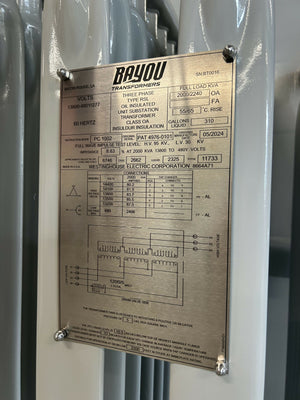
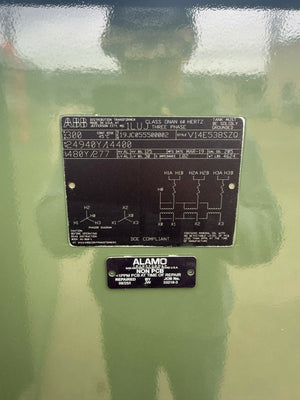
"The nameplate lists the primary and secondary voltage ratings and the tap range for adjusting output voltage." – Taishan Transformer
Start by checking that the primary and secondary voltage ratings meet your system’s needs. For instance, a transformer labeled 115 kV HV / 13.8 kV LV is designed to take in 115 kilovolts from the grid and reduce it to 13.8 kilovolts for distribution. Pay close attention to the nameplate details - IEEE Std C57.12.00 specifies how these ratings should appear, such as 12470Y/7200 V. Also, confirm the phase configuration symbol (e.g., Dyn11, which indicates a Delta primary, Wye secondary, and a 30° phase shift). This ensures your system’s grounding and phase displacement requirements are met.
1.2 Review Tap Changers
Tap changers help adjust the transformer's turns ratio, which fine-tunes the output voltage when the primary voltage fluctuates. A typical tap range is ±5% in 2.5% increments. For example, on a 33 kV primary, a +2 tap position increases the voltage to 34.65 kV, while a -2 position lowers it to 31.35 kV.
- On-Load Tap Changers (OLTC): These allow adjustments while the transformer is energized, making them ideal for grids with frequent voltage fluctuations or for critical loads that can’t afford downtime.
- Off-Load Tap Changers: These require the transformer to be de-energized before making adjustments. They’re suitable for stable grids where voltage changes are only needed occasionally or seasonally.
While OLTCs are more expensive, they offer automatic voltage regulation. Off-load tap changers, on the other hand, are simpler and more cost-effective for less dynamic systems.
1.3 Check Insulation Levels
The Basic Insulation Level (BIL) indicates how much insulation the transformer has to withstand high-voltage surges, such as those caused by lightning strikes or switching operations. For high-voltage systems, verifying the BIL rating is critical to avoid flashovers during electrical surges. Insulation materials like paper and oil are used to separate conductive parts and prevent arcing.
It’s worth noting that every 6–8°F rise above the insulation’s thermal limit can cut its lifespan in half. If your system includes non-linear loads (like those in data centers), consider using K-rated transformers. These are specifically designed with enhanced insulation to handle the extra heat generated by harmonic distortion.
Once you’ve confirmed the voltage ratings and tap configurations, the next step is to ensure your transformer can handle the required current loads.
2. Calculate kVA Capacity and Load Requirements
Getting the kVA sizing right is crucial to avoid overloading your system and to keep costs in check. The capacity should be based on the largest load your system will handle at any given moment. To do this, you’ll need to assess the size and duration of your loads, differentiate between linear and non-linear equipment, and factor in temporary power spikes, such as motor starting currents. Once you've nailed down your kVA needs, make sure to plan for both current demands and any future growth.
2.1 Determine kVA Requirements
The method you use to calculate kVA depends on your power system. For three-phase systems - common in industrial high-voltage settings - the formula is: (Volts × Amps × 1.732)/1,000. For single-phase systems, use: (Volts × Amps)/1,000. If you need to convert kilowatts to kVA, divide the kilowatts by a power factor of 0.8.
"Starting a device generally requires more current than running it. To account for this additional current requirement, it's often helpful to add a start factor into your calculations." – Todd Benadum, ELSCO Transformers
For motors and inductive loads, include a 125% start factor to cover the extra current needed during startup. If your equipment starts more than once per hour, you might need an even larger start factor. After calculating your kVA needs, add a 20% safety margin and round up to the nearest standard kVA rating. Common transformer ratings include 75, 112.5, 150, 225, 300, 500, 750, and 1,000 kVA. For instance, if your calculation gives you 52.5 kVA, you’d select a 75 kVA unit.
2.2 Plan for Future Growth
Choose a transformer with extra capacity to handle future needs. Consider any potential increases in power demand, like adding new equipment or expanding your operations, when deciding on the capacity.
2.3 Identify Load Types
The type of equipment you’re powering can significantly influence your kVA requirements. Non-linear loads - such as medical devices, variable frequency drives, or data center hardware - can create harmonic distortion and may require specialized K-rated transformers to manage it. Consulting with a professional can help ensure you meet the specific kVA needs for these loads.
Calculate the load for each device, sum them up, and balance the load across all three phases to avoid overloading. Keep in mind that transformers installed above 3,300 ft or in areas with ambient temperatures exceeding 86°F may need higher kVA ratings due to reduced cooling efficiency.
3. Verify Frequency, Phase, and Configuration
To ensure your transformer operates correctly, it must align with the grid’s frequency, phase type, and voltage configuration. A mismatch could result in energy inefficiency, equipment damage, or even system failure.
3.1 Verify Frequency
In the United States, the standard grid frequency is 60 Hz. Check the nameplate on your transformer and connected equipment to confirm they are rated for 60 Hz. For international installations, verify the local grid frequency, as many regions in Europe, Asia, and Africa operate at 50 Hz. Using a 50 Hz transformer on a 60 Hz grid can increase iron losses by 20%, leading to wasted energy and excessive heat generation. This step is crucial before moving on to phase and configuration checks.
3.2 Select Phase Type
The phase type of your transformer depends on the application. Single-phase transformers are typically used for residential or small commercial loads, such as 120V/240V systems. In contrast, three-phase transformers are preferred for industrial and high-power applications due to their efficiency. Always check the equipment nameplate to determine the appropriate phase type.
If your utility provides three-phase power, using a single three-phase transformer is generally more efficient than employing three separate single-phase units.
"Three-phase transformers are the most commonly used for electrical designer application and selection." – Robert Sander and Mario Caraveo, Electrical Designers, NV5
When connecting single-phase loads to a three-phase transformer, distribute the load evenly across all three phases to prevent overloading a single winding. Common sizes for three-phase transformers range from 15 to 500 kVA, while single-phase units typically range from 5 to 100 kVA. Once the frequency and phase type are confirmed, you can proceed to assess the voltage conversion method.
3.3 Check Step-Up/Step-Down Configuration
Determine whether you need a step-up or step-down transformer by comparing the line voltage to your equipment’s operating voltage. Step-up transformers, which have more winding turns on the secondary coil than the primary, are commonly used in power generation and renewable energy projects to boost voltage for long-distance transmission. Conversely, step-down transformers, with fewer winding turns on the secondary coil, are used in local distribution and industrial settings to lower high transmission voltages to usable levels.
"Step-up transformers are commonly used in renewable energy applications to increase the voltage for transmission, while step down transformers are typically used to reduce high transmission voltages to the levels suitable for end users." – Sunbelt Solomon
Additionally, confirm the vector group alignment to ensure proper grounding and load balancing when integrating a transformer into an existing grid or when paralleling multiple transformers. For three-phase systems, determine whether a Delta or Wye configuration is required to meet these needs effectively.
4. Review Environmental and Installation Requirements
When choosing a transformer, it’s not just about the electrical specs - matching the unit to your installation environment is just as critical. A transformer designed for mild, indoor conditions won’t hold up in extreme heat, high altitudes, or harsh outdoor settings. Before finalizing your purchase, make sure the transformer's environmental ratings align with the conditions at your installation site.
4.1 Check Ambient Temperature Ratings
Transformers are typically designed to operate within specific temperature ranges. Standard units assume a daily average of 30°C, with a maximum of 40°C over any 24-hour period. The minimum operating temperature should not drop below -20°C.
"Note: 40 [degrees] C maximum ambient in any 24-hr period with 30 [degrees] C as the 24-hr average is considered a standard ambient." – Moran, EC&M
For liquid-filled transformers, the design allows for a 65°C winding temperature rise above a 30°C ambient, resulting in a hot spot limit of 110°C. Dry-type transformers, built with 220°C insulation and designed for a 150°C rise, are also equipped to handle these conditions. However, if your site experiences regular temperatures exceeding 40°C or is situated at a high altitude, you’ll need a transformer with a higher kVA rating to account for reduced cooling efficiency.
4.2 Verify Enclosure and Cooling Type
The environment plays a big role in determining the right cooling system for your transformer. The cooling system not only protects the transformer but also impacts its capacity. Liquid-filled transformers use a four-letter code to describe their cooling method. The first two letters indicate how heat is removed from the core, while the last two describe how it’s dissipated externally.
For instance:
- ONAN (Oil Natural Air Natural): Uses natural convection for cooling. It’s quiet but has limited capacity.
- ONAF (Oil Natural Air Forced): Adds fans to enhance cooling, which can increase kVA capacity by up to 25%.
Dry-type transformers also offer flexibility in cooling. Switching from AA (self-cooled) to FA (forced air) can boost the loading capacity by 33% over the base rating.
For indoor, residential, or fire-sensitive areas, dry-type transformers are often the go-to choice since they pose no fire risk and require minimal maintenance. On the other hand, for outdoor or harsh environments where moisture, salt spray, or corrosive fumes are present, sealed liquid-filled units or cast coil dry-type transformers are better suited to protect the core and windings. Keep in mind that even a small increase in the hot-spot temperature - just 6 Kelvin - can cut the transformer's service life in half.
4.3 Review Physical Dimensions and Noise
Before installation, ensure the site can accommodate the transformer's size and weight. The area should allow enough clearance for personnel, cable routing, and access to components like tap changers and monitoring gauges. Properly support all cables to prevent mechanical stress on bushings.
Transformers produce a 120 Hz hum due to core magnetostriction. This noise can be more noticeable in quiet environments, like offices, compared to industrial settings where other machinery masks the sound. For residential or commercial installations, consider noise-reduction measures like low-noise cooling fans. For indoor or underground setups, ensure proper ventilation to manage heat and prevent contaminants from building up. Lastly, for dry-type transformers that aren’t fully sealed, periodically clean the core and coil assemblies to keep them running efficiently.
Next, we’ll dive into compliance, efficiency, and material specifications to round out your evaluation.
5. Confirm Compliance, Efficiency, and Materials
Once you've determined that installation is feasible, it's time to verify compliance with standards, operational efficiency, and the materials being used. These factors are crucial for ensuring safety, managing long-term costs, and maintaining reliability.
5.1 Check Standards and Certifications
In the U.S., high-voltage transformers must meet strict industry standards. The IEEE C57 series outlines key requirements for transformer performance. For general specifications, refer to IEEE C57.12.00, while C57.12.10 applies to liquid-immersed units, and C57.12.90 covers test procedures. Dry-type transformers follow guidelines in NEMA ST 20 and IEEE C57.12.01, and all transformers must adhere to the Department of Energy's (DOE) energy efficiency rules under 10 CFR Part 431.
"The Standards appearing in this publication... are used by the electrical industry to promote production economies and to assist users in the proper selection of transformers."
Make sure the test report includes the details outlined in section 8.7 of IEEE C57.12.00-2010. For transformers with tap changers, compliance with IEEE C57.131 is essential. In areas sensitive to noise, consult NEMA TR 1 Tables 1 and 2. For example, a 10,000 kVA oil-immersed transformer with a 350 kV Basic Insulation Level should not exceed an average sound level of 68 decibels. These certifications lay the groundwork for focusing on efficiency.
5.2 Compare Efficiency Ratings
Efficiency is just as important as compliance. Transformers operate around the clock, so even small efficiency gains can lead to substantial energy savings. Energy losses typically come from winding resistance and core losses, which waste energy and increase cooling demands.
"Transformers don't shut off; they continue to use current and generate heat 24 hr a day, seven days a week."
DOE regulations recommend optimizing efficiency at about 35% of the transformer's rated load. For instance, upgrading from a transformer with 98.5% efficiency to one with 99.14% efficiency could pay for itself in less than a decade. When replacing an older unit, measure the actual 30-day load and size the new transformer for that load, plus an additional 25%. This approach minimizes energy losses and cooling requirements. Additionally, using amorphous metal cores can cut core losses by 60–70% compared to traditional silicon steel cores, though they come with a 15–40% higher upfront cost.
5.3 Compare Conductors
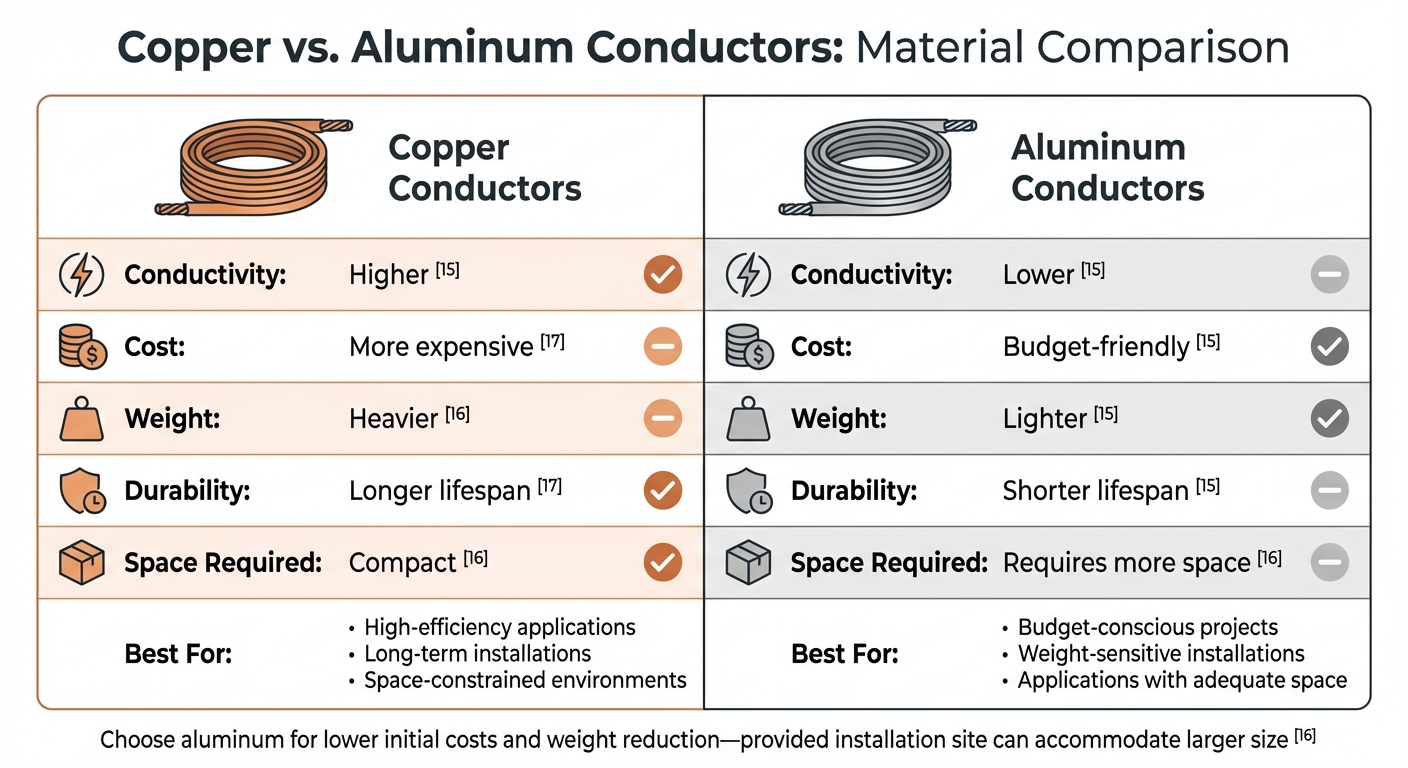
Efficiency also depends on the materials used for conductors. Copper and aluminum are the two main choices, and each comes with distinct advantages. Copper offers better conductivity, higher efficiency, and a longer service life, but it’s heavier and more expensive. Aluminum, on the other hand, is lighter and more affordable, making it a good choice for projects with tight budgets or weight constraints, though it requires more space for windings.
| Feature | Copper Conductors | Aluminum Conductors |
|---|---|---|
| Conductivity | Higher | Lower |
| Cost | More expensive | Budget-friendly |
| Weight | Heavier | Lighter |
| Durability | Longer lifespan | Shorter lifespan |
| Space Required | Compact | Requires more space |
If weight reduction or lower initial costs are priorities, aluminum may be a better option - provided the installation site can handle the larger size. By confirming compliance, efficiency, and material choices, you're well on your way to completing your evaluation of high-voltage power transformers.
6. Review Safety Features and Testing Documentation
Once you've confirmed compliance and efficiency, it's essential to validate safety and testing documentation to ensure smooth operation and protect both equipment and personnel.
6.1 Verify Safety Features
High-voltage transformers are equipped with multiple safety features designed to protect the system and those working around it. For example, pressure relief devices (PRD) and surge arrestors play a critical role in managing excess pressure and transient voltage spikes caused by lightning or switching operations. Bushings allow high-voltage electricity to pass safely through the transformer tank without making contact with the enclosure.
Other key safety components include load break switches (LBOR), which enable manual disconnection from the energized grid for safe maintenance. Monitoring tools, such as oil level gauges, temperature monitors, and tank pressure gauges, provide real-time data to help operators avoid potentially hazardous conditions. Additionally, secure grounding provisions are vital for protecting personnel and maintaining system stability. Always check the nameplate data to ensure all safety features are rated appropriately for your specific load.
| Safety Component | Primary Function | Benefits |
|---|---|---|
| Pressure Relief Valve | Vents internal tank pressure | Prevents tank explosions or ruptures |
| Load Break Switch | Manual de-energization | Enables safe maintenance under load |
| Surge Arrestor | Diverts high-voltage transients | Protects insulation from lightning |
| Oil Level Gauge | Monitors cooling fluid volume | Prevents overheating and insulation failure |
| Grounding Terminal | Provides low-impedance path | Protects personnel from electric shock |
Once you've reviewed these safety features, move on to confirming their functionality through testing documentation.
6.2 Review Test Reports
After verifying safety features, it's time to examine the performance test reports to ensure the transformer meets reliability standards. Request detailed reports covering key tests like TTR (Turns Ratio Test), winding resistance, impedance/load loss, polarity/phase relation, and excitation/no-load loss. For example, IEEE standards specify that TTR tested ratios should not vary by more than 0.5%, and winding resistance differences between phases should stay within 5%.
For newly designed transformers, you should also ask for Type Test reports, which include tests for Lightning Impulse, Temperature Rise, and Audible Sound Levels to confirm the design's adherence to industry benchmarks. Additionally, the unit should pass a leak test, which typically involves maintaining 5 PSI of pressure for 24 hours to confirm the integrity of gaskets and seals.
Witness testing is another way to ensure performance. This involves either you or an appointed inspector visiting the manufacturing facility to observe the testing process in person. Around 75% of transformers purchased by utilities undergo this type of inspection. If you plan to attend, inform the manufacturer at least two weeks in advance and request that raw data be recorded on standard datasheets instead of being summarized as pass/fail results.
"Witness testing is one way to make sure your new transformer meets industry standards and will provide quality performance after installation."
- Patrick K. Dooley, EC&M
7. Source from Reliable Suppliers and Review Specifications
7.1 Choose a Credible Supplier
Finding a reliable supplier is key. Assess their technical knowledge, customer support, and production capabilities to ensure they can meet both your current and future needs. A supplier's experience in the industry and feedback from previous clients can often provide valuable insights into their reliability.
Make sure the supplier offers strong after-sales support, including the ability to handle modifications and provide emergency assistance when needed. This is critical because even a single hour of downtime in manufacturing can cost as much as $5 million. If you're sourcing used or surplus equipment, confirm that the supplier stocks major brands like GE, Siemens, and Square D, and has the expertise to locate rare or hard-to-find items.
"The people who create the equipment determine its quality."
- Todd Benadum, ELSCO Transformers
Platforms like Electrical Trader (https://electricaltrader.com) can simplify the process by offering a centralized marketplace for both new and used high-voltage transformers. These platforms allow you to compare options from various suppliers. Before making a decision, check the supplier's reputation through client reviews. It's also smart to ask if they can provide temporary or backup units during power outages and ensure they supply compliance documentation, such as test reports that meet ANSI/IEEE standards like C57.12.90 for wet units or C57.12.91 for dry units.
Once you've identified a dependable supplier, shift your focus to analyzing the detailed specification sheets to finalize your choice.
7.2 Analyze Specification Sheets
Carefully review the transformer's specification sheet to confirm that it aligns with your project needs. Start by verifying the electrical ratings: ensure the rated power (kVA or MVA), primary and secondary voltage levels, and operating frequency (60 Hz in the U.S.) are accurate. Check whether the transformer is single-phase or three-phase, and confirm the connection type - Delta or Wye - along with the correct Vector Group symbol.
Pay close attention to impedance and regulation, as the percentage impedance (%Z) affects voltage stability and short-circuit current levels. Look into the tap configurations to determine if the unit includes Load Tap Changers (LTC) or No-Load Tap Changers (NLTC), and ensure the tap voltages (e.g., +/- 2x2.5%) can handle incoming voltage variations. Consider the insulation and cooling type, such as liquid-filled versus dry-type, the cooling class (e.g., ONAN, ONAF), and the Basic Insulation Level (BIL).
| Specification Category | Key Data Points to Review |
|---|---|
| Core & Coil | Winding material (Cu/Al), Volts per turn, Flux density, Core steel grade |
| Performance | kVA/MVA rating, Voltage ratio, % Impedance, No-load/Load losses |
| Environmental | Ambient temp range, Altitude, Seismic rating, Sound limitations |
| Physical | Total weight, Untanking weight, Oil volume, Dimensions, Bushing types |
Consider the transformer's total weight, oil volume, and dimensions to ensure it fits within your installation site. Most standard transformers are designed for altitudes below 3,300 feet (1,000 meters) and ambient temperatures with a daily average not exceeding 86°F (30°C) or a peak of 104°F (40°C). If your site conditions surpass these limits, you'll need a transformer with a higher rating to account for reduced cooling efficiency. Lastly, confirm that the datasheet references the appropriate standards, such as IEEE C57.12.00 for general requirements and C57.12.90 for test codes.
8. Compare Key Specifications
8.1 Comparison Table: Standard vs. Custom Transformers
When deciding between transformer options, it’s essential to weigh the specifications that matter most to your project. The choice often comes down to standard transformers or custom-engineered units. Standard transformers are designed for general use, such as converting 240 VAC to 120 VAC at 60 Hz. They’re mass-produced, making them a fast and cost-efficient option. On the other hand, custom transformers are tailored for specialized applications, especially when unique voltage levels, specific physical dimensions, or extreme operating conditions come into play.
Lead time and total cost of ownership (TCO) are two critical factors to consider. Standard transformers are readily available, often shipping immediately or within a few weeks, which makes them perfect for emergencies or tight schedules. Custom transformers, however, require months for design, prototyping, and production. While standard units have lower upfront costs since they don’t involve non-recurring engineering (NRE) fees, custom transformers can offer long-term savings. They often feature better efficiency and reduced maintenance needs, leading to a lower TCO. For instance, a custom 20/25 MVA transformer can reduce core losses by 22% and hotspot temperatures by 16%, extending its service life from about 25 years to 35 years.
Custom transformers are the go-to choice for installations in challenging environments. If your site is above 3,300 ft in altitude, endures ambient temperatures exceeding 104°F, or deals with high-harmonic loads from variable frequency drives (VFDs), a custom design is essential.
Here’s a side-by-side comparison to help clarify the differences:
| Feature | Standard (Stock) Transformer | Custom-Engineered Transformer |
|---|---|---|
| Lead Time | Immediate to a few weeks | Several months (design + build) |
| Upfront Cost | Lower | Higher |
| Voltage Rating | Fixed standard classes | Tailored to site requirements |
| Tap Range | ±5% | ±10% or more; automatic options |
| Efficiency | Standard DOE compliance | Optimized (up to 22% lower core loss) |
| Load Suitability | Uniform, linear loads | Fluctuating or harmonic-rich loads |
| Service Life | Approximately 25 years | Approximately 35 years |
This table highlights the key differences between the two options. If your project prioritizes fast delivery, a tight budget, or standard industrial needs, a stock transformer is the better fit. However, for unique voltage requirements, tailored layouts, or challenging environments, investing in a custom transformer can pay off in the long run. In scenarios where long service life and optimized performance are crucial, the higher upfront costs of custom designs often prove worthwhile.
Conclusion
This checklist has walked you through the key steps to evaluate voltage, capacity, environmental factors, compliance standards, and supplier reliability when selecting a high-voltage power transformer. Start by confirming your electrical specifications - such as voltage levels, frequency (typically 60 Hz in North America), and phase configuration. Then, calculate your kVA capacity, adding a 20% buffer to accommodate potential future growth.
Environmental factors like ambient temperature, altitude, and exposure to corrosive elements are equally important. These conditions directly influence the type of transformer and cooling method that will best suit your installation. Overlooking these details could lead to inefficiencies or even premature equipment failure.
Material quality plays a major role in long-term performance and costs. Decisions such as choosing between copper and aluminum windings or selecting silicon steel versus amorphous metal cores will impact both upfront investment and operating expenses over the transformer's 20 to 30+ year lifespan.
"The correct transformer is instrumental in achieving these objectives [efficiency and cost savings]. In reality, a high-quality, reliable transformer suited to the job saves you money in the long term." - Todd Benadum, ELSCO Transformers
Safety and compliance are non-negotiable. Make sure the transformer meets IEEE, IEC, or ANSI standards and comes equipped with critical safety features like pressure relief devices, gauges, and fuses. Additionally, always request detailed test documentation to verify the internal insulation and winding integrity before finalizing your purchase.
Sourcing from a reputable supplier is crucial to avoid costly downtime. A faulty transformer can result in downtime expenses reaching as high as $5 million per hour. Platforms like Electrical Trader (https://electricaltrader.com) provide access to a range of new and used high-voltage transformers from trusted manufacturers.
Ultimately, whether you choose a standard or custom transformer, following this checklist ensures your investment is protected. Taking the time to evaluate these criteria can lead to lower maintenance costs, improved efficiency, and fewer unexpected failures - making the effort well worth it.
FAQs
What safety features should I look for when buying a high-voltage transformer?
When you're buying a high-voltage transformer, safety should be at the top of your checklist. Start by checking for UL or CSA certifications - these confirm the transformer meets established safety standards. Also, make sure the nameplate data is clear and accurate. Proper clearances and grounding are non-negotiable to avoid electrical hazards.
Key safety features to look for include lockout/tagout provisions that make maintenance safer and fire-resistant insulating oil or low-flammability fluids to reduce fire risks. A high Basic Insulation Level (BIL) paired with partial-discharge monitoring can help catch issues before they escalate. Transformers with isolation capabilities are also a smart choice, as they allow you to safely separate equipment from high-power circuits during operation or maintenance.
How can I determine the right kVA capacity for my high-voltage transformer?
To determine the right kVA capacity for your transformer, start by calculating the total load in volt-amperes (VA). For a single-phase system, the formula is straightforward: volts × amps. If you're working with a three-phase system, the formula changes slightly to volts × amps × √3 (approximately 1.732). Once you have the VA value, divide it by 1,000 to convert it into kVA.
When selecting a transformer, pick one with a kVA rating that matches or exceeds your calculated value. It's wise to include a safety margin - this not only prepares for potential future expansions but also helps handle unexpected overloads, ensuring the transformer operates reliably and lasts longer.
Why should environmental factors be considered when choosing a high-voltage transformer?
When choosing a high-voltage transformer, it’s essential to think about how environmental factors might affect its performance. Doing so can help the transformer run more efficiently, reduce energy losses, and save on costs over time. Plus, operating at cooler temperatures can extend the transformer's lifespan and cut down on maintenance needs.
Considering environmental aspects also ensures the transformer aligns with recycling, disposal, and regulatory requirements. This not only supports eco-friendly practices but also helps avoid fines or legal troubles tied to environmental regulations.