

Top PPE Brands for NFPA 70E Compliance
When working with electrical systems, safety is non-negotiable. NFPA 70E, the standard for electrical workplace safety, emphasizes the importance of proper personal protective equipment (PPE) to shield workers from arc flash, electric shock, and other hazards. Compliance with this standard ensures both safety and adherence to OSHA regulations.
Key Takeaways:
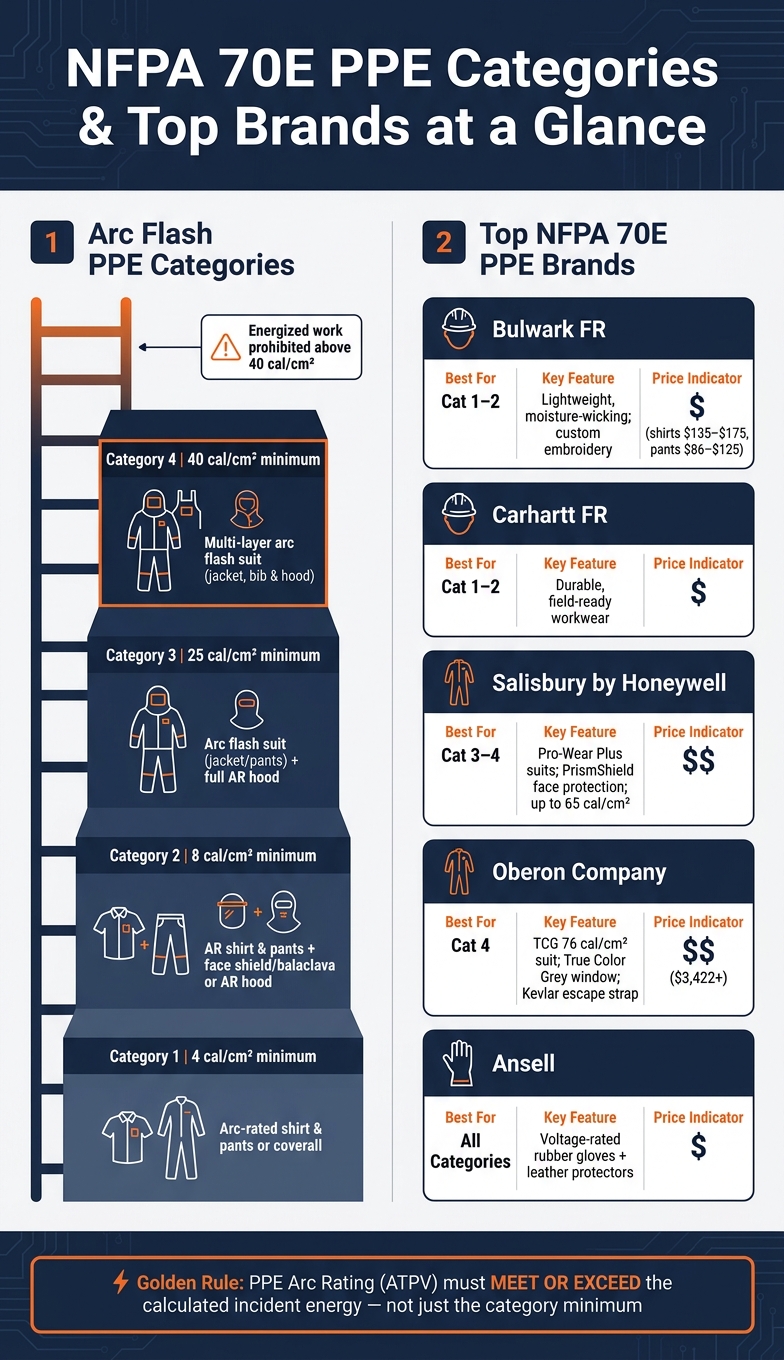
- NFPA 70E Basics: Focuses on safe work practices and mandates PPE for tasks involving electrical hazards. Energized work is prohibited above 40 cal/cm².
- PPE Categories: Ranges from Category 1 (4 cal/cm²) to Category 4 (40 cal/cm² or higher), with specific gear required for each level.
- Top Brands: Bulwark FR, Carhartt FR, Salisbury by Honeywell, Oberon, and Ansell offer reliable options for various tasks and protection levels.
- Selection Criteria: Look for arc ratings that match or exceed incident energy, durability under industrial conditions, and proper certifications like ASTM F1506 and F2178.
Quick Comparison of Top Brands:
| Brand | Best For | Notable Features | Price Range |
|---|---|---|---|
| Bulwark FR | Cat 1–2 tasks | Lightweight, moisture-wicking, custom embroidery | $85.95–$445.95 |
| Carhartt FR | Cat 1–2 tasks | Durable, field-ready clothing | Varies |
| Salisbury by Honeywell | Cat 3–4 tasks | Full arc flash suits, PrismShield face protection | Premium pricing |
| Oberon | Cat 4 tasks, high-risk work | Advanced suits with ventilation, Kevlar straps | $3,422.09+ |
| Ansell | All categories, shock protection | Voltage-rated gloves with leather protectors | Varies |
When choosing PPE, ensure it matches the task's energy levels and includes proper documentation for compliance. This article explores the best brands and how to select the right gear for your needs.
NFPA 70E PPE Categories & Top Brands Comparison Guide
Key NFPA 70E PPE Requirements
Arc-Rated Clothing and PPE Categories
NFPA 70E breaks down arc-rated PPE into four categories, each defined by the minimum arc rating (measured in cal/cm²) needed for specific tasks. This rating reflects the energy level at which there’s a 50% chance of a second-degree burn. Higher categories mean greater protection.
| PPE Category | Min. Arc Rating (cal/cm²) | Typical Garment System |
|---|---|---|
| Category 1 | 4 cal/cm² | Arc-rated (AR) shirt and pants or coverall |
| Category 2 | 8 cal/cm² | AR shirt and pants with face shield and balaclava, or AR hood |
| Category 3 | 25 cal/cm² | Arc flash suit (jacket/pants) with full AR hood |
| Category 4 | 40 cal/cm² | Multi-layer arc flash suit (jacket, bib, and hood) |
It’s important to note that while all arc-rated clothing is flame-resistant (FR), not all FR garments are arc-rated. Arc-rated clothing undergoes specific thermal testing (ASTM F1959) that standard FR clothing does not. Using non-arc-rated FR clothing where arc-rated PPE is required can lead to safety risks and compliance issues.
When selecting PPE, you can use one of two methods:
- Incident Energy Analysis Method: Relies on precise engineering calculations to determine the required arc rating.
- PPE Category Method: Uses NFPA 70E’s predefined tables to select PPE based on the task.
These methods should never be combined for a single task to ensure accuracy and compliance.
PPE for Power Distribution Work
Tasks in power distribution environments - like those in substations, switchgear rooms, or motor control centers - often require higher levels of protection. Activities such as racking a circuit breaker on medium-voltage switchgear or working on an open automatic transfer switch generally demand PPE from Category 3 or 4.
In addition to arc-rated clothing, voltage-rated rubber gloves are essential for many tasks. The glove class depends on the system voltage:
| Glove Class | Max Use Voltage (AC) | Max Use Voltage (DC) | Common Application |
|---|---|---|---|
| Class 0 | 1,000 V | 1,500 V | 480V AC panelboards; UPS DC bus |
| Class 1 | 7,500 V | 11,250 V | Medium-voltage gear up to 7.5 kV |
| Class 2 | 17,000 V | 25,500 V | 12.47 kV or 13.8 kV service entrance |
Proper coverage is critical. Ensure sleeves are rolled down, shirts are tucked in, and fasteners are secured to avoid exposing skin within the arc-flash boundary. This boundary is the distance where incident energy on bare skin reaches 1.2 cal/cm², enough to cause a second-degree burn. The 2024 NFPA 70E update also mandates hearing protection for anyone inside this boundary, as arc flash sound levels can exceed 140 decibels.
Compliance Standards and Testing
PPE must meet strict testing standards to ensure safety. Key requirements include:
- Arc-rated clothing: Tested under ASTM F1506.
- Eye and face protection: Must meet ASTM F2178.
- Rubber gloves: Tested under ASTM D120, with leather protectors adhering to ASTM F696.
For rubber gloves, OSHA requires retesting every six months. Gloves not retested within this timeframe are considered non-compliant, regardless of their condition. Additionally, arc-flash equipment labels must be durable enough to withstand harsh conditions like UV exposure, chemicals, and moisture - common in outdoor substations and utility yards.
"The safest buying rule is simple: the garment arc rating must exceed the calculated incident energy at the worker's task distance." - ATPV Rating Guide
For instance, if a label specifies 8.6 cal/cm², a Category 2 garment rated at 8 cal/cm² isn’t sufficient. The arc rating of the PPE must match or exceed the specific incident energy level, not just meet the category minimum. This highlights the importance of choosing reliable PPE brands that meet established safety standards.
sbb-itb-501186b
How to Evaluate NFPA 70E-Compliant PPE Brands
Arc Ratings and PPE Coverage
When it comes to arc-rated garments, the Arc Thermal Performance Value (ATPV) is the key metric to consider. This value indicates the incident energy level at which there’s a 50% chance of a worker sustaining a second-degree burn. To ensure proper protection, always verify that the ATPV or Energy Breakopen Threshold (EBT) listed on the label matches or exceeds the incident energy level calculated for the task at hand - not just the minimum requirement.
Many reputable brands offer a variety of protection levels, allowing workers to find PPE suited to specific hazards. It’s also crucial to consider layering systems. Outer arc-rated garments can interact poorly with non-FR materials like polyester or nylon, which can melt under heat and worsen injuries.
For head and face protection, the required coverage depends on the level of exposure. For lower-energy three-phase exposures, an arc-rated faceshield with at least an 8 cal/cm² rating is sufficient. However, tasks involving exposures of 9 cal/cm² or higher demand a full arc-rated hood for adequate protection.
Durability and Environment Suitability
Once you’ve confirmed that a garment meets the necessary arc ratings, it’s important to evaluate its durability under working conditions. In power distribution settings, for instance, garments must withstand repeated industrial laundering. Using chlorine bleach or fabric softeners can degrade flame resistance, so it’s wise to choose brands that guarantee their garments maintain flame resistance throughout their lifespan, even with industrial washing.
Fabric weight and breathability also play a significant role. Heavier suits with high-energy ratings can lead to heat stress during long tasks, especially in hot climates. Newer hybrid materials - such as a combination of DuPont Protera® and Westex® UltraSoft® - offer a solution by reducing garment weight by 37% and doubling breathability, all while maintaining a 40 cal/cm² rating. For outdoor jobs like utility or substation work, check for garments with FR hi-viz reflective trim (e.g., 3M Scotchlite) to improve visibility in low-light conditions.
Availability and Compliance Documentation
In addition to physical performance, proper documentation is essential for evaluating PPE brands. Look for garments that display the ASTM F1506 certification mark, clearly state the arc rating, and include independent lab test reports from recognized facilities such as Kinectrics or the University of Alberta's PCERF Laboratory.
"Based on laboratory testing required by ASTM F1506-10a, the expectation is that protective clothing with an arc rating equal to the estimated incident heat energy will be capable of preventing second-degree burn injury." - OSHA
If you’re procuring PPE for utility or federal contract work, ensure the products are TAA-compliant or Made in USA, as these factors can impact procurement eligibility and supply chain stability. Additionally, some brands carry NFPA 2112 certification, which provides protection against both arc flash and flash fire hazards. Before making a purchase, review the spec sheets to confirm details like fabric composition, garment weight, and the specific standards the product meets.
Webinar VOD | NFPA 70E: Selection and Use of Electrical Personal Protective Equipment (PPE)
Top PPE Brands for NFPA 70E Compliance
When it comes to electrical work, Personal Protective Equipment (PPE) must align with the specific demands of the task. Some brands focus on routine electrical jobs, while others cater to high-risk situations with full-body protection systems. Here's a closer look at some of the top PPE brands and what makes them stand out.
Bulwark FR
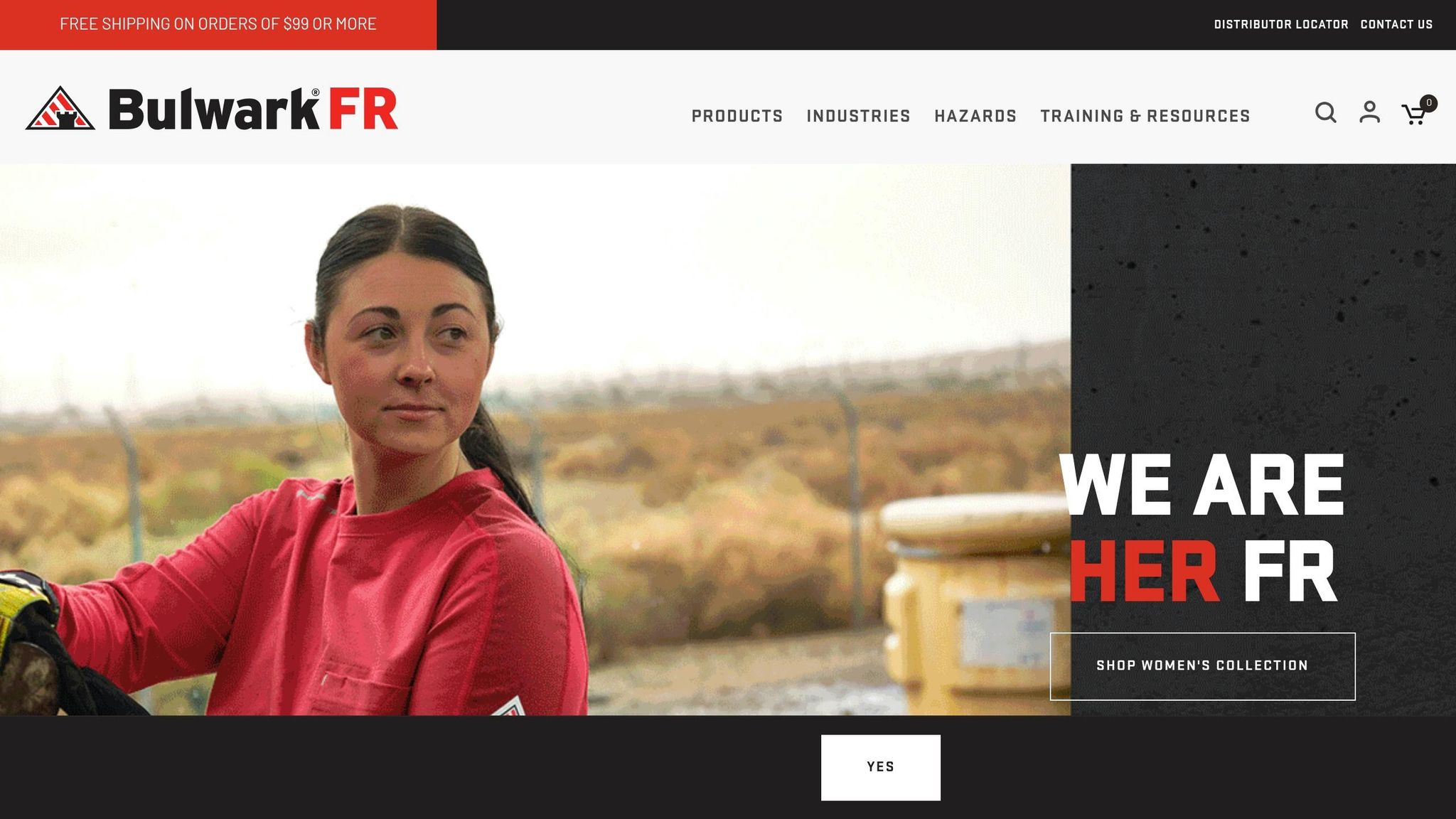
Bulwark is a familiar name in flame-resistant workwear, especially among electric utility workers. With over five decades of experience, their designs prioritize both safety and comfort. The iQ Series and Flex Knit lines are tailored for Category 1 and 2 tasks, featuring lightweight, moisture-wicking shirts and durable work pants.
"With over 50 years of expertise in flame-resistant apparel for electric utility workers, Bulwark delivers top-notch comfort, compliance, and rugged safety, from arc flash to extreme weather." - Bulwark Protection
Price Range: iQ Series shirts cost between $135.95 and $174.95, work pants range from $85.95 to $124.95, and FR/chemical splash coveralls are priced around $445.95. They also offer custom embroidery for company logos and name badges without compromising protective features.
Carhartt FR
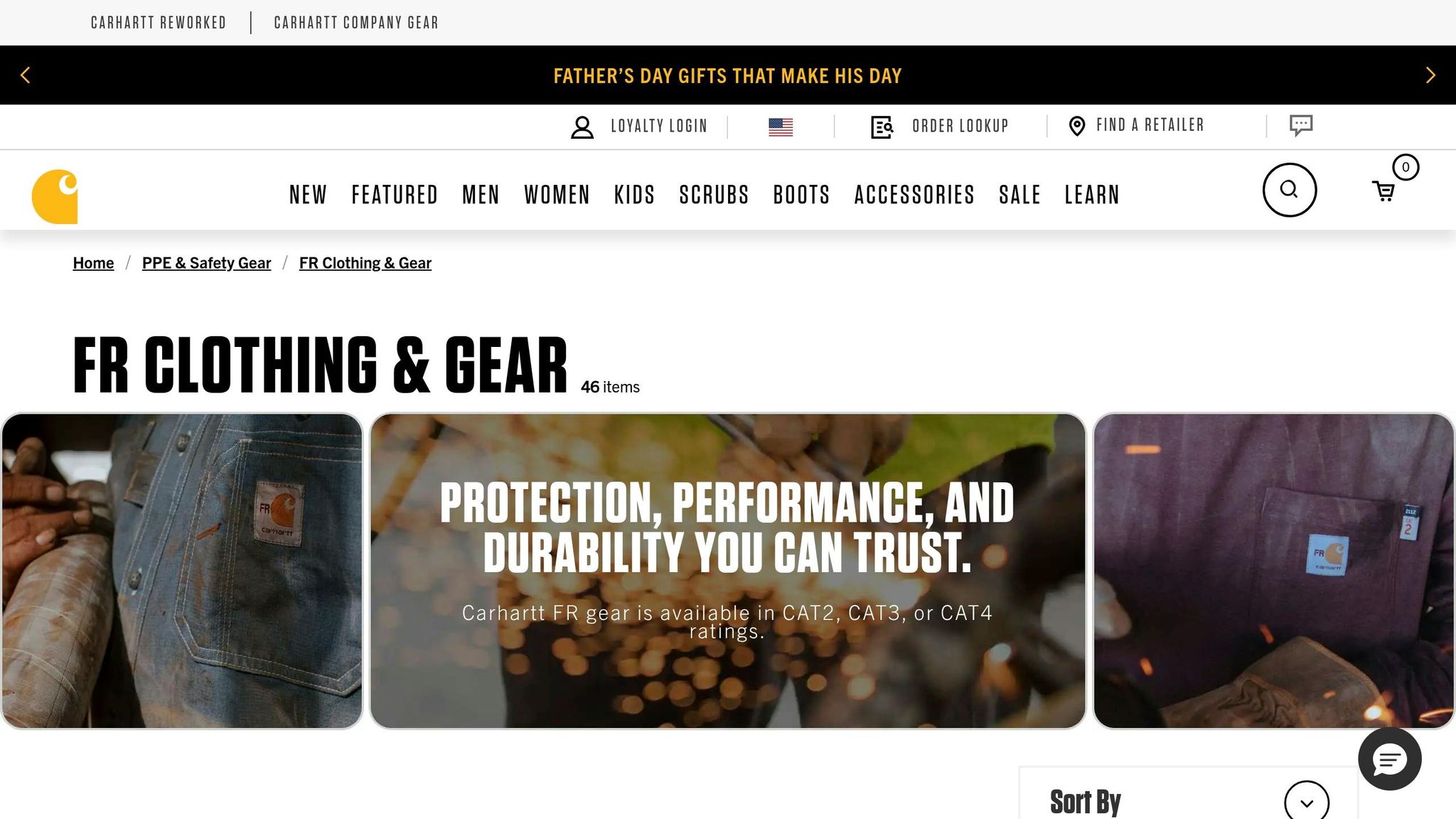
Carhartt's FR line is a go-to for electricians and linemen who need tough, field-ready clothing. Their garments meet NFPA 70E standards and are built for durability, making them a favorite among utility and construction crews handling Category 1 and 2 tasks.
Salisbury by Honeywell
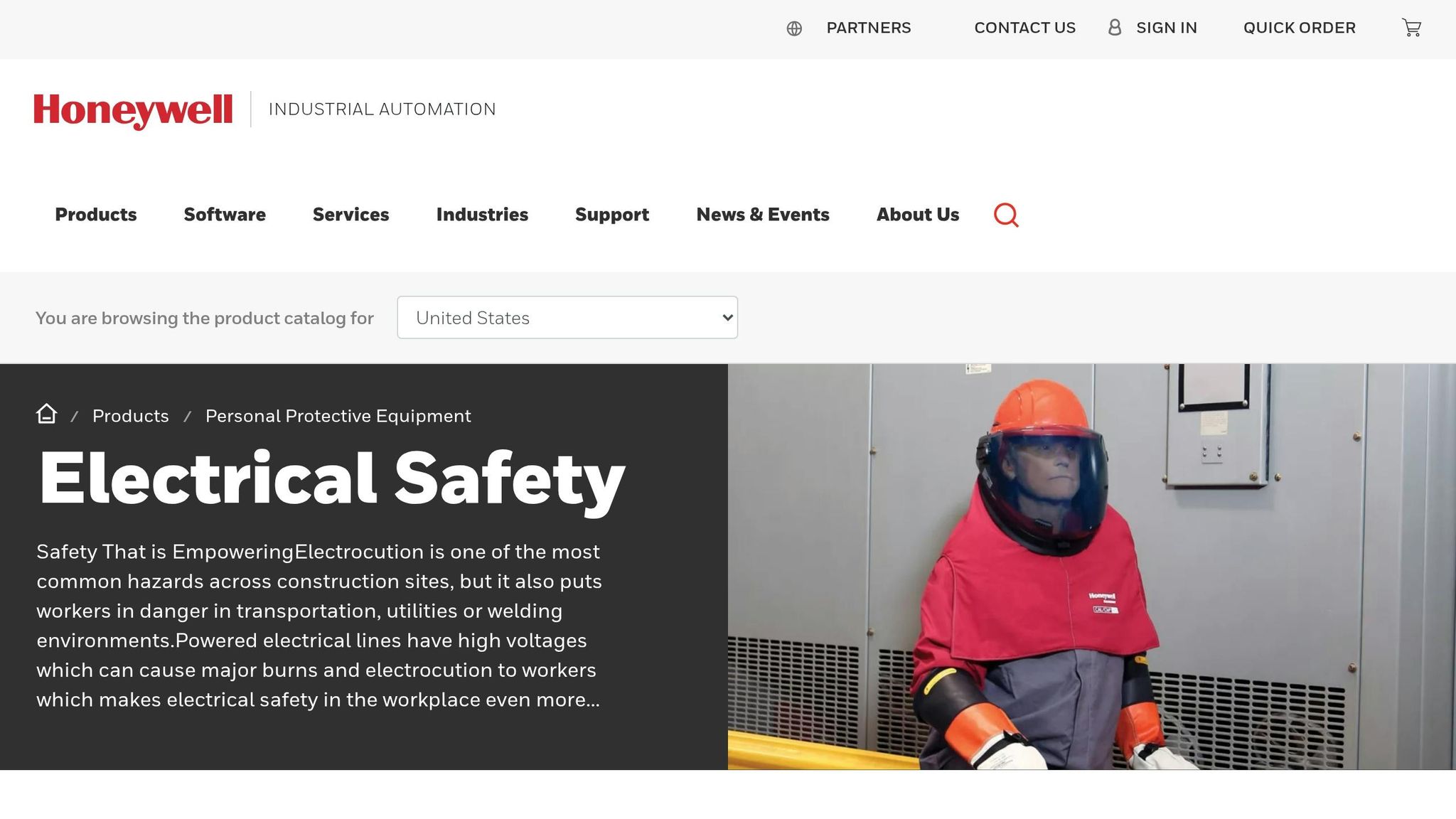
Salisbury provides a comprehensive range of electrical PPE, including voltage-rated gloves, arc-rated face shields, and full arc flash suits. Their Pro-Wear Plus line is designed for Category 3 and 4 environments, offering suits rated at 40 cal/cm² and 65 cal/cm². These are ideal for high-risk tasks like high-energy switching and maintenance on energized equipment.
Oberon Company
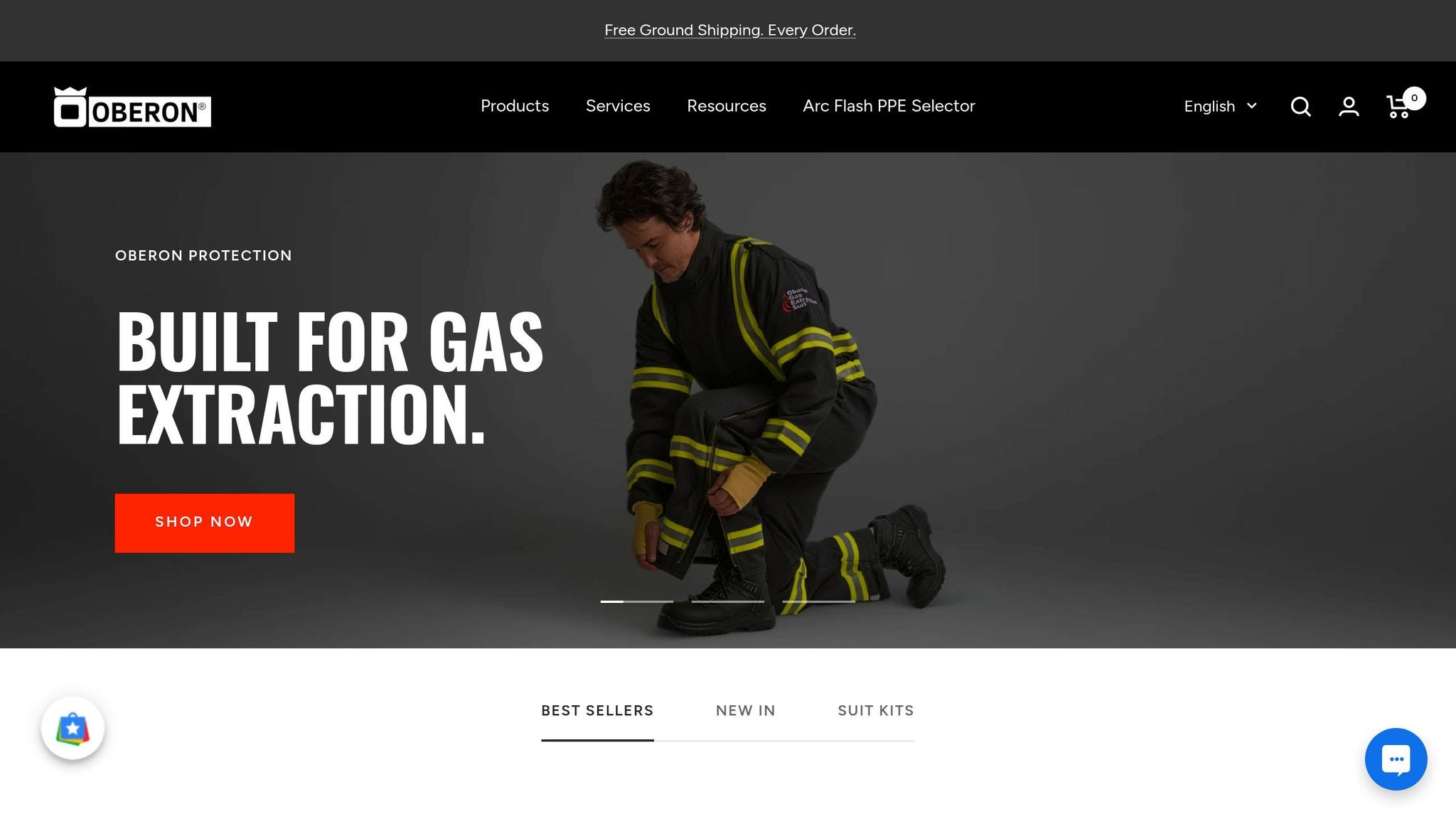
Oberon specializes in advanced arc flash protection. Their TCG (True Color Grey) 75 Cal Deluxe Arc Flash Suit Kit offers an impressive Arc Thermal Performance Value (ATPV) of 76 cal/cm². Key features include:
- A hood window with anti-fog and anti-scratch coatings for accurate color recognition (critical for identifying color-coded wires).
- An integrated ventilation system for comfort.
- A 20-foot Kevlar escape strap, allowing a second worker to pull an injured colleague to safety.
Price: The complete kit is available for $3,422.09.
Ansell
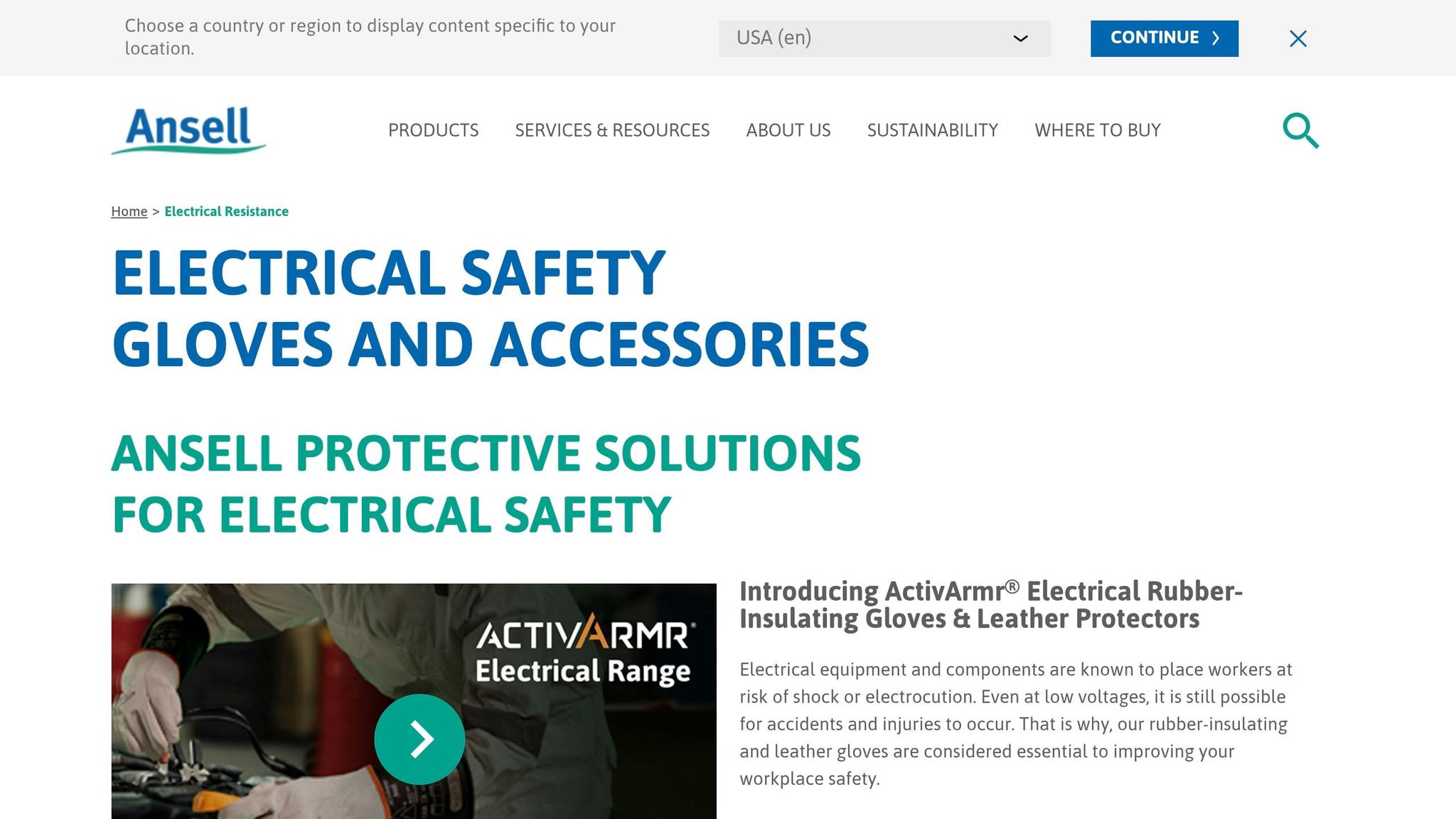
Ansell is well-known for its insulating rubber gloves and leather protectors, which are essential for electrical shock protection. Their gloves meet NFPA 70E standards and are available in various voltage classes. Leather protectors add an extra layer of durability, safeguarding against mechanical damage during energized conductor work.
| Brand | PPE Category | Notable Feature |
|---|---|---|
| Bulwark FR | Cat 1–2 | Decades of expertise, custom embroidery |
| Carhartt FR | Cat 1–2 | Durable, widely available |
| Salisbury by Honeywell | Cat 3–4 | Comprehensive electrical PPE lineup |
| Oberon Company | Cat 4 | True Color Grey window, Kevlar escape strap |
| Ansell | All | Specialized in shock protection |
Each of these brands brings something unique to the table, ensuring there's a solution for every type of electrical job. The next section dives deeper into matching PPE to specific power distribution tasks.
Matching PPE Brands to Power Distribution Tasks
Routine Operations and Inspections
For routine tasks involving switchgear and panelboards, Category 1–2 flame-resistant (FR) clothing is the go-to choice. Most Category 2 scenarios require a minimum ATPV (Arc Thermal Performance Value) of 8 cal/cm², as these tasks often exceed the 4 cal/cm² threshold of Category 1. Reliable options for daily wear include Magid's IND2530HV jacket (12.9 cal/cm²) and Atlas Guardian's FR coveralls (12 cal/cm²). These garments not only meet safety standards but also feature integrated hi-viz trim for better visibility during inspections - Magid's jacket, for instance, uses 3M Scotchlite reflective material.
For long-term durability, garments made with inherent FR fibers, like those in ProGARM's Gen 2 range, retain their arc protection even after multiple washes. Alternatively, treated fabrics such as Westex Indura Ultrasoft, used in the Clydesdale NOAH jacket (12.4 cal/cm²), offer dependable performance for electrical fieldwork. These options provide a solid foundation for more demanding tasks, which we'll cover next.
High-Risk Maintenance Tasks
When dealing with high-risk activities - like racking breakers, relay testing, or working on energized switchgear - Category 3 (minimum 25 cal/cm²) or Category 4 (minimum 40 cal/cm²) protection is essential. Brands like Salisbury by Honeywell and Oberon stand out in this category.
For tasks requiring precise color identification, such as relay testing or working with color-coded wiring, Salisbury's PrismShield Plus hoods are a top choice. These hoods not only comply with face protection standards but also improve color perception, reducing the risk of wire misidentification. Additionally, their LFH (Lift Front Hood) design allows workers to quickly lift the face shield without removing the entire headgear, saving time and minimizing heat stress.
Outdoor Utility and Substation Work
Outdoor utility and substation work come with unique challenges, including exposure to weather, low-light conditions, and visibility requirements. Oberon's FR/Arc-Rated Hi-Vis Coveralls (priced around $225.75) meet ANSI/ISEA 107-2020 Class 3 Type R hi-viz standards, making them ideal for roadside utility work and substation tasks.
For storm restoration or wet-weather environments, it's critical to choose garments that meet both ASTM F1891 (arc) and ASTM F2733 (flash fire) standards. These standards address the dual risks of arc flash and hydrocarbon flash fire hazards often present in utility work.
| Task Type | Protection Level | Key Brand Options |
|---|---|---|
| Routine switchgear/panelboard inspections | Cat 1–2, 8–13 cal/cm² | Magid, Atlas Guardian, Clydesdale, Bulwark FR |
| Racking breakers, relay testing | Cat 3–4, 25–65 cal/cm² | Salisbury Pro-Wear Plus, Oberon TCG Deluxe |
| Outdoor utility/substation work | Cat 2–4 + hi-viz + weather-rated | Oberon Hi-Vis Coveralls, NASCO Omega FR™ |
These tailored solutions ensure workers are equipped with the right protection, whether they're performing routine inspections, tackling high-risk maintenance, or managing outdoor utility tasks.
Conclusion: Choosing the Right PPE for NFPA 70E Compliance
When it comes to selecting the proper PPE for NFPA 70E compliance, the process boils down to one key principle: ensure the Arc Thermal Protective Value (ATPV) of the PPE matches or exceeds the incident energy of the equipment being worked on. As Thomas Northcott, Senior Power Engineer at Jacobs Technology, emphasizes:
"Arc flash PPE is only effective for equipment that has incident energy levels that are lower than the ATPV rating of the PPE. This is a fundamental understanding that all electrical workers should have."
Effective PPE needs to provide full-body protection, covering everything from head to toe. This includes arc-rated clothing, voltage-rated gloves with leather protectors, face shields, a rated hard hat, and hearing protection. Overlooking even a single layer or combining incompatible PPE categories can leave workers vulnerable to severe energy exposure.
When sourcing PPE, prioritize suppliers who offer complete documentation, traceability, and post-incident support. Look for certifications like ASTM F1506 for finished garments and independent lab test reports verifying compliance. For a streamlined procurement process, platforms like Electrical Trader offer a centralized marketplace for compliant PPE and electrical components, making it easier to maintain safety standards and compliance.
FAQs
How do I know what cal/cm² rating I actually need?
To figure out the required cal/cm² rating for your PPE, start by checking the arc flash label on your equipment. This label provides the incident energy level or PPE category determined by your facility's arc flash hazard analysis. If there's no label, you can consult the NFPA 70E tables or perform an Incident Energy Analysis. Make sure your PPE's arc rating is equal to or greater than the incident energy level at your site to ensure proper protection.
What’s the difference between FR clothing and arc-rated clothing?
While people often mix them up, these terms aren't exactly the same. Flame-resistant (FR) clothing is made to self-extinguish and help minimize burn injuries caused by thermal hazards. On the other hand, arc-rated (AR) clothing - a category within FR clothing - is specifically tested to protect against arc flash incidents. Here's the key distinction: all AR clothing is FR, but not all FR clothing meets the standards for AR.
For tasks involving live electrical work, NFPA 70E requires workers to wear arc-rated gear that includes a clearly labeled arc rating (measured in cal/cm²).
What documentation should I require to prove NFPA 70E compliance?
To demonstrate compliance with NFPA 70E, it's crucial to keep thorough records of your electrical safety program. This includes documenting hazard evaluations, job briefing procedures, and annual program audits. Make sure to log employee qualifications, training on electrical hazards, and CPR retraining.
For tasks performed within arc flash boundaries, record the incident energy exposure in calories per square centimeter (cal/cm²). Additionally, maintain inspection and testing records for protective equipment, such as rubber insulating gloves, to ensure they meet ASTM standards. These records provide essential proof that your safety measures align with regulatory requirements.