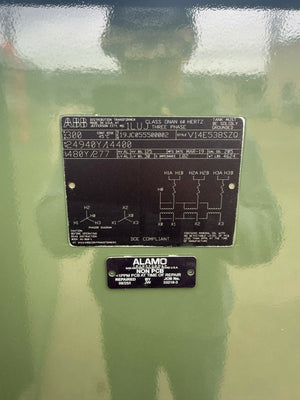
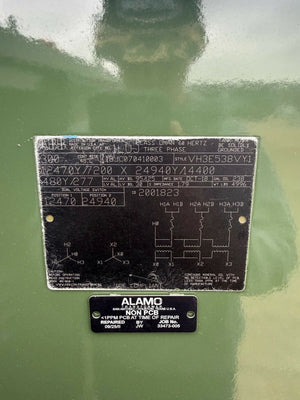
Top 7 Medium Voltage Equipment Brands
When selecting medium voltage (MV) equipment for commercial buildings, reliability, safety, and compliance with U.S. standards are paramount. This article highlights the top 7 brands excelling in MV equipment, focusing on their key offerings, safety features, digital integration, and compact designs.
Key Brands:
- ABB: Known for SafeGear and Advance switchgear, offering digital monitoring, arc flash mitigation, and compact solutions for space-limited areas.
- Siemens: Provides durable GM-SG switchgear, advanced safety features, and integration with building systems using SIMATIC SCADA.
- Schneider Electric: Features SF6-free switchgear and the EcoStruxure platform for real-time energy monitoring.
- Eaton: Offers arc flash mitigation, Brightlayer digital tools, and compact gas-insulated switchgear.
- General Electric (GE): Focuses on SF6-free solutions, digital monitoring, and compact retrofitting options.
- Mitsubishi Electric: Delivers space-saving circuit breakers and ANSI-compliant switchgear tailored for North America.
- Hitachi Energy: Specializes in ANSI-rated Dead Tank Breakers, digital tools like TXpert™, and eco-friendly compact designs.
Quick Overview:
- Safety: Arc flash mitigation, remote racking, and SF6-free options.
- Digital Integration: IoT, SCADA, and real-time monitoring tools for predictive maintenance.
- Compact Solutions: Gas-insulated systems and retrofitting for tight spaces.
- Compliance: Adherence to ANSI, IEEE, and NEMA standards.
Choosing the right MV equipment ensures operational reliability, worker safety, and long-term cost efficiency.
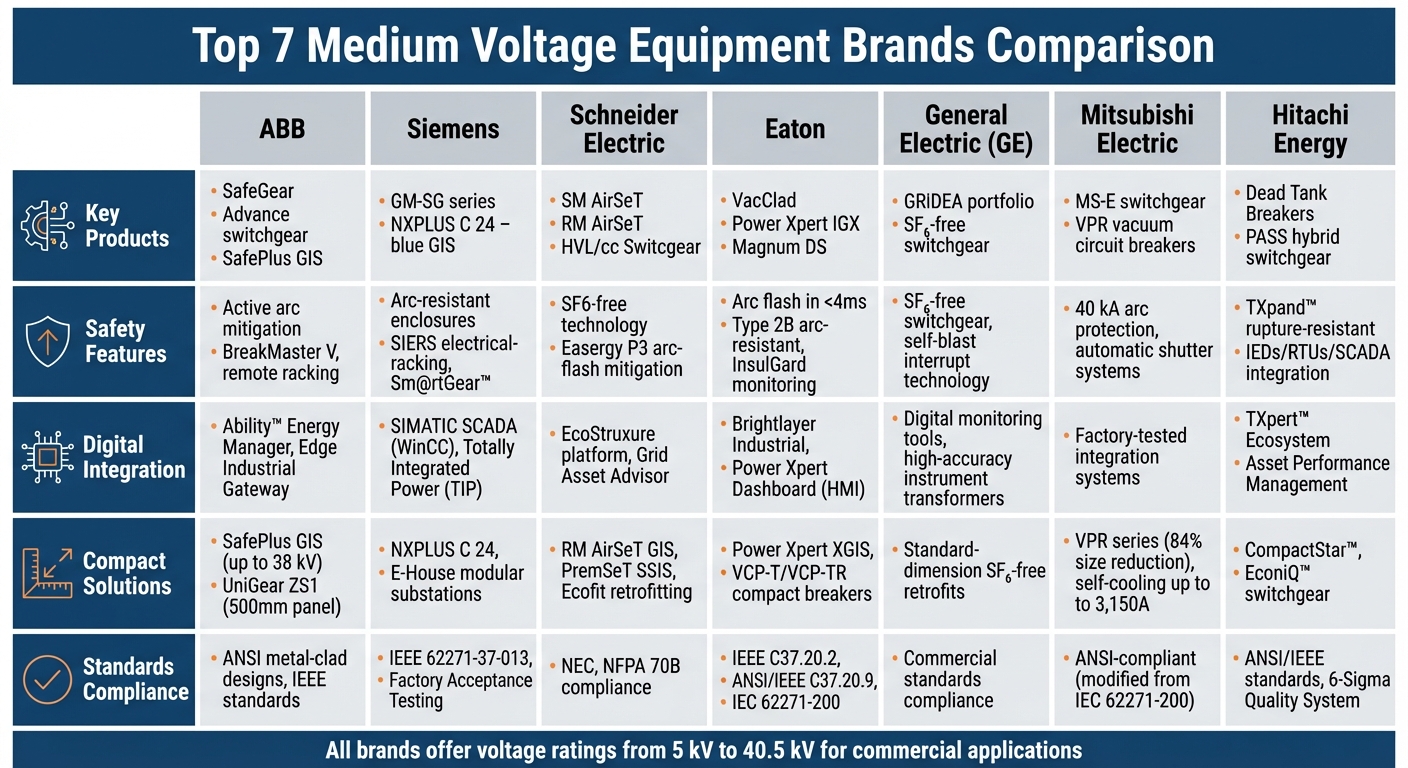
Top 7 Medium Voltage Equipment Brands Comparison Chart
F-Gas-Free Medium-Voltage Switchgear blue GIS made in Frankfurt
1. ABB
ABB offers the SafeGear and Advance air-insulated switchgear series, specifically designed for North American facilities. Their medium voltage product range spans from 5 kV to 40.5 kV, covering the requirements of large-scale operations. With a presence in 100 countries and a workforce exceeding 100,000, ABB brings extensive expertise to the table. Their solutions are built to meet critical industry standards, ensuring dependable and consistent performance.
Compliance with ANSI/IEEE/NEMA Standards
ABB’s SafeGear and Advance platforms are based on ANSI metal-clad designs, tailored to meet North American regulatory requirements. These systems incorporate advanced circuit-breaking technologies, such as the Emax 2 air circuit breaker and AF Contactors, which boost both reliability and operational efficiency. The modular design allows for tailored configurations, ensuring compatibility with specific building codes and installation needs. These features make it easier to implement advanced safety measures.
Safety Features
The SafeGear series includes key safety enhancements like active arc mitigation, the BreakMaster V for reducing arc flash energy, and remote racking devices for safe, remote breaker operations.
Digitalization and Integration with Building Management Systems
ABB’s Ability™ Energy and Asset Manager connects medium-voltage equipment to building management systems, enabling real-time monitoring. The ABB Ability™ Edge Industrial Gateway consolidates data from low- and medium-voltage circuit breakers into a unified dashboard, accessible either on-site or via the cloud. Additionally, ABB’s ANSI MV Digital Metal-clad Switchgear replaces traditional hard-wired components with digital communication modules for more streamlined operations.
Compact Solutions for Space-Constrained Environments
For urban commercial buildings with limited electrical room space, ABB provides the SafePlus compact Gas-Insulated Switchgear (GIS), supporting distribution applications up to 38 kV, 25 kA, and 600 A. They also offer narrow-panel options like the 500 mm panel version of the UniGear ZS1, designed to maximize energy efficiency in tight spaces. A notable example is the installation of 20 ABB SafePlus AirPlus Medium Voltage Ring Main Units by utility company Enel in May 2022. These units were deployed in secondary substations across Italy and Spain, enhancing grid reliability in areas where space is at a premium.
2. Siemens
Siemens offers a range of medium voltage solutions tailored for North American commercial building standards. Their lineup includes the GM-SG and GM-SG-AR series of air-insulated, metal-clad switchgear, known for their durability and adherence to industry requirements. Another standout is the NXPLUS C 24 – blue GIS, which handles primary distribution up to 24 kV, 25 kA, and 2,500 A busbar current. With a strong global presence, Siemens combines technical expertise with a commitment to reliability, ensuring their solutions meet the rigorous demands of commercial buildings.
Compliance with ANSI/IEEE/NEMA Standards
To ensure quality and reliability, Siemens conducts Factory Acceptance Testing (FAT) for its medium-voltage products. This testing confirms compliance with specifications before the equipment leaves the factory, adhering to standards like IEEE 62271-37-013 for vacuum circuit breakers. The 3AH operator, a key component in their circuit breakers, is built to last for 10,000 operations or 10 years before maintenance is needed. Additionally, the 3AH37/38 operators boast a service life of over 20 years without requiring re-lubrication or adjustment.
Safety Features
Safety is a priority in Siemens' designs. The GM-SG-AR series includes arc-resistant enclosures and the SIERS electrical-racking system, enabling safe remote operations. Their Sm@rtGear™ technology integrates real-time monitoring and analytics, enhancing both safety and operational efficiency. The NXPLUS C 24 – blue GIS features a sealed stainless steel pressure vessel and vacuum switching technology, which resist contamination and extend the equipment's lifespan. For aging generator circuit breakers, Siemens' vacuum technology upgrades can cut operating expenses by up to 75%.
Digitalization and Integration with Building Management Systems
Siemens goes beyond hardware by offering digital solutions that improve operational control and efficiency. Using SIMATIC SCADA (WinCC), they bridge operational technology with IT systems, while integration with building management systems is achieved through BACnet and other standard interfaces like OPC UA and REST APIs. Their Totally Integrated Power (TIP) framework provides end-to-end planning and design for electric power distribution, tailored to specific infrastructure and building projects. A notable example of their efficiency is a collaboration with JDC Power Systems, where Siemens helped Digital Realty reduce the deployment time for a modular data center from 179 days to just 80 days.
Compactness and Ease of Installation in Constrained Spaces
For facilities facing space limitations, Siemens offers gas-insulated switchgear (GIS) like the NXPLUS C 24, which combines a compact design with resistance to environmental factors. They also provide E-House solutions - modular, pre-assembled power substations that minimize on-site work and are ideal for hard-to-reach commercial or industrial locations. Additionally, their vacuum replacement circuit breakers are designed to fit within or reduce the footprint of older equipment. The NXPLUS C 24 – blue GIS is ETL listed and available in the U.S., making it suitable for substations and power supply applications.
3. Schneider Electric

Schneider Electric takes a comprehensive approach to medium voltage (MV) equipment, combining regulatory expertise with modern digital technologies that align with updated NEC and NFPA 70B standards. For commercial buildings, they require documented proof that arc-energy reduction systems function below arcing current levels, confirmed through on-site testing. With this strong regulatory foundation, Schneider also places a strong focus on advanced safety measures.
Safety Features
Safety is at the heart of Schneider's medium voltage offerings. Their SF6-free technology, showcased in the SM AirSeT and RM AirSeT ranges, removes the risks associated with greenhouse gases by using air and digital components instead [27,28]. Additionally, their Easergy P3 protection relays enhance operator safety by utilizing advanced arc-flash mitigation [30,31,33]. Utility companies using Schneider's Advanced Distribution Management Systems (ADMS) and Distributed Energy Resource Management Systems (DERMS) have seen impressive results - achieving a 184% return on investment, saving approximately $40 million, and recovering costs in just 16 months.
Digitalization and Integration with Building Management Systems
Schneider's EcoStruxure platform transforms traditional MV equipment into smart, connected systems. For example, at La Hacienda Tortilleria, Square D I-Line panelboards equipped with Smart Cells were integrated into the EcoStruxure platform, turning passive electrical boxes into active systems that deliver real-time energy data. The platform supports a wide range of breakers, from 20 A to 6,000 A, providing real-time updates on circuit breaker status, metering data, and contact wear directly to mobile devices or PCs. Additionally, integration with EcoStruxure Building Operation Software enables facility managers to oversee energy consumption alongside other building functions. The Grid Asset Advisor further enhances maintenance by offering predictive insights based on the actual condition of assets [28,32].
Compactness and Ease of Installation in Constrained Spaces
Schneider also excels in providing compact solutions designed for high performance in limited spaces. Products like the RM AirSeT GIS (Gas-Insulated Switchgear) and PremSeT SSIS (Shielded Solid Insulated Switchgear) offer efficient, space-saving options [27,31]. Their Ecofit tool simplifies retrofitting older MV equipment, helping facilities meet modern safety standards without needing a complete overhaul. For commercial applications, the HVL/cc Switchgear line provides another effective solution for saving space. By blending regulatory compliance, safety, digital integration, and compact design, Schneider Electric stands out as a leading provider of MV equipment for commercial buildings.
4. Eaton
Eaton boasts over five decades of expertise in delivering medium voltage equipment that adheres to stringent standards while embracing advancements in safety and digital technology. Their products cater to commercial buildings, offering voltage ratings from 2.4 kV to 38 kV, continuous current ratings up to 2,000 A, and interrupt ratings reaching 63 kA rms symmetrical.
Compliance with ANSI/IEEE/NEMA Standards
Eaton ensures its equipment meets rigorous industry standards, including IEEE, ANSI, and NEMA. The VacClad Switchgear complies with ANSI/IEEE C37.20.2 standards for metal-clad medium-voltage applications. Meanwhile, the Power Xpert IGX line stands out as the first dual-rated solution, meeting both IEEE C37.20.9 and IEC 62271-200 standards. Eaton's VCPW-HD series circuit breakers are certified under IEEE C37.06, C37.09, and C37.10 standards and are entirely free of SF6 gas, addressing environmental concerns. For more specialized needs, the VCP-WG generator circuit breakers surpass IEEE service duty requirements, handling unique fault conditions with ease.
Safety Features
Eaton prioritizes safety with a multi-layered approach to arc-flash mitigation. The Magnum DS switchgear can detect and extinguish an arc flash in under 4 milliseconds - 10 times faster than traditional circuit breaker-only systems - while reducing energy to below 1.2 cal/cm². Remote racking systems allow operators to rack breakers from distances of 25 feet or more, keeping them safely outside the arc-flash boundary. Additionally, arc-resistant enclosures with Type 2B ratings shield workers from potential hazards on all sides, even when low-voltage control doors are open. Eaton's InsulGard system provides continuous, non-invasive online monitoring of medium-voltage switchgear and motors, identifying potential failures before they occur. Together, these features form a comprehensive safety framework that integrates seamlessly with Eaton's compact designs and digital monitoring tools.
Digitalization and Integration with Building Management Systems
Eaton has embraced digitalization with tools like the Brightlayer Industrial application, which consolidates real-time operational data for unified facility management. Their Intelligent Switchgear incorporates Industry 4.0 and IIoT technologies, using intelligent electronic devices (IEDs) with network connectivity to improve productivity and performance. The Power Xpert IGX switchgear offers a maintenance-free, IEEE and IEC-compliant compartment with advanced digital features. Supporting components such as ReliaSense power measurement sensors and Smart VFI transformers enable real-time data collection, aiding predictive maintenance efforts. Eaton's Power Xpert Dashboard (HMI) provides a one-line diagram and elevation view, allowing for remote monitoring and control of switchgear. These digital tools highlight Eaton's commitment to integrating technology with space-efficient designs.
Compactness and Ease of Installation in Constrained Spaces
Eaton addresses the challenges of limited space in commercial buildings with compact and efficient solutions. The Power Xpert XGIS gas-insulated switchgear is designed for tight spaces and retrofit applications. Compact circuit breakers like the VCP-T and VCP-TR reduce both size and weight, lowering installation and shipping costs while maintaining full functionality. Eaton's vacuum replacement breakers (VR-Series+) modernize older infrastructure by cutting the number of parts in half and eliminating asbestos-filled components. These replacements also feature digital compatibility and offer a switching duty life of up to 250,000 operations, significantly extending the lifespan of the equipment.
5. General Electric
GE Vernova provides a range of products, including transformers, GIS (Gas-Insulated Solutions), circuit breakers, and voltage regulators, all designed to meet strict commercial standards. Their circuit breakers incorporate advanced self-blast interrupt technology, which enhances both stability and reliability. Let’s break down GE's key offerings, focusing on safety features, digital solutions, and compact designs.
Safety Features
Safety is a top priority in GE's product lineup. Their Gas-Insulated Solutions (GIS) are built for high reliability while requiring less maintenance. Additionally, the GRiDEA portfolio stands out with its SF₆-free switchgear, making retrofitting easier and reducing environmental impact.
Digital Tools and Building Management Integration
GE Vernova leverages digital tools to monitor asset conditions, extend equipment lifespan, and lower overall ownership costs. Their high-accuracy instrument transformers and specialized controllers are designed to integrate seamlessly with building management systems, offering streamlined operations.
Compact Designs for Tight Spaces
GE addresses the challenges of space constraints with compact, efficient designs. Their SF₆-free switchgear maintains standard ratings and dimensions, making retrofits straightforward and saving valuable space in commercial installations.
sbb-itb-501186b
6. Mitsubishi Electric

Mitsubishi Electric brings seven decades of experience in manufacturing medium voltage panels for the North American market, primarily through its affiliate, Mitsubishi Electric Power Products, Inc. (MEPPI). With a strong presence in the region, the company ensures its equipment aligns with the specific needs of the U.S. and Canada. Operating out of 38 locations across the United States and employing around 4,000 people, MEPPI plays a key role in delivering tailored solutions.
Safety Features
Safety is a cornerstone of Mitsubishi's medium voltage solutions. The MS‑E switchgear is designed to handle internal arc currents up to 40 kA for 1.0 second, ensuring robust protection. Features like relief flaps, automatic shutter systems, and interlocking mechanisms enhance operational safety, allowing users to manage equipment without needing to open the panel door.
Compliance with ANSI/IEEE/NEMA Standards
While the MS‑E switchgear is built to IEC 62271‑200 standards, MEPPI modifies it to meet the specific requirements of North American power systems. To ensure reliability, the equipment undergoes type testing by independent authorities like KEMA in the Netherlands. Mitsubishi’s "Quality First" principle reflects its dedication to achieving both global and regional safety and performance benchmarks. These adjustments not only meet local standards but also address the challenges of compact installations.
Compactness and Ease of Installation in Constrained Spaces
Mitsubishi tackles space constraints with compact designs that simplify installation. For example, circuit breakers with capacities up to 3,150 A use advanced heat management systems for self-cooling, eliminating the need for additional fans. The VPR series vacuum circuit breakers stand out with an 84% size reduction compared to traditional models. Flexible cable entry options - top or bottom - further streamline integration into existing setups. Additionally, factory-tested units arrive ready for installation, cutting down on the time and effort needed for on-site setup and testing.
7. Hitachi Energy

Hitachi Energy runs a cutting-edge manufacturing facility in Mount Pleasant, Pennsylvania, specializing in producing Dead Tank Breakers (DTB) that meet ANSI/IEEE standards. This local presence allows them to cater specifically to North American power systems, ensuring faster delivery times for commercial building projects. Their commitment to strict standards ensures both reliable performance and safety.
Compliance with ANSI/IEEE/NEMA Standards
The company's TrafoStar Technology Platform streamlines design, production, and quality control across all its facilities. This ensures every product meets both international and regional standards. With a 6-Sigma Quality System and over 6,000 production parameters in place, each unit undergoes rigorous full-acceptance testing. This process has already been successfully applied to more than 20,000 power transformers (totaling 2,600+ GVA) worldwide.
Safety Features
Safety is a top priority for Hitachi Energy. They integrate substation automation and protection systems, including IEDs, RTUs, and SCADA, to enhance grid reliability. Their TXpand™ rupture-resistant technology provides additional protection by absorbing energy during internal transformer faults, safeguarding both personnel and the environment. For projects requiring quick setup, the PASS hybrid switchgear comes fully assembled and factory-tested, reducing risks during on-site energization.
Digitalization and Integration with Building Management Systems
The TXpert™ Ecosystem brings digital innovation to power transformers with its open, modular, and scalable design. It delivers real-time data and early failure warnings, helping facility managers stay ahead of potential issues. This system integrates effortlessly with building management systems through IEDs, RTUs, and SCADA, while its Asset Performance Management tools ensure optimized equipment performance and reduced downtime.
Compactness and Ease of Installation in Constrained Spaces
Urban projects often face space limitations, and Hitachi Energy addresses this with solutions like CompactStar™ and Integrated Multifunctional Products (IMP), which deliver high power density in tight spaces. Additionally, their EconiQ™ switchgear replaces sulfur hexafluoride (SF6) with environmentally friendly alternatives, all while maintaining a compact design. This approach meets environmental regulations without compromising on space efficiency.
What to Consider When Choosing Medium Voltage Equipment
When selecting medium voltage equipment for commercial installations, it's crucial to ensure it complies with U.S. standards. For instance, ANSI/IEEE C37.20.2 applies to metal-clad switchgear, while IEEE C37.20.9 is relevant for gas-insulated switchgear. These certifications are essential for ensuring safe and reliable performance.
Beyond meeting standard certifications, focus on safety features that protect both personnel and equipment. Look for options with arc-resistant construction (ANSI Type 2B), active arc mitigation systems, and motorized remote racking that can be operated from 25–30 feet away. These features are especially critical during high-risk operations. In environments where reliability is paramount, sealed compartments offer protection against dust, moisture, and other contaminants.
Space considerations often play a significant role in equipment selection, particularly in commercial buildings. Air-insulated switchgear requires more floor space, while gas- and fluid-insulated systems provide higher dielectric strength in a smaller footprint. For spaces with limited square footage, front-access-only designs are a smart choice, as they allow the equipment to be mounted directly against walls, eliminating the need for rear maintenance aisles. Gas-insulated switchgear is particularly well-suited for retrofits in dense urban areas where space is at a premium.
Take advantage of digital technologies like IoT sensors, digital twins, and SCADA systems to streamline operations. These tools enable predictive maintenance, centralized health monitoring, and efficient management of smart grids and distributed energy resources. Not only do these capabilities improve reliability, but they also help lower operational costs - a major benefit for buildings incorporating renewable energy sources.
The installation environment is another key factor. Ensure the equipment is rated for the specific conditions it will face, whether indoor, outdoor, or subsurface. It’s also important to consider water ingress protection. For arc-resistant switchgear, keep in mind that additional vertical or horizontal space may be needed to accommodate plenums that safely redirect arc flash energy. When installing liquid-filled transformers indoors or on rooftops, opt for less-flammable dielectric fluids like FR3, which has a fire point above 300°C (572°F) - far higher than the 155°C (311°F) fire point of mineral oil.
How Electrical Trader Supports Medium Voltage Projects
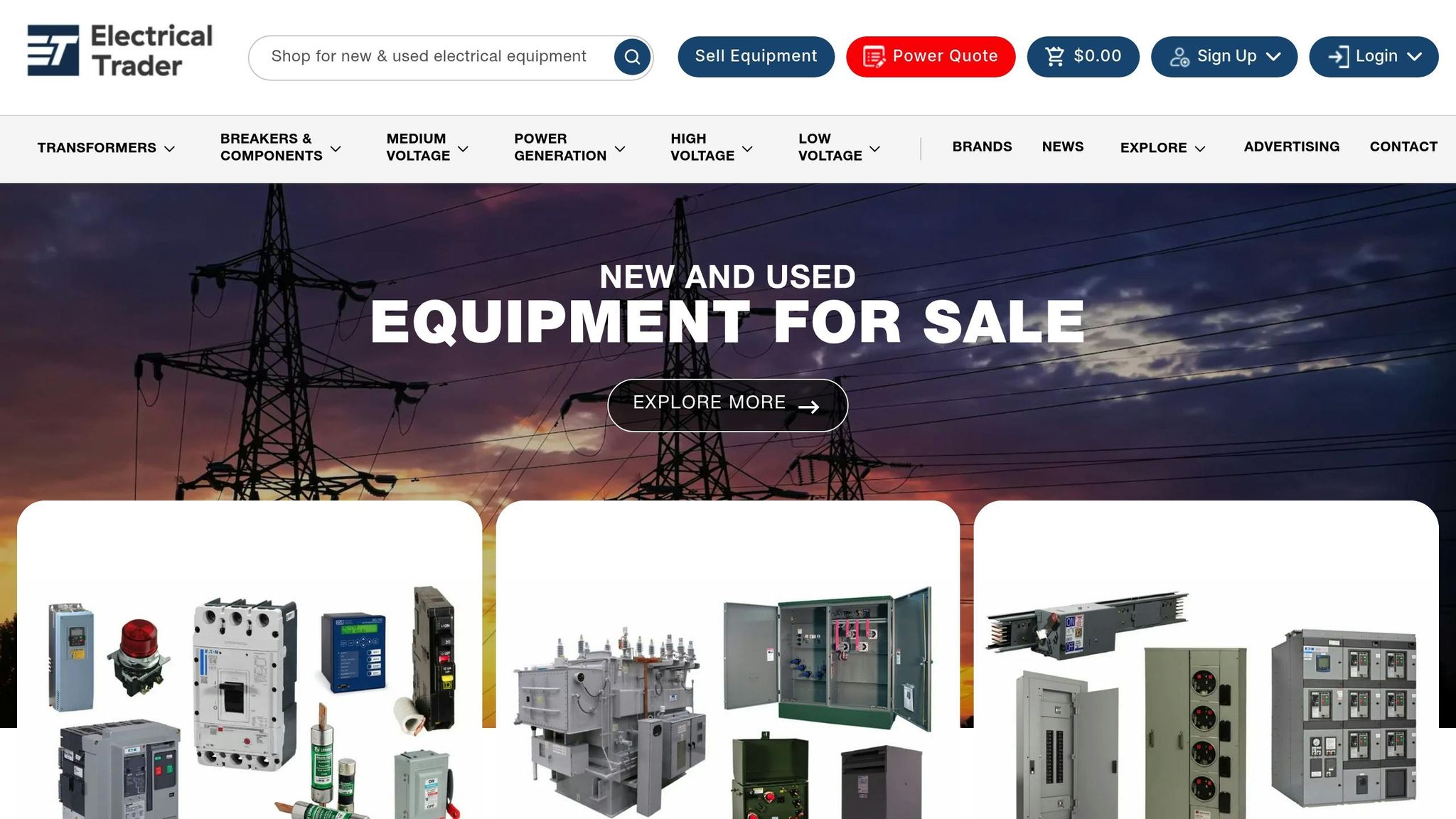
Electrical Trader serves as an online marketplace that connects buyers and sellers of both new and used medium voltage equipment. The platform offers essential gear like metal-clad switchgear, pad-mount transformers, and vacuum circuit breakers, making it a go-to resource for various projects. Whether you're building a new data center or upgrading an older hospital's electrical system, Electrical Trader provides access to equipment from leading manufacturers like ABB, Siemens, and Eaton. By centralizing sourcing for both new and legacy equipment, the platform simplifies the procurement process and supports projects at every stage, from initial builds to retrofits.
One standout feature of Electrical Trader is its ability to source legacy equipment that’s no longer in production. For contractors maintaining older systems in commercial buildings (480 V to 15 kV), finding replacement parts for discontinued models can be a real challenge. Electrical Trader helps bridge this gap, offering access to obsolete components that are critical for keeping older systems operational. Plus, opting for used or refurbished equipment can save significantly - typically 30–60% compared to new gear. Fully refurbished units, often sold with warranties, are priced at 50–70% of the cost of new equipment.
The marketplace also helps mitigate lead time delays, a common issue in commercial projects. For instance, switchgear sourced as new surplus or refurbished equipment is typically delivered within 8 to 10 weeks. This shorter turnaround can help keep projects on schedule and avoid costly delays.
Another benefit of Electrical Trader is its resale options. Through the "Sell Power" and "Sell Equipment" features, contractors can list surplus or unused gear, recovering costs while offering affordable options to other buyers. This resale process not only saves money but also supports sustainability by extending the lifespan of existing equipment. By reducing the demand for new raw materials, this circular system promotes more eco-friendly practices.
When purchasing used equipment, it’s essential to verify its maintenance history and loading records, as well as confirm that all necessary tests - like insulation resistance and turns ratio - have been completed. For oil-filled transformers, ensure they are free of PCBs to meet environmental compliance standards. These steps align with industry best practices and help ensure reliability across commercial installations.
Conclusion
Choosing dependable medium voltage equipment is crucial for commercial buildings, as it directly impacts safety, operational reliability, and long-term cost efficiency. Trusted brands like ABB, Siemens, Schneider Electric, Eaton, GE, Mitsubishi Electric, and Hitachi Energy are known for offering solutions that ensure smooth and uninterrupted operations.
These brands go beyond reliability by integrating vital safety features. For example, advanced arc flash mitigation systems and arc-resistant designs not only protect personnel but also help meet legal safety requirements. Eaton highlights the risks of neglecting arc flash mitigation, emphasizing its importance for both safety and compliance. Additionally, remote racking systems allow operators to manage equipment from a safe distance, minimizing the danger of arc flash incidents and potential equipment damage.
Modern digital tools further boost the performance of medium voltage equipment while reducing future expenses. Remote monitoring systems provide real-time data from multiple sites, enabling predictive maintenance and improving efficiency. Compact options like gas-insulated switchgear (GIS) are particularly valuable for retrofitting older buildings, as they deliver high performance within limited space.
Adhering to industry standards such as ANSI/IEEE C37.20.2 and IEC 62271-200 ensures that the equipment can withstand electrical and environmental stresses, protecting both workers and budgets. By selecting reputable brands and prioritizing advanced safety and technology features, commercial projects can achieve reliable performance and meet regulatory requirements for years to come.
FAQs
What safety features should I prioritize when choosing medium voltage equipment?
When choosing medium voltage equipment, safety should always come first. Prioritize designs that reduce risks during faults, such as arc-resistant equipment that limits energy release to protect operators. Opt for solutions with durable enclosures, like metal-clad or gas-insulated switchgear, which create strong physical barriers and safeguard against accidental contact with live components.
Key features to look for include:
- Vacuum circuit breakers for dependable fault clearing.
- Intelligent monitoring systems that provide real-time diagnostics.
- Access-control interlocks to prevent operation while the system is energized.
Make sure the equipment complies with recognized safety standards, such as ANSI/IEEE C37.20.2, to ensure it meets stringent safety requirements. For sourcing dependable solutions, platforms like Electrical Trader offer a variety of medium voltage equipment designed with these critical safety features in mind.
How do digital tools improve the efficiency of medium voltage systems?
Digital tools are reshaping medium voltage (MV) systems, offering capabilities like real-time monitoring, automated controls, and predictive maintenance. These advancements allow operators to fine-tune energy usage, identify faults early, and boost system reliability across networks operating between 5 kV and 36 kV.
Manufacturers are embedding advanced digital features directly into MV equipment. Modern switchgear and transformers now come equipped with built-in sensors and smart connectivity, enhancing safety and enabling condition-based maintenance. Tools like grid automation systems and digital twins further streamline responses to power disruptions and support smarter energy management.
For those in the market to buy or sell MV equipment, platforms such as Electrical Trader make the process easier. They provide access to detailed product specifications and smart-enabled components in a single, centralized marketplace. These innovations not only reduce downtime but also enhance efficiency, ensuring commercial power systems are prepared for future demands.
Why is a compact design important for medium voltage equipment in commercial buildings?
When it comes to medium voltage equipment in commercial buildings, a compact design isn't just a convenience - it's a necessity. Space is often at a premium in these projects, and compact systems combine critical components like circuit breakers and disconnects into a single, enclosed unit. This streamlined approach minimizes the equipment's footprint, making it ideal for tight spaces like small rooms or areas with limited accessibility.
But the benefits of compact equipment go beyond just saving space. Installation and maintenance become much simpler, which translates to lower labor costs and faster project timelines. Shorter wiring runs and easier access for inspections also ensure that safety and reliability standards remain high. For retrofit projects, where expanding existing spaces isn’t an option, compact designs allow developers to make the most of the available layout while staying on schedule.
Related Blog Posts
- 10 Best Circuit Breakers for Industrial Use
- Ultimate Guide to Low Voltage Equipment
- Metal Clad vs Metal Enclosed Switchgear
- Low vs. Medium Voltage Switchgear: Key Differences