Top 5 Features of Automatic Voltage Stabilizers
Automatic voltage stabilizers are essential for protecting your electronics from power fluctuations. They ensure a steady voltage supply, preventing damage to sensitive devices like TVs, air conditioners, and medical equipment. Here's a quick breakdown of their top features:
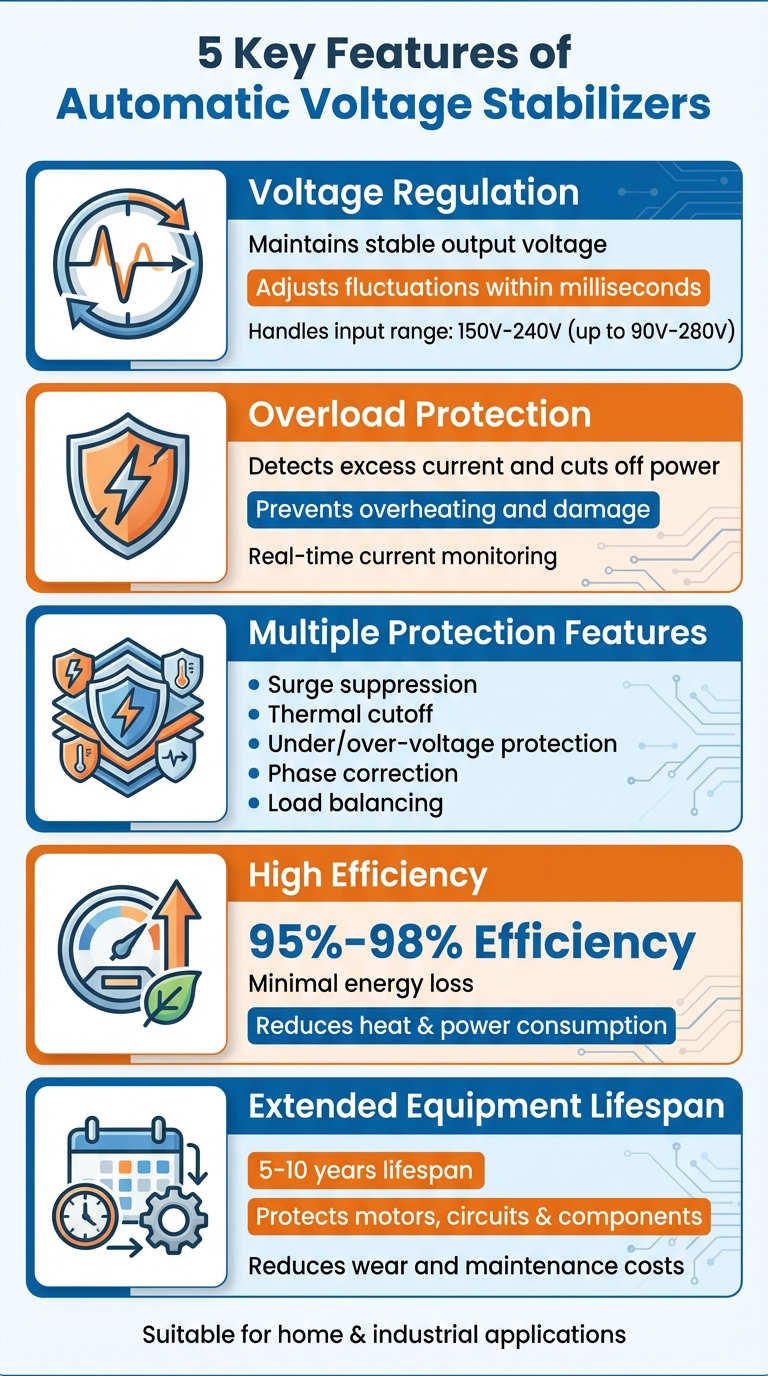
- Voltage Regulation: Maintains stable output voltage by adjusting fluctuations within milliseconds.
- Overload Protection: Detects excess current and cuts off power to prevent overheating and damage.
- Multiple Protection Features: Includes safeguards like surge suppression, thermal cutoff, and under/over-voltage protection.
- High Efficiency: Operates with minimal energy loss (95%-98%), reducing heat and power consumption.
- Extended Equipment Lifespan: Protects motors, circuits, and other components, reducing wear and maintenance costs.
These features make automatic voltage stabilizers a reliable choice for both home and industrial applications, ensuring consistent performance and reducing repair expenses.
5 Key Features of Automatic Voltage Stabilizers
How Voltage Stabilizers Work
sbb-itb-501186b
1. Voltage Regulation
At the heart of an automatic voltage stabilizer lies its primary function: keeping voltage stable. These devices work by constantly monitoring the output voltage, comparing it to a preset value, and making adjustments in milliseconds to counter any fluctuations. This ensures a steady power supply, even when the input voltage is inconsistent .
"An AVR is a feedback control system that measures the output voltage of the generator, compares that output to a set point, and generates an error signal that is used to adjust the excitation of the generator." – According to Wikipedia
There are several types of voltage stabilizers - electromechanical, static, and ferroresonant - that use specific mechanisms to achieve precise voltage corrections.
Many stabilizers come equipped with a feature called a "dead band." This is a small voltage range where no adjustments are made, which helps prevent unnecessary wear on the components and extends their lifespan. This level of precision is especially important for delicate equipment like medical devices, CNC machines, and data center hardware. These stabilizers are designed to handle a wide range of input voltages - often spanning from 150V to 240V or even as broad as 90V to 280V - making them highly effective in areas where power supply is unreliable.
Speed is another critical factor. With response times measured in milliseconds, automatic voltage stabilizers act quickly to protect motors, transformers, and sensitive electronics from the gradual damage caused by voltage instability. Once voltage regulation is in place, these stabilizers also provide additional protections, such as overload protection, which will be explored in the next section.
2. Overload Protection
After ensuring proper voltage regulation, overload protection adds another layer of safety for your devices. This feature uses sensors and microcontrollers to keep an eye on current levels, tracking load changes in real time. If the connected load surpasses the stabilizer's rated capacity - like when multiple appliances draw more power than the stabilizer can handle - the system detects the excessive current almost instantly.
When an overload is detected, the protection mechanism kicks in, cutting off the power supply immediately. This quick response prevents the transformer from overheating and safeguards your sensitive equipment from potential damage.
"Overload Protection: Guards against excessive current flow that may damage the stabilizer or connected devices." – Aulten
To avoid overload issues, calculate the total wattage of all the devices you plan to connect. Make sure their combined load stays within the stabilizer's rated kVA capacity. For example, if you're using a stabilizer for a 2.0-ton AC, select one that matches or exceeds that load requirement.
Keep an eye on digital indicators for overload alerts, and place the stabilizer in a cool, ventilated spot. This reduces the chances of tripping and helps extend the lifespan of your equipment. Up next, we’ll look at other protection features that elevate the performance of stabilizers.
3. Multiple Protection Features
Beyond overload protection, modern automatic voltage stabilizers come equipped with a suite of features designed to shield your equipment from various electrical issues. These features work together to handle a range of potential faults, ensuring your devices stay safe.
Under-voltage and over-voltage protection is a key component. By continuously monitoring voltage levels, these stabilizers automatically adjust to correct deviations. This prevents damage to sensitive electronics and ensures they function as intended.
Surge suppression and filtering are vital for minimizing the impact of transient voltages and electrical noise. These features are especially important for protecting delicate IT systems and other sensitive devices. Many stabilizers also include thermal cutoff mechanisms, which shut down the unit if it overheats during use.
The stabilizers' control systems employ built-in circuit protection to manage sudden voltage fluctuations. With closed-loop feedback, they maintain stable output levels, reducing strain on connected devices and prolonging their lifespan.
In advanced models, features like phase correction and load balancing add another layer of protection. These ensure voltage is evenly distributed across circuits, which is particularly useful in commercial environments. Combined with voltage regulation and overload protection, these additional safeguards provide a well-rounded defense for your equipment.
4. High Efficiency
After robust protection features, efficiency plays a crucial role in the performance of voltage stabilizers.
Modern automatic voltage stabilizers are designed to keep energy loss to a minimum during voltage correction. This means lower operating costs and reduced heat output. High-quality stabilizers typically hit efficiency ratings of 95% to 98%, ensuring that only a small amount of power is lost as heat.
This impressive efficiency comes from advanced internal components. Many stabilizers now use toroidal transformers, which help cut down on copper and iron losses in the transformer core. Combined with digital electronics and smart control systems, these components not only reduce power consumption but also maintain stable voltage levels. Most modern stabilizers are also built to handle a broad range of input voltages.
One major benefit of lower energy consumption is reduced heat generation. Excessive heat can damage key components like insulation, solid-state relays, circuit breakers, and servo motors over time. By keeping internal temperatures in check, efficient stabilizers ensure steady performance and a longer lifespan.
Different types of stabilizers also show variations in efficiency. Servo-controlled stabilizers are known for their precision, making them a great choice for sensitive equipment. On the other hand, relay-based stabilizers are quicker at correcting voltage and tend to be more cost-effective. Both types work to correct voltage fluctuations quickly, minimizing wasted energy.
When choosing a stabilizer, check for "Energy Efficiency" in the product details. Models with digital displays are especially helpful, as they let you monitor input and output voltage in real time. Also, make sure the stabilizer's KVA rating matches your equipment's energy needs to avoid unnecessary power loss.
5. Extended Equipment Lifespan
One major advantage of using an automatic voltage stabilizer is its ability to prolong the life of your equipment. By ensuring a steady power supply and reducing stress on internal components, stabilizers help maintain the durability of your devices. This consistent voltage correction not only safeguards circuits but also enhances the overall reliability of your machinery.
Thermal protection plays a big role here. Over-voltage conditions can generate excessive heat in electrical windings and insulation, which could lead to irreversible damage. Stabilizers help prevent this by keeping voltage levels in check.
Voltage drops, or sags, can also be harmful. These dips in power can strain motors and compressors, but stabilizers counteract them effectively, ensuring these components operate smoothly without unnecessary wear.
Quick voltage correction is another key factor. By responding rapidly to fluctuations, stabilizers protect sensitive electronics and support uninterrupted operations in environments like data centers and robotic systems. This immediate action not only keeps things running but also extends the working life of your equipment.
To maximize the benefits, install stabilizers in clean, dry, and well-ventilated areas. Avoid overloading them, and perform regular inspections for signs of trouble, such as unusual noises, overheating, or damaged wiring. With proper care, a voltage stabilizer can last anywhere from 5 to 10 years.
Conclusion
Automatic voltage stabilizers play a crucial role in maintaining consistent voltage levels, shielding your devices from harmful fluctuations. They protect equipment from both over-voltage and under-voltage scenarios while incorporating features like overload, short-circuit, and surge protection to lower fire risks. This steady voltage not only ensures immediate safety but also supports the long-term performance of your devices.
By providing a stable power supply, voltage stabilizers help prevent overheating, reduce energy waste, and safeguard motors and circuits. This stability lessens mechanical and thermal stress on sensitive equipment, which can significantly extend their lifespan and reduce maintenance expenses over time.
When choosing a stabilizer, it’s important to determine whether your system requires a 1-phase or 3-phase model. Pairing the stabilizer with additional safety devices like circuit breakers, surge protectors, and isolation transformers can further enhance protection and reliability.
Whether you’re securing residential appliances or industrial machinery, sourcing high-quality components is key. Platforms like Electrical Trader offer a wide range of automatic voltage stabilizers and power distribution equipment, including transformers and circuit breakers. With options for both new and used components, it’s easier to find solutions tailored to your power needs.
Investing in a dependable voltage stabilizer can help you minimize repair costs, cut energy bills, and maintain consistent performance for years to come.
FAQs
What size (kVA) stabilizer do I need?
To determine the right stabilizer size (measured in kVA), you need to account for the total power requirements of all the equipment you'll connect. This involves calculating the load's voltage and current demands. For the best results, it’s a good idea to perform a detailed load assessment or consult with an experienced electrician to ensure accurate selection.
Should I choose a servo or relay stabilizer?
The decision boils down to what you need in terms of accuracy, load handling, and response time. Servo stabilizers are perfect for situations where precise voltage regulation and smooth operation are required, such as with sensitive equipment or systems experiencing heavy, fluctuating loads. On the other hand, relay stabilizers are a budget-friendly option, ideal for general household appliances or less demanding applications. If you’re dealing with variable loads and need high accuracy, a servo stabilizer is the way to go. For everyday use, a relay stabilizer should get the job done.
Do I need 1-phase or 3-phase stabilization?
When deciding, think about your power requirements. 1-phase stabilizers work well for homes or smaller devices, while 3-phase stabilizers suit industrial or commercial setups needing more power. Match the stabilizer to the scale and purpose of your application for the best results.