

Top Brands Supporting IEEE 1547-2018 Standards
IEEE 1547-2018 is a key standard for connecting distributed energy resources (DERs) like solar panels and battery systems to the U.S. electric grid. It focuses on grid stability by requiring DERs to remain online during disturbances, enabled by smart inverter technology. Compliance is verified through UL 1741 Supplement B (SB) certification and testing under IEEE 1547.1-2020.
Leading brands offering compliant products include:
- Caterpillar: Advanced inverters with grid-stabilizing features.
- SMA Solar Technology: Inverters with robust communication protocols and grid-support functions.
- ABB: Utility-scale inverters with precise power control.
- SolarEdge Technologies: Smart inverters for residential to utility-scale applications.
- Enphase Energy: Microinverters with module-level optimization and grid compliance.
For certified equipment, search for "UL 1741-SB" on platforms like Electrical Trader, which lists compliant inverters, transformers, and breakers. This ensures compatibility with modern grid standards and utility requirements.
Enphase is Ready! IEEE 1547: 2018, for Installers
sbb-itb-501186b
Leading Brands with IEEE 1547-2018 Compliant Products
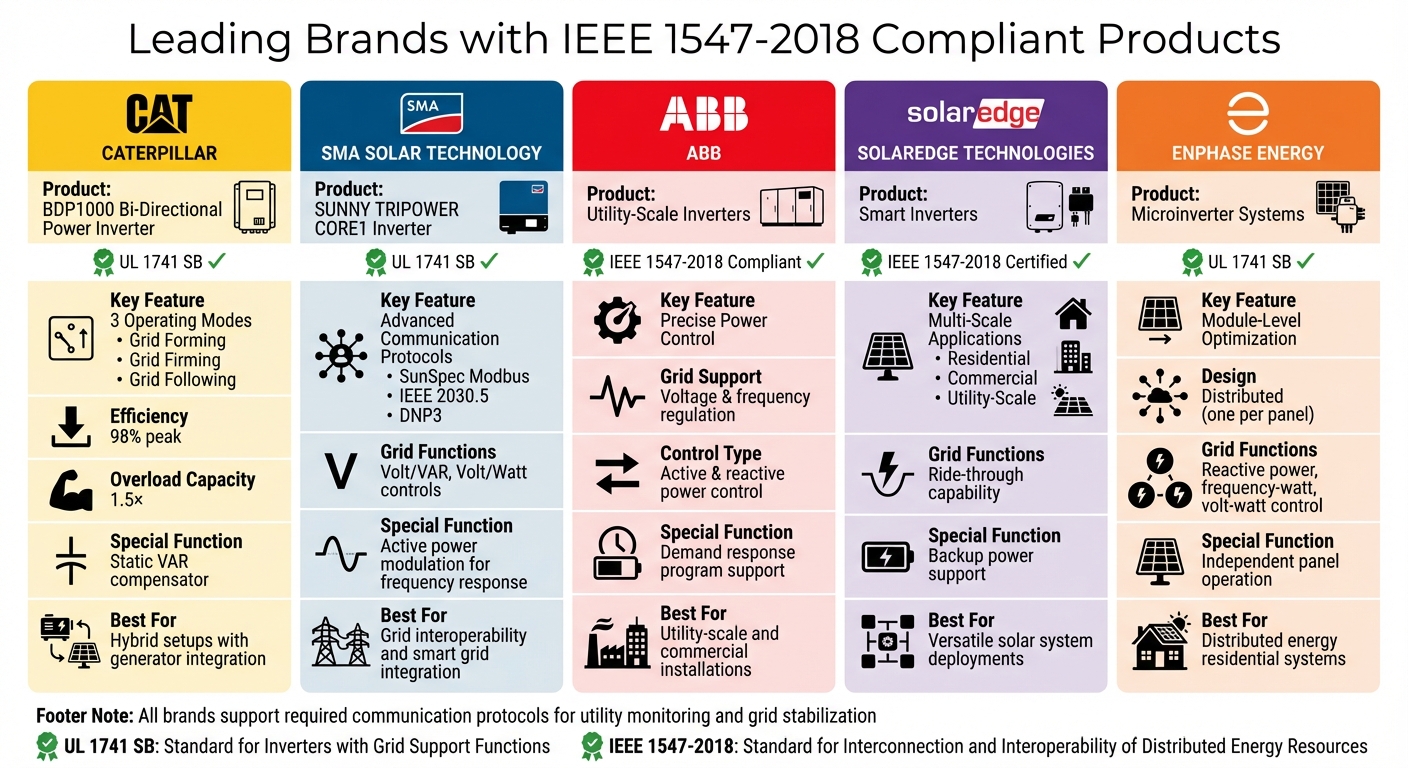
Top 5 IEEE 1547-2018 Compliant Inverter Brands Comparison
Top manufacturers now provide distributed energy resource (DER) systems that align with IEEE 1547-2018 standards, catering to renewable energy and backup power needs. Some achieve compliance through certifications like UL 1741 Supplement B (SB), while others integrate advanced grid-support features and standardized communication protocols. These brands reflect diverse strategies for grid-connected DER systems, ranging from traditional generators upgraded with smart inverters to cutting-edge solar and microinverter technologies. Below are highlights of leading brands demonstrating strong adherence to these standards.
Caterpillar Generator Sets
Caterpillar's BDP1000 Bi-Directional Power Inverter stands out for its UL 1741 SB certification and advanced grid-stabilizing features. This inverter operates in three distinct modes - grid forming, grid firming, and grid following - enabling it to serve as a primary power source, assist grid stability, or synchronize with utility power. Its patented non-linear droop control ensures precise frequency and voltage regulation. Key specs include a 98% peak efficiency, a high overload capacity of 1.5×, and a 2 per unit fault current capability. Additionally, it functions as a static VAR compensator, offering reactive power support. For hybrid setups, its integrated controls optimize fuel use by allowing lean-burn gas gensets to run more efficiently in island mode.
SMA Solar Technology Inverters
SMA Solar Technology delivers inverters equipped with grid-interoperability features that meet IEEE 1547-2018 standards. These inverters support essential communication protocols like SunSpec Modbus, IEEE 2030.5, and DNP3. They also include smart grid functions such as Volt/VAR and Volt/Watt controls for voltage regulation, active power modulation for frequency response, and ride-through capabilities during grid disruptions. This marks a significant improvement over older systems that disconnected during disturbances.
ABB Inverter Solutions
ABB offers inverters tailored for utility-scale and commercial energy installations, all compliant with IEEE 1547-2018. These inverters feature advanced grid support functions, including precise voltage and frequency regulation, as well as active and reactive power control. They adhere to interoperability standards, enabling seamless communication between facility power management systems and utility grids. This ensures smooth grid stabilization and supports demand response programs.
SolarEdge Technologies Smart Inverters
SolarEdge Technologies produces smart inverters certified to IEEE 1547-2018 for residential, commercial, and utility-scale solar systems. These inverters are designed to support backup power applications while maintaining grid-support capabilities during normal operation. Features include ride-through functionality to handle voltage dips or frequency shifts and compatibility with interoperability protocols for utility communication and control.
Enphase Energy Microinverters
Enphase Energy's microinverter systems meet IEEE 1547-2018 standards through UL 1741 SB certification. Their distributed design attaches individual microinverters to each solar panel, ensuring module-level power optimization while maintaining grid compliance. These systems include smart grid features like reactive power control, frequency-watt response, and volt-watt control. Their independent operation ensures reliable grid support even if some panels underperform. Enphase systems also support required communication protocols for utility monitoring, making them ideal for distributed energy setups.
These brands not only comply with existing standards but also set the stage for future advancements in grid-connected energy technologies.
SunSpec Certification for IEEE 1547-2018
When it comes to products compliant with IEEE 1547-2018, SunSpec certification provides a clear, standardized way to verify communication and grid interconnection capabilities.
The SunSpec 1547 certification program simplifies the process of ensuring compliance with IEEE 1547-2018 and IEEE 1547.1-2020 standards. It focuses on the SunSpec Modbus IEEE 1547 communication framework, specifically using the 700-series Modbus models (701-715). By obtaining this certification, manufacturers can confirm that their inverters, gateways, and energy storage systems meet the necessary protocols and testing requirements for grid interconnection. This approach not only strengthens trust in their products but also speeds up the adoption of distributed energy resource (DER) solutions in grid applications.
For utilities and grid operators, this certification ensures devices are ready for market integration with verified plug-and-play interoperability. The SunSpec Alliance Product Certification Registry, which lists 226 certified DER-related products as of 2026, serves as a valuable resource for verifying certified devices. These efficiencies translate into practical results through real-world product certifications.
Some examples include:
- SMA Solar Technology's SUNNY TRIPOWER CORE1 inverter (cert. SM-000024, models 701-714)
- FranklinWH Energy Storage's aGate and Meter Adapter (cert. SM-000028, models 701-715 for energy storage systems)
- Lion Energy's Management System (cert. SM-000036, models 701-713)
- DER Security Corp.'s DER Simulator (cert. SM-000046, models 701-715, 64412, and 64415)
For manufacturers, SunSpec certification offers a smoother path to market readiness. Many utilities accept it as proof of compliance, reducing the need for custom verification processes. This standardized testing not only cuts down on time and costs but also ensures that equipment meets the grid communication and support requirements essential for today’s distributed energy systems.
Finding IEEE 1547-2018 Compliant Equipment on Electrical Trader
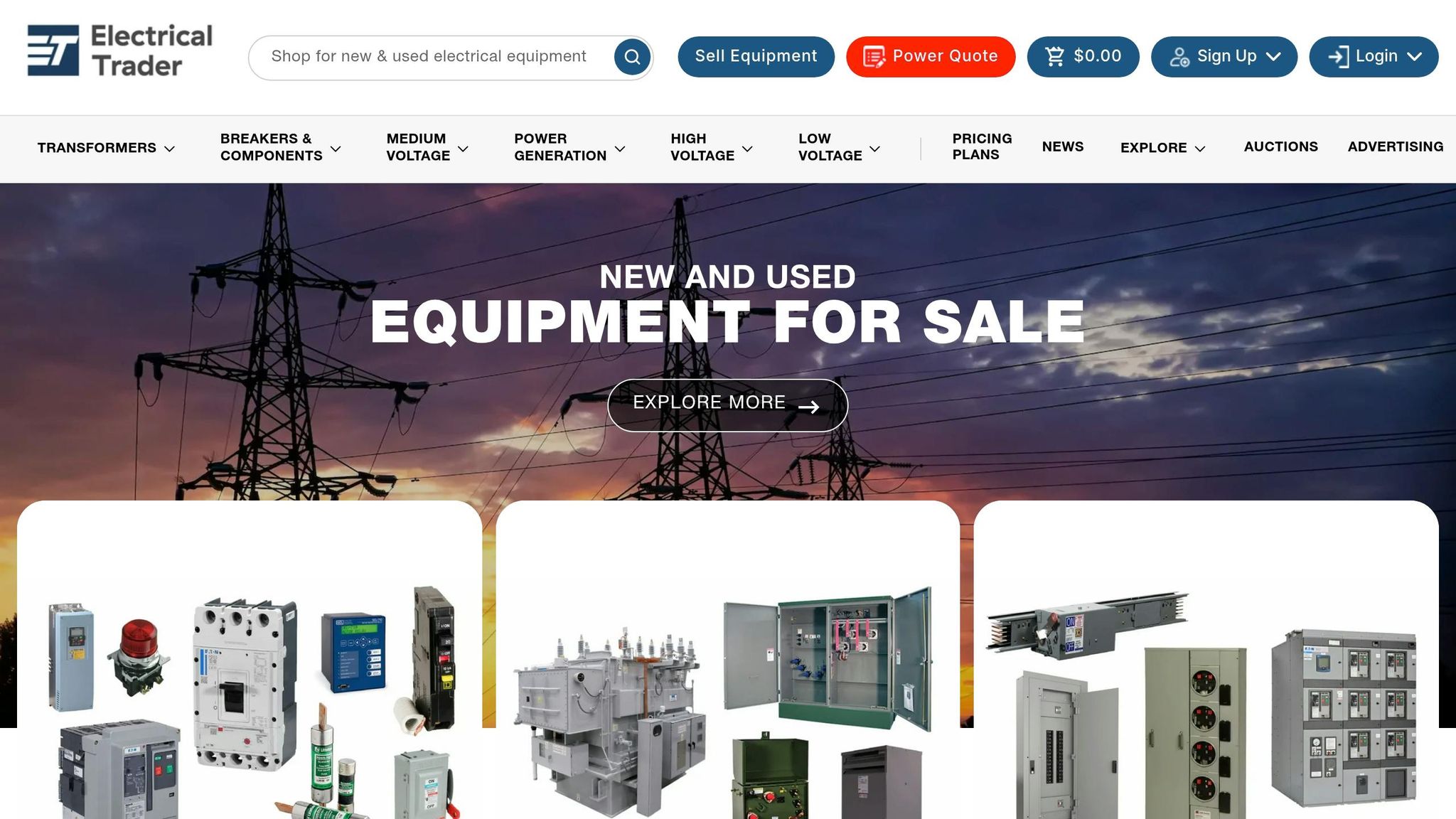
When searching for equipment on Electrical Trader, focus on the certification code rather than the standard name. Specifically, use "UL 1741-SB" as your primary search term. This certification is prominently displayed on product nameplates and specifications for devices that comply with the 2018 IEEE 1547 standard. As highlighted by IEEE SCC21, "For inverters rated for compliance with the new IEEE 1547-2018, IEEE 1547a-2020, and IEEE 1547.1-2020, certification via Supplement SB will be required". Using this approach ensures you can efficiently identify products that meet the standard.
Electrical Trader's platform is designed to streamline your search with well-organized listings. The marketplace includes inverters, transformers (step-up and three-phase), breakers, and generator sets tailored for facility power management. When browsing inverters, make sure the product specifications explicitly mention "Supplement SB" certification. Avoid products certified under the older "Supplement SA", as manufacturers can choose which version to adhere to.
For communication protocols, verify that smart inverters support interoperability standards like SunSpec Modbus, DNP3, or IEEE 2030.5. These protocols are critical for enabling remote utility control in line with the 2018 revision. Additionally, ensure that transformers include relays capable of detecting single-phase loss on the utility side.
Electrical Trader also provides tools for comparing new and used equipment. Since UL 1741 Edition 3 was released on September 28, 2021, and compliance deadlines for inverter-based DERs generally fell after April 1, 2023, you’ll find certified products readily available. The platform's categorized listings for breakers, transformers, and voltage equipment make it easier to assemble complete interconnection solutions that align with both safety and grid support requirements.
For facility power management, prioritize listings that specify Direct Transfer Trip (DTT) capability and Remote Terminal Unit (RTU) telemetry. Technical manuals provided through Electrical Trader should clearly outline these advanced grid support features alongside the UL 1741-SB certification, ensuring you have all the information needed to make an informed decision.
Conclusion
Published on April 6, 2018, IEEE 1547-2018 introduced a new standard for integrating distributed energy resources. By requiring systems to stay online during grid disturbances, it enables features like voltage regulation, frequency response, and ride-through capabilities. This shift turns renewable energy systems and generator sets into active participants in grid stability rather than passive components that disconnect during disruptions.
The brands featured here - Caterpillar, SMA Solar Technology, ABB, SolarEdge Technologies, and Enphase Energy - have achieved UL 1741-SB certification, confirming their products meet the advanced grid functionality outlined by the standard. Their dedication to compliance ensures professionals can access reliable, cutting-edge equipment.
For those looking to source certified products, Electrical Trader offers a centralized platform. It allows users to compare new and used equipment, including inverters, transformers, breakers, and power generation systems, with filters specifically for UL 1741-SB compliant products. This is especially valuable in states like California, Texas, and New York, where regulatory mandates are already in effect.
Whether managing power systems or installing grid-connected renewable solutions, choosing IEEE 1547-2018 compliant equipment ensures alignment with today’s utility standards. Electrical Trader makes the process straightforward, offering access to trusted manufacturers and verified products.
FAQs
Do I need UL 1741-SB to meet IEEE 1547-2018?
UL 1741-SB certification isn't a universal requirement for meeting IEEE 1547-2018. However, some jurisdictions mandate that inverters carry this certification to align with the standard. It's crucial to review local regulations to understand specific compliance needs.
What smart inverter features does IEEE 1547-2018 require?
The IEEE 1547-2018 standard requires smart inverters to include features like voltage regulation, frequency response, active and reactive power support, local interoperability, and ride-through capability. These functionalities are essential for maintaining reliable grid operations and meeting today's energy standards.
How can I confirm a product is IEEE 1547-2018 compliant on Electrical Trader?
To verify IEEE 1547-2018 compliance on Electrical Trader, start by checking product descriptions or accompanying documents for clear compliance statements. Look for certifications or test reports from trusted programs, such as the IEEE Conformity Assessment Program (ICAP). If the information isn’t immediately obvious, dive into the manufacturer’s specifications or reach out to the seller directly through the platform for confirmation.