Guide to Sustainable Materials in Electrical Components
The electrical industry is moving towards materials that reduce waste, emissions, and dependency on scarce resources. Here's what you need to know:
- Key Materials: Recycled metals, bio-based plastics, halogen-free insulation, and low-GWP gases.
- Why It Matters: Electrical components contribute to e-waste and carbon emissions. Sustainable materials help reduce their environmental footprint.
- Examples of Change:
- Certifications to Watch: UL ECOLOGO®, RoHS, REACH, and ISO 14001 are benchmarks for eco-friendly products.
- How to Choose: Look for Environmental Product Declarations (EPDs), recycled content, and durability when sourcing components.
This shift isn’t just about compliance - it’s about smarter material choices that align with global efforts to reduce waste and emissions. Dive into the full details to see how the industry is transforming.
Principles and Standards for Sustainable Material Selection
Core Principles of Sustainable Design
When it comes to sustainable material selection in electrical components, three main principles take center stage: life cycle assessment (LCA), eco-design, and resource efficiency.
LCA is a method governed by ISO 14040 and ISO 14044 that evaluates the environmental impact of a product throughout its entire life - from raw material extraction to disposal. This approach provides a detailed view of a product's total carbon footprint.
Building on LCA insights, eco-design focuses on making smarter material choices early in the design process. For instance, this could mean opting for rare-earth-free magnets, biodegradable insulation, or replacing SF6 with low-GWP insulating gases. Meanwhile, resource efficiency ensures materials like copper and aluminum can be recycled, reused, or remanufactured, keeping valuable resources in circulation and out of landfills.
"LCA is particularly useful for identifying system carbon emissions from energy-consuming equipment and is an essential tool for energy system assessments." - Finnveden et al.
These principles set the stage for standards that help define and measure sustainable practices.
Key Standards and Certifications
A range of standards helps guide sustainability efforts in electrical components:
- RoHS (Restriction of Hazardous Substances) limits harmful substances like lead, mercury, and cadmium.
- REACH ensures manufacturers manage chemicals across the supply chain responsibly.
- ISO 14001 provides a framework for environmental management systems to reduce a facility's overall environmental impact.
One of the newest and most impactful certifications is UL ECOLOGO®, developed under UL 2711. This life cycle-based standard applies to energy and industrial automation equipment. In November 2025, Schneider Electric became the first company to achieve this certification for its PowerPact™ Molded Case Circuit Breakers. The certification process involved third-party audits examining material selection, manufacturing methods, and end-of-life planning.
"As an energy technology leader and the first company to apply ECOLOGO certification, we're setting a new standard for transparency and accountability in manufacturing, helping our customers confidently deploy lower-carbon energy technology and power distribution solutions at scale." - Bin Lu, Executive Vice President, Power Products, Schneider Electric
The ECOLOGO mark has substantial influence: 73% of consumers recognize it, and 66% of U.S. retailers prefer it over unverified claims. Additionally, it is referenced in over 400 green purchasing specifications worldwide.
With these standards, manufacturers have clear benchmarks to evaluate materials.
Material-Level Criteria for Sustainability
When assessing materials for sustainability, four key criteria come into play: recycled content, recyclability, toxicity, and durability.
- Recycled content reduces a product’s carbon footprint. For instance, recycling copper efficiently can cut emissions by 3–4 kg of CO₂e per kilogram.
- Recyclability ensures materials can be recovered and reused at the end of their life cycle.
- Toxicity is a major concern. Take brominated flame retardants (BFRs), often found in traditional PCB substrates like FR4. These release harmful furans and dioxins during recycling, undermining sustainability efforts.
- Durability extends the lifespan of components, reducing the need for replacements and lowering cumulative environmental costs.
sbb-itb-501186b
FEMM Hub: Sustainable manufacturing of electrical machine components for the circular economy
Main Sustainable Material Types in Electrical Components
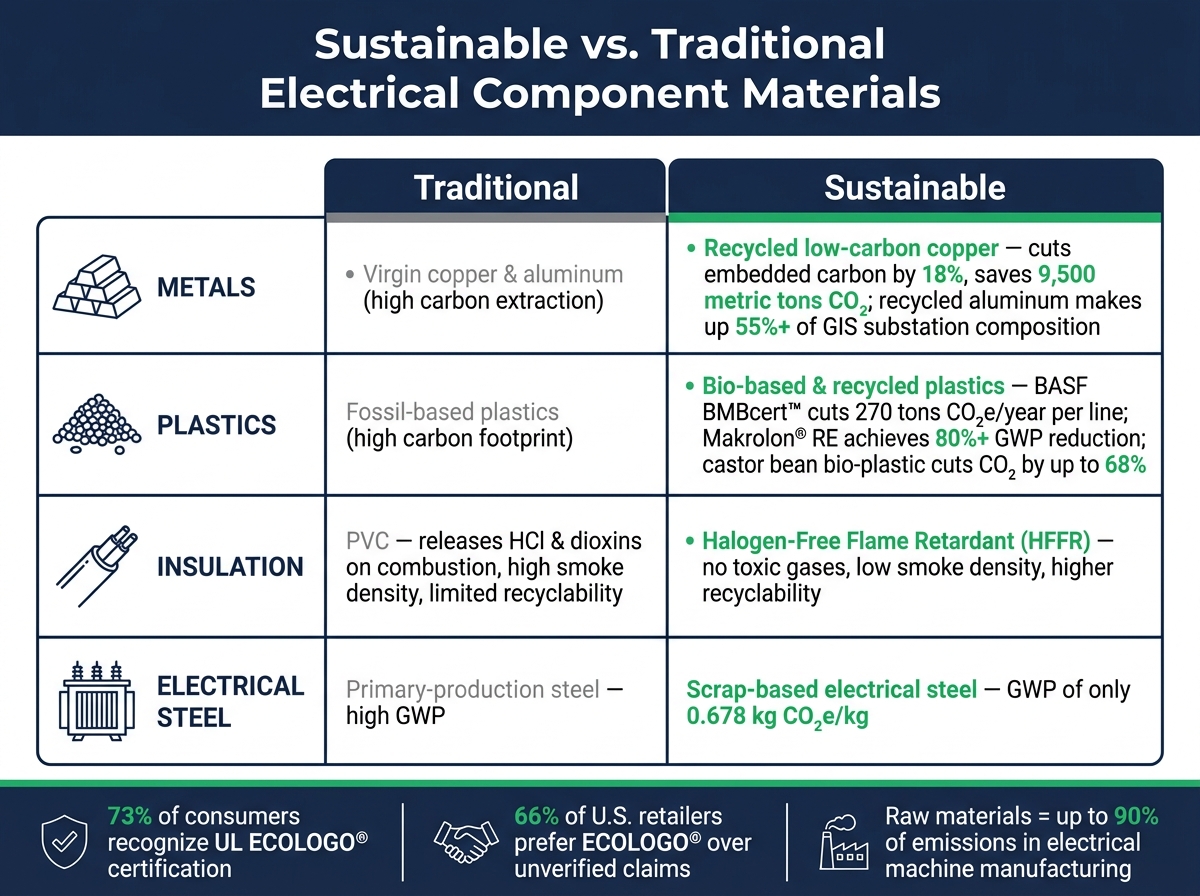
Sustainable vs. Traditional Electrical Component Materials: Key Metrics
Sustainability in electrical components is no longer optional - it's a necessity. Let's dig into some of the key material types driving this shift and how they're being applied in real-world scenarios.
Recycled Metals: Steel, Copper, and Aluminum
Recycled metals are becoming a go-to choice for manufacturers aiming to reduce environmental impact. A prime example is recycled aluminum, which makes up over 55% of a 145kV Gas Insulated Substation's composition. With copper usage expected to increase tenfold and aluminum sixfold between 2020 and 2050, sourcing recycled metals isn't just smart - it's essential.
In May 2026, Hitachi Energy set a new benchmark by delivering a 380 MVA transformer made with low-carbon copper. This innovation cut embedded carbon by 18% and slashed material-related environmental costs by 60%, saving an estimated 9,500 metric tons of CO₂.
"Through continuous collaboration with customers and suppliers, we are advancing the decarbonization of the transformer supply chain, offering low-carbon, and more circular material options across key materials categories for transformers, including steel, aluminum, copper conductors, and insulating fluids." - Namita Asnani, Head of Sustainability, Transformers Business Unit, Hitachi Energy
Another promising material is scrap-based electrical steel. Hot strips made from this steel have a Global Warming Potential (GWP) of just 0.678 kg CO₂e/kg, making them a compelling option for transformer cores and housings while maintaining magnetic efficiency.
Recycled and Bio-Based Plastics
The shift from fossil-based to recycled and bio-based plastics is another game-changer. These materials now match traditional plastics in durability, UV resistance, and fire safety, all while drastically reducing carbon footprints.
Take Siemens Smart Infrastructure and BASF, for example. In June 2024, they began producing the SIRIUS 3RV2 circuit breaker using BASF's Ultramid® and Ultradur® BMBcert™ plastics. These materials replace fossil feedstock with biomethane from agricultural waste, cutting 270 tons of CO₂ equivalents annually from one production line.
"The mass balance approach enables gradual replacement of fossil raw materials in sometimes complex production processes." - Martin Jung, President, BASF Performance Materials
ABB's SAGA™ wiring collection also stands out. Using Covestro's Makrolon® RE polycarbonate, made from 85.8% bio-circular raw materials, ABB reduced the product's carbon footprint by over 80%. Similarly, SCHURTER's "Green Line" connectors, launched in 2024, use bio-based plastic from castor beans, cutting CO₂ emissions by up to 68% compared to fossil-based alternatives - all while meeting stringent flame ratings like UL94 V-0.
One hurdle for bio-based plastics, however, is flame retardancy. Traditional flame retardants often rely on halogens or red phosphorus, which come with environmental drawbacks. Newer options, like LAPP's corn starch-based EPIC® connector housings introduced in 2024, are halogen-free and red phosphorus-free, meeting fire safety standards without the usual trade-offs.
Halogen-Free and Low-Toxicity Insulation
PVC insulation, while commonly used, poses challenges due to the release of toxic gases like HCl and dioxins during combustion. Halogen-free alternatives based on polyolefins offer a cleaner solution. These materials, often paired with mineral fillers like aluminum trihydrate (ATH) or magnesium hydroxide, deliver comparable fire performance without toxic byproducts.
| Property | PVC Insulation | Halogen-Free (HFFR) |
|---|---|---|
| Toxic gas on combustion | Yes (HCl, dioxins) | No |
| Smoke density | High | Low |
| Recyclability | Limited (chlorine contamination) | Higher |
| Typical applications | Legacy cables, conduit | Modern cables, molded parts |
In high-voltage insulation, dielectric performance is critical, as roughly 75% of high-voltage transformer failures are linked to insulation issues. Sustainable alternatives like natural esters from soybean or rapeseed are being explored for their biodegradability and dielectric strength. Re-refined mineral oils also offer a circular option, maintaining performance while reducing reliance on virgin materials.
These advancements highlight the growing role of sustainable materials in electrical components, setting the stage for smarter sourcing decisions in the future.
Brand-Specific Innovations in Sustainable Materials
How Major Brands Are Using Sustainable Materials
Big-name companies are finding ways to integrate eco-friendly materials into their products. Take Schneider Electric, for instance. Their RESi9 DPN XE miniature circuit breakers use ECONYL® regenerated nylon, which reduces the product's carbon footprint by 25%.
Siemens has also stepped up with their SIRIUS 3RQ4 relays. Developed in collaboration with Envalior, these relays feature Akulon® K225-KS B-MB, a material that's 70% bio-based, derived from used cooking oil. Not only is it halogen-free and UL94 V-0 rated at 0.4 mm, but it also reduces semiconductor energy losses by 33%.
In another example, Siemens partnered with DOMO Chemicals to create RCCBs (Residual Current Circuit Breakers) using TECHNYL® 4EARTH® PA6. This material incorporates 50% recycled textile fibers and is UL-certified, halogen-free, and rated for 10,000 cycles.
"It's our 'new normal' to deploy as much sustainable material as possible for each new product to support our customers in achieving both optimized operations and their environmental goals." - Andreas Matthé, CEO of Electrical Products, Siemens Smart Infrastructure
These efforts show how sustainability is being woven into every stage of product development.
Specialized Material Suppliers
Specialized suppliers play a key role in providing the materials that make these innovations possible. For example, Covestro's Makrolon® RE is a bio-circular polycarbonate made from organic waste and residues, with 85.8% of its raw materials being bio-circular. ABB utilized this material in its SAGA™ collection of switches and sockets, achieving over an 80% reduction in Global Warming Potential compared to traditional fossil-based polycarbonate.
DOMO Chemicals is another standout. Their TECHNYL® 4EARTH® line uses chemical recycling to transform post-consumer textiles into high-quality PA6 compounds. These compounds meet the stringent safety requirements for electrical components.
"Utilizing Covestro's solutions is not just a choice; it's a strategic relief. It's about crafting products that don't just connect circuits but connect with a sustainable future and setting a new standard for responsible electrification." - Sven Werdes, Global Product Line Manager, ABB
Sustainable Manufacturing and Refurbishment
Sustainability doesn’t stop at materials - it extends to how products are made and what happens at the end of their life. Siemens has embraced the "DEGREE" framework to ensure that all relevant product families incorporate eco-design principles by 2030. This means products are designed to be halogen-free, easy to disassemble, and recyclable from the very start.
ABB is also making strides with its PMA® EcoGuard™ system for cable protection. By reusing discarded fishing nets to create high-performance conduit, the system cuts upstream Scope 3 greenhouse gas emissions by 30% and freshwater use by 50% compared to traditional options. The base material, Akulon® RePurposed, has a carbon footprint that's 70% lower than virgin nylon 6.
When refurbishment isn’t feasible, eco-labeled products like Siemens' "EcoTech" ensure recyclability at the end of their lifecycle. This approach minimizes the need for raw materials while supporting a circular economy.
How to Source Sustainable Electrical Components
Choosing sustainable electrical components goes beyond just innovation - it requires careful consideration of their environmental impact.
Reading Product Documentation for Sustainability
A great starting point is the Environmental Product Declaration (EPD). This standardized, third-party-verified document provides a detailed breakdown of a product's life cycle impact, covering factors like global warming potential and resource depletion. For instance, when comparing options for circuit breakers or switchgear, EPDs allow you to make side-by-side comparisons of these metrics.
Another key resource is Material Data Sheets, which list the chemical substances used in a component. These sheets help identify eco-friendly materials like recycled metals, bio-based plastics, or halogen-free insulation, complementing what you learn from EPDs. Many major manufacturers, such as Schneider Electric, provide online portals where you can access sustainability certifications and filter products by environmental performance metrics. If you're replacing an older component, tools like Product Substitution and Replacement tools can guide you toward a greener alternative without adding unnecessary complexity to your search.
Once you've gathered this information, you can weigh sustainability factors alongside cost and performance to make an informed choice.
Balancing Cost, Performance, and Sustainability
After verifying product details, it's time to balance these insights with cost and performance considerations. Focusing solely on upfront costs can be misleading. Instead, consider the ecological return on investment - a framework that incorporates circular economy principles, material sustainability, and long-term efficiency. For example, a component made from recycled metals might have a higher purchase price but could offer net environmental benefits, such as reduced water consumption and resource depletion, as shown in life cycle assessments.
When evaluating performance, look at factors like material composition, system integration, and end-of-life options. For renewable energy systems, components designed for variable load conditions are often better than those optimized for a single operating point. Features like modularity and repairability also add long-term value, reducing both disposal costs and environmental impact.
| Criteria | Sustainable Choice | Less Sustainable Choice |
|---|---|---|
| Material Use | Recycled metals; rare-earth–free | Virgin materials; critical raw materials |
| End-of-Life | Recyclable or repairable | Disposal-oriented |
| Operational Design | Optimized for variable loads | Constant-load only |
| Circularity Score | High (e.g., 95.3% for rectifiers) | Low (e.g., 38.6% for inverters) |
Once you've assessed cost and performance, exploring platforms that specialize in sustainable procurement can simplify the process even further.
Using Marketplaces Like Electrical Trader
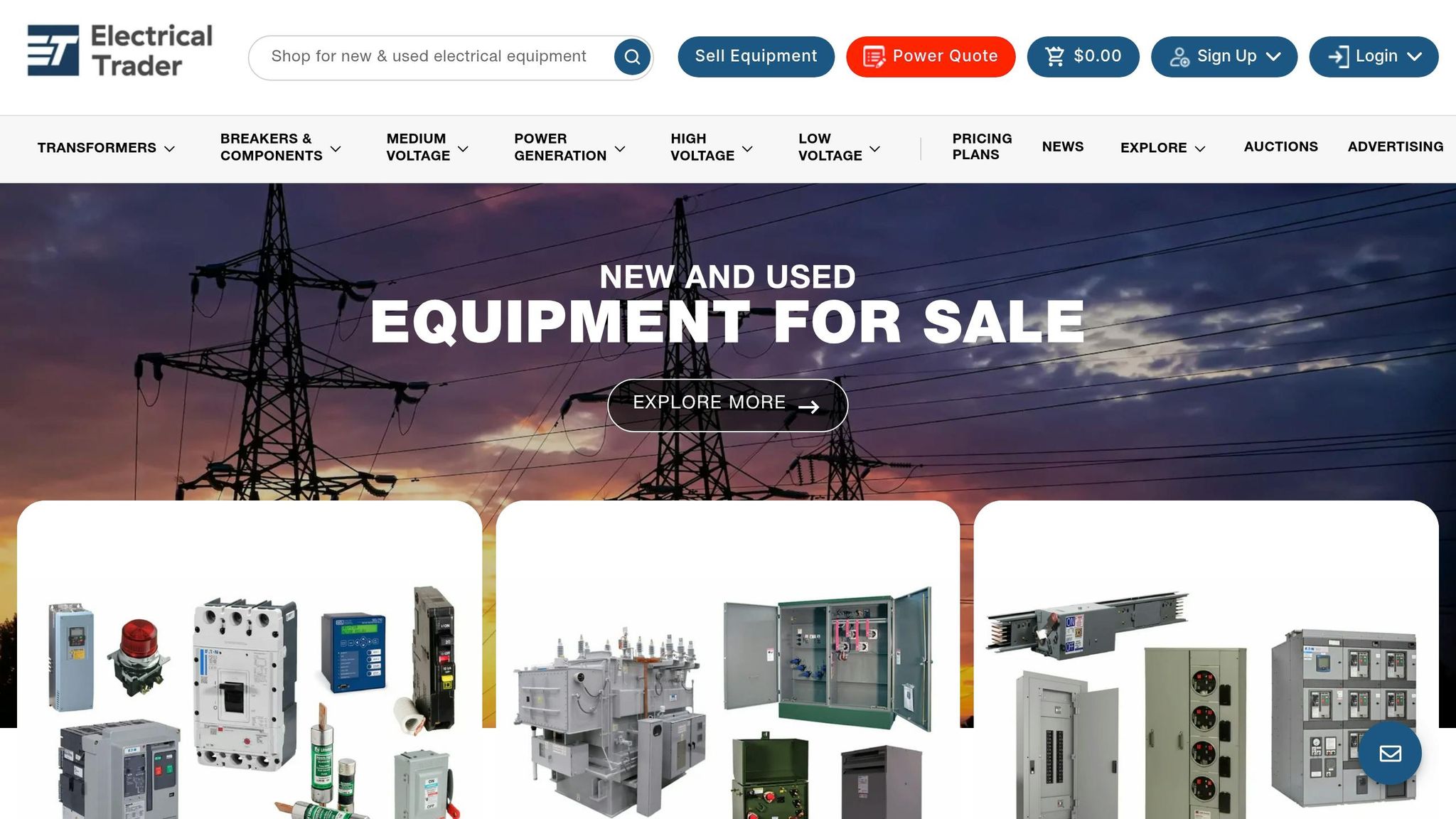
Sustainable sourcing doesn't always mean buying brand-new components. Platforms like Electrical Trader offer a marketplace for both new and used electrical components, including breakers, transformers, and power generation tools. Opting for quality used or surplus parts can significantly reduce the demand for newly manufactured components, cutting down on resource use and emissions while maintaining functionality.
For projects with strict compliance requirements, Electrical Trader's categorized listings streamline the search for specific equipment. Whether you're managing a retrofit or replacing a single part, this platform helps keep functional equipment in circulation, aligning with circular economy principles. Sellers can also list surplus inventory, preventing usable components from ending up in landfills and supporting a more sustainable procurement approach.
Conclusion
Sustainable material choices are changing the way the electrical components industry operates. Today, the design, manufacturing, and sourcing of these components are heavily influenced by environmental considerations. With energy systems responsible for about 60% of global greenhouse gas emissions and raw materials contributing up to 90% of emissions during the manufacturing phase of electrical machines, choosing the right materials has become one of the most impactful decisions in a product's lifecycle.
Several products already showcase the benefits of integrating sustainable materials. For example, the SIRIUS 3RV2 circuit breaker and SCHURTER Green Line connectors demonstrate how environmentally conscious design can be both practical and market-ready. These products highlight the industry’s growing focus on balancing performance with sustainability.
"Environmental performance is no longer an afterthought in industrial product design. It is a design criterion." - Bin Lu, Executive Vice President, Power Products, Schneider Electric
To stay ahead, businesses should rely on tools like Life Cycle Assessment (LCA) data, verified certifications such as UL ECOLOGO®, and full cost assessments. Platforms like Electrical Trader also play a key role by offering access to both new and quality used components, helping reduce the demand for newly manufactured parts while keeping functional equipment in use.
FAQs
Which certifications matter most for sustainable electrical components?
When selecting eco-friendly electrical components, certifications play a crucial role in verifying their environmental impact. Look for these key certifications:
- UL ECOLOGO (UL 2711 standard): This certification evaluates the entire lifecycle of a product, ensuring it meets strict sustainability criteria.
- Environmental Product Declarations (EPDs): These declarations, aligned with ISO 14025 or ISO 14021 standards, provide transparency about the materials used in a product.
- Cradle to Cradle Certified: This rating assesses products based on safety, reuse potential, and social responsibility factors.
Electrical Trader aligns with these principles by offering a range of both new and pre-owned equipment designed to meet sustainability goals.
How do I verify recycled or bio-based content in a component?
To confirm whether an electrical component contains recycled or bio-based materials, start by checking its Environmental Product Declaration (EPD). These declarations provide detailed data on the component's environmental impact and are often supported by Life Cycle Assessments (LCA) in line with ISO 14021 standards.
If the material relies on a mass balance approach, certifications such as ISCC PLUS or REDcert can serve as credible indicators. Additionally, when sourcing components from platforms like Electrical Trader, consider asking for the component's sustainability profile to gain further insights.
Do sustainable materials change safety or performance ratings?
Sustainable materials do not compromise safety or performance ratings. Today's bio-based plastics and polymers are carefully designed to offer the same durability, reliability, and safety as traditional materials. They meet stringent standards such as UL94 V-0 flame retardancy and maintain essential electrical and thermal performance. These materials are crafted to deliver top-notch functionality while also offering environmental advantages.