

Environmental Impact of Flame Retardants in Electrical Systems
Flame retardants are essential in electrical systems to reduce fire risks, but they pose long-term risks to health and the planet. Chemicals like TBBPA and DecaBDE, widely used in circuit boards and plastics, persist in ecosystems, accumulate in living organisms, and release toxic by-products during disposal. Alternatives like organophosphate flame retardants (OPFRs) are gaining traction due to stricter regulations, but they come with their own concerns, including potential toxicity.
Key points:
- Flame retardants: Found in circuit boards, wire insulation, and enclosures to meet fire safety standards.
- Brominated flame retardants (BFRs): Effective but harmful; they leach into the environment and bioaccumulate.
- Organophosphate flame retardants (OPFRs): Emerging replacements, but linked to health risks like developmental issues.
- E-waste challenges: Improper recycling releases harmful toxins; less than 40% of e-waste is recycled properly in regions like the EU.
- Regulations: Efforts like the EU's PBDE limits and the EPA's safer alternatives program push for better solutions.
The shift to safer, non-halogenated flame retardants is underway, but balancing fire safety, human health, and waste management remains a challenge. Effective recycling and stricter disposal practices are critical to minimize harm.
Polymer Flame Retardants May Pose Serious Environmental Risk | A Q&A with Dr. Arlene Blum
sbb-itb-501186b
Main Types of Flame Retardants and Their Uses
The electrical industry depends on four key chemical families of flame retardants: inorganic, halogenated (mainly bromine and chlorine), organophosphorus, and nitrogen-based compounds. Among these, brominated and organophosphate flame retardants are the most commonly used in electrical applications, making up about 45% of global production by volume. Understanding how these flame retardants work helps explain the industry's gradual shift toward safer alternatives.
Brominated Flame Retardants (BFRs)
Brominated flame retardants (BFRs) are organobromine compounds where bromine atoms replace hydrogen, making up 50%–85% of their weight. These compounds work by disrupting the chemical reactions that sustain combustion, effectively slowing or stopping fires. In 2011, global sales of BFRs reached approximately 390,000 tons, with electronics and electrical devices consuming 50% of that total.
One of the most widely used BFRs is Decabromodiphenyl ether (DecaBDE), a type of Polybrominated Diphenyl Ether (PBDE). DecaBDE is typically added to polymers in concentrations of 10% to 15% by weight and is often combined with antimony trioxide to boost its fire-retardant performance. It is commonly found in materials like high-impact polystyrene (HIPS) for TV back panels, polyamides for connectors and bobbins, and polyterephthalates (PBT/PET) for switchgear.
The way BFRs are incorporated into materials - either as reactive or additive compounds - affects their environmental behavior. Reactive BFRs, such as TBBPA in epoxy resins, chemically bond to the polymer chain, making them less likely to leach out. Additive BFRs, like PBDEs in ABS plastics, are physically mixed and can migrate into the environment over time. For example, a standard 1.6 mm FR4 circuit board laminate contains about 0.42 kg of TBBPA per square meter, and around 80% of BFRs in electronics are used in cabinets, housings, and printed circuit boards. This contrasts with the solid-phase action of organophosphate flame retardants, which operate differently.
Organophosphate Flame Retardants
As concerns over halogenated flame retardants grew, organophosphate flame retardants (OPFRs) became popular alternatives. These compounds, which are phosphate esters, can be either non-halogenated or contain bromine or chlorine. Unlike BFRs, which act in the gas phase, OPFRs work in the solid phase by extracting water from the material to encourage charring, forming an insulating barrier. They now account for 20% of global flame retardant production and are increasingly used to replace phased-out PBDEs.
Common OPFRs include Triphenyl phosphate (TPP) and Resorcinol bis-diphenylphosphate (RDP), often used in PC/ABS blends for laptop and monitor housings. In the mid-1990s, halogenated flame retardants were present in nearly 68% of TV enclosures, but by 1997, this figure had dropped to just 8% in European markets as manufacturers shifted toward halogen-free options.
However, this transition hasn't been without challenges. Heather M. Stapleton, Professor of Environmental Chemistry and Health at Duke University, highlights a growing concern:
"OPFRs exposure is ubiquitous in people and in outdoor and indoor environments, and are now often found at higher levels compared to PBDE peak exposure levels."
Both halogenated and non-halogenated organophosphate flame retardants have raised health concerns in toxicity studies, leading some experts to describe them as "regrettable substitutions". This ongoing issue reflects the difficulty of finding flame retardants that effectively balance fire safety, environmental impact, and human health in electrical applications.
Effects on the Environment and Human Health
Flame retardants, known for their high-temperature stability, tend to linger in the environment long after their intended use. As the US EPA explains, "BFRs belong to a large group of organohalogen chemicals. They are highly persistent, bioaccumulative". This resistance to degradation not only leads to bioaccumulation but also creates challenges in recycling and waste management, particularly in electrical systems.
How Long Flame Retardants Remain in the Environment
The environmental persistence of flame retardants depends on how they are incorporated into materials. Reactive flame retardants, which chemically bond to polymers, show an emission factor of 0% during use because they do not volatilize or leach. In contrast, additive flame retardants release about 0.05% over the lifetime of an electronic product. While this release rate seems minimal, the cumulative environmental impact is significant.
Once released, these compounds tend to volatilize, leach into water systems, and accumulate in sediments. Their lipophilic and hydrophobic properties allow them to persist for decades. Improper disposal of electronic waste further exacerbates the issue, with dioxin emissions reaching approximately 0.51 mg TEQ per kilogram of waste. These emissions contribute to the prolonged presence of toxic chemicals in ecosystems, posing risks to both human health and wildlife.
Health Risks to Humans and Wildlife
The persistence of flame retardants means they accumulate in living organisms, leading to various health concerns. Both brominated flame retardants (BFRs) and organophosphate flame retardants (OPFRs) have been linked to harmful effects, though their impacts differ. For example, polybrominated diphenyl ethers (PBDEs) have been detected in human hair, semen, blood, urine, and even breast milk. Infants are particularly vulnerable, with higher daily exposure levels due to inhalation and ingestion of contaminated household dust. Exposure to BFRs has been associated with thyroid hormone disruption, reproductive issues like cryptorchidism, and developmental problems, including reduced IQ and psychomotor delays in children.
Switching to OPFRs has not resolved these concerns. Research published in the Archives of Toxicology highlights that prenatal exposure to OPFRs may lead to low birth weight, behavioral issues, and cognitive deficits, with some effects differing by sex. Specific compounds such as TDCPP, TPhP, and TCEP have been shown to interfere with neural cell growth and differentiation. TDCPP, in particular, has been linked to genotoxic and carcinogenic effects in human liver cells. Studies on wildlife, including zebrafish and rodents, reveal similar patterns of neuroinflammation, oxidative stress, and endocrine disruption, further emphasizing the widespread impact of these chemicals on ecosystems.
How Flame Retardants Enter the Environment and Disposal Problems
The journey of flame retardants into the environment often begins during manufacturing. Emissions occur at various stages, such as mining raw materials like heavy metals for inorganic flame retardants, chemical synthesis, and the compounding process where these chemicals are added to polymers. However, the largest environmental impact usually happens at the end of a product's life, particularly during disposal, which amplifies contamination risks.
The waste treatment phase is a major contributor to environmental pollution. The sheer volume of e-waste generated is staggering, and the complexity of modern electronics - often containing over 1,000 different materials - makes separating flame-retardant-treated plastics from other components incredibly challenging. In the EU, less than 40% of electronic waste is recycled properly, while globally, about 19% of waste electrical and electronic equipment (WEEE) is processed under substandard conditions.
Disposal methods further compound the problem. In many developing regions, unsafe recycling practices - like open burning of cables and circuit boards, acid leaching, and manual dismantling - release harmful chemicals into the air, soil, and water. These methods can produce toxic brominated dioxins and furans, with studies measuring emissions as high as 0.51 mg TEQ/kg of waste. A lifecycle assessment published in The International Journal of Life Cycle Assessment highlights that "The largest differences in impact were found to occur in the waste phase due to an increased dioxin emission formed out of BFRs during improper waste treatment". These findings underscore the urgent need for safer and more sustainable recycling practices.
Even official recycling facilities face significant hurdles. Mechanical shredding, for instance, releases flame retardant dust into the air, creating workplace hazards and contributing to environmental contamination. Plastics containing brominated flame retardants are often excluded from standard recycling processes to prevent contamination of new products. Instead, these plastics are incinerated, which undermines efforts toward a circular economy by destroying materials that could otherwise be reused. These challenges persist even after recycling, with troubling consequences.
Contamination in recycled material streams raises additional alarms. A study of 30 plastic items made from recycled electronic waste in the EU revealed that 25% contained hazardous flame retardants. Another investigation of recycled plastic children's products across 26 countries found that 90% of the samples contained banned substances like OctaBDE or DecaBDE, while nearly 50% contained HBCD. The European Environment Agency has warned that "Hazardous flame retardants in materials entering waste streams (e.g. electronics waste) and legislation restricting or preventing recycling those materials could present a key barrier to EU circularity goals". This toxic cycle allows banned substances to reappear in consumer products, including items like children's toys and food-contact materials, where such chemicals should never be present.
These disposal challenges not only intensify environmental contamination but also highlight the pressing need for changes in flame retardant use, recycling practices, and regulatory frameworks.
Government Regulations and Changes in the Industry
Regulatory approaches to managing harmful flame retardants vary between the United States and international bodies. In the U.S., the Environmental Protection Agency (EPA) leads efforts under its Safer Choice Program (formerly the Design for the Environment, or DfE Program). Rather than imposing outright bans, the EPA collaborates with stakeholders to assess alternatives. A key focus has been on Tetrabromobisphenol-A (TBBPA), the primary flame retardant used in printed circuit boards.
In 2015, the EPA completed an alternatives assessment for flame retardants in printed circuit boards. This initiative involved major electronics manufacturers and incorporated experimental testing to evaluate combustion by-products. Results from these tests, supported by industry trade groups, revealed that non-halogenated alternatives matched or outperformed TBBPA in specific applications. As the EPA explained:
"The purpose of this alternatives assessment is to provide objective information to help members of the electronics industry more efficiently factor human health and environmental considerations into decision-making when selecting flame retardants for PCB applications".
This collaborative approach has opened doors for adopting safer alternatives in the industry.
On the other hand, the European Union has adopted stricter measures, particularly through the Stockholm Convention on Persistent Organic Pollutants. Aiming to phase out polybrominated diphenyl ethers (PBDEs), the EU is tightening limits on PBDEs in recycled materials. By 2025, the limit will drop from 500 mg/kg to 350 mg/kg, and by 2027, it will fall further to 200 mg/kg. For high-risk items like toys and childcare products, the threshold will be reduced to a mere 10 mg/kg. The European Commission has emphasized:
"The benefits of recycling must not come at the cost of reintroducing toxic substances into homes".
This tough stance supports the EU's goal of "detoxifying the circular economy" by preventing banned substances from making their way back into consumer products through recycled plastics.
These regulatory actions are driving a transition toward phosphorus-based and non-halogenated alternatives in electrical installations. Global standards such as RoHS (Restriction of Hazardous Substances) and WEEE (Waste Electrical and Electronic Equipment) are now pivotal in shaping the material choices for electronics worldwide. Chemical manufacturers like Albemarle, Clariant, Dow Chemical Company, and Nabaltec AG are at the forefront of developing safer options. Meanwhile, industry organizations such as IPC (Association Connecting Electronics Industries) are working to establish new performance benchmarks for these materials.
Safer Flame Retardant Options
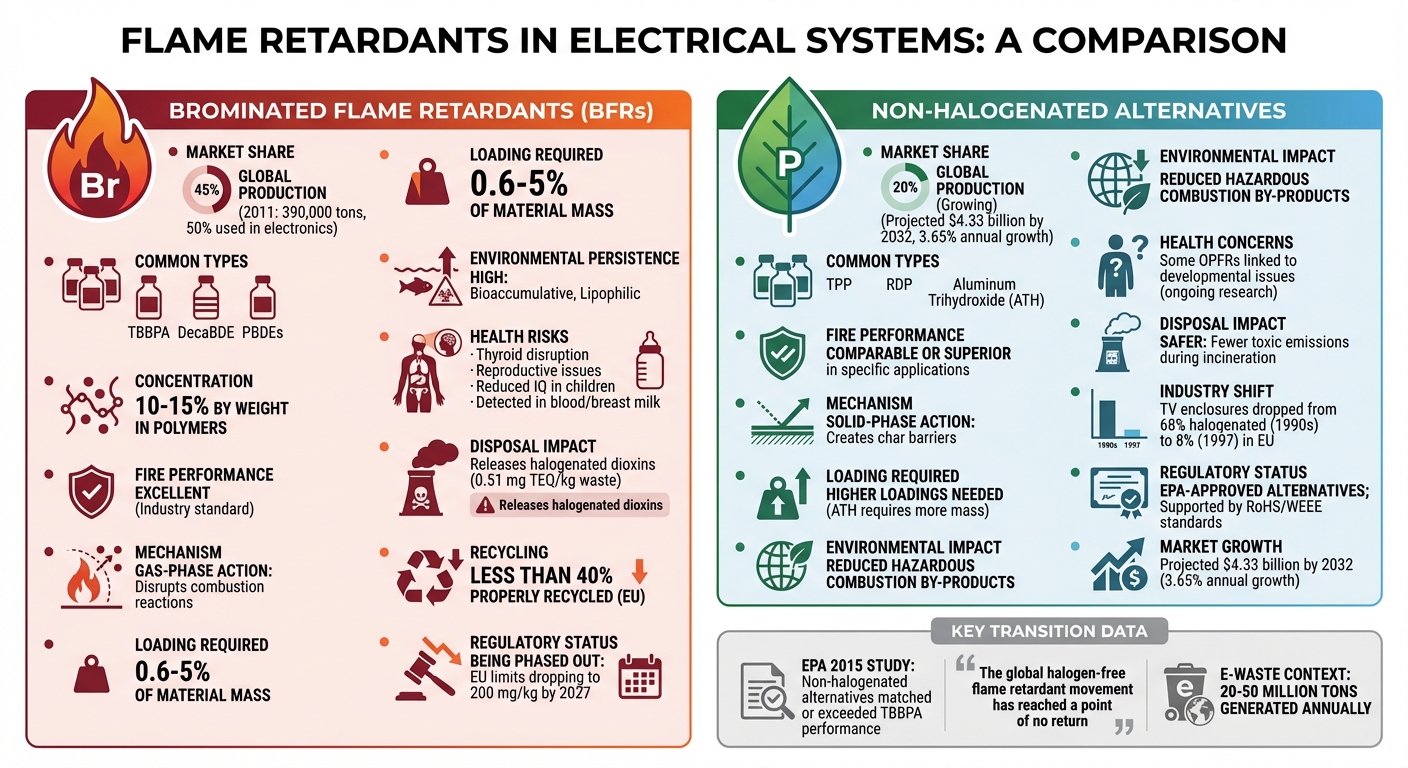
Comparison of Brominated vs Non-Halogenated Flame Retardants in Electronics
Phosphorus-Based and Non-Halogenated Flame Retardants
With stricter regulations and growing health concerns, the industry is moving toward safer alternatives. Phosphorus-based and non-halogenated flame retardants are gaining traction as substitutes for brominated compounds. Instead of releasing halogen gases, these alternatives create char barriers that protect materials from heat, making them especially effective for applications like housings and enclosures (e.g., PC/ABS).
In September 2015, the U.S. EPA's Design for the Environment Program collaborated with leading electronics manufacturers to assess non-halogenated options as replacements for TBBPA in printed circuit boards. Tests conducted by the University of Dayton Research Institute demonstrated that these alternatives matched or exceeded the performance of TBBPA-based boards while producing fewer hazardous by-products during disposal.
However, challenges remain. Traditional halogenated systems achieve fire ratings with just 0.6%–5% of a material's mass, whereas alternatives like Aluminum Trihydroxide (ATH) require higher loadings, potentially altering the material's properties. Despite these hurdles, the flame-retardant market is expected to grow, driven by advancements in electric vehicles and 5G infrastructure, reaching a projected value of $4.33 billion by 2032 with an annual growth rate of 3.65% starting in 2024.
Even with these developments, concerns about safety persist. Research by Blum et al. in Environmental Science & Technology Letters highlights that current exposure levels for both halogenated and non-halogenated organophosphate flame retardants (OPFRs) raise health concerns. Moreover, OPFRs are now found in the environment at levels surpassing the peak concentrations of PBDEs, leading to questions about whether they represent a "regrettable substitution".
Comparison of Different Flame Retardants
Here’s a comparison of brominated flame retardants (e.g., TBBPA) and non-halogenated alternatives:
| Flame Retardant Type | Fire Performance | End-of-Life Environmental Impact |
|---|---|---|
| Brominated FRs (e.g., TBBPA) | Excellent fire resistance; widely used standard | Higher risk of releasing halogenated dioxins and furans during incineration |
| Non-Halogenated Alternatives | Comparable or superior performance in specific applications | Reduced formation of hazardous combustion by-products, making disposal safer |
"Manufacturers can move towards healthier and safer products by developing innovative ways to reduce fire hazard for electronics enclosures, upholstered furniture, building materials and other consumer products without adding flame retardant chemicals."
As Blum et al. point out, focusing on design innovations alongside chemical substitutions can lead to safer products. This approach emphasizes that thoughtful design can enhance safety without compromising environmental or human health.
Conclusion
The environmental and health dangers of traditional brominated flame retardants (BFRs) can no longer be overlooked. With an estimated 20 to 50 million tons of e-waste generated globally each year, these chemicals continue to wreak havoc. BFRs are known to disrupt thyroid function, impair cognitive development in children, and create a troubling cycle where hazardous substances from old electronics find their way into recycled plastics used for everyday items like toys and food containers.
Shifting to phosphorus-based and non-halogenated flame retardants is more than just about meeting regulations - it's a matter of industry accountability. As Sunil Herat from the Griffith School of Engineering aptly stated:
"The global halogen-free flame retardant movement has reached a point of no return".
A 2015 EPA study highlighted that non-halogenated alternatives not only rival but often surpass the performance of TBBPA while significantly reducing toxic emissions.
Still, managing e-waste effectively remains the most pressing challenge. Poorly handled e-waste can release up to 0.51 mg TEQ of dioxins per kilogram, posing severe environmental risks. Strengthening e-waste management systems is critical, especially in regions where informal recycling practices cause the most harm. Industry stakeholders must act decisively to keep electronic waste out of unsafe disposal streams, particularly in developing countries.
Safer flame retardants do more than comply with regulations - they align with sustainable practices. Platforms like Electrical Trader make it easier to access compliant and environmentally responsible components such as breakers, transformers, and power distribution systems. These resources empower professionals like electricians and engineers to make choices that prioritize both safety and environmental stewardship.
FAQs
How can I tell if a product uses brominated flame retardants?
To identify brominated compounds like PBDEs (polybrominated diphenyl ethers) in a product, start by reviewing its material specifications, safety data sheets (SDS), or labels. These documents often highlight such chemicals due to their potential health and environmental risks. If you're unsure, check with the manufacturer directly for clarification or additional details.
Are non-halogenated flame retardants safer for people and the environment?
Non-halogenated flame retardants are often seen as a safer alternative to their halogenated counterparts, which have been associated with long-lasting environmental contamination and serious health concerns, including endocrine disruption and cancer. Although non-halogenated options are designed to lower toxicity and lessen environmental impact, some of these alternatives still carry potential risks. Researchers are actively studying their safety, but they are generally preferred when aiming to reduce harm compared to traditional halogenated chemicals.
What’s the safest way to dispose of or recycle flame-retardant electronics?
To get rid of flame-retardant electronics safely, steer clear of regular landfills. These devices often contain materials like brominated flame retardants (BFRs), which can be harmful to the environment. Instead, look for specialized recycling methods such as solvent extraction, hydrothermal treatment, or microwave-assisted pyrolysis. These techniques are designed to manage BFRs effectively.
Proper disposal also means dismantling the electronics to separate their components, reducing the risk of hazardous substances being released. Always choose recycling facilities that are equipped to handle these materials responsibly.