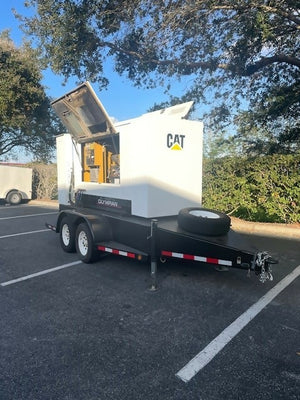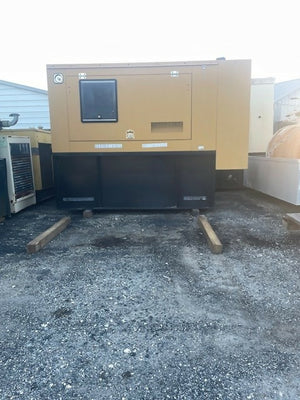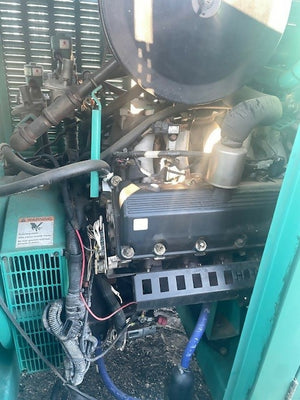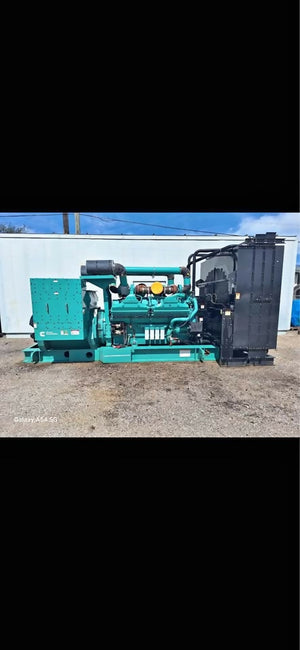


Sound-Attenuated Generator Enclosures Explained
Want to quiet your generator? Sound-attenuated enclosures are the answer. These specialized housings reduce generator noise by up to 40 dB(A) while ensuring proper cooling and protection from weather. Whether you're dealing with a 50 kW unit producing 85 dB(A) or a 1,500 kW generator roaring at 105 dB(A), these enclosures use acoustic barriers, vibration isolation, and airflow management to make operations quieter and safer.
Key Takeaways:
- Noise Reduction: Enclosures cut noise levels to meet local limits (45–72 dB(A)), essential for urban areas, hospitals, and residential zones.
- How They Work: Combine steel barriers, sound-absorbing insulation, vibration control, and airflow baffles to reduce noise without overheating.
- Materials: Use heavy-gauge steel, aluminum for corrosion resistance, and moisture-resistant insulation like mineral wool or fiberglass.
- Applications: From residential to industrial settings, enclosures are tailored for specific noise and durability needs.
This Generator Quiet Box has a SECRET!
sbb-itb-501186b
How Sound-Attenuated Generator Enclosures Work
Sound-attenuated enclosures combine three main strategies to reduce noise: acoustic barriers that reflect and absorb sound, vibration control systems that minimize mechanical noise, and carefully designed airflow paths that cool the generator while dampening sound. Together, these elements transform noisy generators into quieter, more manageable machines. Let’s break down how each component contributes to this process.
Acoustic Barriers and Insulation
These enclosures use a dual-layer approach to combat noise. The outer shell, typically made from 12‑gauge to 16‑gauge steel, acts as a barrier, reflecting sound waves back into the enclosure. Inside, a soft, porous lining - commonly foam or fiberglass - absorbs the trapped sound energy. When sound waves hit these porous materials, their kinetic energy converts into heat, as the ADE Power Generators Team explains:
"The kinetic energy of the sound pressure waves is transformed into heat, which radiates off harmlessly (and silently)".
This process aligns with the Mass Law principle, which states that doubling the wall mass or sound frequency increases sound transmission loss by 6 dB. Different materials are used to target specific frequencies: porous materials capture high-frequency sounds, while low-frequency sounds require techniques like air gaps between thin panels. Effective insulation typically has a sound absorption coefficient of 0.75 or higher on a scale where 1 represents total absorption.
To protect the insulation from damage, manufacturers often add perforated metal facings. These facings need an open area of at least 20% to maintain sound absorption. Coating or painting the insulation is avoided, as it can seal the pores and reduce effectiveness.
While these acoustic barriers handle airborne noise, vibration control systems address structure-borne noise.
Vibration Control and Mounting Systems
Vibration control systems prevent engine vibrations from turning into structural noise, which can radiate from the enclosure walls or floor. Without proper isolation, lightweight skid mounts can amplify noise through a "drumming" effect caused by the engine's operating frequency.
To combat this, specialized vibration isolators are used. Flexible couplings for fuel lines, exhaust pipes, and electrical connectors separate the vibrating engine from the static enclosure. Anti-vibration pads made of rubber or composite materials absorb kinetic energy at the generator's feet. Gaskets are also used to seal uneven gaps between the generator base and mounting surface, stopping "noise leaks". As Generator Source highlights:
"Without adequate vibration isolation of the skid base on a generator, vibrations will travel unopposed through the skid, so that much of the noise is not subjected to acoustic dampening systems designed into the sound attenuated enclosure".
Airflow and Exhaust Noise Management
Efficient airflow is critical for both noise control and engine cooling. The radiator fan must circulate enough air to prevent overheating, but sound-attenuating designs can create resistance. As AcoustiGuard‑Wilrep Ltd. explains:
"The problem is that the more we try to reduce the sound, the more we restrict the air movement. The fan's capacity is limited; excessive sound suppression can inhibit engine cooling".
To address this, enclosures often feature a dual-compartment design. Air flows through the engine area, passes through the radiator into an exit compartment, and then exits the enclosure. Acoustic louvers and baffles at intake and exhaust points reduce noise by forcing sound waves to bounce off absorptive surfaces before escaping. Exhaust silencers handle the loudest noise source - engine exhaust, which can reach 120–130 dB(A) - while soundproof air intake filters reduce induction noise from 80–90 dB(A).
The system must be carefully tuned to match the radiator fan's capacity and the generator’s specific frequency range, especially on hot days, to ensure both effective cooling and noise reduction.
Materials and Construction Standards
The materials and construction methods used in sound-attenuated enclosures play a crucial role in their performance and longevity. A well-designed enclosure should effectively block noise, resist weather damage, and endure tough conditions - all while ensuring the generator operates at a safe temperature.
Common Materials Used
Most enclosures are built with 12–14 gauge steel, with 16 gauge occasionally used, to create a sturdy barrier that reflects noise back inside. However, in coastal or humid environments, aluminum is often preferred due to its natural resistance to corrosion, eliminating the need for additional protective coatings.
Inside the enclosure, the acoustic insulation is typically made of 50mm to 75mm thick mineral wool, fiberglass, or acoustic foam. These materials are designed to resist moisture, which helps prevent mold formation and ensures consistent performance over time.
Construction quality varies depending on the application. For instance:
- Residential enclosures often use 1mm mild steel paired with 50mm mineral wool, achieving noise levels of 70–75 dB(A) at 23 feet.
- Critical or hospital-grade units upgrade to 1.5mm steel and 75mm insulation for a quieter 65 dB(A) output.
- Super-silent models feature 2mm steel combined with mass-loaded vinyl composite insulation, reducing noise to 60 dB(A) or even lower.
Durable materials lay the foundation for enhanced weatherproofing and long-term reliability.
Weatherproofing and Durability Features
Effective weatherproofing involves more than just keeping water out. High-quality enclosures use stainless steel latches and zinc-coated fasteners to prevent rust. Sealed doors and access panels are essential for blocking both moisture and sound. Some manufacturers go a step further by applying specialized finishes, such as "Power Armor" coatings, for added corrosion resistance.
Premium enclosures are built to withstand extreme conditions, including wind speeds of 120–150 mph, making them ideal for hurricane-prone areas. Features like sealed auxiliary entries and specially designed louvers help prevent rodent intrusion while maintaining proper airflow. Additionally, acoustic door seals should be inspected every three months and replaced if their compression exceeds 25% to ensure the soundproofing remains effective.
Industry Standards and Compliance
Strict standards ensure that the materials and construction methods meet both safety and performance requirements.
The UL2200 certification is the benchmark for stationary generator assemblies and their enclosures, addressing both safety and operational performance. For enclosures with built-in fuel tanks, compliance with UL142 standards is required to regulate steel aboveground tanks containing flammable liquids.
Acoustic insulation must meet UL94 HF1 flame resistance standards. Beyond product certifications, installations must adhere to OSHA noise guidelines, which use the dB(A) scale to protect workers, and local noise ordinances that typically restrict property-line noise levels to 45–72 dB(A), depending on zoning. In areas prone to earthquakes or severe weather, additional structural certifications may be necessary to ensure the enclosure can handle such conditions without failure.
Noise Reduction Levels and Applications

Generator Enclosure Noise Levels by Brand and Application Type
Understanding Sound Attenuation Levels
Sound levels are typically measured at a distance of 23 feet (7 meters) from the noise source, using angles of 45° or along six cardinal directions. The process begins by assessing ambient noise levels (with the generator off), followed by measuring operating noise across eight octave bands. The standard measurement used is the A-weighted decibel scale, or dB(A), which aligns with how the human ear perceives sound frequencies.
The decibel scale works logarithmically, meaning sound intensity increases exponentially. For instance, 80 dB(A) is twice as loud as 70 dB(A), while 100 dB(A) is 16 times as loud. A 500 kVA generator, for example, produces noise levels around 100–105 dB(A) at 3.3 feet, comparable to the sound of a chainsaw. In open spaces, doubling the distance from the noise source generally reduces the noise level by about 6 dB(A). This makes placement critical for managing sound effectively. Sounds exceeding 85 dB(A) can harm human hearing, while levels near 120 dB(A) approach the pain threshold.
"It is generally considered that a reduction of 40 dB(A) is the upper limit of what is practical for a prefabricated sound proof container."
- ADE Power Projects Team
These principles guide noise reduction strategies across various settings.
Applications by Noise Level
Noise metrics help determine suitable strategies for meeting local noise regulations and specific application needs. Different environments require varying levels of sound attenuation to maintain compliance and ensure comfort.
For residential areas, enclosures typically achieve 70–75 dB(A) at 23 feet by using 1 mm mild steel and 50 mm mineral wool insulation. This setup works well for neighborhoods and smaller businesses. On the other hand, critical applications like hospitals and data centers demand quieter enclosures. These often use 1.5 mm steel and 75 mm insulation to lower noise levels to around 65 dB(A). For stricter requirements, such as mixed-use areas with nighttime limits near 55 dB(A), super-silent models employ 2 mm steel and mass-loaded vinyl composite insulation to reach 60 dB(A) or less.
One notable design achieved a 30 dB reduction by combining distance, a hospital-grade silencer, a labyrinth intake, a discharge attenuator, and composite panels.
Manufacturers offer a range of solutions tailored to meet these varying noise reduction needs.
Brand Comparison: Features and Specifications
Manufacturers provide different enclosure options to address diverse noise requirements. For example, Cummins offers three levels of sound attenuation, each tailored for specific applications. Caterpillar and Kohler also provide models designed for various environments, from industrial settings to high-humidity regions.
| Brand | Enclosure Level | Noise Level @ 23 ft | Key Features |
|---|---|---|---|
| Cummins | Level I | 70–89 dB(A) | Steel construction, UL220-listed |
| Cummins | Level II | 63–78 dB(A) | Low-profile design, easy access |
| Cummins | Level III | 68–70 dB(A) | Highest standard attenuation |
| Caterpillar | Weather Proof | 84–98 dB(A) | 16-gauge steel, industrial grade |
| Caterpillar | Level I | 78–95 dB(A) | Single-side service access |
| Caterpillar | Level III | 78–91 dB(A) | Stainless steel latches, zinc-coated fasteners |
| Kohler | Steel Weather | 71 dB(A) | Power Armor finish, 150 mph wind rating |
| Kohler | Steel Sound | 70 dB(A) | Acoustic insulation meets UL94 HF1 |
| Kohler | Aluminum Sound | 70 dB(A) | Lightweight, ideal for humid climates |
Each brand offers solutions with unique features, ensuring options for a wide range of operational and environmental needs.
Choosing the Right Enclosure
When selecting the right enclosure for your generator, it’s all about matching the site conditions with your operational needs. Let’s break it down into three key considerations: noise regulations, ventilation, and environmental factors.
Assessing Site Noise Regulations
Start by checking your local noise ordinances. These typically range from 45–72 dB(A) at property lines, depending on zoning. Residential areas often enforce stricter limits, while industrial zones are more lenient. To get accurate information, contact your local building department.
Next, measure the ambient noise level at your site. A portable digital decibel meter can help you establish a baseline before installation. Keep in mind that existing structures, walls, or even vegetation can either reflect or absorb sound, which might alter your readings. To stay compliant, factor in a safety margin for nearby structures that could reflect sound.
Positioning the enclosure also plays a role. Placing it as far from property lines as possible can naturally reduce sound levels.
Ventilation and Accessibility
Once you’ve tackled the noise regulations, shift your focus to ventilation and accessibility. Proper airflow is critical. Without it, your generator’s efficiency could drop, or worse, it could overheat. Check the manufacturer’s airflow specifications to ensure compliance. If your enclosure design limits airflow too much, it might exceed the radiator’s pressure drop allowance, leading to engine overheating - so consult with engineers to avoid this.
For maintenance, choose enclosures with hinged doors, removable panels, or single-side access. These features make routine tasks like oil checks, filter replacements, and load-bank wiring much easier, especially in tight spaces. Some custom designs even include exterior oil and coolant drains or overhead lifting brackets for easier transport.
Customization and Environmental Factors
Finally, think about how the enclosure will handle your specific environmental conditions.
- Materials: Standard steel enclosures (12–16 gauge) are suitable for most sites, but aluminum enclosures are better for humid or coastal areas. Aluminum also makes installation easier in tight spaces.
- Weather Resistance: If you’re in a region with extreme weather, look for enclosures rated for 120–150 mph winds with reinforced hardware. Pay attention to whether the design is "weather-protective" (basic rain and snow protection) or "weather-proof" (built to handle heavy snow loads and strong winds).
- Seismic Stability: For earthquake-prone areas, request enclosures with seismic certifications to meet local codes.
- Noise and Vibration: In high-traffic or industrial settings, advanced acoustic treatments - like hoods over louvers or vibration-damping pads - can minimize noise and structural vibration.
Conclusion
Sound-attenuated enclosures offer more than just noise reduction - they play a vital role in safeguarding workers, meeting regulations, and maintaining operational efficiency. Large generators can generate noise levels similar to heavy traffic or even jet engines, which, without proper mitigation, can lead to permanent hearing damage and regulatory violations. These enclosures help cut costs, protect communities, and create safer environments.
The best enclosures strike a balance between reducing noise, maintaining airflow, and ensuring durability. With quality designs, generator noise can be reduced by up to 40 dB(A), turning an industrial roar into something as manageable as the hum of a quiet office. However, to achieve this, the enclosure must be tailored to the specific needs of your site.
Key elements like acoustic barriers, vibration control, and exhaust management are essential to making the right choice. For example, residential setups might need Level II attenuation, which reduces noise to 63–78 dB(A), while hospitals often require super-silent performance, keeping noise at or below 60 dB(A). To ensure the best results, evaluate your ambient noise levels, understand local regulations, and work closely with manufacturers who design enclosures specifically for your generator model.
Beyond noise control, these enclosures provide additional benefits, such as shielding generators from harsh weather, preventing unauthorized access, and minimizing structural vibrations that can cause long-term damage. When you consider the combined advantages - operator health, compliance with regulations, and extended equipment life - investing in a thoughtfully designed enclosure becomes a practical and necessary decision.
FAQs
How do I figure out how quiet my generator enclosure needs to be?
To figure out how quiet your generator enclosure needs to be, start by checking local noise regulations and the acceptable decibel (dB) levels in your area. These limits usually fall between 45 and 72 dB(A) at property lines or near residences. Once you know your generator's noise output, choose or design a sound-attenuated enclosure that brings the noise level down to meet the required standards. Conducting a noise assessment can also help confirm that you're staying within compliance.
Will a sound-attenuated enclosure make my generator run hotter?
A soundproof enclosure could cause a small rise in your generator's operating temperature if it limits airflow or ventilation. That said, these enclosures are typically built to reduce noise while maintaining proper cooling, thanks to their well-designed insulation and ventilation features.
What maintenance keeps an enclosure’s noise reduction working over time?
To keep an enclosure performing well at reducing noise, it's essential to follow a few maintenance steps. Regularly inspect and replace any worn or damaged sound-absorbing materials. Make sure the ventilation system is functioning correctly, as improper airflow can compromise performance. Additionally, check seals and other components for signs of wear or damage. Taking these steps ensures the enclosure continues to minimize noise effectively over time.