

Signs of Transformer Oil Contamination
Transformer oil contamination can lead to serious transformer failures if not addressed promptly. Key warning signs include:
- Oil color changes: Dark or cloudy oil indicates oxidation or moisture contamination.
- Milky appearance: Suggests water or particle contamination, reducing insulation and cooling efficiency.
- Sludge buildup: Visible sediment or sludge hampers heat dissipation and degrades insulation.
- Low dielectric breakdown voltage (BDV): Signals reduced insulating ability, increasing arcing risks.
- High acidity levels: Caused by oxidation, leading to sludge and insulation damage.
- Moisture presence: Weakens insulation, catalyzes chemical reactions, and reduces oil performance.
- Gas bubbles or unusual odors: Indicate internal arcing or partial discharge.
- Oil leaks: Compromised seals allow contamination and reduce oil levels.
- Visible particles: Metal fragments or debris lower insulation quality and signal internal wear.
Routine oil testing, maintenance, and timely interventions are critical to preventing long-term damage and ensuring reliable transformer performance.
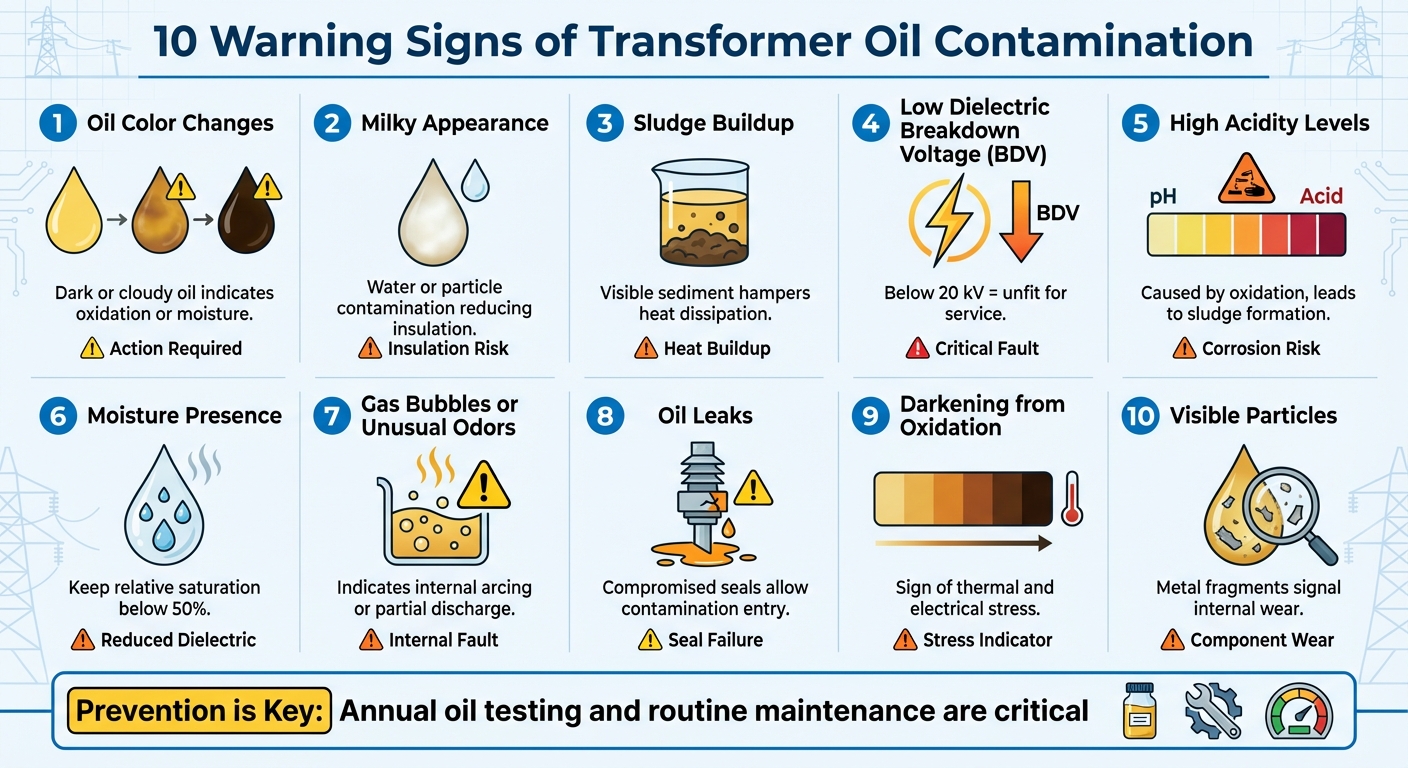
10 Warning Signs of Transformer Oil Contamination
Transformer Oil Color and Appearance Explained ⚡ | ASTM D1500 Meaning, Limits and Actions
sbb-itb-501186b
What Causes Transformer Oil Contamination
Transformer oil can degrade over time due to a mix of external and internal contaminants. Pinpointing these causes is key to spotting vulnerabilities early and preventing equipment failures.
One major issue is oxygen exposure. When transformer oil comes into contact with air, it oxidizes, leading to the formation of acids. These acids create sludge that coats transformer windings, making it harder for heat to dissipate and speeding up the oil's breakdown.
Another common problem is moisture ingress. Moisture can enter the system through damaged seals, during maintenance, or as the transformer "breathes" due to temperature fluctuations. Once inside, moisture exists either as suspended particles or as free water that settles at the bottom of the tank. Both forms of moisture reduce the oil's insulating properties. Combined with temperature fluctuations, this can further weaken the oil's quality.
High temperatures also play a significant role. Elevated heat accelerates the formation of sludge, which in turn hampers cooling efficiency and causes even higher temperatures - a damaging cycle.
On top of that, particulate contamination impacts oil performance. Dust, dirt, and other particles can enter the transformer during transport, handling, or through compromised seals. As noted by Rice, "New oil often requires further degasification to remove air and moisture added during the transportation and handling process." Moreover, the breakdown of internal materials like paint, varnish, and paper insulation releases additional polar compounds and particulates into the oil.
These combined factors degrade the oil's integrity, ultimately diminishing the transformer's efficiency and reliability.
1. Oil Color Changes
Visual Indicators of Contamination
The color of transformer oil can tell you a lot about its condition. Judie Rice, General Manager at A.F. White Ltd., explains, "The colour of the oil indicates quality, aging, and contaminants." When transformer oil is fresh, it’s usually clear or light amber. However, if you notice it turning darker - shades of brown or even black - it’s a strong warning sign of internal issues like contamination or degradation.
Chemical Composition Changes
A darkening oil color often points to oxidation. This process occurs when oxygen reacts with the oil, forming acids that mix with other byproducts to create sludge. The shift in color isn’t just superficial - it’s a sign of chemical breakdown. Quick tests, like those for interfacial tension, can detect these changes early. They often reveal the presence of oxidation byproducts or the breakdown of internal materials such as paint, varnish, or insulation paper.
Electrical Performance Impact
When oil color changes, it’s not just a cosmetic issue - it can directly affect the transformer's electrical performance. Contaminants in the oil reduce its dielectric strength, or its ability to insulate against voltage. Moisture and particles in the oil can lead to partial discharge, which is a localized electrical arcing within the insulation. This not only weakens the insulation but also increases the risk of electrical failures.
Physical Contamination Signs
Oil color changes are often accompanied by other physical signs of contamination. For instance, sludge buildup on windings is a clear indicator of contamination. In cases where the oil becomes saturated, free water might even collect at the bottom of the transformer tank. Including oil color evaluations in your annual maintenance routine - along with tests for dielectric breakdown, acid number, interfacial tension, and water content - can help you identify these issues early. These visible changes should prompt further inspections to uncover additional signs of contamination.
2. Milky or Cloudy Oil
A milky or cloudy appearance in transformer oil is another key indicator of contamination.
Visual Indicators of Contamination
When transformer oil turns milky white or light brown, it often points to moisture contamination or suspended particles. You might also spot visible droplets, sediment, or streaks on inspection caps or inside the transformer tank.
Electrical Performance Impact
This visual change isn't just cosmetic - it directly affects the oil's performance. Contaminated oil loses its dielectric strength, increasing the likelihood of arcing and reducing overall reliability. For example, transformer oil is deemed unfit for service if its breakdown voltage drops below 20 kV. Additionally, the oil's cooling capabilities diminish, leading to overheating risks for the windings.
Simon Sutton, Ph.D., Lance Lewand, and Andy Davies highlight the seriousness of moisture contamination:
"Water is the most damaging molecule in the transformer. When dissolved in the insulating liquid, it catalyzes reactions, weakens bonds, attracts other polar contamination to the paper and allows acids to be aggressive."
Chemical Composition Changes
The milky appearance often results from moisture reacting with the oil to form an emulsion. To maintain proper dielectric performance, the relative water saturation should stay below 50%. If the insulation temperature exceeds 212°F (100°C), water may vaporize into gas bubbles, increasing the risk of partial discharges.
Physical Contamination Signs
Milky oil doesn't just impair electrical performance - it thickens, clogs lubrication paths, and reduces cooling efficiency. Free water can settle at the bottom, causing corrosion or even flashovers. Addressing these issues often involves oil regeneration to remove moisture, sludge, and acids. Regular testing for moisture levels, acid number, and dielectric breakdown voltage is crucial to prevent these problems from escalating into full transformer failure.
3. Sludge and Particle Buildup
Sludge and particle buildup can set off a thermal cycle that may lead to transformer failure. While early warning signs point to contamination, the presence of sludge signals a critical stage in oil degradation that jeopardizes the transformer's reliability.
Visual Indicators of Contamination
Sludge often appears as sediment on transformer windings and internal components. This visible evidence highlights the need for deeper analysis of the chemical changes happening within the oil.
Electrical Performance Impact
Sludge and particles in the oil can conduct electricity more easily than clean oil. This lowers the oil's dielectric strength, increasing the likelihood of electrical faults. As sludge accumulates, the insulating properties of the oil diminish further, making the transformer more vulnerable to failures.
Chemical Composition Changes
Oxidation in the oil leads to the formation of acids, which eventually precipitate as sludge. This process is reflected in rising acid numbers, reduced interfacial tension, and higher power factor readings. The acids and resulting sludge can coat the windings, hampering heat transfer.
Physical Contamination Signs
When sludge settles on the windings, it creates a layer of thermal insulation, disrupting the proper transfer of heat from the windings to the oil. This raises the operating temperature, which in turn speeds up insulation aging and promotes even more sludge formation. In cases of significant sludge buildup, Rice points out:
"Any sludge formed by the acid has to be rinsed out of the transformer with hot oil to remove the sediment"
It's worth noting that the ASTM standard sets a water content limit of 30 ppm in transformer oil. Remedial actions are most effective when acid levels reach approximately 0.1, ideally before extensive sludge formation begins. These thermal effects highlight the urgency of addressing sludge buildup to ensure the transformer continues to perform at its best.
4. Lower Dielectric Breakdown Voltage
Dielectric breakdown voltage (BDV) measures how much electrical stress transformer oil can endure before failing and allowing an electrical arc to pass through. A noticeable drop in BDV signals that the oil is no longer insulating effectively under high electrical stress.
Electrical Performance Impact
When BDV is low, the chances of flashovers and partial discharge increase, especially since free water can encourage arcing and worsen insulation breakdown. According to Ampcontrol:
"Over time, repeated partial discharge can gradually erode the insulation, weakening it and increasing the risk of complete failure." - Ampcontrol
This reduced dielectric strength can also lead to higher heat levels and overheating of internal parts, which might escalate into thermal runaway.
Chemical Composition Changes
Water contamination plays a major role in lowering BDV by encouraging the formation of polar compounds. As mentioned earlier, moisture and oxidation degrade oil quality, and this degradation directly impacts BDV. To preserve dielectric strength, the relative saturation of water in the oil should stay below 50%. Oxidation byproducts and polar contaminants like acids further compromise the oil’s dielectric properties. These issues can be identified through power factor testing or interfacial tension measurements. Such chemical changes create conditions where physical contaminants can further deteriorate BDV.
Physical Contamination Signs
Even minor physical contaminants can drastically affect BDV. Particles and fibers - sometimes introduced during sampling through the use of cotton rags or paper towels - can form pathways for electrical current. Additionally, when the paper insulation’s water content reaches 2% by dry weight, bubble formation becomes a serious concern at temperatures above 284°F. These bubbles can cause partial discharge and localized damage to the transformer’s internal components.
5. Higher Acidity Levels
Chemical Composition Changes
As oxidation and sludge buildup take their toll, higher acidity levels in transformer oil create even more damage. Acidity increases when oil reacts with oxygen, leading to a chain reaction of degradation. Judie Rice, General Manager at A.F. White Ltd., explains:
"Oxidization is acid that forms in the oil when it comes in contact with oxygen. The acid will form sludge which settles on the windings of the transformer resulting in reduced heat dissipation." - Judie Rice, General Manager, A.F. White Ltd.
This process doesn’t just stop at sludge formation. Acids also break down insulation materials like paper, varnish, and paint, releasing polar compounds. These compounds can be identified through power factor testing, offering a clear indication of the oil’s deteriorating condition.
Electrical Performance Impact
Higher acidity doesn’t just harm the oil - it creates a domino effect within the transformer. Sludge buildup leads to overheating, which speeds up the oil’s breakdown and pushes the transformer closer to failure. Rice emphasizes the seriousness of this issue:
"The high acid content and increased temperatures will accelerate the deterioration of the insulating qualities of the oil and if left untreated will cause the transformer to fail." - Judie Rice, General Manager, A.F. White Ltd.
Acidic oil also weakens the bonds in insulation, increasing the likelihood of partial discharge and eventual failure. To prevent acids from becoming too aggressive, it’s critical to keep the relative saturation of water in the oil below 50%. These chemical changes often manifest as physical signs, which are discussed next.
Physical Contamination Signs
The effects of elevated acidity are often visible during inspections. As oil ages and becomes more acidic, it darkens significantly. Lab testing frequently reveals sediment or suspended particles, further signaling contamination. Acidic oil can also corrode critical internal components, including copper windings, silver contacts, and iron parts.
Routine testing is the best defense against these issues. Annual Neutralization/Acid Number tests help measure sludge-causing acids, while Interfacial Tension (IFT) tests can detect polar compounds that hint at early oxidation. If acid levels are found to be high, proactive measures like treating the oil with Fuller's earth can remove acids and particulates before sludge forms. For transformers already affected by sludge, a hot oil rinse can flush out sediment and restore proper heat dissipation.
6. Moisture in the Oil
Moisture is one of the most damaging contaminants in transformer oil, altering its chemical makeup and physical properties in ways that can severely impact performance.
Chemical Composition Changes
Moisture wreaks havoc on transformer oil, as it triggers chemical reactions that degrade the materials it interacts with. Simon Sutton, Ph.D., Director of Services for Altanova, explains:
"Water is the most damaging molecule in the transformer. When dissolved in the insulating liquid, it catalyzes reactions, weakens bonds, attracts other polar contamination to the paper and allows acids to be aggressive."
In other words, moisture accelerates the breakdown of cellulose insulation by disrupting hydrogen bonds, making the structure weaker. High operating temperatures can exacerbate this issue by causing water vapor to form, which increases the risk of insulation failure. This chemical degradation directly undermines the dielectric properties of the oil, which are critical for proper transformer function.
Electrical Performance Impact
The presence of moisture reduces the oil's insulating ability, which is vital for preventing electrical arcing inside the transformer. This loss of insulation can lead to localized discharges that gradually wear down the insulation materials. On top of that, reduced cooling efficiency caused by moisture can result in overheating, which accelerates the breakdown of both the oil and the solid insulation. If left unchecked, these issues can culminate in transformer failure.
Physical Contamination Signs
Moisture contamination often becomes visible as water mixed with the oil or absorbed into the cellulose insulation. To assess and manage moisture levels, it’s measured in parts per million (ppm) for oil and as a percentage for paper insulation. For the oil to maintain its dielectric strength, the relative saturation of water in the insulating liquid should stay below 50%.
7. Strange Odors or Gas Bubbles
Abnormal odors and gas bubbles are key warning signs that something might be wrong with a transformer’s oil. These issues often point to oil contamination and can signal deeper problems within the equipment.
Chemical Composition Changes
Gas bubbles in transformer oil are often caused by partial discharge, which happens when impurities, moisture, or particles disrupt the insulation. These gases can be identified using Dissolved Gas Analysis (DGA), a diagnostic tool that helps pinpoint the root cause of contamination.
Physical Contamination Signs
Even if gas bubbles aren't directly visible in a sealed transformer, their presence can often be detected through other indicators. For example, internal arcing that generates gas is frequently accompanied by unusual noises like buzzing, humming, or sizzling. Ampcontrol explains:
"Strong vibrations or unusual sounds, such as buzzing, humming, or sizzling, can indicate problems with the transformer's internal components... there's a good chance that loose parts, overheating, or arcing are causing these noises."
If you notice an increase in these types of noises, it’s a red flag that requires immediate attention. These physical and audible signs not only point to oil contamination but can also compromise the transformer's overall performance.
Electrical Performance Impact
Gas bubbles from partial discharge can weaken the insulation and degrade the oil further, especially when combined with moisture and particles. This creates a dangerous cycle of overheating and additional discharges, which can lead to equipment failure. Ampcontrol emphasizes the importance of regular maintenance:
"By regularly inspecting the transformer and analysing the gases dissolved in the oil, you can detect early signs of insulation problems and take proactive steps to prevent failure."
Routine oil sampling and DGA testing are essential for spotting these invisible gases before they cause serious damage. For high-value transformers, continuous partial discharge monitoring provides real-time insights into arcing activity, enabling timely interventions.
8. Oil Leaks and Stains
Visual Indicators of Contamination
Oil leaks are one of the clearest signs that something is wrong with a transformer’s sealed environment. Keep an eye out for visible drips or pools beneath the unit, streaks of oil on the tank, radiators, or terminals, and dropping oil levels on the sight gauge. While condensation is normal, it’s important to confirm whether a suspicious area is oil or just water vapor. Use a white cloth to test the area - if it leaves behind a greasy residue or smells like oil, it’s likely a mineral oil leak. To verify an active leak, place an absorbent mat under the transformer for an hour. If a stain forms and spreads, you’ve got a leak. Be sure to document any findings by taking photos and measuring stains. This not only helps track the issue but also ensures compliance with environmental regulations.
Physical Contamination Signs
When seals or gaskets are damaged, oil can escape, and contaminants can make their way inside. Ampcontrol emphasizes this point:
"Oil can escape if a seal or gasket is compromised, leading to contamination and reduced performance."
The same compromised pathways that allow oil to leak out also let moisture, dirt, and other unwanted materials in. Look for cracks, corrosion, or structural damage to the transformer tank - these are clear indications that the unit’s integrity has been compromised. Such breaches don’t just allow contamination; they also weaken the transformer's ability to function properly.
Electrical Performance Impact
Oil leaks can have a serious impact on a transformer’s electrical performance. As oil levels drop, the transformer’s cooling efficiency decreases, leading to overheating windings and weakened insulation. Additionally, air entering through the compromised seals accelerates oxidation, reducing the oil’s dielectric strength and contributing to the formation of acids and sludge. This deterioration increases the chances of partial discharge or even a catastrophic flashover. If lab tests show a breakdown voltage below 20 kV or an acid number exceeding 0.5 mg KOH/g, the oil is in critical condition. Repair costs typically range from $440 to $1,100. However, if the cost of repairs approaches 40%–50% of the price of a new transformer (up to $29,700 for a 400 kVA unit), replacing the transformer might be the better option.
9. Darkening from Oxidation
One of the clearest signs of transformer oil contamination is the darkening of the oil, a result of oxidation. This change goes beyond aesthetics, signaling serious thermal and electrical stress within the transformer.
Visual Indicators of Contamination
When transformer oil turns dark, it's a strong indicator of oxidation and overall degradation. The discoloration often points to excessive stress. As MBT explains:
"If it [transformer oil] is black or dark in color, it is a sign that it has been affected or spiked."
In addition to the oil's appearance, external signs like warping or peeling paint on the transformer's surface may hint at internal overheating caused by oxidation.
Chemical Composition Changes
The darkening of the oil is just the beginning. As oxidation progresses, the chemical makeup of the oil deteriorates. Acids and polar compounds begin to form, with high operating temperatures accelerating this reaction between the oil and oxygen. Over time, these byproducts can solidify into sludge. To prevent this, routine maintenance is critical. Testing for factors like neutralization/acid number, interfacial tension, and color can help detect early oxidation.
Electrical Performance Impact
Oxidation doesn't just affect appearance - it has serious consequences for performance. Darkened oil and sludge buildup trap heat, reducing the oil's cooling efficiency and dielectric strength. Dissolved Gas Analysis (DGA) can help identify gases produced by the breakdown of oil and insulation materials. To address these issues, treatments such as Fuller's earth filtration and degasification can remove acids and particulates, partially restoring the oil's properties. However, if sludge levels are severe, more intensive measures, like flushing the transformer with hot oil to clear sediment from the core and coil assembly, may be required. These symptoms demand immediate attention to prevent further damage.
10. Visible Particle Contamination
Visual Indicators of Contamination
After spotting signs like moisture and sludge buildup, visible particles in oil serve as another clear warning of contamination. Contaminated oil often loses its transparency, making it easier to detect during routine checks. By using ASTM D1524, you can shine light through an oil sample to reveal suspended foreign particles.
In addition to cloudiness, you might observe metal fragments floating in the oil. These typically result from mechanical wear, especially from failing oil pump bearings.
Physical Contamination Signs
Visible particles can come from both internal and external sources. Internally, they might stem from deteriorating insulation or loose components. Externally, they can enter when seals are compromised. These particles often signal early-stage faults caused by electrical stress (like discharges or arcs), thermal stress (hot spots), or mechanical stress from oil friction. Conducting regular visual inspections can help identify these problems early on.
Electrical Performance Impact
Visible particles don’t just indicate contamination - they can directly impact a transformer's insulation and reliability. Many of these contaminants are better conductors of electricity than the oil itself, which lowers the dielectric breakdown voltage and weakens insulation. This increases the risk of electrical arcing (partial discharge), generates excess heat, and can eventually lead to equipment failure. Electro-Magnetic World highlights the severity of this issue:
"Bad oil pump bearings can put enough metal particles into the oil to threaten transformer insulation and cause flashover inside the tank, resulting in an explosive catastrophic failure."
If you hear unusual noises from oil pumps, it’s crucial to conduct a metal particle count to assess potential bearing wear. Combining traditional Dissolved Gas Analysis (DGA) with advanced methods like Particle Quantification Index (PQI) and Analytical Ferrography can help identify the contaminants’ characteristics - such as their size, shape, and source. This approach enables quicker identification of failing components and reduces downtime for repairs.
How to Prevent Oil Contamination
Once contamination signs are spotted, taking steps to prevent further issues becomes a priority for extending the life of your transformer.
Preventing transformer oil contamination hinges on a well-planned maintenance strategy that includes regular testing, proper sealing, and using high-quality equipment. Annual oil sampling and Dissolved Gas Analysis (DGA) testing are essential for tracking dielectric strength and catching early signs of insulation breakdown.
Seal integrity is crucial for keeping external contaminants out. Rubber gaskets and seals should be replaced every 10–15 years to prevent cracking or loss of elasticity. When installing or replacing gaskets, use calibrated torque tools and follow the tightening patterns recommended by the Original Equipment Manufacturer (OEM) to avoid leaks caused by over- or under-torquing. Radiator flanges are particularly prone to leaks, accounting for 30% of transformer oil leaks, while tank lids and top seals contribute another 20%.
For high-value transformers, continuous monitoring technology offers real-time insights. Systems like SCADA or cloud-based dashboards can provide early warnings. Tools such as infrared thermography and smart oil sensors have proven effective in detecting leaks early, helping to prevent environmental damage.
Breather maintenance is another key step in keeping moisture out. Silica gel breathers should be inspected quarterly, with the gel replaced as soon as its color changes. Bi-annual infrared scans can pinpoint hotspots on tank seams or radiators, which may signal oil seepage or restricted flow. Ultrasonic acoustic detection is also useful for identifying pinholes or microfractures that may not yet be visible.
In addition to these practices, sourcing durable components is essential. When purchasing transformers or replacement parts, prioritize quality. Suppliers like Electrical Trader offer a selection of new and used transformers and electrical components designed with high sealing and durability standards. Choosing reliable equipment from trusted vendors can minimize risks like premature seal failure and structural issues that lead to contamination.
Conclusion
Indicators like darkened oil and elevated dissolved gas levels often serve as warning signs of potential transformer failure. These symptoms suggest that the oil is either contaminated or degraded, signaling stress on the transformer that could lead to serious issues if left unchecked. Additionally, recurring leaks and overheating can turn minor problems into major failures, resulting in costly repairs or replacements.
To keep your transformer operating efficiently, a well-planned maintenance routine is essential. Regular testing can pinpoint vulnerabilities early on, preventing them from escalating into irreversible damage. When combined with consistent maintenance, this approach helps extend the lifespan of your transformer.
If you notice any signs of contamination, take immediate action by initiating testing and consulting with qualified professionals. For more tips on protecting your electrical equipment, visit Electrical Trader.
FAQs
Which oil tests should I run first if contamination is suspected?
The initial evaluations to conduct are the Dissolved Gas Analysis (DGA) and Moisture Content tests. These methods are extensively used to detect typical problems in transformer oil, like contamination or signs of degradation. Addressing the findings promptly can play a key role in avoiding significant transformer breakdowns.
When does contaminated oil need treatment versus a full oil change?
Contaminated transformer oil requires treatment when impurities such as water or particles compromise its insulating abilities. In cases where the oil is too degraded or heavily contaminated to be restored, a complete oil replacement becomes necessary. Regular monitoring is crucial to decide the best course of action, ensuring the transformer operates efficiently and avoiding significant breakdowns.
How fast can moisture or oxidation damage a transformer once it starts?
Moisture and oxidation can severely damage a transformer in a short amount of time - sometimes within just days or weeks if the issue isn’t resolved. When transformer oil becomes contaminated, it loses its ability to insulate and cool effectively. This not only speeds up the wear and tear on the equipment but also raises the chances of a complete failure.