10 Predictive Maintenance Tools for Industrial Generators
A generator problem can sit hidden for weeks, then turn into a failed start at the worst time. In this guide, I break down 10 tools that help teams spot battery fade, fuel issues, vibration, insulation wear, and cooling problems before they lead to downtime.
Here’s the short version:
- Battery and fuel issues cause about 80% of generator failures
- Starter battery failures alone account for 30%
- One hour of downtime can cost more than $100,000
- The right tool depends on your fleet:
- OEM-only fleets: Cummins, Cat, DSE
- Mixed fleets: IBM Maximo, iFactory, InHand
- Large plant or utility units: GE Vernova, Siemens, ABB
- Parts sourcing after an alert: Electrical Trader
I’d group the 10 tools like this:
- Electrical Trader - parts sourcing after a fault is found
- IBM Maximo APM - asset health scoring and work orders
- GE Vernova GHM / Predix APM - deep generator fault diagnostics
- Siemens Energy GenAdvisor - vibration and winding fault detection
- ABB Ability - shaftline and insulation monitoring
- Cummins PowerCommand Cloud - Cummins fleet monitoring and control
- Cat Connect RAM - Caterpillar fleet monitoring tied to dealer service
- DSEWebNet - DSE controller-based remote monitoring
- iFactory - mixed-OEM prediction with CMMS links
- InHand Networks - edge monitoring for older controls
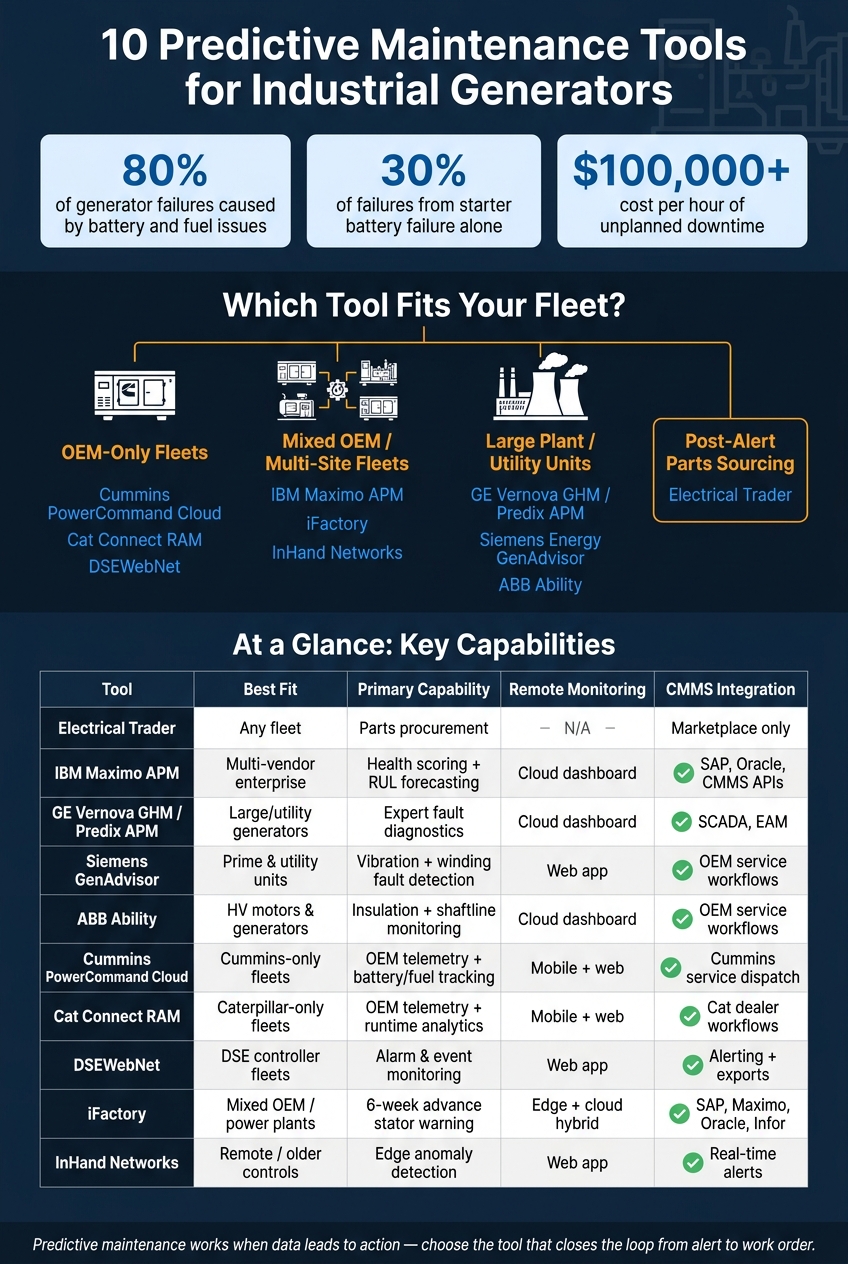
10 Predictive Maintenance Tools for Industrial Generators: Side-by-Side Comparison
Predictive Maintenance Explained + The 3 Best CMMS Right Now
sbb-itb-501186b
Quick Comparison
| Tool | Best fit | Main use | Best for |
|---|---|---|---|
| Electrical Trader | Any fleet | Find replacement parts | Post-alert parts buying |
| IBM Maximo APM | Multi-site, multi-vendor fleets | Health scoring, RUL, work orders | Enterprise maintenance teams |
| GE Vernova GHM / Predix APM | Large generators | Fault-specific diagnostics | Utility and plant units |
| Siemens GenAdvisor | Prime and utility units | Vibration and winding analysis | Teams needing fault-level detail |
| ABB Ability | HV motors and generators | Insulation and shaftline checks | Sites with ABB-heavy equipment |
| Cummins PowerCommand Cloud | Cummins fleets | OEM monitoring and remote control | Standby fleets |
| Cat Connect RAM | Caterpillar fleets | Telemetry plus dealer workflow | Service-backed fleet support |
| DSEWebNet | DSE controller fleets | Alarms, status, service tracking | Rental and standby fleets |
| iFactory | Mixed OEM fleets | Early fault prediction and CMMS flow | Sites with many controller brands |
| InHand Networks | Older or mixed controls | Edge data processing and alerts | Remote sites with older assets |
If you’re choosing fast, my read is simple: use OEM tools for single-brand fleets, use iFactory or Maximo for mixed fleets, and use GE, Siemens, or ABB when you need deeper electrical fault coverage.
What These Tools Help You Monitor on Industrial Generators
These tools turn raw generator data into early warning signs for wear, contamination, overheating, and electrical drift. That matters because each signal should lead to a maintenance decision, not just sit on a dashboard as a status light. The main difference between these tools comes down to how they collect data, how they notify teams, and how well they work for one site versus a full fleet.
Engine, Fuel, and Cooling System Data
Oil, fuel, and cooling data help you catch problems before they turn into damage. Oil data can point to lubrication loss. Fuel data can show contamination. Cooling data can reveal restricted flow before heat starts doing expensive damage.
Oil pressure (psi), oil temperature, and load trends show when service is needed based on how the generator is actually being used, not just on a fixed calendar. Fuel quality monitoring can flag water contamination and microbial growth in stored diesel. Coolant temperature (°F), coolant flow rate, and air-cooler temperature differential can expose blocked passages and heat exchanger fouling, often with a 2–6 week warning window before thermal damage occurs.
That said, data by itself doesn't do much. The platform has to turn those readings into alerts, trend lines, and work orders that teams can act on.
| Subsystem | Key Data Points | Warning Window |
|---|---|---|
| Engine Health | Oil pressure (psi), oil temperature, oil levels, runtime hours, load trends | Run-hour based |
| Cooling Circuit | Coolant flow rate, temperature (°F), air-cooler temperature differential | 2–6 weeks |
| Fuel System | Fuel level (gallons), consumption rate, quality | Real-time/Trend |
| Emissions | NOx, CO, particulate matter | Regulatory monitoring |
Alternator and Electrical Performance Data
Alternator health is a big deal. Stator insulation breakdown causes about 45% of generator forced outages, which is why continuous partial discharge (PD) and insulation resistance monitoring matter so much. Those tools can give teams a 6–18 month advance warning before a winding failure.
Beyond insulation, these systems track voltage, current, frequency, and power factor in real time so operators can spot abnormal load behavior early. End-winding vibration and shaft vibration can point to bearing wear or coupling misalignment. Shaft voltage and current help catch grounding issues before they spread. Teams also watch automatic voltage regulator (AVR) stability and field current drift to keep an eye on the excitation system. In many cases, that gives a 4–8 week warning window before the issue gets worse.
Battery, Emissions, and Fleet-Level Monitoring
Battery monitoring fills a gap that many teams miss. It tracks charger status and battery behavior during idle periods, which helps catch degradation that may not show up during normal exercise tests. In plain terms, a battery can look fine during a scheduled run and still fail when the unit has been sitting.
On the emissions side, tools track NOx, CO, and particulate matter for compliance. That isn't just paperwork. Emissions violations can lead to penalties averaging $65,000 per event, so real-time monitoring can help facilities avoid a costly mistake.
For operators managing generators across more than one site, centralized cloud dashboards bring fuel levels, runtime hours, and engine health data into one view. That makes it much easier to see which unit needs attention now and which one can wait.
The next section compares which platforms handle these data streams best.
1. Electrical Trader
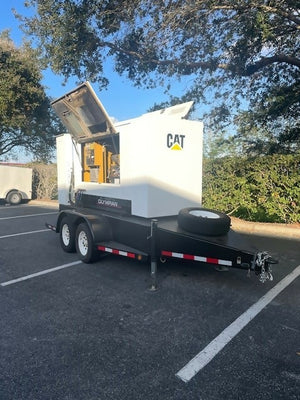
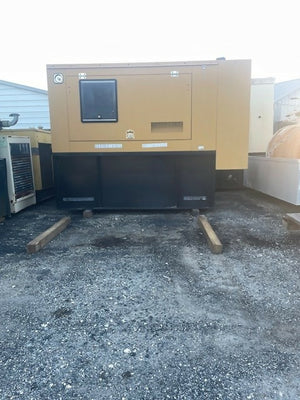
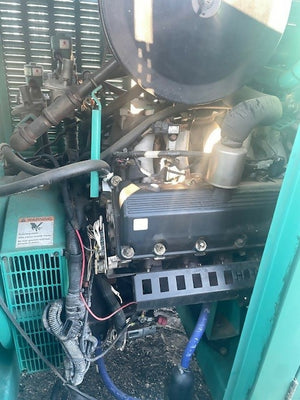
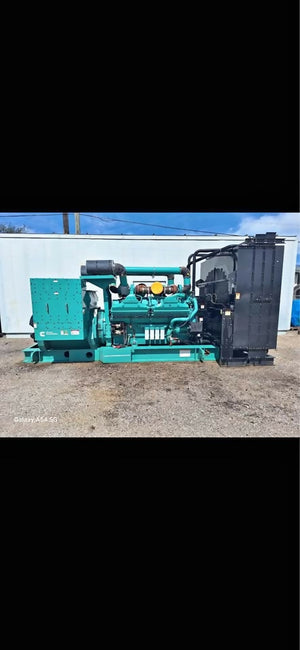
Electrical Trader isn't a monitoring platform. Instead, it helps with predictive maintenance after a diagnostic alert by making it easier for teams to source replacement parts and generator equipment.
When a monitoring tool flags a failing component, teams can use the marketplace to look for compatible replacements. That includes generators with digital controllers already installed, which support remote monitoring.
For diagnostics and live condition tracking, the next tools cover the monitoring side.
2. IBM Maximo Asset Performance Management
If you need continuous condition monitoring, Maximo shifts the focus from finding parts to tracking asset health.
IBM Maximo APM pulls in generator controller, sensor, and battery data to build an asset health score. With battery monitoring systems, it can also collect metrics like conductance, voltage sag, charge current, and electrolyte temperature.
Those data points matter because Maximo turns them into failure probability scores and Remaining Useful Life (RUL) forecasts.
Failure prediction
The platform uses machine learning models trained on past failure patterns to generate failure probability scores and RUL estimates, including 30-day forecast windows. IBM recommends at least 30 historical failure examples per asset type to get reliable model output.
Remote monitoring and alerts
Maximo Monitor sends real-time alerts from IoT and sensor data. When an alert fires, Alert Insights adds likely causes and next steps based on maintenance history.
Once an alert appears, the platform can pass it straight into the maintenance workflow.
Maintenance workflow integration
Maximo Manage can automatically create and prioritize generator work orders when RUL drops below a set threshold, which helps prevent outages across generator fleets.
3. GE Vernova Generator Health Monitoring and Predix APM

For teams that need deeper diagnostics on rotating equipment, GE Vernova adds generator-focused monitoring.
GE Vernova’s GHM and Predix APM zero in on generator faults that standard condition monitoring can miss. GHM uses a modular setup, which means plants can install the sensors that fit their main risk areas instead of taking a one-size-fits-all approach.
Generator data coverage
Each module tracks a common generator failure mode.
| GHM Module | What It Monitors | Failure Mode Detected |
|---|---|---|
| Partial Discharge | Stator winding and bus duct discharges | Insulation degradation |
| Rotor Flux | Magnetic flux leakage | Rotor winding inter-turn short circuits |
| Rotor Shaft Voltage | Voltage levels and grounding status | Insulation failure, excitation issues |
| End Winding Vibration | Vibration location and magnitude | Mechanical loosening or resonance |
| Temperature Module | Component temperatures against design limits | Overheating, cooling system inefficiency |
| Stator Leakage | Hydrogen levels in cooling water | Cooling system leaks |
| Collector Health | Sparking at exciter/brush assemblies | Collector flashover |
The platform works with both GE and non-GE generators, and it can also pull in third-party sensor data.
Predictive analytics depth
SmartSignal compares live operating data against digital-twin baselines instead of relying only on fixed alarm thresholds. That matters because fixed limits often show trouble late. SmartSignal’s models use precursor signatures from more than 19,500 rotating and electrical assets across 350+ equipment types.
Time-to-Action estimates when a signal is likely to reach alarm level, giving crews time to plan service before an outage hits. GHA uses control-system data and fleet history to help shape outage timing and scope, including whether the job calls for an in-place rotor inspection or full rotor removal.
GHA also reviews generator and lifecycle data to flag winding-insulation risk and support outage planning.
In February 2026, SmartSignal picked up early generator bearing vibration at a combined-cycle plant, helping the site avoid $3.8 million in damage.
Remote monitoring and alerts
Level 4 Remote Services connect assets to GE Vernova monitoring centers for 24/7 analysis and reporting. GE Vernova monitors more than 1,500 connected generators around the world.
Maintenance workflow integration
APM Health ties into EAM and CMMS systems so teams can generate work recommendations when anomalies appear. Its automated Asset Health Score updates nightly using rounds, time-series alerts, predictive diagnostic alerts, recommendations, and preventive and corrective maintenance history.
That gives managers a current score they can use to prioritize fleet work.
Next, the article shifts from plant-wide analytics to cloud tools built for specific controller ecosystems.
4. Siemens Energy GenAdvisor
For plants that need deeper vibration and winding diagnostics, GenAdvisor goes after the faults that standard monitoring tools often miss.
GenAdvisor is Siemens Energy's generator diagnostics platform for vibration, winding, and control-system monitoring. It works with hardware such as the VIB3000 vibration monitoring system, Fiber Optic End Winding Vibration Systems, and Rotor Flux Probe Monitors to track vibration, fatigue, and control-system data.
Predictive analytics depth
Its analytics use a mix of physics-based models and machine learning to spot specific generator fault modes, with over 90% fault identification accuracy. That matters because the platform doesn't just say something is off. It can point to exact fault types, including stator wedge loosening and core lamination circulating currents. Siemens says the system can flag issues 7 to 30 days in advance.
That extra time makes outage planning a lot easier. The Wedge Tightness test helps estimate outage duration for planning, which supports resource scheduling and reduces downtime. On top of that, automatic fault localization can cut troubleshooting time by 60%.
Remote monitoring and alerts
The Omnivise Asset Management suite gives on-site crews and remote Siemens Energy experts a shared view of asset condition across multiple sites. Alerts are prioritized with industrial AI, so teams can focus on the highest-risk issues first. Those alerts can also be routed to remote teams across different sites, which is useful when one group is watching several plants at once.
Maintenance workflow integration
GenAdvisor connects with existing CMMS, SCADA, and plant historian systems through OPC UA and FTP, so teams can keep the workflows they already use. For U.S. facilities, the Siemens Energy Pittsburgh Service Center offers fast customization of inspection components and remote diagnostic support when problems come up.
For facilities that want this kind of monitoring in a different equipment stack, the next tool takes a broader industrial approach.
5. ABB Ability Condition Monitoring for HV Motors and Generators
For plants that need a broader view of the entire shaftline, ABB Ability goes past the generator alone. It watches the generator, gearbox, and driven load, helping teams spot insulation-system defects, stator and rotor core faults, and early warning signs before they become outages.
Generator data coverage
ABB Ability tracks stator winding insulation condition, stator and rotor core health, and real-time performance trends across the full shaftline. Its Air Gap Inspection feature also lets technicians check the stator core, rotor core, and windings without removing the rotor.
Predictive analytics depth
ABB Ability LEAP focuses on stator winding insulation, which is often the most uptime-critical part of high-voltage motors and generators. The model is built on more than 15,000 physical tests and delivers clear guidance: run, repair, retrofit, or replace.
Remote monitoring and alerts
Digital Powertrain Insights is a self-service cloud platform with real-time asset health dashboards and condition trend analysis. It can cover anything from a single line to multi-site and global fleets, which gives U.S. facility managers one place to monitor assets spread across different locations.
Maintenance workflow integration
ABB ties condition data to action through its run, repair, retrofit, or replace framework. If a site wants more direct support, ABB Motion OneCare agreements help with maintenance planning based on the data collected from the asset base. Teams that want to manage things on their own can use Digital Powertrain Insights as a standalone self-service option, without the managed-service layer.
The next platform is more controller-centric and better suited to OEM cloud monitoring.
6. Cummins PowerCommand Cloud
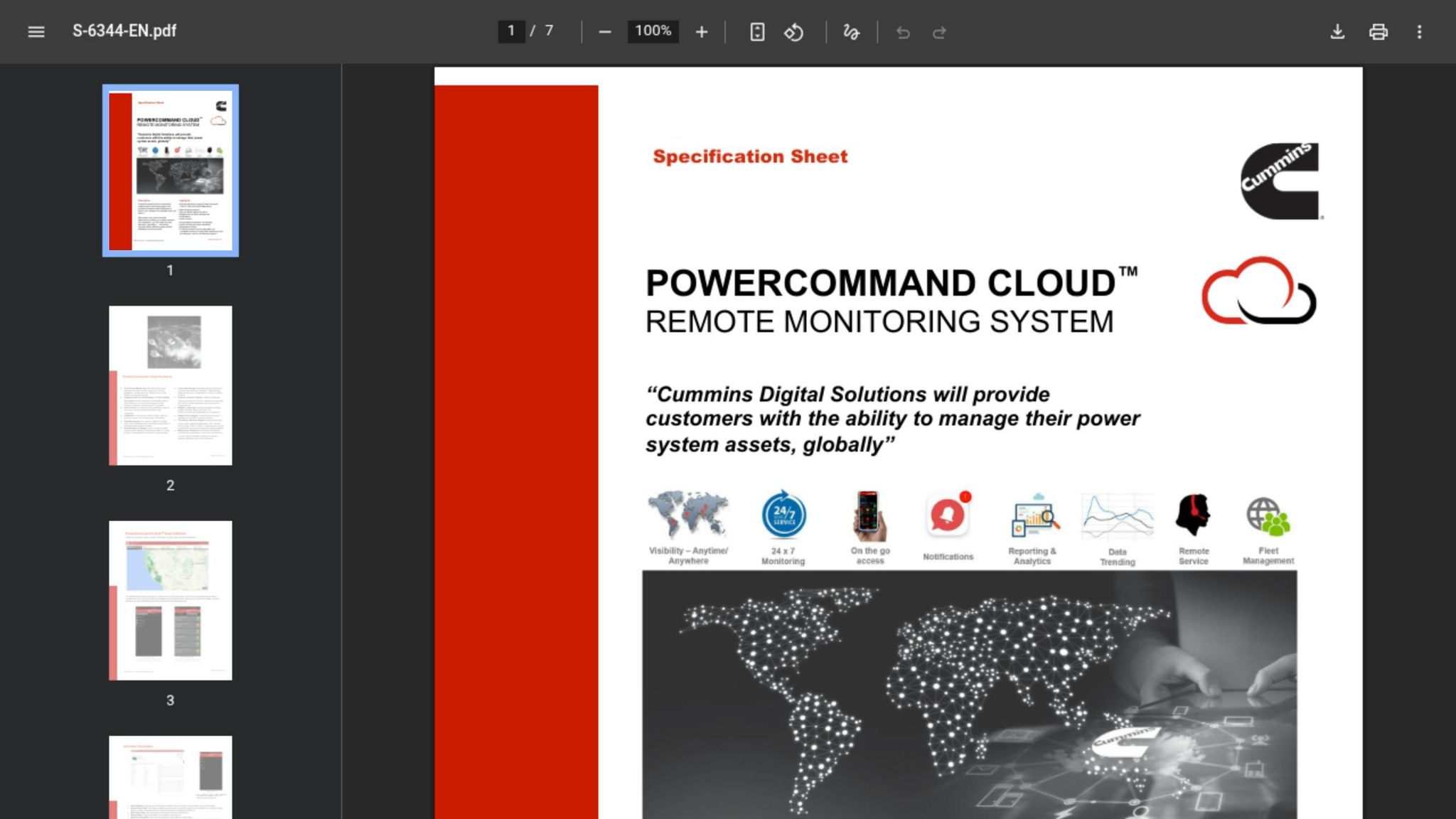
For fleets that already run on Cummins controls, PowerCommand Cloud keeps monitoring and control inside the same OEM setup. It centers on the generator set itself - engine, alternator, transfer switches, and battery - in one dashboard.
Generator data coverage
The platform tracks engine, alternator, fuel, battery, and metering data in real time. It also includes AmpSentry™ protection, which watches the alternator for overcurrent conditions and protects it during overcurrent faults.
PowerCommand controls are also NFPA 110 Level 1 compliant. For U.S. standby generators, that’s an important box to check.
Remote monitoring and alerts
The mobile and web interface gives teams remote status, alerts, and basic control across many sites. Technicians can start or stop the genset from a distance and reset faults when needed. There’s also an Exercise Scheduler that automates exercise runs.
Predictive analytics depth
If you want deeper predictive analytics, Cummins sends engine data into PrevenTech or third-party maintenance systems through expanding API access. PowerCommand telemetry can also feed outside platforms. For example, iFactory uses that data to predict battery failures 4 to 8 weeks in advance and flag engine wear 150 hours before failure.
That matters for a simple reason: starter battery failures account for 30% of all generator failures.
On its own, PowerCommand Cloud handles monitoring and control well. But it becomes far more useful when it’s paired with a maintenance system that can act on those alerts.
Maintenance workflow integration
For larger U.S. fleets, the dashboard supports many assets and sites, grouped by region or facility type. And for teams already using Cummins hardware, there’s a clear upside: the engine, alternator, and controls all come from Cummins, which supports tighter system integration.
The next tool moves away from OEM-native control and into a broader cloud monitoring setup.
7. Caterpillar Cat Connect Secured Remote Asset Monitoring

For fleets powered by Caterpillar engines, the focus moves past basic monitoring. It ties monitoring straight to service support. Cat Connect combines Product Link™ telematics with RAM dashboards and dealer service workflows, and it can also work with older or non-Caterpillar controllers through custom mappings.
Generator data coverage
Cat Connect tracks core engine, electrical, and load data, with updates as often as once per second. Load percentage is especially helpful for teams trying to see whether generator size matches actual demand. The platform keeps a full year of data for trend review, with archiving available for up to 10 years. That stands out against the 30-day retention common in many SCADA setups.
This is where the platform gets more useful. Trend history isn't just there to fill a chart. It helps teams spot trouble early instead of just reacting to a dashboard warning.
Predictive analytics depth
By looking at past patterns, Cat Connect can flag issues like obstructed air filters or deteriorating oil before a standard SCADA alarm goes off. That can save a team from finding out about a problem only after it starts affecting uptime.
A railroad rental fleet running 80 Cat C32 gensets through Cat RAM went 2.5 years with zero unplanned shutdowns and posted fuel efficiency 7% better than the client's stringent requirements.
Remote monitoring and alerts
Alerts can go out by text, email, or app push alerts when fuel falls below a custom threshold, battery health drops, or a fault code becomes active. Users can also clear alarms remotely, which cuts out some technician trips. The map view shows all assets in one place and lets managers drill into any unit.
Maintenance workflow integration
Cat Connect links alerts with preventive schedules, parts ordering, and technician dispatch. Fluid analysis through Cat S•O•S℠ Services adds one more layer by pairing lab results with telematics data for a more complete view of engine health.
Its strongest point is simple: it connects the alert to the repair process. For U.S. generator fleets, that can mean less travel time and faster service response.
For fleets that need a more controller-agnostic setup, the next platform takes a broader cloud-monitoring route.
8. Deep Sea Electronics DSEWebNet
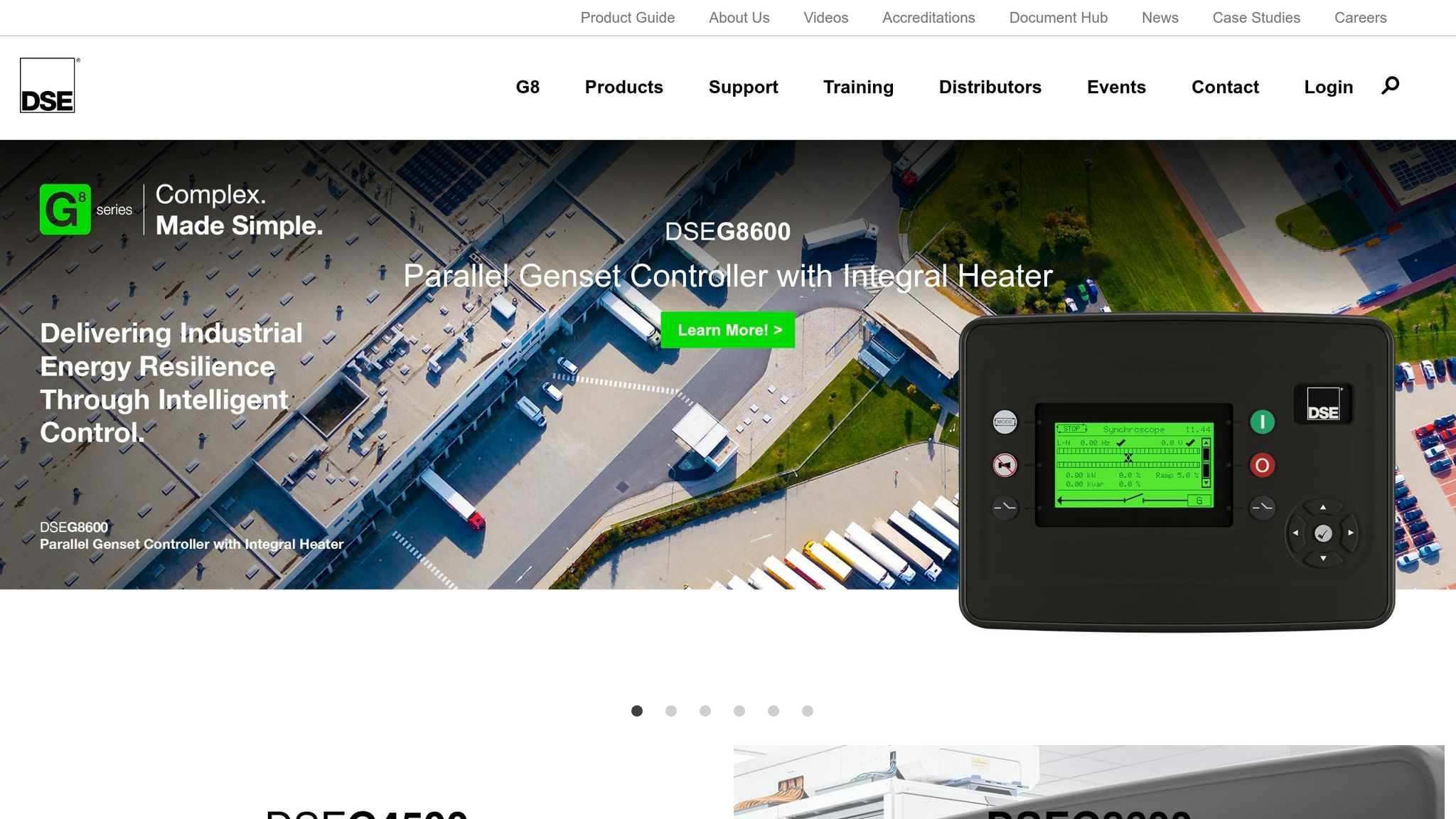
For fleets already built around DSE controllers, DSEWebNet keeps monitoring inside that same setup. It's a controller-based cloud monitoring platform for DSE fleets, and it needs a compatible hardware gateway to send data, such as the DSE890 MKII for 4G/GSM or the DSE891 for Ethernet. One gateway can handle up to five DSE controllers.
Generator data coverage
DSEWebNet pulls in real-time engine and alternator data, fuel levels, battery DC voltage, and status information from connected DSE controllers. The DSE890 MKII works with 8–36 V systems. It also includes geo-fencing and location tracking, which is useful for rental fleets or mobile units.
Predictive analytics depth
A big part of its value comes from runtime-based service tracking. And if you need deeper analysis, data can move into third-party platforms through MQTT instead of stopping at basic service reminders. The DSE890 MKII supports MQTT V 3.1.1, which lets data flow to brokers like AWS, Google, or IBM.
Remote monitoring and alerts
DSEWebNet sends automatic SMS and email alerts to multiple users, and it can also deliver scheduled reports. Access levels are user-configurable, so each team member can be limited to the data tied to their role.
Maintenance workflow integration
For service companies, multi-site service accounts make it easier to manage many client locations under one login. Custom branding options are also available. If a site uses a building management system (BMS), integration runs through the RS485 port on DSE controllers. For SCADA integration, DSESCADA is required and sold per computer.
For fleets that need analytics across mixed equipment, the next tool goes past the DSE controller layer.
9. iFactory Predictive Maintenance for Diesel Generators
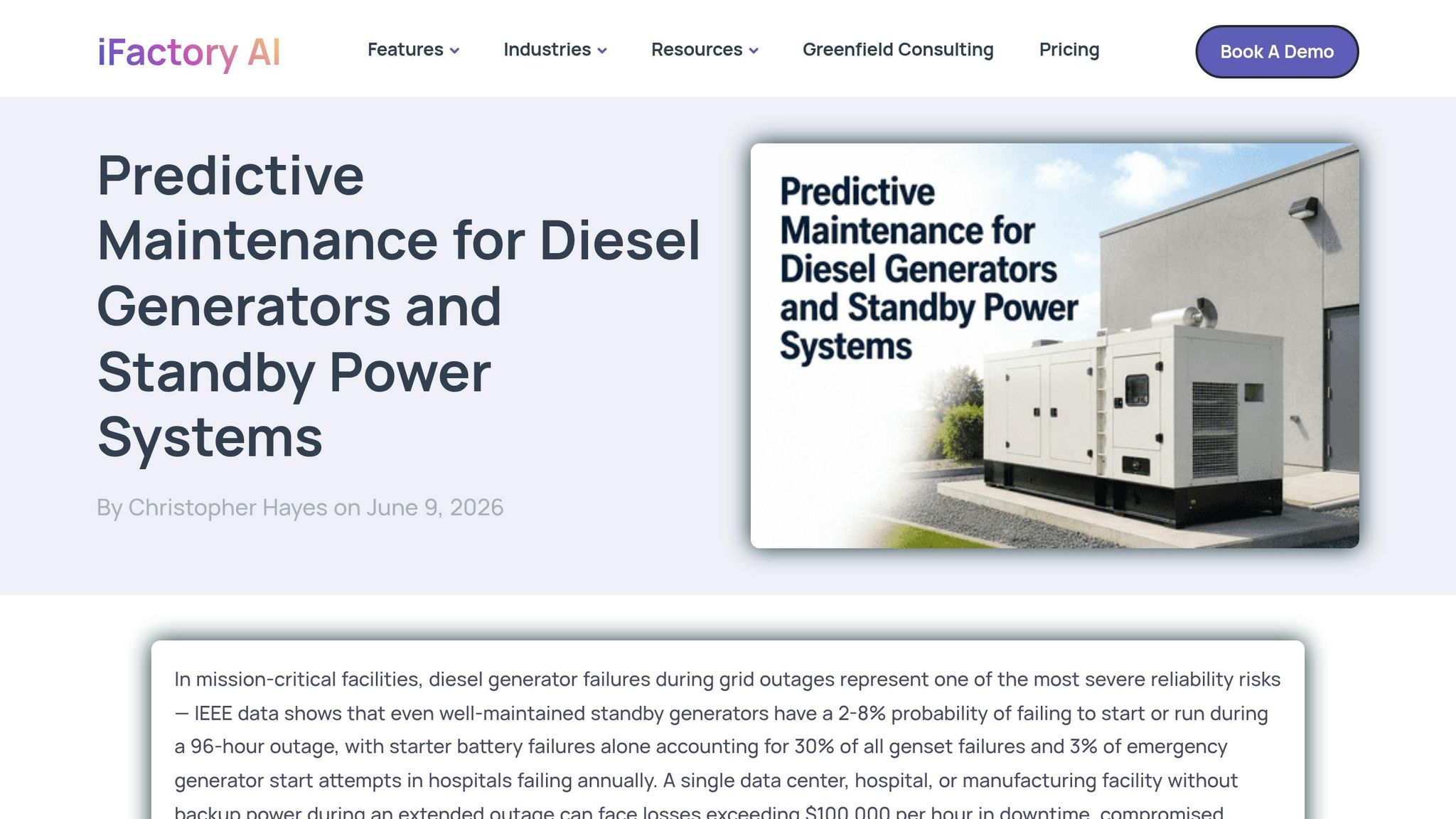
For fleets running mixed OEM controllers, iFactory pulls generator data into one vendor-agnostic model. It connects to existing generator controllers and building systems, including Cummins PowerCommand, Caterpillar EMCP, Kohler DEC, MTU, and John Deere, through Modbus, BACnet, OPC-UA, MQTT, and DNP3.
Generator data coverage
iFactory covers battery, oil, coolant, fuel, alternator, and vibration data across mixed OEM fleets. That's the big draw here. Teams don't have to swap hardware or commit to a single controller stack. The platform takes in data from whatever is already installed on-site.
Predictive analytics depth
iFactory uses unsupervised machine-learning models to build a dynamic baseline for each generator. That lets it separate normal variation from actual anomalies, cut false alarms by 91%, and flag faults weeks before fixed-threshold alarms would go off.
Lead times depend on the failure mode:
| Failure Mode | Advance Warning |
|---|---|
| Starting battery capacity fade | 4–8 weeks |
| Engine oil or bearing wear | 150 hours |
| Stator or rotor failure | ~11 days on average |
| Bearing faults | 72+ hours |
Facilities using iFactory report a 62% drop in unplanned generator outages and a 22% drop in total annual maintenance spend within 18 months.
Remote monitoring and alerts
Alerts show up as mobile notifications and live dashboards with failure-confidence scores and RUL forecasts. It also flags idling-related failure modes, including battery sulfation, oil acidification, and fuel microbial growth.
Maintenance workflow integration
When the platform flags a fault, it can send that result straight into maintenance workflows. iFactory generates condition-based work orders in under 4 minutes and routes them to CMMS platforms such as SAP PM, IBM Maximo, Oracle EAM, Microsoft Dynamics, and Infor EAM.
For U.S. facilities, it also automates documentation for NFPA 110 and NFPA 70B, producing audit-ready records on demand. And for sites with NERC CIP requirements, it can run on-premise with NVIDIA edge servers, keeping AI inference and sensor data inside the facility's security perimeter.
That combination of mixed-fleet data intake and workflow automation sets up the next cloud-based option.
10. InHand Networks Industrial Generator Predictive Maintenance

For sites running older generator controls, InHand moves predictive monitoring closer to the machine. InHand Networks uses the EC312 edge computer to process generator data on-site before sending it to the cloud.
Generator data coverage
The EC312 supports CAN, analog input, digital I/O, and serial ports, which makes it a good match for older generator fleets. It tracks temperature, vibration, pressure, voltage, and current in real time.
That matters because the EC312 doesn't just collect data and wait for cloud processing. It analyzes the input at the edge, right where the generator is running.
Predictive analytics depth
Azure IoT Edge applications handle data locally, which helps spot anomalies faster. The unit also includes onboard supercapacitors to help it stay online through short power transfers.
Remote monitoring and alerts
DeviceLive gives teams fleet-level visibility across multiple sites, with real-time generator health monitoring and edge application management. For connectivity, the EC312 supports 4G cellular with dual SIM, Wi-Fi, and Ethernet.
On the security side, InHand includes IEC 62443 design, Secure Boot, and TPM 2.0.
Maintenance workflow integration
When the EC312 detects an anomaly, it sends real-time alerts to maintenance teams. That makes InHand a solid fit for fleets that need remote visibility without swapping out existing controller hardware.
Side-by-Side Comparison of All 10 Tools
These tools vary in how they’re deployed, what data they can reach, and which fleets they suit best. After the individual profiles, this side-by-side view makes it much easier to match each option to an actual fleet.
Comparison Table
| Tool | Deployment Model | Best Fit | Best For | Primary Capability | Remote Monitoring | Integrations |
|---|---|---|---|---|---|---|
| Electrical Trader | Marketplace / Web | Parts sourcing after alerts | Any generator fleet | Procurement support | N/A | Marketplace listings |
| IBM Maximo APM | Cloud / On-Premises | Enterprise asset management | Multi-vendor | Asset lifecycle + failure prediction | Cloud dashboard | SAP PM, Oracle EAM, CMMS APIs |
| GE Vernova GHM / Predix APM | Cloud / Hybrid | Large prime and utility units | GE and legacy brands | Expert diagnostics + fleet data | Cloud dashboard | SCADA, EAM integration |
| Siemens Energy GenAdvisor | Cloud | Prime and utility | Siemens primary | OEM diagnostics | Web app | OEM service workflows |
| ABB Ability Condition Monitoring for HV Motors and Generators | Cloud | Prime and industrial | ABB primary | HV motor and generator condition monitoring | Cloud dashboard | OEM service workflows |
| Cummins PowerCommand Cloud | OEM-native monitoring | Standby fleets | Cummins only | OEM telemetry, battery and fuel tracking | Mobile + web | Cummins service dispatch |
| Cat Connect Secured Remote Asset Monitoring | OEM-native monitoring | Standby fleets | Caterpillar only | OEM telemetry, runtime analytics | Mobile + web | Cat dealer service workflows |
| Deep Sea Electronics DSEWebNet | Controller-based | Controller-connected standby monitoring | Controller-connected fleets | Alarm and event monitoring | Web app | Alerting and exports |
| iFactory | On-Premises (NVIDIA Edge) | Power plants and mixed fleets | All OEMs | High - 6-week advance stator warning | Edge + cloud hybrid | CMMS APIs, SCADA-compatible |
| InHand Networks | Edge / Controller-Based | Remote generator sites | Mixed controller-connected fleets | Edge anomaly detection | Web app | Real-time alerts |
A simple way to think about it:
- Use OEM-native tools for single-brand standby fleets.
- Use mixed-fleet APM platforms for multi-vendor sites.
- Use edge or on-premises systems when cloud access is limited by security rules.
For sites with NERC CIP requirements, iFactory stands out because its on-premises edge setup keeps data inside the security perimeter.
One thing to keep straight: Electrical Trader is a procurement marketplace, not a monitoring platform. It fits best when you need to source replacement parts after a predictive alert.
Before rollout, confirm the basics first: sensor access, controller compatibility, connectivity, and security boundaries.
What to Set Up Before Deploying These Tools on U.S. Generator Fleets
Sensors, Controllers, and Data Access
Before you roll out any platform, make sure the site can provide clean data, secure access, and a baseline the software can use.
These tools live and die by input quality. Focus first on stator insulation, rotor core, excitation, cooling, and bearings. Then check that the site already has the signals you need before deployment: partial-discharge probes, flux probes, vibration sensors, current and voltage sensors, flow meters, temperature sensors, proximity probes, and oil analysis inputs.
Controller access isn't optional. The system needs to connect with OEM controllers such as Cummins PowerCommand, Caterpillar EMCP, and Kohler DEC through Modbus, BACnet, or OPC-UA. Verify source-level controller access before the contract is signed. If that piece is missing, the rest can fall apart fast.
Connectivity, Security, and Remote Access
Once the data path is in place, tighten up how data leaves the site.
Use Ethernet, cellular, or LoRaWAN gateways to stream data. The transport method matters, but separation matters more. Keep the gateway physically and logically apart from primary OT and IT networks. Encrypt data in transit and at rest with AES-256, and require SOC 2 Type II or IEC 62443 compliance.
If your facility is subject to NERC CIP-005 through CIP-013, keep the data inside the Electronic Security Perimeter.
Baselines, Workflows, and Multi-State Support
After connectivity is handled, set the baseline and map out the maintenance workflow the software will kick off.
AI tools need baseline data before alerts become dependable. Plan for 4 to 12 weeks of baseline data before you lean on automated alerts.
Tie the platform into your CMMS or EAM through API so alerts can open work orders on their own.
If you manage mixed OEM fleets across several states, pick a platform that normalizes mixed-OEM data into one dashboard. That single view helps remote subject matter experts rank assets by risk and coordinate service from a distance.
Also make sure the platform can document NFPA 110 compliance and RCM practices.
Conclusion
How to Choose the Right Tool
Choose based on fleet size, OEM mix, and how well the platform fits your maintenance workflow.
Small to mid-size standby units need readiness monitoring. That means battery health, fuel condition, and start reliability. Utility-scale generators need deeper diagnostics, including stator insulation, rotor windings, and bearings. If you manage mixed-OEM fleets across multiple sites, a brand-agnostic platform that normalizes mixed-OEM data is a must. And if your team doesn't have in-house vibration or electrical specialists, put plain-language guidance ahead of raw waveforms.
Integration depth matters just as much as diagnostic power. A platform that spots a fault but can't open a work order in your CMMS on its own adds manual work and slows response time. The best tools close that loop automatically.
Once you've nailed the fit, the next thing to look at is simple: does the platform turn condition data into action fast enough to matter?
Key Takeaways
Predictive maintenance only works when data leads to action. Reactive failures cost more, take longer to fix, and often come after warning windows that can stretch from 6 weeks to 18 months.
The best platform tells crews what's wrong, when it will start to matter, and what to do next. Look for tools that catch insulation decline early, turn it into a clear repair plan, and keep battery, fuel, cooling, and insulation health in view at all times. That's the difference between predictive maintenance and a dashboard full of noise.
FAQs
Which tool fits a mixed-OEM generator fleet?
For a mixed-OEM generator fleet, genSense works across generator types and original equipment manufacturers. It gives you continuous monitoring and alerts your team can act on - without the need for specialized vibration know-how.
Electrical Trader can also support fleet maintenance with power generation tools and core electrical components.
What data do these tools need to predict failures?
They use continuous sensor data such as:
- vibration
- temperature
- current and voltage
- partial discharge
- insulation resistance
- coolant flow or pressure
Many also use maintenance records, failure history, and part replacement logs. When you combine that with load cycles, ambient conditions, and operating history, the model can spot anomalies and estimate remaining useful life.
How long does setup take before alerts are reliable?
It depends on the solution.
Some modern AI-powered platforms can be set up and start spotting early-stage issues in 1 to 7 days, based on actual operating conditions.
Others need a self-learning phase. During that period, the system tracks voltages and currents during normal operation to build baseline parameters before alerts become fully reliable.