

Noise and Emission Control in Power Generators
If a generator is too loud or too dirty, the fix usually comes down to four things: enclosure, muffler, after-treatment, or fuel change. In many U.S. jobs, standard generator noise can land around 70–100 dB at about 23–30 feet, and diesel emissions are often the bigger permit issue in cities and non-attainment areas.
Here’s the short version I’d want before making a decision:
- For noise: use a sound-attenuated enclosure, muffler, vibration isolation, and smart site placement
- For diesel emissions: use DOC, DPF, and SCR based on the pollutant you need to cut
- For lower source emissions: look at natural gas, renewable diesel (HVO), biogas, or battery-generator hybrid setups
- For standby units: watch for low-load running, because it can lead to soot buildup and DPF regen problems
- For retrofits: check backpressure, airflow, runtime, fuel storage, and local permit limits before you buy anything
What matters most is simple: match the control method to the site. A hospital, data center, and construction job may all use generators, but they do not face the same noise limits, fuel limits, or runtime rules.
Quick Comparison
| Option | Main Use | What It Cuts | Watch For |
|---|---|---|---|
| Acoustic enclosure + muffler | Noise control | Sound at the source and exhaust | Airflow, heat removal, footprint |
| DOC | Diesel exhaust cleanup | CO, hydrocarbons, some PM | Exhaust temperature |
| DPF | Soot control | PM | Regeneration, ash cleaning |
| SCR | NOx control | NOx | DEF storage, dosing, freeze protection |
| HVO renewable diesel | Lower source emissions | PM and lifecycle CO2 | Slight fuel use increase, OEM approval |
| Battery-generator hybrid | Less engine runtime | Fuel burn, runtime emissions, low-load noise | Battery cost, controls, integration |
| Hydrogen / fuel cell | Very low combustion-related output | PM and CO2 | Fuel supply, storage, cost |
If I had to boil the full article down to one point, it would be this: use acoustic hardware for sound, use after-treatment for diesel exhaust, and use cleaner fuels or hybrid systems when the site needs lower emissions from the start.
sbb-itb-501186b
Root Causes of Generator Noise and Emissions
Main Noise Sources and Typical Sound Levels
The right control plan starts with one simple step: figure out where the noise is coming from.
Generator noise usually comes from four main sources: combustion, exhaust, cooling fans, and vibration. Combustion creates sharp pressure pulses inside the cylinders. Exhaust flow carries those pulses through the muffler and stack. Cooling fans add fan and airflow noise, which gets worse on larger units running at full load. Mechanical vibration moves through the frame and into the ground or building structure, and the alternator adds noise too.
Put all of that together, and unmitigated sound levels can reach about 70–100 dB at 23–30 feet for most industrial generators. At places like hospitals, schools, and senior living facilities, the bar can be much lower. Some sites may require limits of 65 dBA at 1 meter.
Once the noise sources are mapped out, it helps to sort emissions by pollutant type.
Main Emissions and Why They Matter
Diesel generators release pollutants that matter for both public health and permitting. Nitrogen oxides (NOx) add to smog and acid rain, which is why EPA Tier standards focus so heavily on them. Particulate matter (PM) is fine soot from diesel combustion and a direct respiratory hazard. Carbon monoxide (CO) is a worker-safety issue, especially in enclosed or partly enclosed spaces. Hydrocarbons and VOCs act as ozone precursors, and CO2 ties into greenhouse gas reporting rules.
Natural gas units usually emit far less NOx, non-methane hydrocarbons, and CO than similar diesel units.
Operating Conditions That Raise Noise and Emission Levels
The same generator can get louder and dirtier under the wrong operating conditions.
Low load, poor maintenance, and cold operation can all push noise and emissions up. Low-load standby testing may not heat diesel particulate filters enough for self-cleaning, which lets soot build up. That soot can later show up as visible smoke. Poor maintenance also cuts combustion efficiency, which increases CO and PM output.
EPA Tier 4 Final standards set the current U.S. baseline for stationary and nonroad engines. For engines above 560 kW, the limits are 0.67 g/kWh for NOx and 0.03 g/kWh for PM. By comparison, a Tier 2 diesel at 200 kW may emit NOx at 6.4 g/kWh, so moving to Tier 4 Final cuts NOx by about 45% and PM by 90%.
Conventional Methods for Controlling Generator Noise and Emissions
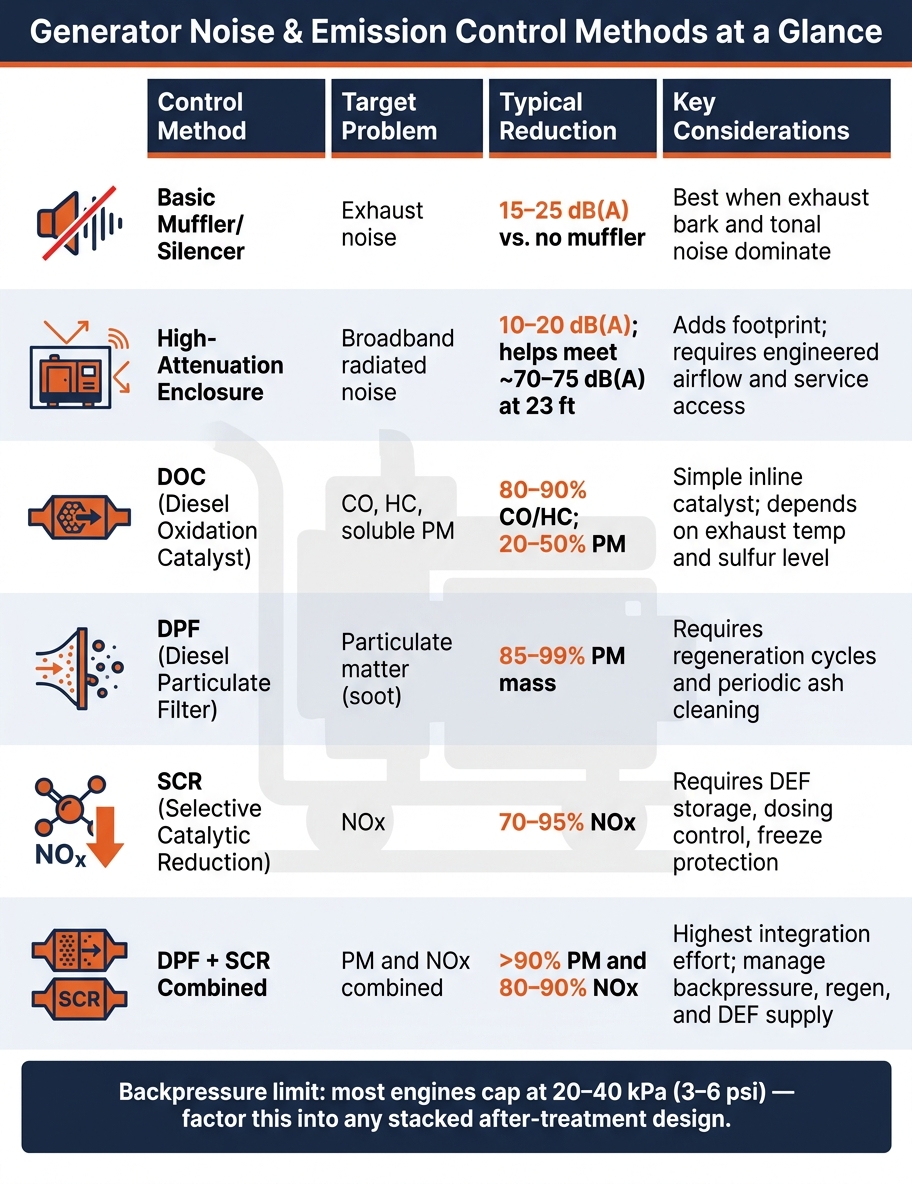
Generator Noise & Emission Control Methods: Quick Comparison Guide
Acoustic Controls That Reduce Generator Noise On-Site
Generator noise doesn't come from just one place. Combustion, exhaust, fan, and vibration noise all behave differently, so each one needs its own fix. That's why most sites don't rely on a single product. They use a layered package.
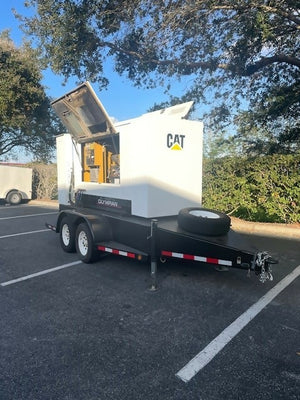
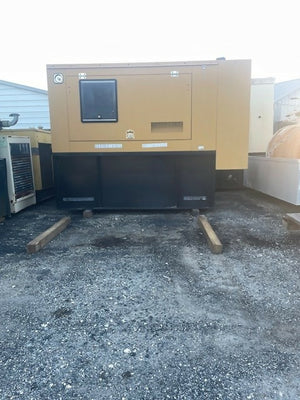
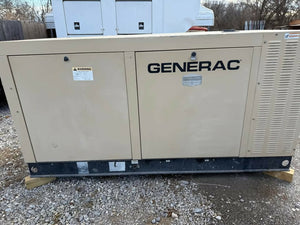
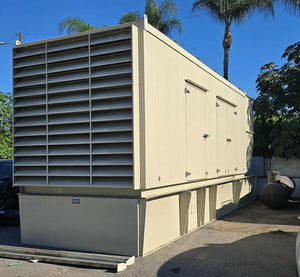
Sound-attenuated enclosures are usually the go-to option. They wrap the generator in insulated panels and use engineered intake and exhaust air paths to cut radiated noise from the engine, alternator, and cooling fan. A standard enclosure can reduce radiated noise by 10–20 dB(A) compared with an open set. High-attenuation models can bring a 100–500 kW diesel unit down to about 75–85 dB(A) at 3 feet, which is often enough to hit a 70–75 dB(A) target at 23 feet. The tradeoff is simple: tighter acoustic treatment can choke airflow, so ventilation has to be sized to remove heat.
Other parts of the package do their own jobs:
- Mufflers handle exhaust noise
- Isolation mounts reduce structure-borne vibration
- Flexible connectors help decouple piping
If the main issue is a clear line of sight to nearby properties, acoustic barriers and site placement can help. At the receiver, they can add about 5–10 dB(A) of reduction. Putting the generator behind a building wall, inside a service yard, or behind a dense berm can work well, but only if the barrier fully blocks the line of sight and has enough height and mass to make a dent.
The factory-versus-retrofit choice mostly comes down to timing. New projects usually do better with a factory-packaged, sound-rated enclosure from the start, since the site plan and foundation can account for the larger footprint. Retrofits can still work, but they tend to cost more for each decibel you gain and often need custom engineering around gear that's already in place.
These steps cut exposure on-site and at the property line. They do not change what comes out of the exhaust.
Exhaust After-Treatment for Diesel Emission Reduction
Noise controls deal with sound. Exhaust after-treatment deals with stack emissions. DOC, DPF, and SCR each go after a different part of the problem.
A Diesel Oxidation Catalyst (DOC) oxidizes CO and unburned hydrocarbons. It also reduces soot-related PM, though results depend on exhaust temperature and fuel sulfur content.
A Diesel Particulate Filter (DPF) traps soot in a ceramic filter. That soot has to be burned off from time to time. This can happen passively through exhaust heat or actively with a burner or a late injection strategy. Here's where standby service gets tricky: generators that run only now and then, and often at low load, may not keep exhaust temperatures high enough for passive regeneration. So active regeneration cycles need to be built into the operating schedule. Even then, ash keeps building up over time, which means the filter still needs periodic cleaning no matter how regeneration is handled.
Selective Catalytic Reduction (SCR) cuts NOx by injecting Diesel Exhaust Fluid (DEF) upstream of a catalyst. DEF is a 32.5% urea solution. Using it means dealing with storage, freeze protection, and dosing controls. Dosing has to match engine load closely. If it doesn't, you can end up with excess ammonia or DEF crystallization.
Combined DPF+SCR systems often place a DOC upstream, and they're now standard on Tier 4 Final packages. Across all of these systems, backpressure is the design issue that can make or break the setup. Most engine makers set a maximum exhaust backpressure of about 20–40 kPa (3–6 psi). Go past that limit and you start seeing power loss and higher fuel use. The total restriction from the muffler, DPF, SCR catalyst, and piping has to stay inside that range. That's why larger exhaust piping and low-restriction silencers matter when multiple after-treatment parts are stacked together.
Older engines can be retrofitted, but low-load standby use calls for site-specific design, backpressure control, and a clear regeneration plan.
Comparison of Noise and Emission Control Options
| Control Method | Target Problem | Typical Reduction | Key Considerations |
|---|---|---|---|
| Basic muffler/silencer | Exhaust noise | 15–25 dB(A) compared with no muffler | Best when exhaust bark and tonal noise dominate |
| High-attenuation enclosure | Broadband radiated noise | 10–20 dB(A) for standard enclosures; high-attenuation units can help many standby sets meet roughly 70–75 dB(A) at 23 feet | Adds footprint and requires engineered airflow and service access |
| DOC | CO, HC, soluble PM | 80–90% CO/HC; 20–50% PM | Simple inline catalyst; performance depends on exhaust temperature and sulfur level |
| DPF | Particulate matter (soot) | 85–99% PM mass | Requires regeneration and periodic ash cleaning |
| SCR | NOx | 70–95% NOx | Requires DEF storage, dosing control, and freeze protection |
| DPF + SCR | PM and NOx combined | More than 90% PM and 80–90% NOx | Highest integration effort; manage backpressure, regeneration, and DEF supply |
Renewable Fuel and Hybrid Systems That Cut Emissions and Noise
Renewable Diesel, Biodiesel, and Biogas Generator Options
If after-treatment doesn't go far enough, cleaner fuels can cut emissions before they leave the engine. Put simply, after-treatment cleans up the exhaust, while renewable fuels reduce pollution at the point of combustion.
Hydrotreated Vegetable Oil (HVO), often called renewable diesel, is the easiest switch for many generator operators. It's a drop-in fuel that usually doesn't need engine or fuel-system changes when it meets ASTM D975 or EN15940. Compared with Ultra-Low Sulfur Diesel (ULSD), HVO can cut PM emissions by 30% to 60%, and lifecycle CO2 by 15% to 78%, depending on the feedstock.
The lab numbers line up with field testing. In a side-by-side test on a 3,000-kWe standby unit, HVO delivered 20% to 30% lower PM at 75% and full load, while start-up and transient performance stayed similar to diesel. A 1,000-hour high-load durability test also found slightly lower noise. There is a tradeoff, though: HVO usually increases fuel use by 3% to 5% and may cut output by 1% to 5%. That means tank sizing and runtime estimates need a second look.
Biodiesel (FAME) is a tougher fit for standby generators. Unlike HVO, it isn't a true drop-in option. It can gel in cold weather, and it's more prone to oxidation. Its shelf life is under 12 months, which matters if the generator may sit for long stretches without running. Because of those storage and stability issues, OEM guidance often limits biodiesel to B5 (5%) blends for standby use.
Biogas can make sense when a site already has access to pipeline gas or landfill gas. These generators use captured methane from landfills, wastewater treatment plants, or agricultural digesters. On a lifecycle basis, they can deliver near-zero net CO2. The catch is that they need spark-ignited natural gas engines or dual-fuel setups, plus a steady gas supply. So they fit fixed sites with a dependable source far better than mobile units or standby-only use.
Hydrogen and Hybrid Generator Configurations
When changing fuels isn't enough, hybrid setups can cut run time and noise by handing part of the load to batteries. A battery-plus-generator hybrid lets the engine stay off during light-demand periods and starts it only when battery charge falls below a set point. Less engine time means less fuel burned and fewer run-time emissions.
There's another upside here: lower noise during the periods when a generator would otherwise sit and idle at low load. That's a big deal because low-load operation is the condition most likely to lead to incomplete DPF regeneration.
Hydrogen-powered generators remove diesel combustion from the equation. Spark-ignited hydrogen engines produce no PM and near-zero CO2, although NOx still has to be managed with tight combustion control or after-treatment. Fuel cell systems go a step further by making electricity electrochemically instead of through combustion. That means no combustion noise and very low emissions. Still, hydrogen has some hard limits today. Storage, fuel delivery, and equipment costs are major hurdles outside pilot programs and fleet use.
Comparison of Renewable Fuel and Hybrid Options
The table below shows where each option fits best.
| Fuel/System Type | PM vs. Diesel Baseline | Lifecycle CO2 vs. Diesel | Noise Characteristics | Infrastructure Needs | Technology Maturity |
|---|---|---|---|---|---|
| Renewable Diesel (HVO) | 30% to 60% lower | 15% to 78% lower | Slightly lower sound power | Same as diesel; verify tank sizing | Commercially available; OEM-approved |
| Biodiesel (FAME, low blends) | Lower than diesel | Lower, variable by feedstock | Similar to diesel | Existing fuel system; monitor for gelling and storage | Mature; limited to low blends for standby |
| Biogas | Near-zero (combustion) | Near-zero to negative (lifecycle) | Similar to natural gas engine | On-site gas supply required | Commercially available at fixed sites |
| Battery-Generator Hybrid | Lower per kWh delivered | Lower per kWh delivered | Quieter during low-load periods | Battery bank, controls, integration | Commercially available; growing adoption |
| Hydrogen / Fuel Cell | Near-zero PM | Near-zero to zero | Near-silent (fuel cell); low (H2 engine) | Hydrogen supply and storage infrastructure | Emerging; limited to pilots and select fleets |
How to Choose and Source the Right Generator Solution
Once you know the main issue - noise, emissions, runtime, or fuel access - you can match the generator to the site instead of guessing.
Matching Solutions to Common Use Cases
The right fit comes down to three things: where the generator runs, how often it runs, and what the site has to put first - noise, emissions, runtime, or fuel supply.
Hospital emergency power systems have almost no margin for error. They must start and carry life-safety load within 10 seconds. If the site is near homes or other noise-sensitive areas, a sound-rated enclosure can help meet local noise limits.
Natural gas or renewable fuel can make sense when retrofit controls don't go far enough, or when fuel logistics matter more than exhaust treatment. Natural gas can also work well for data centers when the Authority Having Jurisdiction (AHJ) allows it, especially in places where on-site fuel storage creates headaches.
Those site-level differences shape what you need to review before you buy new equipment or retrofit what you already have.
What to Check Before Buying or Retrofitting
Before you commit, check the basics first:
- kW rating and load profile: If the unit often runs below 30% load, plan annual load-bank testing to help prevent wet stacking.
- Local dB(A) limit: Urban sites and other sensitive locations may need a sound-rated enclosure that goes beyond standard noise control.
- EPA tier and local air-permit status: In some states, emergency standby engines may still qualify under older tier standards, which can help avoid full Tier 4 after-treatment costs. Sites in nonattainment areas may face tighter runtime limits and stricter testing schedules.
- Fuel storage and Spill Prevention, Control, and Countermeasure (SPCC) requirements: Diesel tanks over 1,320 gallons need secondary containment. If you're thinking about switching to natural gas for an emergency system, confirm AHJ approval first, since natural gas removes the need for on-site fuel storage.
After those checks, source equipment that fits the final kW target, enclosure needs, and fuel path. Electrical Trader lists new and used power generation equipment, switchgear, and power distribution components for upgrade projects.
Conclusion: Steps to Lower Generator Noise and Emissions
Start with the main problem, then pick the fix with the least added complexity that still gets the job done. If noise is the issue, acoustic enclosures and exhaust silencers are often the fastest path. If emissions compliance is the driver, look at whether after-treatment on the current diesel unit is enough, or whether a move to natural gas or renewable diesel makes more sense over the equipment's lifetime.
You can add renewable fuels or hybrid systems where the site setup and budget allow for it. The key is to look at compliance, fuel logistics, and installed cost at the same time. A setup that clears the permit but falls short on runtime, fuel supply, or load testing still leaves a gap.
FAQs
How do I know if noise or emissions are the bigger issue?
Set a baseline for both, then compare your generator’s output with local rules.
For noise, measure sound from 23 feet away while the generator runs at full load. Then record the ambient reading with the unit turned off. Compare those numbers with local noise limits, which are often 45 to 72 dB(A) at the property line.
For emissions, check whether the generator meets local standards, such as Stage V rules.
Which diesel after-treatment system do I need?
Choose based on your application and regulatory requirements. In the U.S., generators that need to meet EPA Tier 4 Final standards usually use:
- DOC for carbon monoxide and hydrocarbons
- DPF to trap soot and ash
- SCR with DEF to cut nitrogen oxides
Electrical Trader offers power generation tools that help you manage these systems and support compliance.
When does it make sense to switch fuels or add a hybrid system?
Switch to renewable diesel (HVO) when you need a drop-in fuel that can cut emissions or help with carbon reporting without replacing equipment or changing engines. It also works well for standby generators because it can stay stable for up to 10 years.
Choose a hybrid system for long-term projects or sites with variable loads when fuel savings and quieter operation matter. It uses battery storage during low-demand periods, then brings in the engine for peak loads or to recharge the batteries.