




Electrical Safety Footwear Materials Explained
A boot’s material affects comfort, grip, water resistance, and wear life - but the EH or dielectric rating is what sets electrical protection. If you work near electricity, the safe move is simple: check the rating first, then match the material mix to dry, wet, or mixed jobsite conditions.
Here’s the short version:
- EH-rated boots are for general electrical work in dry conditions.
- Dielectric boots are the better pick for wet or higher-voltage work.
- Anti-static footwear helps control static, but it is not for live electrical hazards.
- Rubber helps with wet surfaces and slip resistance.
- Leather gives support and long wear, but water can cut its insulating reliability.
- PU is lighter and softer underfoot, which can help on long shifts.
- PVC helps with waterproofing, but it can feel stiffer.
- Composite parts are lighter and non-metallic, but they do not replace a safety rating.
One key test point stands out: EH footwear is tested to resist 14,000 volts at 60 Hz for 1 minute under the stated test conditions. That number matters. But so does boot condition. Wet, cracked, cut, or worn boots can lose the protection you counted on.
Electrical Safety Footwear Explained ANSI Z41 PT99 Standard
sbb-itb-501186b
Quick Comparison
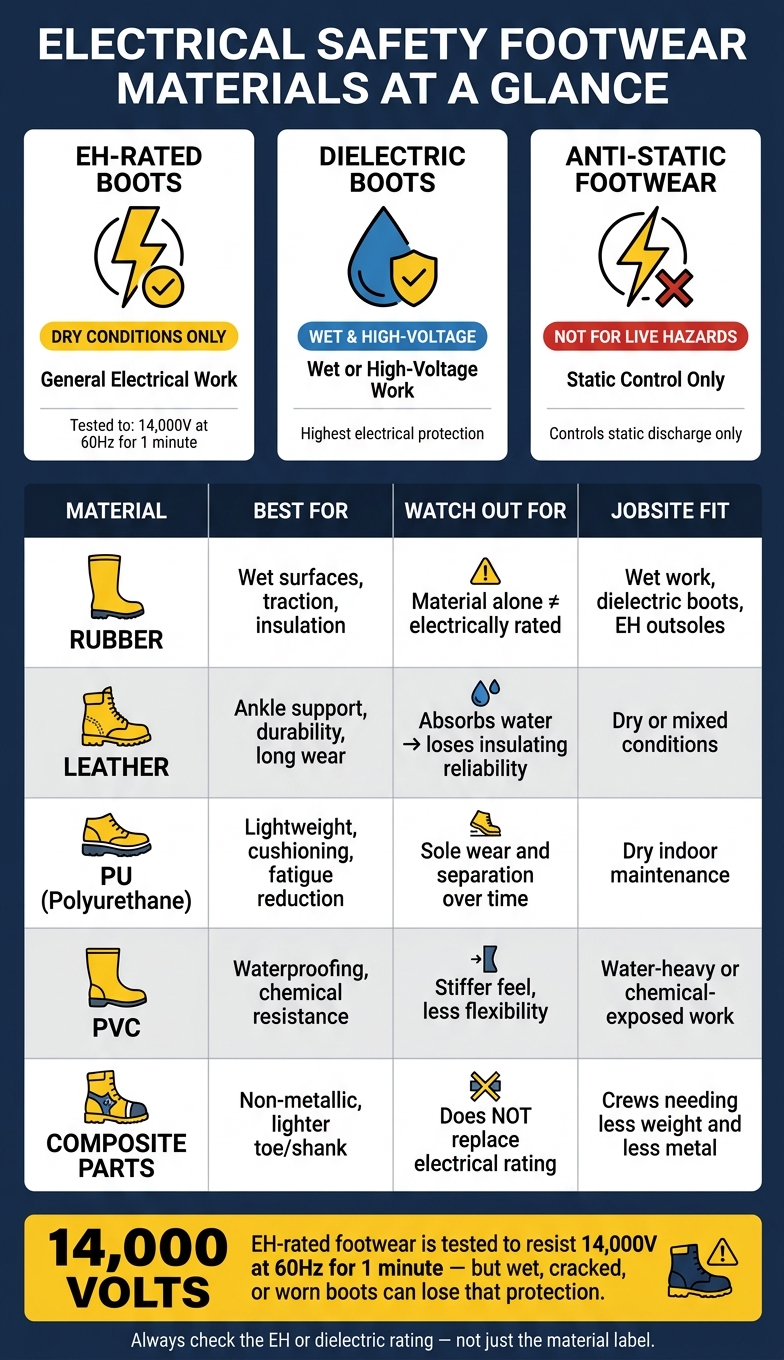
Electrical Safety Footwear Materials: EH vs Dielectric vs Anti-Static
| Material | Main use | Watch-outs | Best fit |
|---|---|---|---|
| Rubber | Wet surfaces, traction, added resistance | Material alone does not mean electrically rated | Wet work, many EH boots, dielectric overshoes/boots |
| Leather | Support, structure, long wear | Can absorb water if not protected | Dry or mixed conditions |
| PU | Lower weight, cushioning | Sole wear and separation over time | Dry indoor work |
| PVC | Waterproofing, wash-down areas | Stiffer feel | Water-heavy or chemical-exposed work |
| Composite parts | Lighter toe/shank parts, non-metallic build | Still need the right rating | Crews that want less weight and less metal |
Bottom line: I’d never judge electrical safety footwear by the outer material alone. I’d check the rating, look at the sole and toe build, and inspect for moisture, sole wear, cracks, and any exposed conductive parts before each use.
Main Footwear Materials and What Each One Changes
The material in a boot can push it in very different directions. One build may lean toward insulation and waterproofing. Another may put more focus on support or lower weight.
Rubber: Wet Conditions, Traction, and Overshoe Use
Rubber resists current flow better than leather, which is why it works well in wet or higher-risk conditions. That makes it a strong pick for wet construction work and dielectric use. A thick rubber outsole can help limit current flow to the ground, and it also gives solid traction on slick, wet surfaces.
If you're dealing with wet or high-voltage work, rubber is usually one of the first materials to look at.
That said, rubber by itself does not make a boot electrically rated. For wet, high-voltage jobs, dielectric boots are the better match. Rubber outsoles show up on many EH-rated boots, but the rating - not the material alone - sets the level of protection.
Leather and PU: Support, Breathability, and Cushioning
Leather gives more ankle support and tends to last longer. PU helps cut fatigue during long shifts. That's the main tradeoff.
Leather uppers are common because they hold up well over time. But untreated leather absorbs water, and once it gets soaked, it loses much of its insulating reliability. Treated leather and waterproof membranes help reduce water absorption, but the boot still needs the right electrical rating.
PU is non-conductive, lighter than rubber, and adds cushioning. That makes it a good fit for dry indoor maintenance and other jobs where lower weight matters. If a crew moves back and forth between indoor and outdoor tasks, these material differences start to matter fast. Leather brings support and durability. PU trims weight and adds comfort underfoot.
PVC and Composite Parts: Waterproofing and Non-Metallic Components
PVC works best when waterproofing matters more than flexibility. It helps in chemical or water-heavy work and is non-conductive, but it feels stiffer than rubber or PU.
Composite toes, shanks, and other non-metallic parts cut down on the amount of metal in the boot. Steel toes can still be used safely in EH-rated boots if they are fully enclosed and not exposed. Even so, composite parts are non-conductive by nature and lighter, which can help reduce fatigue.
Composite parts can help with weight and non-conductive performance, but they do not replace the boot's electrical rating. The better move is to match the material to the jobsite conditions, not just the label.
Matching Material Combinations to the Jobsite
No single material does every job well. The best boots use a mix of materials to balance insulation, wear resistance, and comfort.
Dry Maintenance, Wet Construction, and Mixed Indoor-Outdoor Work
Use the combinations below to match the material mix to the jobsite.
| Work Condition | Upper Material | Outsole | Safety Toe | Primary Rating |
|---|---|---|---|---|
| Dry indoor maintenance | Leather or suede | PU or rubber | Composite (lightweight) | EH-rated |
| Wet construction sites | Treated leather or PVC | Thick rubber (slip-resistant) | Steel or composite | Dielectric + waterproof construction |
| Mixed indoor-outdoor | Full-grain leather | Rubber | Steel or composite | EH-rated + Waterproof |
For dry maintenance, a lightweight EH-rated boot with a leather or suede upper and a PU outsole helps cut fatigue during long shifts.
For wet construction, put dielectric protection first. Thick rubber outsoles and internal waterproofing matter here too.
Full-grain leather works well for mixed indoor-outdoor jobs. It handles rough surfaces, wears well over time, and pairs nicely with a rubber outsole that adds traction and electrical resistance.
What Buyers Should Look at Beyond the Material Label
The outer material is easy to spot, but it doesn't tell the whole story. A boot can look right on the shelf and still fall short on the job.
Construction method is one of the first things to check. Cemented construction bonds the sole with adhesive, which cuts weight and avoids the metal nail issue. Nail construction is more old-school, but it adds weight and can create a conductive path.
Sole design matters too. On wet or oily surfaces, a thick rubber outsole does most of the heavy lifting. PU is often picked for dry indoor work because it weighs less and adds cushioning.
Toe encasement should be checked, not guessed. Steel toes are safe in EH-rated boots only when they are fully enclosed in non-conductive material. Composite toes are non-metallic by design and usually lighter.
Fit and lining affect both safety and comfort. An internal waterproof membrane helps limit seepage and trapped moisture. That matters because internal moisture can create a conductive path.
After choosing the build, inspect the whole boot, not just the outer material.
Inspection, Care, and Replacement by Material Type
The materials that change comfort and grip also change how fast protection wears down. And that matters more than it might seem at first glance. A boot can look fine on the outside and still let you down at work.
Material choice plays a big part in safety, but inspection tells you whether that safety is still there. Start with visible damage. Then look for the kind of wear each material tends to develop.
What to Check Before and After Each Use
Check these three areas on every boot before use:
- Outsole: Look for thinning, cuts, or separation from the upper. A worn sole gives your foot less insulation from the ground.
- Upper: Check for cracks, torn seams, or punctures. Also look for mud, oil, chemicals, or debris on the outsole. These can reduce traction and hide damage.
- Conductive parts: If any conductive part is exposed, remove the boot from service right away. If the boot is wet or saturated, remove it from service.
Care by Material: Rubber, Leather, PU, and PVC
Wet work wears leather down faster. Dry abrasion, on the other hand, tends to wear PU and rubber soles sooner. The best approach is simple: match the care to the material and the job site conditions.
| Material | Primary Care Step | Key Warning Sign |
|---|---|---|
| Rubber | Remove contaminants and inspect the sole | Surface wear or cracking |
| Leather | Keep dry and recondition as needed | Moisture seepage or cracking |
| PU | Inspect for thinning, cracking, and sole separation | Thinning, cracking, or separation |
| PVC | Wash off contaminants, then check seams and fit | Stiffness, cracking, or seam failure |
| Composite parts | Check for cracks, loosening, or exposed edges | Visible cracks or exposed edges |
Once the material starts to show wear, loses its shape, or takes on moisture damage, replace the boot instead of trying to get more life out of it. If you see damage, saturation, or exposed conductive parts, it's time for a new pair.
Conclusion: Choosing Materials for Safety, Comfort, and Service Life
After looking at the main boot materials side by side, the takeaway is pretty simple: material shapes comfort and wear life, but the EH or dielectric rating is what determines electrical protection.
Rubber and PVC are a strong fit for wet, waterproof jobs. Leather and PU offer a better middle ground for support, breathability, and cushioning. Composite parts help cut weight and reduce metal exposure.
So when you're picking a pair, match the material mix to the hazard, the weather, and how long you'll be wearing the boots, not just the label. That balance of safety, comfort, and durability is the buying standard that matters.
Replace boots when the outsole gets thin, the waterproofing stops doing its job, or conductive parts are exposed. Once that happens, the boot is no longer fit for service.
FAQs
How do I choose between EH and dielectric boots?
Choose based on your work conditions. EH-rated boots, marked with the ASTM F2413 label, are made for dry conditions. They help protect against accidental contact with live electrical circuits by resisting current through the sole and heel.
That said, moisture, sweat, or wet ground can cut into that protection. So EH boots aren't a good fit for wet settings. Dielectric boots are the better pick for wet environments or high-voltage step-potential hazards.
Are steel toe boots safe for electrical work?
Yes - if they are EH-rated and in good condition.
A steel toe does not increase shock risk as long as it’s fully enclosed in non-conductive materials like leather or rubber and does not touch your foot.
Steel toe boots that meet ASTM F2413 are acceptable. Inspect them daily for wear, cracks, or exposed metal. Also, EH protection works only in dry conditions.
When should electrical safety boots be replaced?
Inspect electrical safety boots every day before you put them on. Look for damage like cracked or punctured soles, thinning leather, worn tread, or conductive debris stuck to the boot. If you spot wear or damage that could affect safety, replace the boots right away.
Some recommendations suggest replacing them every 6 to 12 months. But in practice, the boot’s actual condition matters more than its age. Any pair with clear wear or damage should be taken out of service, even if it hasn’t been used that long.





