

Dimming Systems: Energy Efficiency Pros and Cons
Dimming systems help reduce energy consumption by controlling light brightness. Manual dimmers are affordable, require physical adjustments, and can cut energy use significantly when paired with compatible bulbs. Smart dimmers, while more expensive, automate lighting through features like motion sensors and scheduling, offering greater convenience and efficiency. Both options can lower electricity bills and extend bulb lifespans, but smart dimmers are better suited for those seeking automation and long-term savings.
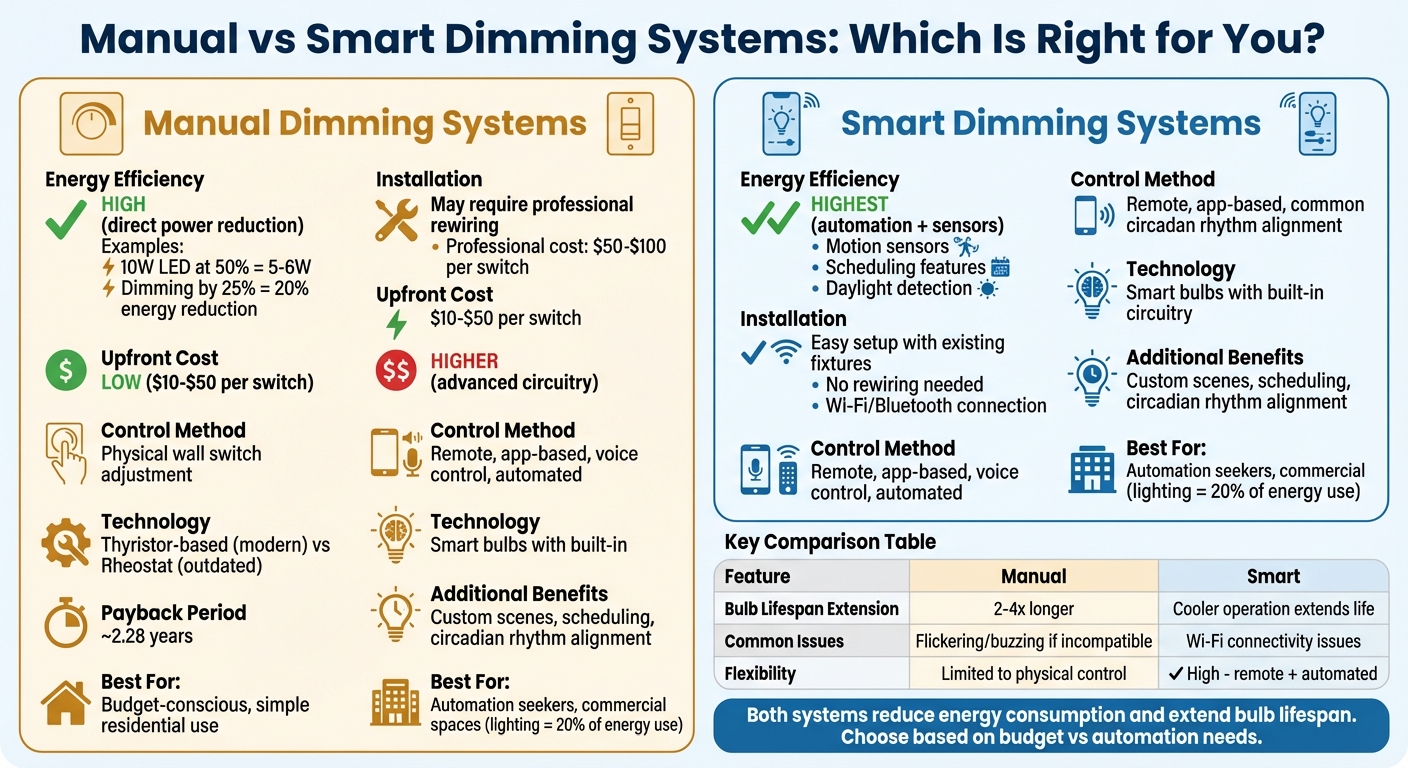
Manual vs Smart Dimming Systems Comparison: Energy Efficiency, Cost, and Control
Can a Dimmer Switch Save Electricity? - Energy saving tips for LED Lighting.
sbb-itb-501186b
Quick Overview:
- Manual Dimmers: Lower upfront cost, physical control, may require professional installation.
- Smart Dimmers: Higher cost, automated control via apps, easier setup with existing fixtures.
| Feature | Manual Dimming Systems | Smart Dimming Systems |
|---|---|---|
| Energy Efficiency | High | Highest (automation adds more) |
| Cost | Low upfront | Higher upfront |
| Control | Physical adjustments | Remote, automated, app-based |
| Installation | May require rewiring | Easier setup with existing fixtures |
Choose manual dimmers for simplicity and affordability, or smart dimmers for automation and convenience.
1. Manual Dimming Systems
Manual dimming systems show how straightforward controls can influence energy use. These systems use a physical wall switch to control brightness, and the technology behind the switch determines whether energy is saved or wasted as heat. Thyristor-based dimmers, for example, reduce power consumption by interrupting the electrical current using semiconductor materials. On the other hand, older rheostat-based dimmers (common over 30 years ago) waste energy by converting it into heat instead of saving it.
Energy Efficiency
The energy-saving potential of manual dimming is simple: dimmer lights mean lower energy use. For instance, dimming LED lights by 50% can cut energy consumption by about half. A 10-watt LED strip dimmed to 50% typically uses only 5–6 watts, depending on the efficiency of its driver. However, compatibility is key. LED bulbs need "LED-compatible dimmers" to work correctly. Using mismatched components can lead to issues like buzzing, flickering, or even a shorter lifespan for the bulbs.
Installation Complexity
Setting up manual dimmers isn’t always straightforward and often requires professional assistance. An electrician is usually needed to ensure proper wiring and maintain warranties. Choosing the right dimming technology for your lighting setup is critical - whether it’s Phase, 1-10V, or DALI dimming. Not all LED fixtures are compatible with dimmers, so checking product specifications beforehand is a must.
| Dimming Type | Technology | Best Use Case | Dimming Range |
|---|---|---|---|
| Leading-Edge | Phase-cut (ascending wave) | Legacy incandescent/halogen | Up to 40% |
| Trailing-Edge | Phase-cut (descending wave) | LED globes | Up to 100% |
| 1-10V | Analog voltage restriction | Commercial/Large residential | Smooth dimming |
Although standard phase dimming works with existing wiring, systems like 1-10V and DALI require separate control cables between the controller and each driver. This adds both complexity and cost to the installation.
Cost-Effectiveness
While manual dimmers cost more upfront than regular switches, they can lead to long-term savings. Dimmable LED drivers are pricier than non-dimmable ones, but the savings come from lower energy bills and extended hardware life. By dimming lights, you reduce heat output, which puts less strain on both the bulbs and the electrical system.
"Dimmed lights place less strain on electrical infrastructure, translating to lower maintenance and replacement costs over time." - HitLights
Cost-effectiveness also hinges on using modern thyristor-based dimmers rather than outdated rheostats. Rheostats may set the mood but don’t save energy since they simply convert unused electricity into heat. In contrast, thyristor-based dimmers can pay for themselves through reduced utility costs and fewer bulb replacements.
Operational Flexibility
Manual dimmers offer practical control over lighting. They allow you to adjust brightness to fit your needs - whether it’s reducing glare in a kitchen or creating a warm atmosphere in a restaurant. For larger spaces, dividing areas into sections with separate dimmers can prevent over-lighting and save energy.
However, the downside is clear: manual dimmers require you to adjust them yourself. Unlike smart systems with motion sensors or daylight detection, manual systems rely on users to remember to dim the lights. This human factor can lead to wasted energy if lights are left at full brightness unnecessarily. Up next, we’ll explore how smart dimming systems address these challenges with automated solutions.
2. Smart Dimming Systems
Smart dimming systems take the hassle out of manually adjusting lights by automating brightness control. These systems work with smart bulbs and mobile apps to optimize energy use. By using built-in circuitry and programming, they ensure compatibility with various fixtures, reducing human error and delivering consistent energy savings.
Energy Efficiency
Smart dimming systems are designed to save energy automatically. Features like motion sensing and scheduling ensure lights are only used when needed. Unlike older rheostat dimmers that waste energy by converting extra power into heat, smart bulbs lower energy consumption directly. This automation translates into measurable energy savings.
Installation Simplicity
One of the best things about smart systems is how easy they are to set up. Unlike manual dimmers, which often require rewiring and professional installation, smart bulbs work with existing fixtures. Simply download the app, connect the bulb via Bluetooth or Wi-Fi, and you’re good to go. This eliminates the need for complex wiring, such as the additional control cables required by 1-10V or DALI systems. The straightforward setup complements the advanced features these systems provide.
Cost Savings
Smart bulbs help reduce costs by eliminating the need for specialized LED-compatible wall switches. Although they’re pricier upfront compared to standard LEDs, they avoid common issues like buzzing and flickering. Plus, their lower energy consumption and cooler operation extend the life of the bulbs, cutting down on energy bills over time. Luke Thomas, Design Director at John Cullen Lighting, highlights this benefit:
"When you dim quality LED light sources, they use less power and typically run cooler, which helps to reduce energy consumption and can extend the life of the fittings".
Enhanced Flexibility
Smart dimming systems go beyond just saving money - they offer a better user experience. With a smartphone, users can adjust brightness remotely, create custom lighting scenes for different activities, or schedule lighting changes to align with natural circadian rhythms. This flexibility makes it easier to tailor lighting to multipurpose spaces, reducing glare and eye strain while creating a more comfortable atmosphere. As Luke Thomas explains:
"Using dimmers transforms how a space feels and performs, and should be considered a fundamental part of a well‑designed lighting scheme rather than a luxury add‑on".
Pros and Cons
Both manual and smart dimming systems help reduce energy use, but they differ in terms of automation, cost, and user control. Manual dimmers, which rely on thyristor technology, cut power consumption by interrupting the electrical current to the bulb. Smart dimming systems take it a step further by integrating automation - using tools like motion sensors and scheduling to ensure lights are only on when needed.
The installation process is another key difference. Manual dimmers are straightforward to install, requiring basic wiring (hot, load, ground) and standard tools, making them an affordable option. Smart dimmers, however, add a layer of complexity with Wi-Fi setup, app synchronization, and firmware updates, which increases the initial cost. That said, this added complexity brings benefits like remote control, voice activation, and scheduling capabilities.
These differences also influence how users interact with their lighting systems. Manual dimmers require physical adjustments at the wall switch, while smart dimmers allow for control from virtually anywhere via a smartphone, along with the ability to create custom lighting scenes and schedules. For commercial spaces, such as office buildings where lighting can account for about 20% of total energy use, the automation offered by smart systems can lead to noticeable energy savings over time.
| Feature | Manual Dimming Systems | Smart Dimming Systems |
|---|---|---|
| Energy Efficiency | High (direct reduction of power draw) | Highest (adds automation and sensor-based savings) |
| Installation Complexity | Low; basic electrical wiring | Moderate; wiring plus digital setup |
| Upfront Cost | Low; inexpensive | Higher; advanced circuitry and software |
| Operational Flexibility | Limited; physical adjustment only | High; remote, voice, and automated control |
| Common Issues | Bulb flickering/buzzing | Wi-Fi connectivity/signal range issues |
In short, manual dimmers are a cost-effective and simple option for basic energy savings, while smart dimmers provide more advanced automation and long-term efficiency benefits.
Conclusion
Deciding between manual and smart dimming systems comes down to your budget and how much automation you want. Manual dimmers are a budget-friendly way to cut energy costs, with prices ranging from $10 to $50 per switch. They can pay for themselves in about 2.28 years through lower electricity bills. Perfect for residential use, they deliver instant energy savings: dimming lights by 25% can reduce energy consumption by up to 20% and double or even quadruple the lifespan of your bulbs.
Smart dimming systems, on the other hand, bring automation into the mix, which explains their higher upfront cost. Features like scheduling, motion sensors, and remote control help eliminate wasted energy by ensuring lights aren’t left at full brightness unnecessarily. For commercial spaces, where lighting makes up about 20% of energy use, these systems can lead to considerable long-term savings without requiring constant manual adjustments.
Make sure your dimmer is compatible with your bulb type - whether LED, CFL, or incandescent - to avoid issues like flickering or buzzing. If handling electrical wiring isn’t your thing, hiring a professional for installation typically costs between $50 and $100 per switch. Ultimately, the best dimming solution for you will depend on how you weigh upfront costs against long-term energy efficiency.
FAQs
How do I know if my LED bulbs will work with a dimmer?
To determine if your LED bulbs are compatible with a dimmer, check whether the dimmer is designed for LED loads. Look for markings or labels on the dimmer switch that indicate LED compatibility. Older dimmers made for incandescent bulbs can often lead to flickering or humming when used with LEDs. If you’re uncertain, consider upgrading to a dimmer specifically rated for LED bulbs to fix these problems. Always refer to the product manual for specific compatibility information.
Do smart dimmers actually save more energy than manual dimmers?
Yes, smart dimmers often save more energy compared to manual ones. They can automatically adjust lighting based on factors like room occupancy or ambient light levels, cutting down on wasted energy. In fact, studies indicate that smart dimmers, when used with LED bulbs, can reduce energy usage by up to 75% in controlled settings. These adaptive features make them a more effective option for energy conservation than traditional manual dimmers.
When should I hire an electrician to install a dimmer?
If installing a dimmer involves intricate wiring, potential safety risks, or the need to comply with local electrical codes, it’s best to hire a professional electrician. This is particularly important if you’re uncertain about the wiring setup or whether the dimmer is compatible with your electrical system. A licensed electrician can ensure the installation is safe and functions correctly, minimizing the chances of electrical shocks or other hazards.