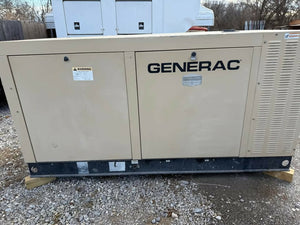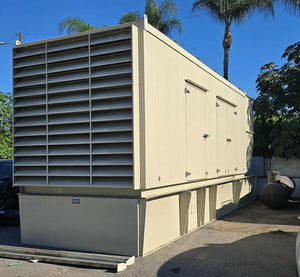


Diesel Generator Fuel System Components
A diesel generator’s fuel system is essential for reliable power. It stores, cleans, and delivers fuel at precise pressures for efficient operation. The system consists of two parts:
- Low-Pressure Side: Includes the fuel tank, supply pump, and filters for fuel storage, transfer, and purification.
- High-Pressure Side: Features the injection pump and injectors for accurate fuel delivery and combustion.
Key components include:
- Fuel Tank: Stores fuel, regulates temperature, and prevents contamination.
- Fuel Lines: Transport fuel, remove vapor, and maintain cooling.
- Fuel Filters: Protect against impurities and water contamination.
- Fuel Pump: Transfers fuel and ensures steady pressure.
- Injectors: Atomize fuel for efficient combustion.
- Water Separator: Removes water to prevent damage and microbial growth.
- Day Tank: Acts as a secondary reservoir for consistent fuel supply.
Regular maintenance - such as cleaning tanks, replacing filters, and inspecting pumps - is critical to prevent failures, extend lifespan, and ensure performance. High-quality parts and proper upkeep safeguard the system against contaminants, water, and wear.
Fuel Oil System Design for Diesel Gensets
sbb-itb-501186b
1. Fuel Tank
The fuel tank is the main storage unit for your diesel generator's fuel, playing a crucial role in both fuel storage and temperature regulation. It helps dissipate heat from returned fuel, ensuring it stays below the flash point.
Role in the Fuel System
On the low-pressure side, the fuel tank works alongside the supply pump and filters. Most tanks include an intake screen to filter out large contaminants before the fuel moves further into the system. For smaller generators, the fuel tank is often built into the skid base, while larger generators use separate, free-standing tanks, typically rectangular or cylindrical in shape.
Temperature management is critical. For every 10°F increase beyond 150°F, power output drops by about 1% since diesel begins to vaporize around 149°F. To ensure safety, tanks must remain leakproof under pressures up to 30 kPa and include vents or safety valves to manage excess pressure.
Maintenance Guidelines
Proper maintenance is key to keeping the tank in good condition. After refueling, allow the fuel to settle for 48 hours. Position the supply pipe 4 inches above the tank's bottom to avoid drawing in contaminants. Quarterly cleanings are essential to remove sediment and water, and the drain plug should be used regularly to discharge moisture and debris. Additionally, inspect the anti-corrosion coating frequently and repair any damage to prevent rust from contaminating the fuel.
Influence on Generator Performance
A well-maintained fuel tank is crucial for optimal generator performance. Many integrated tanks are designed to provide 6–12 hours of operation at full load. By preventing contaminants from entering the fuel system, you protect sensitive components and ensure reliable operation. Place tanks away from sources of heat and vibration to minimize vaporization and sediment disturbance. Lastly, the fuel surface level should not exceed 8.2 feet above the generator base to prevent cavitation during fuel transfer. These steps underline the tank's importance in maintaining a dependable fuel system.
2. Fuel Lines
Fuel lines are essential to your diesel generator, acting as the pathways that transport diesel from the tank, through filters, and into the injection system. These lines connect critical components like the day tank, water separator, supply pump, filters, and injection pump, forming a complete fuel loop. Beyond just transferring fuel, they also handle vapor and air removal and help cool injectors and pumps by maintaining constant circulation.
Functionality in the Fuel System
Fuel lines play a vital role in ensuring the smooth operation of the generator's fuel system. There are two main types of lines in this system:
- Low-pressure lines: These carry fuel from the tank to the supply pump and through the filters.
- High-pressure injection pipes: These deliver fuel from the injection pump to the injectors with much greater force.
Return lines are equally important, as they remove excess fuel, air, and vapor to prevent air locks, which can cause starting issues. They also help regulate temperature by sending fuel heated by the engine back to the tank or filter, reducing the risk of fuel waxing in cold conditions.
High-pressure fuel lines must be carefully matched in both volume and length. According to GeneratorTech:
These pipes should have the same volume so that the injection pump delivers exact equal amount to the cylinder injectors.
This precise balance ensures that each cylinder gets the correct amount of fuel, enabling smooth and consistent engine performance.
Maintenance Requirements
To keep fuel lines functioning effectively, regular maintenance is essential. Start by bleeding trapped air and fuel vapor from the system, as these can lead to engine stalls or starting problems, especially in hot environments. In colder conditions, water within the fuel lines can freeze, cutting off the fuel supply. Avoid this by ensuring the system is free of water accumulation.
When replacing high-pressure fuel pipes, always use ones with the same length and diameter as the originals. This preserves the equal volume needed for accurate fuel delivery to all cylinders. Additionally, inspect fuel lines and connections frequently for leaks, as the system must remain leakproof under pressures of at least 30 kPa (about 4.4 psi). Keep fuel lines and filters away from heat sources to prevent fuel degradation or safety risks.
Impact on Generator Performance
Faulty or clogged fuel lines can seriously affect your generator's performance and reliability. Diesel injection relies on precise pressure levels to deliver the correct amount of fuel to each cylinder. Any drop in pressure can disrupt this balance, leading to reduced power output. In cold weather, ice or wax crystals can clog fuel lines entirely, blocking the fuel supply. Similarly, restricted return flow can cause injectors and pumps to overheat, as excess fuel also serves to cool these components.
3. Fuel Filters
Fuel filters are critical in protecting diesel generators from contamination. They catch particles, water, and microbial impurities before these can reach the injection pump and injectors. Even the tiniest particles can harm precision components if not filtered out.
Functionality in the Fuel System
Most industrial generators rely on a two-stage filtration system. The primary filter, located at the transfer pump's inlet, tackles larger contaminants and separates water, typically filtering particles in the 10–30 µm range. The secondary filter, situated on the outlet side, handles finer particles (2–10 µm) before the fuel enters the high-pressure injection system. For modern Tier 4 Final engines, which operate at over 30,000 PSI, filtration must be even finer (2–4 µm) to protect the common rail systems. At such high pressures, even tiny particles can damage injector surfaces.
Water separation is another key function. Many filters use specialized media to remove water, which can cause corrosion, freeze in fuel lines during cold weather, or harm fuel-lubricated components. Some systems use hydrophobic barrier media (e.g., silicone-treated cellulose) to make water bead and collect in a cup. Others rely on hydrophilic coalescing media (like glass micro-fiber) to combine small water droplets into larger ones that separate from the fuel. To keep these systems effective, regular maintenance is essential.
Maintenance Requirements
Routine maintenance of fuel filters is vital for a generator's performance. Draining the primary filter’s water bowl frequently is especially important in humid climates. Ignoring this task can lead to fuel system damage. Warning signs of filter issues include surging, hard starting, or a sludgy, dark water bowl. For standby generators used infrequently, a full service - including filter replacement - should be performed at least once a year to address fuel degradation and microbial growth. Additionally, NFPA 110 standards require documented maintenance records, including filter change logs, for emergency and standby systems.
Always replace filters with ones that match the manufacturer's specified micron rating and bypass valve pressure. Using incorrect filters can void warranties or damage sensitive Tier 4 components. When replacing element-type filters - where only the internal media is swapped - ensure the housing is thoroughly cleaned to prevent residual dirt from entering the injection system.
Impact on Generator Performance
A clogged or failing filter disrupts fuel delivery, leading to problems like surging or hunting under load. Severe blockages can cause complete fuel starvation and engine shutdown. If a damaged filter allows particles to bypass, these can permanently scar the precision surfaces in high-pressure injectors. This results in incomplete combustion, producing excess soot that can clog the oil filter and accelerate engine wear. Similarly, failing to separate water effectively can allow free water to damage fuel-lubricated components or freeze in cold conditions, potentially blocking the fuel supply.
Here’s a breakdown of the key specifications for each filter stage:
| Filter Stage | Typical Micron Rating | Primary Function |
|---|---|---|
| Primary Filter | 10–30 µm | Removes large particulates and separates water |
| Secondary Filter | 2–10 µm (Tier 4: 2–4 µm) | Filters finer particles before fuel injection |
4. Fuel Pump
The fuel pump plays a key role in moving fuel from storage to the injection system, ensuring consistent pressure throughout the process.
Functionality in the Fuel System
The fuel pump, often called the lift pump, is responsible for transferring diesel fuel to the injection system at low pressure. This ensures a steady supply for the high-pressure injection system. Positioned on the low-pressure side of the fuel system, it works closely with the fuel tank and filters to maintain a continuous flow. Unlike the high-pressure pump, which pushes fuel into the injectors at extremely high pressures, the lift pump focuses on the initial fuel transfer and circulation. Interestingly, many fuel pumps are designed to deliver more fuel than the engine consumes. This excess flow not only ensures an uninterrupted fuel supply but also helps cool system components. Depending on the setup, the pump may be powered electrically or mechanically.
Keeping the fuel pump in good condition is just as important as its role in the system.
Maintenance Requirements
Protecting the fuel pump starts with using high-quality fuel filtration. Contaminants and tiny particles can cause wear and tear, so it’s essential to replace primary (10–30 µm) and secondary (2–10 µm) filters every 500 hours or once a year. After changing filters, be sure to prime the system to remove any air pockets. Additionally, avoid letting the fuel tank drop below one-quarter full to reduce the risk of air entering the system and to minimize condensation, which can introduce water into the fuel. Weekly visual inspections can help catch potential problems early, such as leaks or unusual fuel odors. For electrically powered pumps, cleaning and tightening connectors and sensors is a must. Semiannual loadbank tests can also confirm the pump’s ability to perform under load.
Impact on Generator Performance
A malfunctioning fuel pump can disrupt the entire fuel delivery process. One of the earliest warning signs is difficulty starting the engine, especially in colder conditions, as the pump struggles to maintain proper pressure. Over time, this can lead to reduced power, sluggish acceleration, and poor performance under load. Irregular fuel pressure might also result in rough idling, misfires, or even a complete engine shutdown. Changes in exhaust smoke - such as black, white, or blue - can provide additional clues about potential issues. On average, a well-maintained diesel injection pump can last between 100,000 and 150,000 miles. Considering that heavy-duty diesel engines convert only about 39% of fuel energy into usable power, ensuring efficient fuel delivery is crucial for both performance and cost management.
5. Fuel Injectors
Fuel injectors play a crucial role in the fuel system by precisely delivering and atomizing fuel into the engine's cylinders at high pressure. By breaking fuel into fine droplets, they create a mist that mixes efficiently with air, ensuring thorough combustion. Modern common rail injection systems operate at extremely high pressures, with some hydraulically actuated systems reaching up to 21,000 psi. This pressure forces fuel through nozzle openings that are often just a few tenths of a millimeter wide, producing a spray pattern that ensures even distribution within the combustion chamber.
These injectors are essential for achieving efficient combustion and building on the foundational work of other fuel system components.
"The fuel injection system is the core component of diesel engines, directly determining the engine's power output, fuel economy and exhaust emission performance." - EnginesWorld
Modern technology, like electronic control units, has revolutionized fuel injection. Systems such as common rail injection can deliver impressive results: up to 20% fuel savings, a 25% boost in power, and substantial reductions in harmful emissions, including 20% less CO2, 40% less carbon monoxide, and a 60% drop in particulate matter. Advanced systems like i-ART take this further by optimizing injection timing with incredible precision - down to 1/100,000 of a second. Each injector in these systems has its own pressure sensor and control unit to fine-tune cylinder performance.
Maintenance Requirements
The performance of fuel injectors is critical to keeping generators running efficiently. Just as fuel filters protect the pump, regular injector inspections are necessary to prevent performance issues. Water separation is especially important, as water can damage the fuel-lubricated components of injectors. In colder climates, fuel preheaters can help prevent wax crystal formation, which might clog the injectors' delicate passages. Regular checks for leaks are also essential, as poor sealing can lead to incomplete combustion and higher emissions. Most manufacturers recommend inspecting injectors approximately every 100,000 miles to ensure they remain in top condition.
Impact on Generator Performance
When injectors malfunction or become clogged, the effects on performance can be significant. Symptoms include hard starts, rough idling, and reduced power output. Generators may struggle under load, leading to sluggish responses and difficulty maintaining speed during heavy demand. Exhaust smoke can serve as a diagnostic clue: black smoke often points to excessive fuel from poor combustion, while white smoke may indicate unburned fuel escaping due to injector issues . Using rebuilt injectors that fail to meet original equipment standards can further reduce fuel efficiency by 5% to 10%. If left unchecked, injector problems can harm the exhaust system and eventually lead to total engine failure.
6. High-Pressure Fuel Pump
Functionality in the Fuel System
The high-pressure fuel pump serves as the critical link between the low-pressure fuel supply and the injectors. While the lift pump draws fuel from the tank, the high-pressure pump compresses it to an intense 25,000–30,000 psi. This level of compression ensures the fuel is atomized properly and delivered with precision to the combustion chamber for efficient engine operation.
In systems like the Cummins PT (Pressure-Time) system, the pump not only handles pressurization but also regulates the fuel pressure. This ensures each cylinder gets the exact amount of fuel it needs for optimal performance. Typically powered by the engine's gear train, the pump often integrates other components like a governor and a tachometer shaft. However, it depends on pre-pressurized fuel supplied by the lift pump to function effectively.
"The operation of the Cummins PT Fuel System is based on the principle that the volume of liquid flow is proportionate to the fluid pressure, the time allowed to flow and the passage size through which the liquid flows." - Starlight Generator
This precise mechanism demands careful upkeep to maintain its performance and protect its intricate components.
Maintenance Requirements
High-pressure pumps are built with extremely tight tolerances, making them especially vulnerable to poor fuel quality. To safeguard the pump, fuel must be filtered to 2–10 µm, and the filter housings should be kept clean. Water contamination poses a particular threat, as it can damage the pump's fuel-lubricated surfaces. In colder conditions, water can freeze and block the pump's narrow passages, further emphasizing the importance of water separators.
Annual inspections by qualified mechanics are strongly recommended to ensure the pump remains in peak condition.
Impact on Generator Performance
The high-pressure pump plays a direct role in how well a generator handles changing loads and maintains steady speed. If the pump starts to fail, you might notice issues like hard starts, rough running, reduced power, and excessive smoke. Working alongside the governor, the pump also acts as a safeguard by cutting off fuel if the engine's RPM exceeds safe limits. A malfunctioning pump disrupts the precision required for clean combustion, leading to higher emissions and lower fuel efficiency over time.
7. Day Tank
Role in the Fuel System
The day tank plays a crucial part in the fuel delivery process. Acting as an immediate fuel reservoir, it provides enough fuel for 6–8 hours of operation, or up to 12 hours when running at full load. Positioned between the main fuel tank and the engine, it ensures a consistent fuel supply while also collecting returned fuel. This process helps dissipate heat and maintain the proper fuel temperature.
The design of a day tank depends on the size of the generator. For smaller generators, typically under 250 kW, the tank is often built into the skid base to save space. Larger generators, on the other hand, use separate tanks - usually rectangular or cylindrical - to handle the greater fuel capacity needed for extended operation.
Maintenance Essentials
To operate effectively, day tanks need to be leakproof, capable of withstanding at least 30 kPa of pressure, and equipped with vents or safety valves to prevent pressure buildup. Regular maintenance is crucial. Fuel polishing helps remove moisture and sediment that can accumulate over time, while periodic fuel sampling ensures the diesel remains in good condition during storage. Additionally, the venting system and fuel return line should be inspected regularly to confirm they are functioning properly.
Influence on Generator Performance
A well-maintained and properly sized day tank is essential for reliable generator operation. It ensures a steady fuel supply and helps regulate fuel temperature, both of which are critical for system performance. Neglecting maintenance or using a tank that's too small can lead to issues with temperature control and overall system reliability.
8. Water Separator
Functionality in the Fuel System
The water separator is a key component in diesel engine fuel systems, designed to remove water from diesel fuel before it can harm critical parts like the injection pump and injectors. This device is part of a larger filtration system that protects high-pressure components. Since diesel fuel has a lower specific gravity (around 0.82–0.85) compared to water (1.0), water naturally settles at the bottom.
Inside the separator, coalescing media work to gather tiny water droplets into larger ones, which then collect in a bowl at the bottom. These bowls are often clear or translucent, making it easy to visually check water levels and fuel quality. In many industrial generators, the water separator acts as the first line of defense, filtering out larger contaminants before a secondary filter handles finer debris.
Maintenance Requirements
To keep the water separator functioning effectively, inspect the bowl monthly and within 24 hours of any fuel delivery. This helps address condensation and any water that may have entered the system. Draining the collected water is a quick task, taking less than a minute, and should be done during every site visit.
The water bowl can also serve as a diagnostic tool. If the collected liquid is clear, it’s likely just condensation. However, dark or cloudy sludge may indicate contamination from diesel bugs. Replace the pre-filter or water separator elements every 250 hours for standby generators or every 500 hours for units used in prime power applications. In colder climates (below 41°F or 5°C), installing heater elements in the filter bowl can prevent wax buildup.
Impact on Generator Performance
Contaminated diesel fuel is responsible for about 65% of unplanned generator failures, making the water separator an essential safeguard. Routine maintenance prevents problems like "hydraulic lock" or "water hammer", which occur when water droplets - unable to compress - enter high-pressure systems, potentially causing injector tips to crack or control valves to fail under pressures exceeding 20,000 PSI. Water in the system also encourages rust and scale buildup in steel fuel tanks, lines, and the precision components of injection pumps. By removing water, the separator not only protects these components but also eliminates the conditions needed for microbial growth, which thrives at the fuel-water interface. This ensures better fuel quality and supports the performance of the entire fuel system.
9. Electrical Trader
When it comes to diesel generator fuel systems, sourcing dependable components is just as important as regular upkeep. Quality parts play a key role in ensuring these systems run efficiently and without unexpected interruptions.
Sourcing Quality Fuel System Components
The reliability of your fuel system hinges on the components you choose. Electrical Trader provides an extensive selection of both low- and high-pressure fuel system parts. These include essentials like fuel tanks, supply pumps, filters, water separators, high-pressure pumps, accumulators, and injectors. Additionally, they offer crucial electrical components such as Automatic Voltage Regulators (AVRs) and control panels to help manage and regulate generator output seamlessly.
By acting as a one-stop shop for electricians, facility managers, and other users, Electrical Trader simplifies the process of accessing both new and used power generation parts. This centralized approach not only helps maintain system reliability but also makes emergency repairs more straightforward.
Maintenance and Replacement Parts
Keeping your generator in top shape means replacing worn-out parts before they lead to bigger issues. Routine maintenance requires a steady supply of high-quality replacement components, and that's where Electrical Trader excels. They offer primary filtration units like fuel water separators and strainers, which are designed to remove water and solid contaminants that could harm your injection system.
Beyond filtration, they also stock essential parts such as fuel supply pumps, fuel filters, injection pumps, and complete injector assemblies. For more specialized upkeep, the platform provides precision injector components tailored to a variety of engine brands.
With a consistent supply of these critical parts, Electrical Trader helps ensure the durability and efficiency of your diesel generator's fuel system.
Component Comparison: Low-Pressure vs. High-Pressure Systems
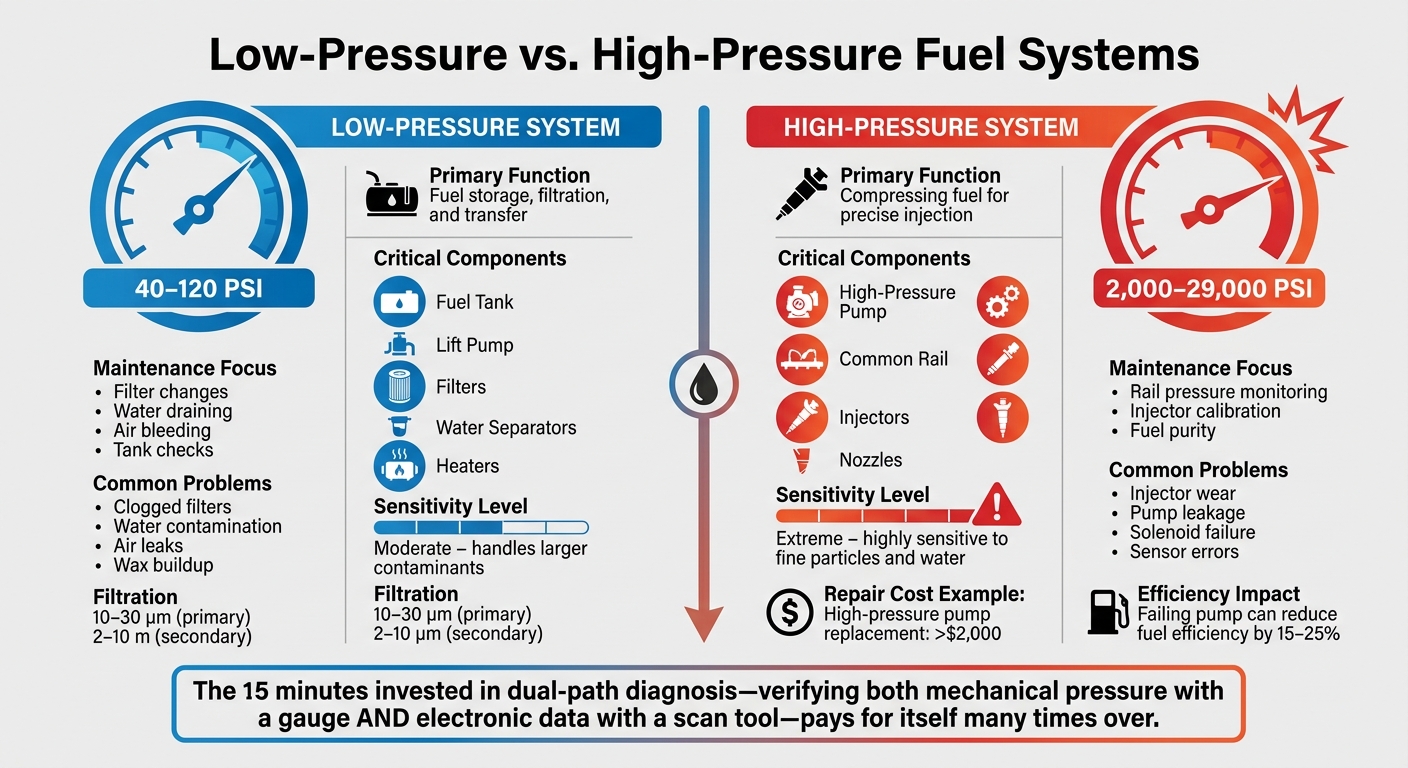
Diesel Generator Fuel System Components: Low-Pressure vs High-Pressure Systems
When it comes to fuel systems, understanding the differences between low- and high-pressure systems can help pinpoint maintenance priorities and streamline diagnostics. The low-pressure system manages fuel storage, filtration, and transfer, operating at pressures between 40–120 PSI. Meanwhile, the high-pressure system ramps up fuel pressure to extreme levels - reaching as high as 29,000 PSI in modern common rail setups - to ensure fuel is atomized properly for efficient combustion.
Maintenance Priorities
Each system has unique maintenance demands. The low-pressure setup focuses on tasks like changing filters, draining water separators, and bleeding air from the lines to prevent contamination and clogs. Primary filters typically catch particles between 10–30 µm, while secondary filters handle finer contaminants down to 2–10 µm. On the other hand, high-pressure systems are far less forgiving. Their tight tolerances and high operating stresses mean they require exceptionally clean fuel to avoid damage. These distinct filtration requirements underscore the challenges each system faces.
Low-pressure issues, such as clogged filters, water contamination, air in the lines, or wax buildup, are relatively straightforward to address with regular upkeep. High-pressure problems, however, are more intricate and expensive. Common issues include injector nozzle wear, pump failures, and solenoid malfunctions. A failing high-pressure pump, for example, can slash fuel efficiency by 15–25%, and replacing one in a commercial diesel engine can cost over $2,000.
"The 15 minutes invested in dual-path diagnosis - verifying both mechanical pressure with a gauge AND electronic data with a scan tool - pays for itself many times over." - Michael Nielsen, Editor & Publisher, Heavy Duty Journal
This advice highlights the importance of checking the low-pressure system first, as many high-pressure symptoms can actually stem from issues like clogged filters or a weak lift pump. Additionally, a well-functioning high-pressure system should maintain residual pressure, losing no more than 3,000 PSI within one minute after engine shutdown.
Key Differences at a Glance
| Feature | Low-Pressure System | High-Pressure System |
|---|---|---|
| Operating Pressure | 40–120 PSI | 2,000–29,000 PSI |
| Primary Function | Fuel storage, filtration, and transfer | Compressing fuel for precise injection |
| Critical Components | Fuel tank, lift pump, filters, water separators, heaters | High-pressure pump, common rail, injectors, nozzles |
| Maintenance Focus | Filter changes, water draining, air bleeding, tank checks | Rail pressure monitoring, injector calibration, fuel purity |
| Common Problems | Clogged filters, water contamination, air leaks, wax buildup | Injector wear, pump leakage, solenoid failure, sensor errors |
| Sensitivity Level | Moderate – handles larger contaminants | Extreme – highly sensitive to fine particles and water |
Conclusion
Maintaining every part of a diesel generator's fuel system and sticking to a regular upkeep schedule is essential for avoiding downtime and keeping performance at its best. Each component plays a crucial role in ensuring the system runs efficiently and reliably. For instance, the fuel tank not only stores diesel for 6–12 hours but also helps dissipate heat from returned fuel. Fuel filters and water separators are indispensable for protecting high-pressure components by filtering out particles as tiny as 2–10 µm and guarding against corrosion caused by moisture. The supply pump ensures fuel is delivered under pressure while also cooling injectors through excess fuel flow. Lastly, fuel injectors are responsible for atomizing diesel, promoting effective combustion and delivering maximum power output.
"Trouble-free operation of a diesel injection system is possible only with filtered fuel." - DieselNet
Regular inspections - recommended every 250–300 hours - are key to identifying and addressing problems like clogged filters, water contamination, or pump issues before they lead to system failures. Simple steps like replacing filters and draining water separators can significantly extend the life of the system.
In addition to routine maintenance, using high-quality parts is critical for ensuring long-term reliability. Choosing components that meet pressure and filtration standards helps prevent premature wear and expensive repairs. Trusted platforms like Electrical Trader (https://electricaltrader.com) provide a wide range of new and used power generation parts, including those for fuel systems, along with technical support and detailed product information.
Whether it's for emergency backup, remote operations, or continuous industrial use, reliable power depends on proper maintenance and sourcing dependable parts.
FAQs
How can I tell if a fuel issue is low-pressure or high-pressure?
When diagnosing fuel system problems, pinpointing whether the issue stems from low pressure or high pressure is key. Here's how to differentiate:
- Low-pressure problems often arise from components like the fuel tank, supply pump, or filter. These issues typically cause symptoms such as hesitation or stalling when the engine operates at lower RPMs.
- High-pressure problems are usually linked to the high-pressure pump, accumulator, or injectors. These can result in misfiring or uneven engine performance, especially at higher RPMs.
By matching the symptoms to the likely source, you can narrow down the cause and address the issue more effectively.
What causes water in diesel fuel, and how do I prevent it?
Water in diesel fuel can find its way there through condensation, leaks, or contamination during handling. To keep this issue at bay, here are a few practical steps:
- Install water separators: These devices help remove water from the fuel before it reaches the engine.
- Drain fuel tanks regularly: Periodically emptying water from the tanks ensures it doesn't accumulate over time.
- Keep the fuel system in good shape: Routine maintenance minimizes the risk of leaks or contamination.
Following these measures can help safeguard your generator from the damage water contamination can cause.
What micron rating should my generator's fuel filter have?
Your generator's fuel filter should have a micron rating of 10 microns or less. This helps effectively remove contaminants, ensuring the engine runs smoothly and efficiently.