




Top 7 Causes of Electrical Fires
Electrical fires are a serious hazard, causing thousands of incidents, deaths, and billions in damages annually. They often start unnoticed, smoldering within walls or devices, and can escalate quickly. Here's what you need to know:
Key Causes:
- Faulty Wiring: Hidden sparks from damaged wires can ignite fires, especially in older homes.
- Overloaded Circuits: Excessive electrical demand overheats wires, melting insulation and sparking fires.
- Defective Outlets and Switches: Loose connections or worn components lead to overheating and arcing.
- Damaged Cords and Plugs: Frayed or pinched wires can spark fires, particularly under rugs or furniture.
- Malfunctioning Appliances: Aging or poorly maintained devices can overheat and ignite nearby materials.
- Improper Use of Extension Cords: Overloading or daisy-chaining cords traps heat, increasing fire risks.
- Overloaded Light Fixtures: Using bulbs with higher wattage than recommended overheats fixtures and ignites flammable items.
Prevention Tips:
- Regularly inspect wiring, outlets, and cords for damage.
- Avoid overloading circuits and use appropriate breakers.
- Unplug unused appliances and use GFCI outlets in moisture-prone areas.
- Replace damaged cords, outlets, or switches immediately.
- Follow wattage ratings for light fixtures and keep flammable materials away.
By addressing these risks and conducting routine electrical inspections, you can significantly reduce the chances of electrical fires in your home or workplace.
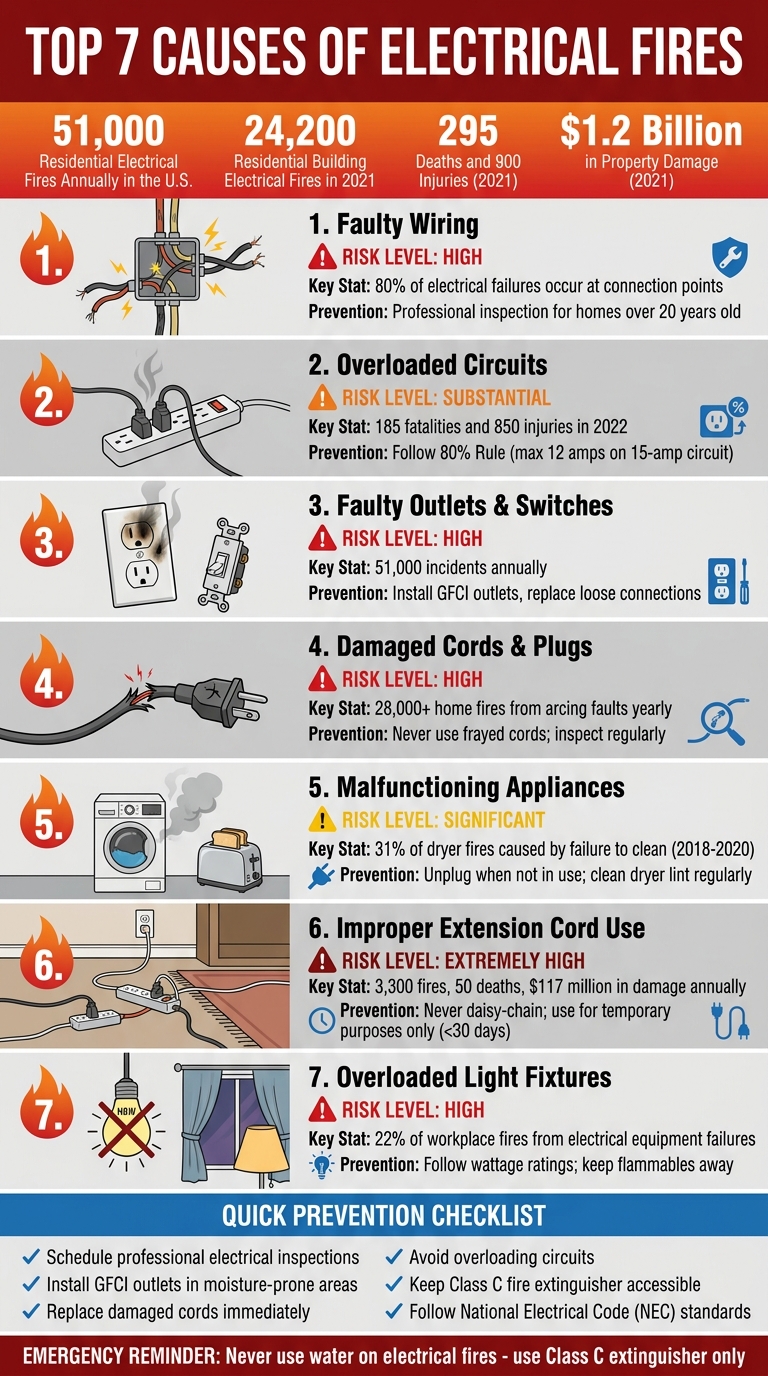
Top 7 Causes of Electrical Fires: Statistics and Prevention Guide
What Causes an Electrical Fire
sbb-itb-501186b
1. Faulty Wiring
Faulty wiring is a serious concern when it comes to fire safety. It’s one of the most dangerous electrical hazards found in homes and workplaces. Damaged wires can overheat and spark hidden fires, often starting behind walls or inside electrical boxes where they’re hard to spot. This makes them particularly risky because the damage can go unnoticed until it’s too late.
Potential Fire Risk Level
The fire risk associated with faulty wiring is high. In the U.S., electrical fires are responsible for around 51,000 residential fires every year. In 2021 alone, there were 24,200 residential building electrical fires, leading to 295 deaths, 900 injuries, and $1.2 billion in property damage. One major culprit is electrical arcing, which happens when loose wire connections create sparks. These sparks can ignite nearby materials, starting a fire.
Frequency of Occurrence
Faulty wiring issues are surprisingly common. Roughly 80% of electrical failures happen at connection points, like outlets, switches, or circuit breakers. Older homes - those over 20 years old - are especially vulnerable due to outdated wiring systems. Warning signs to watch out for include flickering or dim lights, a burning smell similar to melting plastic, scorch marks on outlets, warm switch plates, and circuit breakers that trip frequently.
Ease of Prevention
Addressing faulty wiring requires professional help. If your home or building is more than 20 years old, it’s a good idea to have a licensed electrician inspect the wiring and replace any damaged or outdated components. For new installations, using Cross-Link Primary Wire instead of standard PVC wiring provides better heat resistance and durability. Additionally, ratcheting crimp tools help ensure secure connections, reducing the chance of loose wires. Installing Ground Fault Circuit Interrupters (GFCIs) and Arc Fault Circuit Interrupters (AFCIs) can also provide extra protection against electrical hazards. Homeowners should regularly check outlets for soot, loose plugs, or unusual odors, and call an electrician immediately if sparks or burning smells are noticed.
Impact on Electrical Systems
Beyond the fire risk, faulty wiring can wreak havoc on your entire electrical system. It can cause frequent power outages, short circuits, and even damage appliances and electronics. A staggering 60% of unplanned maintenance issues are linked to electrical problems, with bad wiring being one of the main culprits. These problems can disrupt daily life, harm sensitive equipment, and create ongoing safety concerns that weaken the overall electrical infrastructure.
Understanding the risks of faulty wiring is key to tackling broader fire hazards, like overloaded circuits, which we’ll explore next.
2. Overloaded Circuits
An overloaded circuit happens when the electrical demand surpasses what the circuit is designed to handle. Plugging multiple high-powered appliances - like space heaters, air conditioners, or microwaves - into one circuit can cause wires and outlets to overheat. This heat can melt the plastic insulation around the wires, exposing live conductors that might spark and ignite nearby flammable materials such as wood, insulation, or curtains.
Potential Fire Risk Level
The fire risk from overloaded circuits is substantial. Electrical malfunctions are a leading cause of home fire damages each year. In 2022 alone, fires stemming from electrical malfunctions in residential buildings led to an estimated 185 fatalities and 850 injuries. As Mitch Ricketts, a Certified Safety Professional, points out:
Fires can still happen if those safety devices [breakers and fuses] are improperly sized, defective, or delayed in operation.
Frequency of Occurrence
Overloaded circuits are a frequent issue, especially in older homes. Houses built over 20 years ago often don't have the electrical capacity to handle today's energy needs, leaving them particularly at risk. Signs of an overloaded circuit include frequent tripping of breakers and outlets that feel unusually warm. These indicators underscore the importance of recognizing and preventing circuit overloads.
Ease of Prevention
Preventing circuit overloads is relatively simple with a few basic precautions. Following the 80% Rule is crucial: for continuous use (three hours or more), ensure the total load stays under 80% of the circuit's rated capacity. For instance, a 15-amp circuit shouldn't exceed 12 amps. Spread high-demand appliances across different circuits and avoid relying on extension cords or power strips as long-term fixes.
Impact on Electrical Systems
Beyond the fire hazard, overloaded circuits can weaken your electrical system over time. Repeated overloads strain circuit breakers, reduce appliance lifespans, and wear out wiring, increasing the likelihood of future failures. As Ricketts explains:
The current rating of cords often falls far below the loads necessary to activate breakers and fuses.
This strain leads to internal damage, reducing the system's reliability and raising the risk of electric shock as insulation deteriorates.
3. Faulty Outlets and Switches
Faulty outlets and switches are a frequent cause of electrical fires in homes, with around 51,000 residential incidents reported annually in the United States. The issue often arises from loose connections that overheat, worn-out internal components that fail to hold plugs securely, or incorrect wiring that can lead to dangerous electrical arcs.
Potential Fire Risk Level
Ungrounded outlets are especially risky because they are more likely to spark or produce electrical arcs. Even grounded outlets, however, can become hazardous over time if their internal wiring loosens. This can lead to heat buildup, which may ignite nearby materials, triggering a fire.
Frequency of Occurrence
Signs of failing outlets and switches are more common than many homeowners might think. Be on the lookout for scorch marks or discoloration on outlet faceplates, outlets that feel warm to the touch, or visible sparks when plugging in devices. A burning smell - similar to melting plastic or rubber - is another red flag. Other warning signs include plugs that fit loosely or fall out easily, and switches that cause lights to flicker or emit buzzing or popping sounds. These are strong indicators of loose or failing connections. Spotting these issues early is key to preventing potential disasters.
Ease of Prevention
Preventing fires caused by faulty outlets starts with regular inspections and quick action when issues arise. Replace outlets with loose-fitting plugs to avoid overheating and potential fires. Installing Ground Fault Circuit Interrupter (GFCI) outlets adds an extra layer of safety by cutting off power in the event of a short circuit. If you notice discoloration, smoke, or a burning odor near an outlet, stop using it immediately and shut off power at the circuit breaker.
Impact on Electrical Systems
The dangers of faulty outlets and switches extend beyond fire risks. They can undermine the safety of your entire electrical system. Loose connections and worn components can lead to electrical arcs, short circuits, and frequent circuit breaker trips as the system struggles to handle excess heat and current. This strain not only increases the risk of fire but can also cause power outages, signaling that the system is no longer able to meet modern energy demands. If ignition occurs, the resulting fire can quickly spread to nearby flammable materials, compounding the danger.
4. Damaged Cords and Plugs
Damaged cords and plugs are another major threat to electrical safety, following issues with faulty outlets and switches. These problems significantly increase the risk of fires in homes across the United States. Frayed, broken, or crimped wires are especially dangerous because they can spark and ignite nearby materials like curtains, bedding, or other combustibles. When the insulation on cords breaks down, it exposes the wiring, which can overheat and cause fires. Even more concerning, arcing faults - electrical discharges between conductors - are responsible for over 28,000 home fires each year in the U.S..
Potential Fire Risk Level
The fire risk from damaged cords is high and often underestimated. Cords placed under rugs or pinched behind furniture are particularly hazardous, as they can trap heat without proper ventilation. Loose prongs on plugs add to the danger by increasing heat buildup. William Burke, Division Manager of Electrical Engineering at the National Fire Protection Association, emphasizes this point:
Even when an appliance is meant to produce heat (like a toaster or space heater), the outlet that powers it should never become hot.
If a plug or outlet feels unusually hot to the touch, it signals a serious problem that requires immediate action.
Frequency of Occurrence
Cord and plug damage is alarmingly common. Electrical distribution problems, including damaged cords, rank as the third leading cause of home structure fires. In 2021 alone, there were approximately 24,200 residential electrical fires in the U.S., leading to 295 deaths and over $1.2 billion in property damage. Warning signs of cord damage include visible wear on insulation, loose-fitting plugs, buzzing or sizzling sounds from outlets, sparking when plugging in devices, and burning odors near cords hidden under rugs or furniture. Soot marks around plugs or outlets are another critical warning sign that should never be ignored.
Ease of Prevention
Preventing fires caused by damaged cords is relatively simple with consistent attention. Regularly inspect appliance cords, extension cords, and plugs for signs of wear or damage. Never use appliances with frayed, broken, or crimped wires. Replace any cord with cracks, fraying, or exposed wiring immediately - don’t try to fix it with tape. Store cords in open, ventilated areas and keep them away from rugs or heavy foot traffic. Additionally, unplug small appliances when they’re not in use to reduce fire risks. Taking these precautions now can help prevent more severe electrical hazards later.
Impact on Electrical Systems
The consequences of damaged cords go beyond the immediate danger of fire. They can also strain your home’s electrical system. Worn cords often trip breakers, but arcing faults caused by degraded insulation can lead to fires even when breakers don’t activate. If plugs don’t fit securely into outlets, it may indicate the need for outlet replacement to avoid heat buildup and potential ignition. Over time, these issues can compromise the safety of your home’s electrical system, leading to costly repairs and, in the worst cases, devastating property damage.
5. Malfunctioning Appliances
Malfunctioning appliances can be a serious fire hazard that often gets overlooked. Like faulty wiring or overloaded circuits, broken appliances can weaken the overall safety of your electrical system. Problems with appliances often arise from worn-out parts, lack of upkeep, or outdated designs missing modern safety features.
Potential Fire Risk Level
The fire risk from malfunctioning appliances is significant. Issues like frayed cords sparking, overheating internal wiring, or dust and lint buildup can easily ignite a fire. Clothes dryers are especially risky - failure to clean them was a leading cause in 31% of home dryer fires between 2018 and 2020. Heat-generating devices like space heaters are another concern, particularly if placed too close to flammable items such as curtains or bedding. Watch for warning signs like burning smells, buzzing or crackling sounds, warm cords, discolored outlet plates, or appliances that frequently trip circuit breakers.
Frequency of Occurrence
In 2022 alone, residential electrical malfunctions caused 185 deaths and $1.5 billion in property damage. This risk tends to spike in December, as more heating equipment and appliances are used during winter. Older appliances - those over 20 years old - pose a higher danger due to aging internal wiring and the lack of modern safety features.
Ease of Prevention
Preventing fires caused by appliances is manageable with some simple precautions. Always plug major appliances directly into wall outlets and unplug smaller ones when not in use. Clean dryer lint filters regularly, and ensure portable heaters have at least three feet of clearance from flammable items. If an appliance emits burning smells, sparks, or strange noises, stop using it immediately. Replace it if the cords are cracked or frayed.
Impact on Electrical Systems
Faulty appliances don’t just pose a fire risk - they can also strain your home’s electrical system. High-energy appliances, especially in older homes with outdated wiring, can lead to overloads and short circuits. If you notice breakers tripping repeatedly or lights flickering when appliances are in use, it’s time to call a professional electrician. Ignoring these signs can lead to further hazards and expensive system repairs. These appliance-related stresses often set the stage for additional risks, which will be explored in the next section.
6. Improper Use of Extension Cords and Power Strips
Extension cords and power strips are handy for temporary situations, but they’re not designed to replace permanent wiring. When misused, they pose a serious fire hazard. Each year, extension cords are linked to about 3,300 residential fires, leading to 50 deaths, over 270 injuries, and $117 million in property damage. What’s alarming is that most of these incidents aren’t due to faulty manufacturing - they’re caused by improper usage, meaning they’re avoidable.
Potential Fire Risk Level
The fire risk from misusing extension cords is extremely high, comparable to the dangers of overloaded circuits or faulty wiring. Common hazards include daisy-chaining (plugging multiple cords or strips into each other) and running cords under rugs or furniture. These practices trap heat, which can break down the cord’s insulation and spark a fire. Appliances with high power demands, like space heaters, refrigerators, and microwaves, should always be connected directly to wall outlets, not extension cords. Warning signs like burning odors, discolored outlets, warm cords, or flickering lights should never be ignored.
Ease of Prevention
Preventing these risks is simple if you follow a few key steps. Electrician Andrew Ducharme advises:
If you have been using the same extension cord in the same location for more than 30 days, you should have a permanent outlet installed instead.
To stay safe, use power strips with built-in overload protection, check cords monthly for any damage, and replace worn or frayed ones immediately. Avoid running cords through walls or across areas where they could be stepped on. Ducharme also points out:
the cost of adding an outlet ($150 to $300) is far less than the cost of a house fire.
This small investment ensures safe, permanent wiring and eliminates the need for risky temporary fixes.
Impact on Electrical Systems
Improper use of cords doesn’t just create fire risks - it also affects your electrical system’s performance. Daisy-chaining and using long cords can cause voltage drops, forcing appliances to draw more current. This can lead to tripped breakers and even damage to your electronics. If you notice these issues, it’s time to call a licensed electrician to add outlets or install dedicated circuits where needed. Addressing these problems early ensures both safety and reliable electrical performance.
7. Overloaded or Faulty Light Fixtures
Faulty or overloaded light fixtures might not always be top of mind, but they pose a serious fire risk. Much like faulty wiring or overloaded circuits, lighting systems require regular checks to ensure safety. One common mistake is using bulbs with wattages higher than what the fixture is rated for. This can lead to overheating, which may ignite nearby materials like curtains or bedding.
Potential Fire Risk Level
The risk here is high. When bulbs exceed a fixture's wattage rating, they generate excessive heat, which can ignite flammable materials nearby. Makeshift lampshades made from cloth or paper are especially hazardous since they trap heat and can catch fire in minutes. Warning signs include fixtures that feel unusually hot, flickering lights paired with a burning smell, or buzzing and crackling sounds that suggest electrical arcing.
Frequency of Occurrence
Lighting systems are a notable source of home structure fires, highlighting the need for vigilance. In workplaces, electrical equipment failures, including lighting, account for 22% of all fires.
Ease of Prevention
Preventing fires caused by light fixtures is relatively simple. Start by replacing any fixture that overheats and always follow the manufacturer's wattage recommendations. Keep flammable items away from light sources, and only use lampshades designed for your specific fixture. Unplug portable lamps when they’re not in use to avoid unattended electrical faults. If you notice consistent flickering, buzzing, or any unusual behavior, call a licensed electrician to inspect the fixture.
Purchasing certified fixtures from trusted retailers like Electrical Trader helps ensure safer installations. These small preventive steps go a long way in maintaining the safety and functionality of your electrical systems.
Impact on Electrical Systems
Overloaded fixtures can strain your electrical system, leading to circuit overloads and frequent breaker trips. They can also cause loose connections and damaged sockets, which may result in electrical arcing. This not only weakens the circuit but can also damage devices connected to it. If a light fixture repeatedly trips your breaker, stop using it immediately and contact an electrician to avoid further damage or potential fire hazards.
How to Prevent Electrical Fires
Preventing electrical fires begins with regular professional inspections. A licensed electrician can identify potential dangers like loose connections, damaged insulation, or overloaded circuits. In 2023, there were 23,700 residential electrical malfunction fires across the U.S., resulting in 305 deaths and 800 injuries.
Staying compliant with electrical codes is equally important. Ensure all installations and upgrades follow the National Electrical Code (NEC) to handle modern electrical loads safely - especially in older homes with outdated wiring. Use circuit breakers rated for their specific load and spread appliances across multiple circuits to avoid overloading any one circuit.
Installing Ground Fault Circuit Interrupter (GFCI) outlets in areas prone to moisture, like kitchens, bathrooms, and outdoor spaces, is another key step. GFCIs cut power instantly when a fault is detected, reducing the risk of electrical shocks and fires. Replace any outlets or switches that show signs of discoloration, heat, or charring as soon as possible. These proactive measures address issues like faulty wiring and overloaded circuits.
Investing in high-quality components also makes a difference. Durable wiring, outlets, and breakers are better equipped to handle electrical loads without overheating. Premium power strips with built-in overload protection can automatically cut power before a fire starts. For reliable, safe equipment, consider purchasing professional-grade products from trusted suppliers like Electrical Trader.
It's also crucial to prepare for emergencies. Keep Class C fire extinguishers (dry chemical or CO₂) on hand, as they're specifically designed for electrical fires. Never use water on an electrical fire - it conducts electricity and could result in severe shock. During maintenance, follow Lockout Tagout (LOTO) procedures to safely de-energize equipment and prevent accidental energization, which can cause dangerous arcing or fires.
Conclusion
Electrical fires are a serious concern in the U.S., with around 51,000 incidents each year leading to nearly 500 deaths and $1.3 billion in property damage. Understanding the seven common causes - faulty wiring, overloaded circuits, defective outlets and switches, damaged cords and plugs, malfunctioning appliances, improper use of extension cords, and overloaded light fixtures - is a critical first step in reducing these risks.
Prevention relies on staying alert and conducting regular inspections. Licensed electricians can identify hidden dangers before they escalate. As the Electrical Safety Foundation International (ESFI) warns:
The electrical system is an essential part of your home, yet it's often taken for granted - and that's a risk.
Pay attention to warning signs like flickering lights, burning odors, or unusual buzzing sounds. These can signal underlying issues that need immediate attention.
In addition to inspections, using high-quality electrical components is key to minimizing fire risks. Reliable breakers, outlets, and wiring are designed to handle electrical loads safely, reducing the chances of overheating or arcing. When purchasing equipment for repairs or installations, sourcing from trusted suppliers ensures the components meet safety standards. Professional platforms like Electrical Trader provide dependable products to help electricians and property owners maintain safe and compliant systems.
Sticking to electrical codes, scheduling regular maintenance, and being prepared for emergencies are essential practices. With arcing faults alone causing over 28,000 home fires annually, taking proactive measures can make a significant difference. Protect your property and loved ones by acting today.
FAQs
What are the first warning signs of an electrical fire risk?
Overheating, damaged or faulty electrical components, and skipping regular maintenance are all early warning signs of a potential electrical fire risk. These problems can cause dangerous heat buildup, which might eventually lead to ignition. It's important to act quickly if you notice any of these signs to help prevent serious hazards.
When should I call a licensed electrician instead of DIY?
If you’re facing problems like outdated or damaged wiring, faulty outlets, or warning signs such as frequent breaker trips, flickering lights, or burning smells, it’s time to call a licensed electrician. For complex tasks - like working on energized components, dealing with high-voltage systems, or operating near power lines - DIY is not the way to go. These situations can be incredibly dangerous and require the expertise of someone with proper training and licensing.
Which devices (AFCI/GFCI) help prevent electrical fires?
Devices like AFCIs (Arc Fault Circuit Interrupters) and GFCIs (Ground Fault Circuit Interrupters) play a crucial role in reducing the risk of electrical fires. These safety tools are designed to detect issues in your electrical system before they escalate into dangerous situations.
- AFCIs: These devices monitor your wiring for arc faults - unintended electrical discharges caused by damaged or deteriorating wires. When an arc fault is detected, the AFCI shuts off the circuit, stopping overheating that could ignite a fire.
- GFCIs: These are designed to prevent electrical shocks and fires by quickly cutting power when a ground fault occurs. Ground faults happen when electricity takes an unintended path, often due to moisture or faulty equipment.
By identifying and interrupting these hazards, both AFCIs and GFCIs add an essential layer of safety to your home’s electrical system.





