

5 Common Causes of Short Circuits
Short circuits can cause fires, injuries, and costly damage. Here are five common reasons they occur and how to prevent them:
- Damaged Wiring: Aging or frayed wires expose conductors, leading to faults. Look for burning smells, buzzing sounds, or discoloration around outlets.
- Loose Connections: Over time, wire connections can loosen, causing arcing and overheating. Tighten connections securely to avoid hazards.
- Faulty Appliances: Internal defects in appliances can create electrical faults. Stop using any device that trips breakers or shows burn marks.
- Pest Damage: Rodents chewing on insulation leave wires exposed, increasing fire risks. Inspect for gnaw marks, nests, or droppings near wiring.
- Moisture Intrusion: Water in electrical systems creates conductive paths, leading to shorts. Use GFCI outlets in wet areas and seal leaks.
Key Takeaway: Regular inspections, quality components, and prompt repairs can help prevent short circuits and protect your home.
5 Common Causes of Short Circuits: Warning Signs and Prevention Methods
How to Stop Electric Short Circuits (and Why They Happen) – Devices for Electric Safety Explained
sbb-itb-501186b
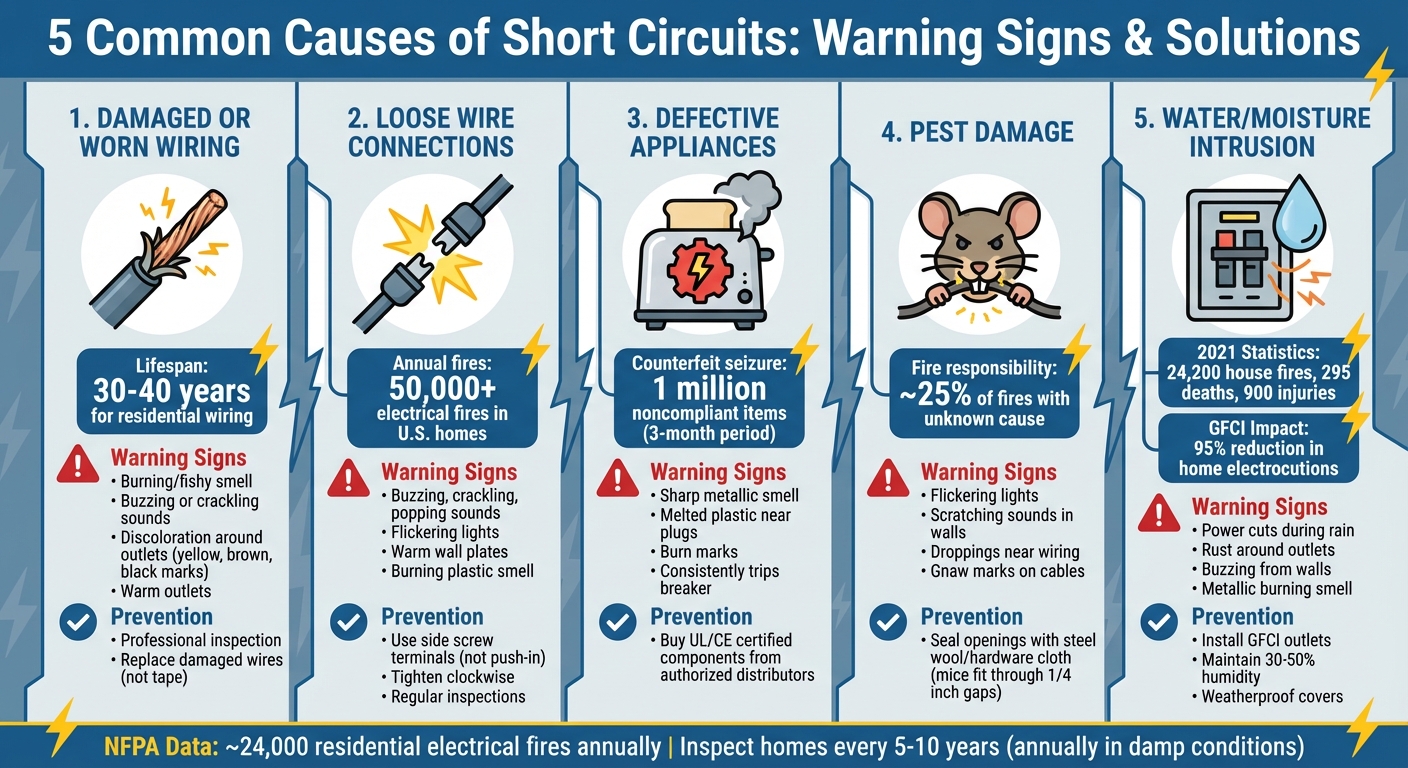
1. Damaged or Worn Wiring
Residential wiring has a typical lifespan of 30–40 years. After that, the insulation can become brittle, crack, and expose live conductors, increasing the risk of short circuits. These occur when exposed hot wires come into contact with neutral or ground wires. Any exposed wiring poses a danger in such situations, as it can lead to electrical faults.
Physical damage can speed up this deterioration. Common culprits include rodents chewing through wire sheathing or accidental damage during DIY projects. Older homes, especially those with aluminum wiring, are particularly vulnerable to loose connections and overheating.
"As wires age, they can deteriorate and become a safety hazard. Older homes might even have aluminum wiring instead of copper wiring, making the chances of overheating and short circuits greater." - Mr. Electric
Certain warning signs can help you catch these issues early. A burning smell - often described as "fishy" or resembling melting plastic - could mean the insulation is breaking down. Jaime Carpenter, Vice President at Integra Electrical, highlights another clue:
"Electricity should be silent. If you're hearing buzzing, crackling, or humming sounds... it's not normal and it could point to damaged or deteriorating wiring."
To stay ahead of potential hazards, keep an eye on your outlets and switches. Discoloration, scorch marks, or unusual warmth - like yellow, brown, or black burn marks - are clear signs of overheating connections. If outlets feel hot or show signs of fraying, turn off the power immediately and contact a licensed electrician. And remember, electrical tape is a temporary measure at best - damaged wires need professional replacement.
2. Loose Wire Connections
Even the best-installed wiring doesn’t stay tight forever. Each time you flip a switch or plug in an appliance, the wires heat up and cool down, causing them to expand and contract. Timothy Thiele, an IBEW Local #176 Union Electrician, explains:
"Wires are under a constant cycle of heating and cooling, expansion and contraction. Every time a switch is used or appliances are plugged in, and the natural result of all this usage is that wire connections can loosen over time."
Over time, this process weakens the integrity of wire connections. When connections loosen at outlets, switches, or junction boxes, electricity may arc across the gap to complete the circuit. This arcing can create sparks and generate intense heat, potentially leading to dangerous conditions. Keep an eye (and ear) out for buzzing, crackling, or popping sounds from electrical boxes - these are warning signs of arcing. Flickering lights, warm wall plates, or a burning plastic smell are other red flags that demand immediate attention. If a loose hot wire shifts and touches a neutral wire or a metal junction box, it can cause a short circuit, likely tripping your breaker.
To reduce the risk of these issues, electricians use secure wiring techniques. Instead of relying on "push-in" wire fittings - known for being unreliable - they use side screw terminals, which provide a more dependable connection. When tightening connections, always turn off the power first. Wrap wires clockwise around screw terminals to ensure a secure grip, and avoid placing two wires under one screw. Instead, use a pigtail connection with a wire nut for safety.
The U.S. Consumer Product Safety Commission reports that over 50,000 electrical fires occur in American homes annually, with electrical failures being a major cause. Many of these fires could stem from something as simple as a loose screw terminal - an issue that could often be caught and fixed during a routine inspection.
3. Defective Appliances or Components
Sometimes, the issue isn't with your home's wiring - it could be the appliance itself. As appliances age, their internal wiring can deteriorate, insulation may crack, and connections might loosen. Key components like motors, transformers, or circuit boards can also develop faults, creating unintended electrical paths that lead to short circuits. This risk increases when components fail to meet proper safety standards.
Counterfeit components are a major concern, as they often lack essential safety features. For example, during a recent three-month enforcement action, authorities seized 1 million noncompliant items. These counterfeit products contribute to an estimated $600 billion in global losses and have been linked to significant electrical hazards.
Be alert for warning signs such as a sharp metallic smell, melted plastic near plugs, burn marks, or discolored wall plates. These could signal internal damage. If a specific appliance consistently trips your circuit breaker, stop using it immediately. As Mr. Electric explains:
"If you have one appliance that constantly stops working while in operation, the electrical short is most likely in the appliance's wiring."
To reduce these risks, always ensure the authenticity of replacement electrical components, whether they are breakers, transformers, or motors. Look for legitimate UL or CE markings, and purchase only from authorized distributors. Platforms like Electrical Trader specialize in providing new and used electrical components from trusted sources, helping you avoid counterfeit products that could endanger your property. By choosing certified appliances and components, you can significantly lower the chances of short circuits caused by internal failures.
4. Pest Damage to Insulation
Mice and rats don’t just invade homes for food - they also gnaw on materials to manage their ever-growing teeth. Unfortunately, electrical wiring often becomes a favorite target. According to Pest Management Systems Inc.:
"Rodents possess continuously growing teeth that require constant wear to keep them manageable. Chewing is part of their survival mechanism... unfortunately, electrical wires often fit the bill."
The plastic or rubber coatings on wires provide an ideal surface for rodents to chew on. Once shredded, these materials often end up as nesting supplies. But the damage doesn’t stop there. When wire insulation is compromised, the exposed metal can touch other wires or grounded components, creating a direct path for short circuits. Worse, these exposed wires can produce electrical arcs and extreme heat, potentially igniting nearby wood or insulation. Experts estimate that rodents may be responsible for about 25% of fires with no identifiable cause. This destructive behavior not only damages insulation but also creates serious fire hazards.
There are some telltale signs of rodent-related wiring damage. Look out for flickering lights, frequent tripped breakers, scratching sounds in walls, or a burning plastic smell near outlets. You might also notice rodent droppings, bite marks on cables, or nesting materials near electrical boxes. To prevent further infestations, seal any vents or foundation cracks with tough materials like steel wool or hardware cloth - standard spray foam won’t cut it. Keep in mind that mice can squeeze through openings as small as 1/4 inch, so thorough sealing is crucial.
If you suspect rodent damage to your wiring, call a licensed electrician to inspect the situation before addressing the pest problem. Right Touch Electrical emphasizes this point, stating, "Rodents chew electrical wiring to control tooth growth, not by accident". And remember, never attempt to fix chewed wires with electrical tape - a professional evaluation is essential to ensure your home’s safety.
5. Water or Moisture Intrusion
Moisture in electrical systems can create dangerous shortcuts. When water finds its way into your electrical system, it forms a conductive bridge between live components, allowing electricity to stray from its intended path. As Solera highlights:
"Water and electricity are a dangerous combination. If water enters electrical panels, junction boxes, or conduit, it can act as a conductive bridge between live components".
This unintended path can immediately trigger a short circuit.
Over time, moisture doesn’t just stop at short circuits - it leads to corrosion and oxidation on metal contacts, which increases resistance and generates heat. This heat buildup can cause circuits to fail or, worse, start a fire. To put it into perspective, electrical problems caused 24,200 house fires, 295 deaths, and 900 injuries in 2021. Moisture can also seep into wire insulation, leading to "water treeing", where tiny cracks form and eventually cause insulation to break down entirely. Recognizing how moisture damages electrical systems underscores the need to identify its entry points.
Common places where moisture sneaks in include leaky roofs, outdoor electrical panels with poor seals, damp basements, and humid crawl spaces. You might notice issues during or after heavy rain - if your power cuts out every time it rains, water could be infiltrating outdoor wiring, electrical panels, or underground lines. In colder weather, condensation on cables can make electricity flow uncontrollably, leading to shorts, as Onesto notes.
To reduce these risks, install Ground Fault Circuit Interrupters (GFCIs) in areas prone to moisture, such as bathrooms, kitchens, and outdoor outlets. Since their introduction, GFCIs have reduced home electrocutions by 95%. The Environmental Protection Agency also recommends keeping indoor humidity levels between 30% and 50% to prevent moisture-related electrical damage. Using dehumidifiers, sealing cracks, and adding weatherproof covers are practical steps to block water intrusion. Be on the lookout for warning signs like flickering lights during rain, rust around outlets, buzzing noises from walls, or a metallic burning smell.
If you suspect moisture has compromised your electrical system, immediately disconnect power and call a licensed electrician. Never try to dry the components while power is still connected - the risk of electrocution is too high. Standard homes should have professional electrical inspections every 5–10 years, while homes in damp conditions, like those with basement panels, should schedule annual checks.
Causes and Solutions Table
Here's a quick guide to common short circuit causes, how to inspect for them, and the best ways to fix them:
| Cause | Inspection Method | Recommended Solution |
|---|---|---|
| Damaged or Worn Wiring | Look for frayed wires, brittle insulation, or discoloration; test insulation resistance (≥1 MΩ). | Replace with copper wiring suited to your environment. Add AFCI breakers from Electrical Trader to detect hidden arcing. |
| Loose Wire Connections | Use infrared scans to find hotspots and check torque with calibrated tools. | Tighten connections to manufacturer specs and replace damaged breakers with those rated for proper kAIC levels. |
| Defective Appliances or Components | Unplug appliances and reconnect one by one; check for burning smells or scorched plugs. | Repair or replace faulty devices. Use surge protectors and quality power cables for sensitive electronics. |
| Pest Damage to Insulation | Inspect for gnaw marks, exposed copper, or nests in attics, basements, and crawl spaces. | Replace damaged wiring and install metal conduit (EMT) to block pests. |
| Water or Moisture Intrusion | Look for condensation, rust, or mineral deposits near outlets; test GFCI outlets monthly. | Use GFCI outlets and breakers, and seal all entry points with NEMA-rated weatherproof enclosures. |
By addressing these issues, you can reduce the risk of short circuits and electrical hazards.
Inspection Methods and Fixes
Regular inspections are key to preventing electrical problems. According to the National Fire Protection Association, deteriorated wiring and insulation contribute to 5% of all U.S. home structure fires and 4% of related fatalities. That’s why prioritizing high-quality components is critical. When you buy breakers, transformers, and conductors from trusted suppliers like Electrical Trader, you ensure compliance with Short-Circuit Current Rating (SCCR) requirements and certifications like UL and CSA.
The NFPA 70B-2023 standard emphasizes annual infrared scans to catch potential short-circuit risks early. Loose or under-torqued connections are a major cause of breaker failures, making these scans an essential practice.
Cheap, substandard components can pose serious risks. As Sagan Electric highlights:
"Substandard products can deteriorate quickly and increase the chances of short circuits and electrical hazards".
Investing in reliable parts - whether it’s an AFCI breaker for pest-related wiring issues or a GFCI outlet in moisture-prone areas - lays the foundation for a safer, more dependable electrical system.
Conclusion
Short circuits often stem from avoidable issues like damaged wiring, loose connections, faulty appliances, pest damage, or water intrusion. According to the National Fire Protection Association, electrical failures or malfunctions rank among the top causes of house fires in the U.S. Each year, U.S. fire departments respond to around 24,000 residential electrical fires. This makes it clear: a tripped breaker is more than an inconvenience - it’s a potential warning.
Routine inspections are critical for keeping your home safe. Infrared scans and annual insulation tests can help identify problems like loose connections or moisture damage before they escalate. As Dwayne Boggs, CEO of Boggs Inspection Services, puts it:
"Homes with electrical problems are significantly more likely to experience a fire than those with updated systems and proper maintenance".
If your home was built before 1980 or has aluminum wiring, scheduling a professional inspection is particularly important. Beyond inspections, investing in high-quality components adds another layer of safety.
The quality of electrical components matters just as much as regular upkeep. When replacing breakers, outlets, or wiring, ensure you’re buying from authorized distributors like Electrical Trader. They provide UL-certified products that adhere to strict safety standards. Using UL-certified components is a key step to reducing the risk of short circuits, as highlighted earlier.
FAQs
Is a tripped breaker a sign of a short circuit?
Absolutely. A tripped breaker often signals a short circuit. Circuit breakers are specifically designed to cut off electricity flow when they detect issues like short circuits or overloaded circuits. This safety feature helps prevent potential damage, electrical fires, or even electric shocks.
When should I call an electrician for a suspected short?
If you notice flickering lights, a burning smell, shocks or tingling sensations, or outlets that aren't working, it's time to call an electrician immediately. These warning signs could indicate a short circuit, which poses serious risks like fire or electrical shock. Addressing these problems quickly helps ensure your safety and avoids further issues.
Do I need AFCI or GFCI protection in my home?
The choice between AFCI (Arc Fault Circuit Interrupter) and GFCI (Ground Fault Circuit Interrupter) protection depends on the specific area of your home and the potential electrical risks involved.
- AFCIs are designed to reduce the risk of fires by detecting arc faults in wiring, which can occur due to damaged or deteriorated wires.
- GFCIs, on the other hand, are crucial for preventing electrical shocks in areas where water and electricity are likely to mix, such as bathrooms, kitchens, and outdoor outlets.
To ensure both safety and compliance with electrical codes, it’s best to consult a licensed electrician who can recommend the proper protection for your home.