

Top Generator Enclosures for Noise Control
Generators are noisy. With sound levels often exceeding 100 dB, they can disrupt neighborhoods, workplaces, and even violate noise regulations. The solution? Generator enclosures. These structures reduce noise, protect equipment, and ensure compliance with local codes.
Key options include:
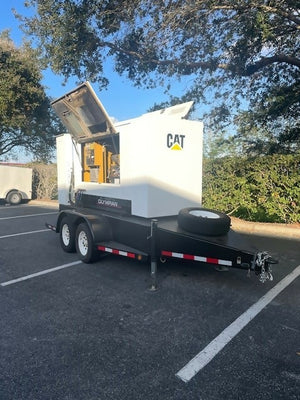
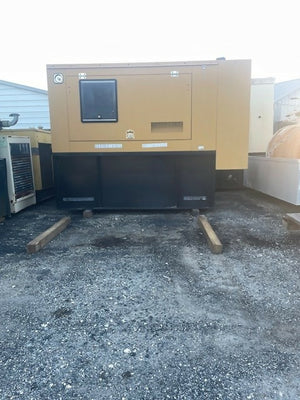
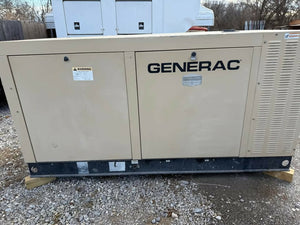
- Factory Sound-Attenuated Enclosures: Pre-built, durable, and straightforward to install. Noise reduction ranges from 15 dB to 35 dB.
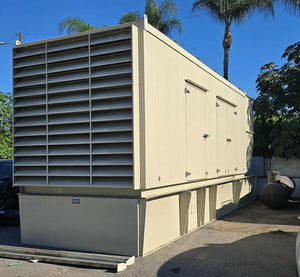
- Custom Fixed Soundproof Rooms: Tailored for maximum noise control and large setups. Best for permanent installations.
- Portable Quiet Boxes: Lightweight and mobile, offering 5–20 dB noise reduction for temporary use.
- Industrial Modular Systems: Flexible panel systems for scalable noise reduction, up to 35 dB.
Choosing the right enclosure depends on your generator size, noise requirements, and whether you need a permanent or portable setup. Below, we’ll break down each option to help you make the best choice.
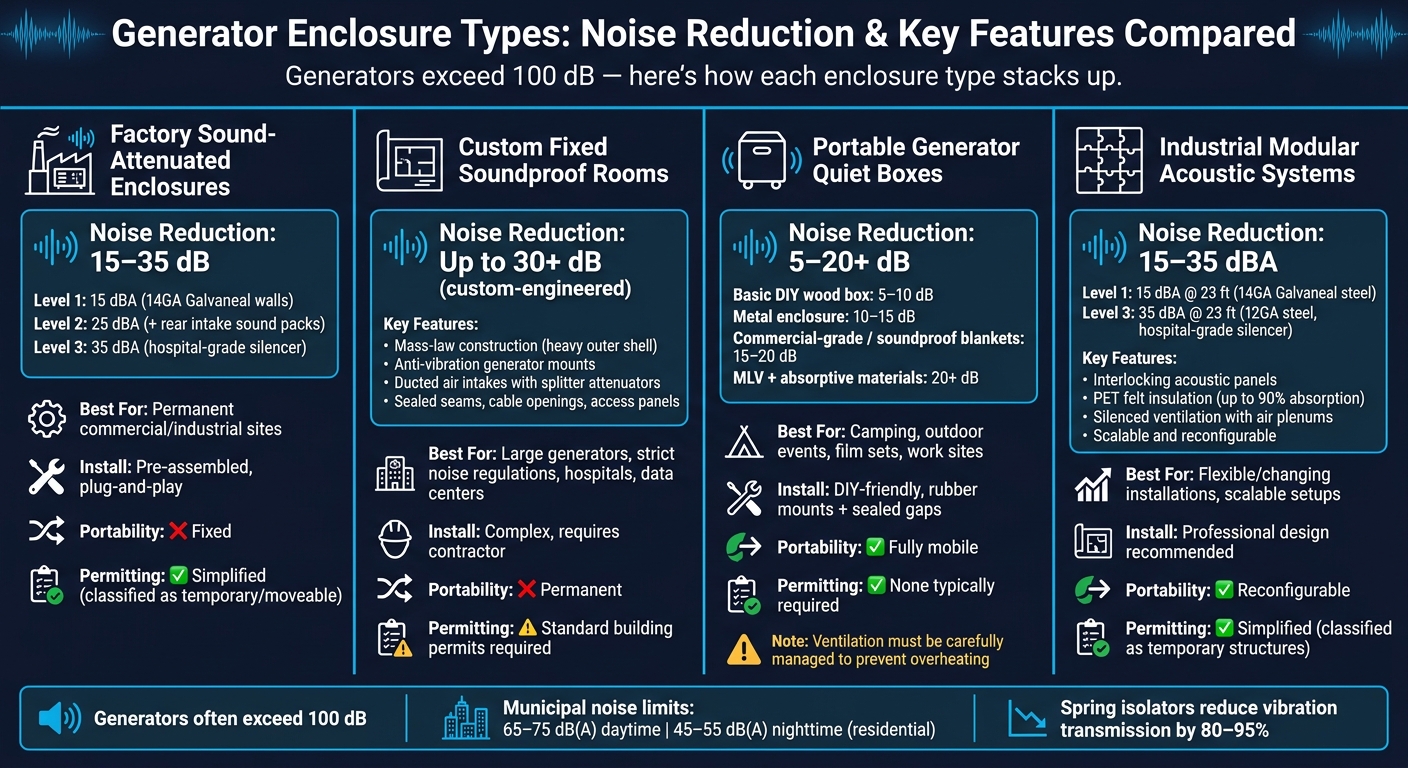
Generator Enclosure Types: Noise Reduction & Key Features Compared
1. Factory Sound-Attenuated Generator Enclosures
Factory sound-attenuated enclosures are pre-designed and ready-to-install structures created to house generators. These enclosures are pre-tested and classified as temporary or moveable, which often simplifies the permitting process compared to permanent building construction. Let’s take a closer look at their standardized noise reduction capabilities.
Noise Reduction Performance
These enclosures are available in specific attenuation levels, so you know the expected noise reduction before installation:
| Attenuation Level | Noise Reduction (at 23 ft) | Features |
|---|---|---|
| Level 1 | 15 dBA | 14GA Galvaneal walls, acoustic insulation, perforated liner, discharge air plenum |
| Level 2 | 25 dBA | Includes Level 1 features plus a rear intake air plenum with sound packs |
| Level 3 | 35 dBA | 12GA Galvaneal walls, sound packs in discharge/intake plenums, hospital-grade internal silencer |
For sensitive locations like hospitals or residential areas, Level 3 enclosures are ideal, as they include hospital-grade or super-critical internal exhaust silencers. However, before selecting a noise reduction level, it’s essential to get accurate sound power data from the generator manufacturer. Without this, it’s hard to confirm whether the enclosure will meet local noise regulations.
In addition to noise control, the construction quality of these enclosures ensures their durability in challenging conditions.
Construction and Durability
These enclosures are built to withstand harsh environments. Depending on the location, they are made from either 12- or 14-gauge Galvaneal steel or 0.100–0.125 in. aluminum for coastal areas. Acoustic insulation is secured with a 22-gauge perforated liner, and powder-coated finishes provide protection against moisture and temperature changes. Maintenance doors, measuring 36 in. by 72 in., allow technician access without compromising the enclosure’s acoustic integrity.
Ventilation and Cooling
Proper airflow management is a critical feature of these enclosures. For instance, a 2,500 kW generator might require up to 106,000 cfm of airflow. To balance noise control with efficient cooling, enclosures are equipped with acoustical louvers, duct silencers, and motorized dampers. These dampers also protect internal components when the generator isn’t in use. Always check the generator manufacturer’s specific airflow and space requirements to ensure that noise reduction measures don’t interfere with cooling performance.
Cost and Installation Complexity
While factory enclosures generally cost more upfront than basic portable solutions, they save time and effort by eliminating the need for custom design and construction. Delivered pre-assembled and pre-tested, their installation is straightforward - typically involving placement, exhaust system connection, and electrical hookups. This streamlined process, combined with the permitting advantages mentioned earlier, makes them a practical choice.
sbb-itb-501186b
2. Custom Fixed Soundproof Generator Rooms
When standard enclosures aren't enough, custom fixed rooms provide a tailored solution for noise control. These structures are built specifically around the generator, rather than being pre-made and placed over it. This makes them a great choice when dealing with large equipment or stringent noise reduction requirements. Unlike one-size-fits-all models, these rooms are designed from scratch to meet demanding noise standards.
Noise Reduction Performance
Custom rooms are designed to handle continuous operation and higher noise levels that standard enclosures can't manage. Diesel generators, for instance, can produce over 100 dB of noise. These custom rooms tackle such challenges with a well-thought-out acoustical design.
Construction and Durability
The key to effective noise reduction lies in mass. Heavier outer shells block more airborne sound - a principle known as the "mass law" in acoustics. As Commercial Acoustics explains:
"In acoustic theory, increasing the mass of a barrier or shifting the frequency of the sound source can reduce transmitted noise."
Inside, sound-absorptive materials are used to reduce reverberation, and generators are mounted on anti-vibration platforms. To maintain acoustic performance, every seam, cable opening, and access panel must be tightly sealed. These rooms can also be built with materials suited to corrosive or harsh outdoor conditions. Features like removable panels and acoustical access doors ensure maintenance remains straightforward.
Ventilation and Cooling
Proper ventilation is essential but can also compromise noise control. To address this, custom rooms use ducted air intakes and acoustic louvers equipped with splitter-style attenuators. These attenuators, made of perforated metal filled with dense rockwool, allow airflow while absorbing sound. Larger attenuators are often preferred as they provide more surface area for sound absorption, further improving noise reduction.
Cost and Installation Complexity
Compared to factory-built enclosures, custom fixed rooms require a more involved design process and additional permitting. However, for large-scale installations or locations with strict noise regulations, they are often the only practical solution. These custom rooms are essential when off-the-shelf options fall short of meeting specific requirements.
3. Portable Generator Quiet Boxes
Portable quiet boxes offer a practical solution for reducing generator noise while maintaining mobility. Perfect for activities like camping, outdoor events, or work sites, these enclosures are designed to be lightweight, easy to transport, and simple to set up wherever you need them.
Noise Reduction Performance
The level of noise reduction depends on the materials and design. A basic wooden DIY box can decrease noise by about 5–10 dB, while a metal enclosure may achieve 10–15 dB of reduction. For those looking for even quieter results, commercial-grade enclosures or setups using soundproof blankets can reduce noise by 15–20 dB. The most effective designs - featuring mass-loaded vinyl (MLV) to block sound and absorptive materials inside - can cut noise by over 20 dB. One user described the improvement by saying:
"I started the generator and it is now possible to have a whispering conversation."
This kind of performance reflects the growing demand for quieter generator solutions.
Construction and Durability
The effectiveness of portable quiet boxes lies in their layered construction. The outer shell, often made of steel or heavy plywood, provides mass to block sound. Inside, materials like mineral wool - known for its high absorption rates at frequencies above 500 Hz - help dampen noise further. MLV is particularly useful for addressing low-frequency sounds, such as the humming typically produced by generators (in the 125–250 Hz range). However, standard foam is not recommended due to its low heat resistance (under 200°F), which makes it unsafe for use in generator enclosures.
Ventilation and Cooling
Proper ventilation is essential to prevent the generator from overheating. However, air gaps for cooling can also let sound escape. This issue is tackled by using baffled air paths, such as S-curve baffles or duct silencers lined with absorptive materials, which allow airflow while reflecting and absorbing sound waves. For DIY builds, adding a powered exhaust fan can help keep temperatures in check. Always monitor the internal temperature during operation to ensure safe performance.
Cost and Installation Complexity
DIY portable enclosures, made with materials like plywood, MLV, and rubber mounts, are much more affordable than custom fixed enclosures. While they might not match the noise reduction of heavier, engineered systems, they still deliver a solid 15–20 dB reduction, which is sufficient for most mobile uses. Key steps in the setup include:
- Decoupling the generator from the box floor with rubber mounts to minimize vibrations.
- Sealing gaps with high-quality gasketing to block sound leaks.
- Extending the exhaust pipe outside the enclosure using heat-resistant materials like copper.
These features make portable quiet boxes a flexible and cost-effective alternative to permanent enclosures, suitable for a variety of applications.
4. Industrial Modular Acoustic Enclosure Systems
When fixed rooms aren't practical, industrial modular acoustic enclosures provide a flexible way to reduce noise. These systems use interlocking acoustic panels or sound-reduction blankets that can be arranged around equipment of almost any size or shape. This makes them far more versatile compared to fixed enclosures. Their modular design allows for custom setups tailored to different generator configurations, offering flexibility both in performance and installation.
Noise Reduction Performance
Modular systems are specifically designed to target the noise frequencies generated by equipment like generators. They incorporate mineral wool and sound-absorbing strips at fastening points to limit sound leakage. Unlike fixed enclosures that rely on static dBA ratings, modular systems achieve noise reduction through adjustable panel setups. For example, a Level 1 system reduces noise by 15 dBA at 23 feet, while a Level 3 system achieves 35 dBA at the same distance. This adaptability makes them suitable for a wide range of generator layouts.
| Attenuation Level | Noise Reduction | Wall Construction | Exhaust System |
|---|---|---|---|
| Level 1 | 15 dBA @ 23 ft | 14GA Galvaneal steel | Critical grade silencer |
| Level 3 | 35 dBA @ 23 ft | 12GA Galvaneal steel | Hospital/Super-Critical grade |
Construction and Durability
Modular systems are built to withstand tough conditions. Their outer layers resist water and UV exposure, while inner layers - often silicone-infused - are designed to handle high temperatures and industrial contaminants. The panel-based design allows these systems to scale or be reconfigured as equipment needs evolve. Instead of conventional polyurethane foam, PET felt is recommended for its superior sound absorption (up to 90%), flame resistance, and lack of odors or VOC emissions.
Ventilation and Cooling
To maintain airflow without compromising noise reduction, these systems include silenced ventilation features. Air plenums and motorized or gravity-fed louvers ensure proper ventilation while keeping noise levels in check. For higher noise attenuation levels, additional sound packs are integrated into the design.
Cost and Installation Complexity
Costs depend on factors like generator size, the desired attenuation level, and material choices. Upgrading to thicker steel panels, higher-grade exhaust silencers, or motorized louvers can increase expenses. Professional design and installation are highly recommended to ensure airtight seals and proper functioning. Before investing, it’s wise to measure your current noise levels so you can determine the exact attenuation needed - this helps avoid unnecessary overspending on features you might not require.
Pros and Cons
Different enclosure types manage noise control in unique ways, and there’s no one-size-fits-all solution. The table below breaks down the main advantages and disadvantages of each option, helping you make an informed decision based on your needs.
| Enclosure Type | Pros | Cons |
|---|---|---|
| Custom Fixed Soundproof Rooms | Designed to fit any generator size or site layout; delivers high noise reduction when using proper materials | Requires standard building permits; success depends on contractor quality; permanent structure limits future adaptability |
| Portable Generator Quiet Boxes | Budget-friendly; easy to transport and disassemble; ideal for camping, film sets, and outdoor events | Offers moderate noise reduction; ventilation must be carefully managed to avoid overheating |
| Industrial Modular Acoustic Enclosure Systems | Proven noise reduction performance; easier permitting as temporary structures; scalable and reconfigurable for changing needs | Requires detailed design to ensure proper noise control and ventilation |
Let’s expand on these points. Portable quiet boxes are a cost-effective solution but demand careful attention to ventilation. As acoustical sales consultant David Watkinson advises:
"Remember, we want to help, not hurt your machinery so when considering this type of solution you will want to contact the manufacturer of the machine to determine how much air space it needs around it to operate without causing any issues or voiding any warranties."
Custom fixed soundproof rooms excel at reducing noise but sacrifice flexibility due to their permanent design, making them ideal for stable, long-term setups. On the other hand, industrial modular systems provide verified noise control and adaptability, but their design complexity requires careful planning to balance ventilation and soundproofing. These considerations tie back to earlier discussions on performance and design, offering a clearer path to finding the right enclosure for your specific situation.
Conclusion
Selecting the right generator enclosure comes down to balancing noise reduction, budget, and installation permanence. Generators often produce noise levels exceeding 100 dB, while most municipal codes limit property-line noise to 65–75 dB(A) during the day and as low as 45–55 dB(A) at night in residential areas. This difference highlights the need for enclosures that effectively reduce noise.
For short-term or portable applications, a portable quiet box can be a solid choice. On the other hand, permanent installations benefit from custom fixed rooms or industrial modular systems, which are designed to meet stricter noise regulations. For example, custom sandwich panels can cut noise by 25–30 dB. Alongside noise reduction, durability and ease of maintenance are equally important.
It's also essential to address vibration isolation and maintenance access. As Commercial Noise Control points out:
"By viewing the enclosure as part of the overall generator installation rather than an afterthought, long-term performance and compliance become achievable." - Commercial Noise Control
Using spring isolators, for instance, can minimize vibration transmission by 80–95% at operating frequencies. This is particularly important in sensitive environments like hospitals or data centers. Enclosures with features like gasketed access doors not only enhance performance but also make routine maintenance more manageable.
For those also sourcing generator equipment or power distribution components, Electrical Trader provides a range of new and used tools to support your installation needs. By carefully weighing noise control, structural durability, and operational efficiency, you can ensure your generator enclosure meets both regulatory standards and practical requirements.
FAQs
How much dB reduction do I need to meet local noise codes?
To meet OSHA standards, workplace noise levels must stay below 85 dB(A) during an 8-hour shift. However, some local regulations may enforce stricter limits, especially near residential or other occupied areas. Always review your local codes to ensure you're following the appropriate guidelines.
Will a generator enclosure cause overheating or reduce generator performance?
Properly designed generator enclosures are built to maintain performance and avoid overheating. Adequate ventilation plays a key role in preventing heat buildup, which can harm the generator or decrease its lifespan. Many soundproof enclosures are equipped with features like duct silencers and acoustic louvers. These components help control noise levels while allowing enough airflow to keep the generator running safely and efficiently. When done right, these enclosures strike a balance between noise reduction and the generator's operational needs.
Do I need a building permit for a generator enclosure in the U.S.?
Yes, in the U.S., a building permit might be required for a generator enclosure. The need for a permit depends on your local regulations and the details of your installation. To avoid potential issues, it’s wise to consult your local authorities before beginning any work.