

Top Asia-Pacific Power Distribution Companies 2026
The Asia-Pacific power distribution market is evolving rapidly, driven by urbanization, industrial growth, and the shift to renewable energy. By 2030, the market is projected to reach $190.8 billion, fueled by infrastructure upgrades and rising energy demand across the region.
Key players in this transformation include ABB, Siemens, Schneider Electric, Mitsubishi Electric, Hitachi Energy, Fuji Electric, Toshiba, Hyosung, KEC International, and Electrical Trader. These companies are leading advancements in smart grids, energy efficiency, and renewable integration.
Highlights:
- ABB: IoT-enabled solutions for data centers and grid upgrades.
- Siemens: Prefabricated modular power systems and cybersecurity for utilities.
- Schneider Electric: IoT-based EcoStruxure platform for AI-driven energy management.
- Mitsubishi Electric: Low-voltage switchgear and renewable-ready systems.
- Hitachi Energy: SF₆-free transformers and digital grid management.
- Fuji Electric: Durable power semiconductors and eco-friendly solutions.
- Toshiba: Smart-enabled transformers and renewable-focused products.
- Hyosung: Advanced GIS, HVDC systems, and microgrid technologies.
- KEC International: Large-scale EPC solutions for transmission and renewable projects.
- Electrical Trader: Online marketplace for power distribution equipment.
The region's focus on clean energy, smart infrastructure, and digital solutions is reshaping the power distribution landscape, with companies adopting cutting-edge technologies to meet growing energy demands.
1. ABB Ltd.
ABB is a leader in power distribution across the Asia-Pacific region, offering advanced high-voltage switchgear and IoT-enabled power distribution units. Its offerings cater to utility-scale grid infrastructure, industrial electrification, and the booming data center industry throughout the region.
Key Products and Solutions in Power Distribution
ABB provides a comprehensive range of high-voltage switchgear and smart power distribution units (PDUs) equipped with real-time monitoring and predictive maintenance capabilities. These solutions are tailored for hyperscale data centers in markets like China, India, and Southeast Asia. With operational facilities in countries such as Australia, China, India, Indonesia, Japan, South Korea, and Vietnam, ABB delivers localized support across more than 15 markets.
Technological Innovation and Competitive Advantages
By integrating IoT technology, ABB enables remote monitoring, energy optimization, and high-density rack power solutions - critical as the Asia-Pacific region is expected to account for 85% of the additional 920 TWh of global power demand by 2026. The global power distribution unit market is also anticipated to grow from $4.23 billion in 2025 to $7.11 billion by 2030, reflecting a 10.9% CAGR.
"Data centers are no longer just a niche load; they are the primary driver of transformational demand across Asia–Pacific".
ABB’s focus on innovation ensures it remains at the forefront as the region undergoes fast-paced infrastructure development.
Sustainability and Energy Efficiency Initiatives
ABB’s systems are designed to minimize renewable energy curtailment and handle grid intermittency, making them ideal for large-scale grid upgrade projects in China. By 2026, electricity consumption in China is expected to surpass 10 PWh for the first time. ABB’s expertise in high-voltage DC and AC systems plays a crucial role in addressing the growing demand for infrastructure that delivers green energy directly to consumers.
sbb-itb-501186b
2. Siemens AG
Siemens continues to strengthen its role in the Asia-Pacific market by providing advanced, integrated power distribution solutions. The company stands out as a leader in the region, delivering IoT-enabled systems that enhance both efficiency and scalability. Its offerings include transformers, switchgear, and cutting-edge power distribution units (PDUs), all designed to meet the growing demands of the data center industry. With the Asia-Pacific electric power transmission and distribution equipment market expected to hit $190.8 billion by 2030, growing at a 7% CAGR, Siemens is well-positioned to benefit from the region's ongoing infrastructure upgrades. Following ABB's example of innovation, Siemens is driving modernization with equally sophisticated and integrated solutions.
Key Products and Solutions in Power Distribution
Siemens delivers a wide array of power distribution equipment tailored to the Asia-Pacific market. Its product range includes:
- Power and distribution transformers
- Circuit breakers and fuses
- Distribution control panels
- Intelligent PDUs
By incorporating IoT capabilities, these solutions allow for digitalized monitoring and control. Siemens also focuses on high-density rack power solutions to meet the rising demand from hyperscale and AI-driven data centers.
Technological Innovation and Competitive Advantages
In November 2025, Siemens Smart Infrastructure joined forces with Delta Electronics to create prefabricated, modular power solutions for data centers. This collaboration offers several benefits:
- Cuts time-to-market by 50%
- Reduces CAPEX by 20%
- Lowers carbon emissions by 27%
These results are achieved through BIM-designed containerized power SKIDs. Stephan May, CEO of Electrification & Automation at Siemens Smart Infrastructure, highlighted the partnership’s impact:
"By combining Siemens' electrical power distribution and engineering services with Delta's high-efficiency UPS, battery and cooling offerings, we are delivering a prefabricated, customizable solution that can drastically cut time-to-market by up to half".
The collaboration also aligns with the region's shift toward renewable energy, expediting the deployment of necessary infrastructure. Siemens further enhances its offerings with a cybersecurity operations center in Cyberjaya, Malaysia, which provides operational technology services and robust security for utilities across the Asia-Pacific. Additionally, the company employs advanced grid stabilization technologies, such as flywheels and High Voltage Direct Current (HVDC) systems, to manage grids with renewable energy penetration exceeding 50%.
Beyond its hardware solutions, Siemens places a strong emphasis on energy efficiency and decarbonization.
Sustainability and Energy Efficiency Initiatives
Siemens Energy invests roughly $1 billion annually in research and development focused on energy transition projects. Over half of its portfolio is centered on decarbonized technologies. In 2024, Siemens collaborated with Pacific Light Power in Singapore to deploy an advanced turbine efficiency package. This initiative achieved an efficiency rating of over 60% and cut 60,000 tons of carbon emissions annually. Karna Mohan, Vice President Finance, Asia Pacific at Siemens Energy, explained:
"Boosting efficiency requires a significantly lower investment but it has a faster turnaround – one gets the most out of their existing infrastructure or as they adopt renewable technologies".
These efforts align with Siemens' DEGREE framework, which outlines 14 flagship targets for 2030, focusing on decarbonization, energy efficiency, and circularity.
3. Schneider Electric
Schneider Electric plays a major role in the Asia-Pacific power distribution market, contributing up to 35% of its global revenue. The company holds a strong position in low-voltage equipment, with a market share of 15%-18%, and dominates the critical data center power and cooling segment at 25% [26, 27]. This leadership is particularly important as the Asia-Pacific region added 600 TWh of power demand in 2025, largely fueled by the rapid growth of data center installations.
Key Products and Solutions in Power Distribution
Schneider Electric’s product lineup includes transformers (both power and distribution types), low-voltage switchgear (such as circuit breakers and control panels), and IoT-integrated power distribution systems. These systems allow for real-time monitoring and predictive maintenance [1, 13]. The company is especially strong in the networked Power Distribution Unit (PDU) market, which is critical for high-density data centers handling AI-driven workloads. As the demand for power distribution solutions grows, the low-voltage switchgear market is projected to expand at a CAGR of over 7% through 2030. Meanwhile, the global PDU market is expected to grow from $4.23 billion in 2025 to $7.11 billion by 2030.
Technological Innovation and Competitive Advantages
Schneider Electric’s focus on digital innovation has solidified its leadership in high-density data center solutions. The EcoStruxure platform, an IoT-enabled architecture, integrates connected products, edge control, and analytics, creating recurring revenue opportunities [26, 27]. Transitioning from a hardware-focused model, the company has leaned into software-driven solutions, with recurring software and service revenue making up nearly 20% of total revenue by late 2025 - well above the industry average of 12%.
Strategic partnerships with companies like AVEVA, ETAP, and Bentley Systems have added capabilities like digital twin technology and Building Information Modeling (BIM). In early 2025, Schneider introduced liquid cooling and modular power skids, leading to a 25% year-over-year increase in demand for high-density data center solutions. Through its "Electricity 4.0" initiative, which integrates electrification with digitalization, Schneider is targeting fast-growing areas such as AI-powered data centers and microgrids. The company dedicates about 5% of its annual revenue to R&D and holds over 25,000 active or pending patents [26, 27, 29].
Gwenaelle Huet, Executive Vice President of Industrial Automation at Schneider Electric, captured the company’s vision:
"When you converge electrification, open software-defined automation, and AI-powered intelligence, you don't just solve today's challenges - you fundamentally change what's possible for industrial operations".
Sustainability and Energy Efficiency Initiatives
Schneider Electric’s commitment to sustainability aligns with the Asia-Pacific region’s decarbonization goals. The company has established a Sustainability Competency Centre in Singapore to support over 100 sustainability projects across Southeast Asia and the broader region. Since 2018, Schneider has helped its customers reduce or avoid more than 734 million tonnes of CO2 emissions and achieved a 48% reduction in emissions across its top 1,000 suppliers as of mid-2025.
In 2024, Takeda, a pharmaceutical company, opened its first "positive energy" manufacturing support building in Singapore. The facility uses Schneider’s EcoStruxure Building Management System and 1,600 square meters (approximately 17,200 ft²) of photovoltaic panels to generate more energy than it consumes, earning the Green Mark Platinum Positive Energy certification. Additionally, Schneider’s EcoStruxure Resource Advisor platform helps organizations analyze real-time data to identify decarbonization opportunities and secure renewable energy through Power Purchase Agreements, ensuring price stability [30, 31].
Reflecting on these efforts, Farrukh Shad, Head of Sustainability Business in APMEA at Schneider Electric, emphasized the importance of a strategic approach:
"Strategy seems the right starting point, however unfortunately it is often short circuited as companies look to act quickly and pivot directly to decarbonize, and by doing this they miss on potential synergies and cost efficiencies".
4. Mitsubishi Electric Corporation
Mitsubishi Electric stands out as a major provider of low-voltage switchgear solutions in the Asia-Pacific region. Their power distribution portfolio includes low-voltage switchgear, ultra-high voltage gas-insulated switchgear (GIS), and power distribution units (PDUs), catering to key sectors like substations, distribution networks, and utilities. With the Asia-Pacific region projected to account for 85% of the 920 TWh in additional global power demand by 2026, Mitsubishi Electric has strategically focused on high-growth markets such as China, India, Japan, and Australia. This positions the company to take advantage of the region's fast-paced energy transformation.
Key Products and Solutions in Power Distribution
Mitsubishi Electric offers a diverse range of products tailored to support the region's rapid infrastructure growth and renewable energy integration. For instance, China's renewable energy capacity hit 1,160.79 GW in 2022, growing over 13% year-over-year, showcasing the scale of renewable adoption in the region. The company's low-voltage switchgear solutions are designed for flexible installation needs, ensuring compatibility with electricity distribution from wind, solar, and hydropower sources. These products align with ongoing grid modernization efforts, emphasizing intelligent systems that enable remote monitoring and energy optimization.
Technological Innovation and Competitive Advantages
Mitsubishi Electric is transitioning toward a circular, digitally integrated model, combining its hardware expertise with cutting-edge digital solutions. The company achieved record-high revenue and profit in fiscal 2025 and anticipates continued growth in fiscal 2026. A standout innovation is its use of Gallium Nitride (GaN) devices, which enhance power conversion efficiency while reducing component size and energy consumption. Additionally, the proprietary Serendie platform integrates analytics with physical infrastructure, such as energy storage systems, to optimize energy management. In April 2026, Mitsubishi Electric demonstrated this platform's potential through a proof-of-concept project in Krakow's tram network, utilizing advanced energy storage systems to improve power efficiency.
Sustainability and Energy Efficiency Initiatives
Mitsubishi Electric places a strong emphasis on sustainability, embedding it as a core element of its management strategy. The company has established a Carbon Neutrality Subcommittee to drive group-wide initiatives, with a goal of achieving net-zero greenhouse gas emissions throughout its value chain by fiscal year 2051. Between October 2024 and June 2025, 2,900 employees participated in Global Initiative for Sustainable Technology workshops, highlighting the company's commitment to aligning its workforce with its sustainability objectives. As the company affirmed:
"We will return to our fundamental principle of 'addressing social challenges through our businesses' and position the realization of sustainability as the cornerstone of our management".
5. Hitachi Energy
Hitachi Energy stands as a major force in the Asia-Pacific power distribution market. As one of the top five players in the global distribution transformer sector, commanding 20–30% of the market share, the company has significantly expanded its manufacturing capabilities across Asia. This expansion aligns with the region's massive contribution - 85% - to the additional 920 TWh of global power demand projected for 2026. Such strategic positioning allows Hitachi Energy to tap into a power transmission and distribution market expected to reach approximately $170.95 billion by 2030.
Key Products and Solutions in Power Distribution
Hitachi Energy offers a comprehensive range of products designed to address the diverse needs of the Asia-Pacific region. Its portfolio includes both dry-type and oil-immersed distribution transformers tailored for smart grids. Beyond transformers, the company provides SCADA systems, Distribution Management Systems (DMS), Remote Terminal Units (RTUs), and Intelligent Electronic Devices (IEDs) aimed at substation automation.
The company also delivers cutting-edge solutions like battery energy storage systems (BESS), capacitors, filters, and Flexible AC Transmission Systems (FACTS), which enhance grid stability and facilitate renewable energy integration. Additionally, Hitachi Energy is leveraging 5G technology for real-time monitoring of industrial and utility operations. This focus on advanced solutions is particularly significant as electricity consumption in China reached unprecedented levels in 2026.
Technological Innovation and Competitive Advantages
Hitachi Energy continues to push boundaries by incorporating advanced digital tools into its offerings. Digital twin modeling, smart sensors, and remote diagnostics are now integral to its distribution transformers, enabling real-time analytics and predictive maintenance. These transformers are designed to handle bi-directional energy flow, a crucial feature for integrating distributed energy sources such as solar, wind, and electric vehicle (EV) charging networks.
The company has also been at the forefront of developing solid insulation materials and advanced dry-type transformers, further solidifying its position in the market. Its leadership in digital monitoring systems reflects its commitment to staying ahead in a rapidly evolving industry.
Sustainability and Energy Efficiency Initiatives
Hitachi Energy’s innovations align with broader efforts to modernize grids and integrate renewable energy. Sustainability remains a cornerstone of its strategy. Through its EconiQ™ portfolio, the company has replaced sulfur hexafluoride (SF₆) - a greenhouse gas with a global warming potential 24,300 times greater than CO₂ - with environmentally friendly alternatives.
In recognition of its efforts, Hitachi Energy received a gold award from EcoVadis in March 2026, placing it among the top 2% of companies worldwide for sustainability performance. The company is committed to achieving net-zero emissions by 2050, with interim goals of reducing Scope 1 and 2 emissions by 80% and cutting Scope 3 intensity by 55%. These initiatives aim to contribute to avoiding 1,000 Mt of CO₂ emissions by 2030.
Notable achievements include delivering the world’s first SF₆-free 550 kV gas-insulated switchgear (GIS) to the State Grid Corporation of China’s Central China Branch, supporting China’s 2060 carbon neutrality goal. Similarly, Hitachi Energy supplied Japan’s first SF₆-free 300 kV circuit breakers to Chubu Electric Power Grid, marking a significant step toward sustainable grid solutions in Japan.
"Sustainability is in the DNA of Hitachi Energy's business strategy, shaping the approach we take towards environment, society, and our own governance in support of a just energy transition".
6. Fuji Electric Co., Ltd.
Fuji Electric plays a prominent role as a power distributor in the Asia-Pacific region, offering a wide range of products and maintaining a strong presence. Its regional operations are managed from Singapore, where Fuji Electric Asia Pacific oversees sales and strategic planning across Southeast Asia, Oceania, and the Middle East. In 2026, the company achieved Grade L6 approval under Singapore's Building and Construction Authority (BCA) Suppliers Registry for Electrical Equipment, the highest grade available, signifying its capability to handle large-scale infrastructure projects.
Key Products and Solutions in Power Distribution
Fuji Electric’s product portfolio caters to diverse power distribution needs in the Asia-Pacific region. Its offerings include:
- Gas Insulated Switchgear (GIS), switchgear and control centers, oil-immersed transformers, and cast resin transformers.
- For low- and medium-voltage applications: Molded Case Circuit Breakers (MCCB), Earth Leakage Circuit Breakers (ELCB), contactors, and thermal overload relays.
To meet the growing demand for digital infrastructure, Fuji Electric showcased its UPS WX Series, 2,400 kVA UPS skids with LV feeders, and container-type Power Train Units during Data Centre World Asia in October 2025.
Technological Innovation and Competitive Advantages
Fuji Electric integrates its systems to deliver top-tier performance and efficiency. A major strength lies in its vertical integration strategy, which combines its proprietary power semiconductors with in-house inverters and systems. This approach enables the company to optimize performance, reduce product sizes, and improve efficiency. For instance:
- Its eighth-generation IGBT modules double power cycle capability, increase output by 35%, cut inverter loss by 10%, and reduce module size by 36%.
- In a notable case study, Fuji Electric’s AC drives completed over 800,000 test cycles with a residential elevator manufacturer, outperforming competitors.
These products are also built to endure extreme conditions. Variable Frequency Drives (VFDs) operate at full load in temperatures up to 122°F (50°C), while IGBT modules for UPS systems remain functional at temperatures as high as 347°F (175°C).
Sustainability and Energy Efficiency Initiatives
Fuji Electric pairs its technical innovations with a focus on sustainability. The company has committed to achieving carbon neutrality through its Environmental Vision 2050 strategy. In December 2025, it earned a spot on the CDP's "A List" for climate change, recognizing its leadership in environmental transparency and performance.
Fuji Electric is also making a ¥2.1 trillion (approximately US$14 billion) investment in SiC power semiconductors, which are expected to improve energy efficiency in power electronics and electric vehicles. That same month, the company installed an FR3® Transformer at the Keio Corporation Fuchu Substation in Japan, utilizing natural ester fluid to enhance safety and environmental compatibility in a densely populated transit area.
Through its subsidiary Fuji SMBE, the company is advancing sustainable energy storage solutions. These include saltwater batteries and sodium-ion batteries, which provide fire-safe, non-toxic alternatives to lithium-ion technology. The "New Generation 3 Sodium-ion Battery" boasts up to 100,000 cycles, offering a much longer lifespan for industrial power applications.
"We aim to contribute to the achievement of a decarbonized society, a recycling-oriented society, and a society that is in harmony with nature by expanding the use of FUJI SMBE innovative clean energy technologies."
– Fuji SMBE Environmental Vision 2050 Statement
7. Toshiba Corporation
Toshiba Corporation plays a critical role in the Asia-Pacific power distribution sector and is recognized as one of the top five global leaders in the distribution transformer market. On April 1, 2026, Toshiba merged Toshiba Energy Systems & Solutions Corporation into its core operations to streamline its energy offerings. This move strengthens its foothold in the high-voltage switchgear market across the region. Below, we explore Toshiba's key products, technical strengths, and sustainability efforts.
Key Products and Solutions in Power Distribution
Toshiba’s product range focuses on modernizing aging grid systems and incorporating renewable energy throughout the Asia-Pacific region. The company produces dry-type and cast-resin transformers, which are designed for fire safety, low maintenance, and indoor applications. For larger renewable projects, Toshiba offers transformers specifically tailored for solar and Battery Energy Storage Systems (BESS) applications, with capacities of up to 20 MVA. Its pole-top transformers, equipped with amorphous core and Cold Rolled Grain Oriented (CRGO) technology, are designed to reduce energy losses and operate across voltage levels ranging from 3.3 kV to 66 kV. Toshiba’s manufacturing facilities in Hyderabad, India, and Malaysia meet regional demand effectively. Since 2011, Toshiba has delivered over 17,000 transformer units to Australia’s energy sector.
Technological Innovation and Competitive Advantages
Toshiba stands out in the market with its smart-enabled transformers that facilitate bi-directional energy flow and integrate seamlessly with digital grids. These transformers feature remote monitoring capabilities and predictive maintenance systems. Additionally, Toshiba employs biodegradable ester fluids and low-noise cores to minimize environmental impact, adhering to strict regulatory standards and earning ISO 9001 and 14001 certifications. Alongside global competitors like Hitachi Energy, Eaton, Siemens Energy, and Schneider Electric, Toshiba commands a 20–30% share of the global distribution transformer market. This market is expected to grow from $21.4 billion in 2025 to $29.6 billion by 2030, with a compound annual growth rate (CAGR) of 6.7%.
Sustainability and Energy Efficiency Initiatives
Toshiba’s 8th Environmental Action Plan (2024–2026) outlines ambitious goals to cut CO₂ emissions, reduce waste, and promote resource efficiency. The company aims to increase its renewable energy adoption rate from 75% in 2024 to 85% by 2026. It also plans to limit CO₂ emissions from energy to 561 kilotons, reduce total waste generation to 22.2 kilotons, and cap chemical emissions at 284 tons by 2026. Additionally, Toshiba’s sustainability strategy aligns with seven targets of the Kunming–Montreal Global Biodiversity Framework, ensuring responsible practices across its manufacturing sites. Through its Made-in-India T&D products, Toshiba is driving clean energy transitions in South Asia and the broader Asia-Pacific region, supporting the shift toward decentralized electrification and distributed energy resources.
8. Hyosung Heavy Industries
Hyosung Heavy Industries is a major player in power distribution solutions across the Asia-Pacific region. Based in South Korea, the company specializes in manufacturing power and distribution transformers (up to 800 kV), cast resin transformers, and shunt reactors. Its Gas Insulated Switchgear (GIS) offerings range from 24 kV to 800 kV, catering to both medium-voltage distribution needs and extra-high voltage transmission requirements. These products form the backbone of Hyosung's extensive power distribution portfolio.
Key Products and Solutions in Power Distribution
Hyosung provides comprehensive turnkey substation services that include project management, design, procurement, and construction for both AIS and GIS systems. Some of its standout projects include the Aminbazar 400/230 kV Substation in Bangladesh and the Kahramaa 132 kV GIS Substation in Qatar (Phase-9, Package S-2). These large-scale projects highlight the company’s ability to handle complex infrastructure demands.
Beyond substations, Hyosung offers medium and low voltage switchgear and control panels tailored for industrial and utility applications. The company also addresses modern grid challenges with advanced solutions like Energy Storage Systems (ESS), Static Synchronous Compensators (STATCOM), High Voltage Direct Current (HVDC) systems, and microgrid technologies. These innovations support grid modernization and the integration of renewable energy sources.
Technological Innovation and Competitive Advantages
Hyosung is aligning with the growing demand for smarter and more efficient grids by leveraging digital asset management tools. A key differentiator is its ARMOUR platform, which uses sensors, IoT, and ICT to enable real-time monitoring and predictive diagnostics. This approach helps reduce system downtime and lowers maintenance expenses.
Additionally, the company’s Substation Automation Systems (SAS) and SCADA solutions provide utilities with detailed oversight of grid operations. Hyosung also delivers end-to-end engineering services, ensuring seamless project execution and single-source accountability.
Sustainability and Energy Efficiency Initiatives
Hyosung focuses on developing eco-conscious, energy-efficient products like transformers, circuit breakers, and switchgear. Since debuting Korea's first 750 kW wind turbine in 2006, the company has expanded its renewable energy offerings to include solar power EPC services, GENTOPIA inverters, and offshore wind turbines with capacities up to 5.5 MW.
The company is also advancing hydrogen energy technologies, including hydrogen engine generators and fueling station infrastructure. Hyosung's commitment to green energy is clear in its statement:
"We will continue to lead the green technology sector by developing and providing eco-friendly power generation systems using new and renewable energy sources such as solar power and wind power".
Since 2018, Hyosung has published annual sustainability reports, showcasing its dedication to transparency in environmental, social, and economic performance.
9. KEC International
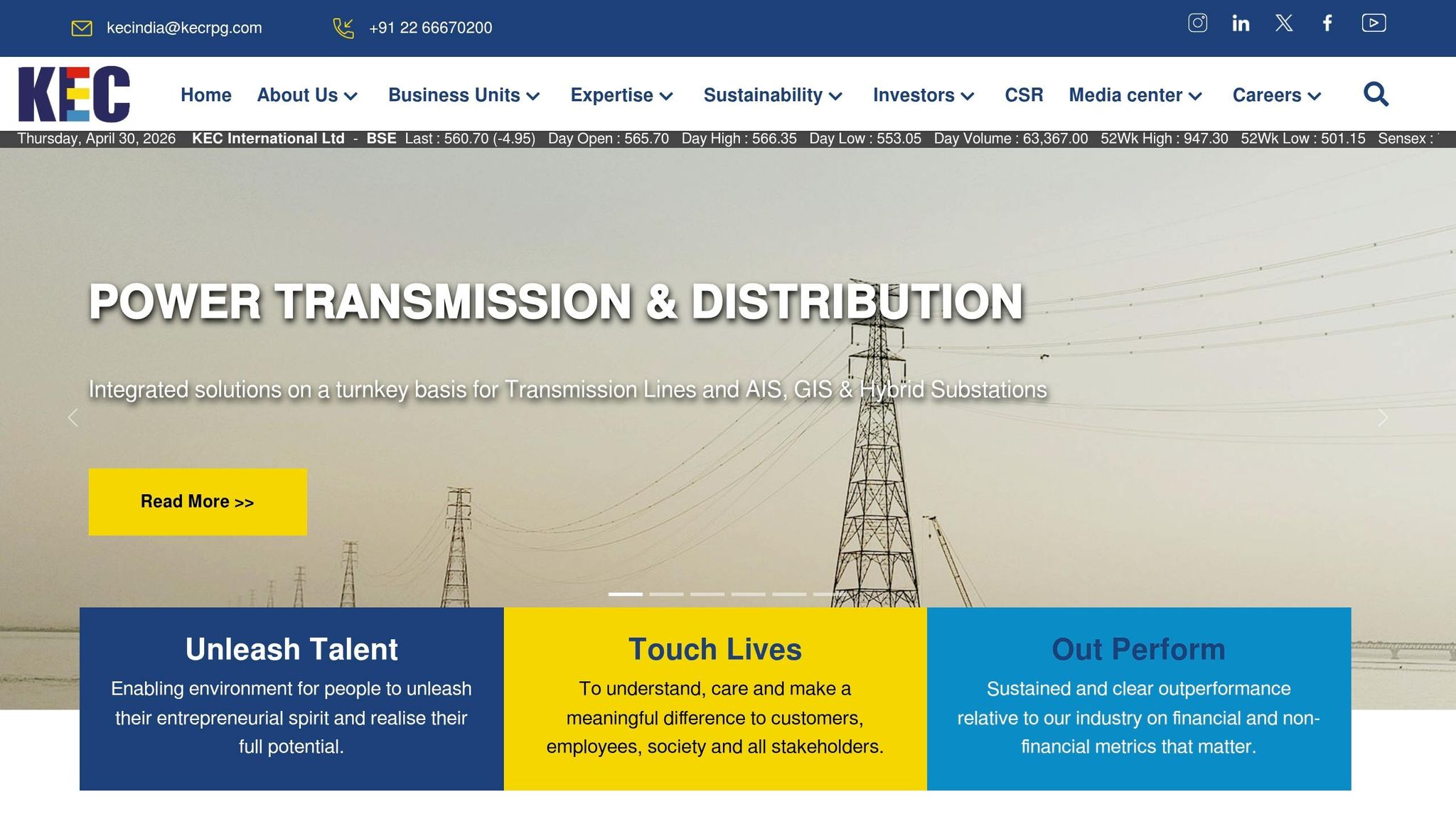
KEC International, a $2.6 billion EPC company, operates in over 110 countries and employs more than 7,500 people. As of April 30, 2026, its market capitalization stood at approximately ₹14,925.83 crore.
Key Products and Solutions in Power Distribution
KEC International provides comprehensive EPC solutions for power distribution. The company specializes in Air Insulated Substations (AIS), Gas Insulated Substations (GIS), and Hybrid Substations, offering efficient and reliable grid infrastructure to meet growing demands. As the largest global manufacturer of lattice towers, KEC boasts an impressive manufacturing capacity of 468,200 metric tonnes annually, supported by advanced tower testing facilities.
Their product range extends to cable manufacturing, covering power, instrumentation, telecom, and railway applications, with an annual capacity of approximately 40,000 km. KEC also supports grid modernization through its EPC services for renewable energy projects, including both ground-mounted and rooftop solar solutions. These offerings reflect the company's focus on delivering technically advanced and reliable solutions.
Technological Innovation and Competitive Advantages
One of KEC's standout strengths is its in-house design team of over 400 experts, enabling the company to create tailored solutions with stringent quality control at every project stage. This expertise allows KEC to manage transmission lines with capacities up to 1,200 kV, reducing energy losses during long-distance power transmission.
In early 2026, the company secured orders exceeding ₹5,000 crores, including major transmission and distribution projects. Notably, in April 2026, KEC signed a contract with Ethiopian Electric Power to construct a 132 kV transmission line spanning about 105 miles (170 km).
Sustainability and Energy Efficiency Initiatives
KEC International pairs its technical expertise with a strong commitment to sustainability. Its Vadodara manufacturing facility became the first cable production plant in India to earn a platinum rating from the Indian Green Building Council (IGBC). Additionally, its Vadodara and Mysuru facilities hold ISO 14001 certifications. The company, under its "Asian Cables" brand, produces specialized green cables and electric vehicle charging cables to support the shift toward clean energy.
In March 2026, KEC was working on a 225 kV transmission project in Guinea, aiming to provide electricity to over 40 localities, directly contributing to regional energy access. In December 2025, the Oman Electricity Transmission Company recognized KEC with an award for "Best Incident Reporting" on the Duqm to Mahout project. The company is also adopting mechanized methods like the DAGP crane system for tower erection to improve efficiency and reduce manual labor.
10. Electrical Trader
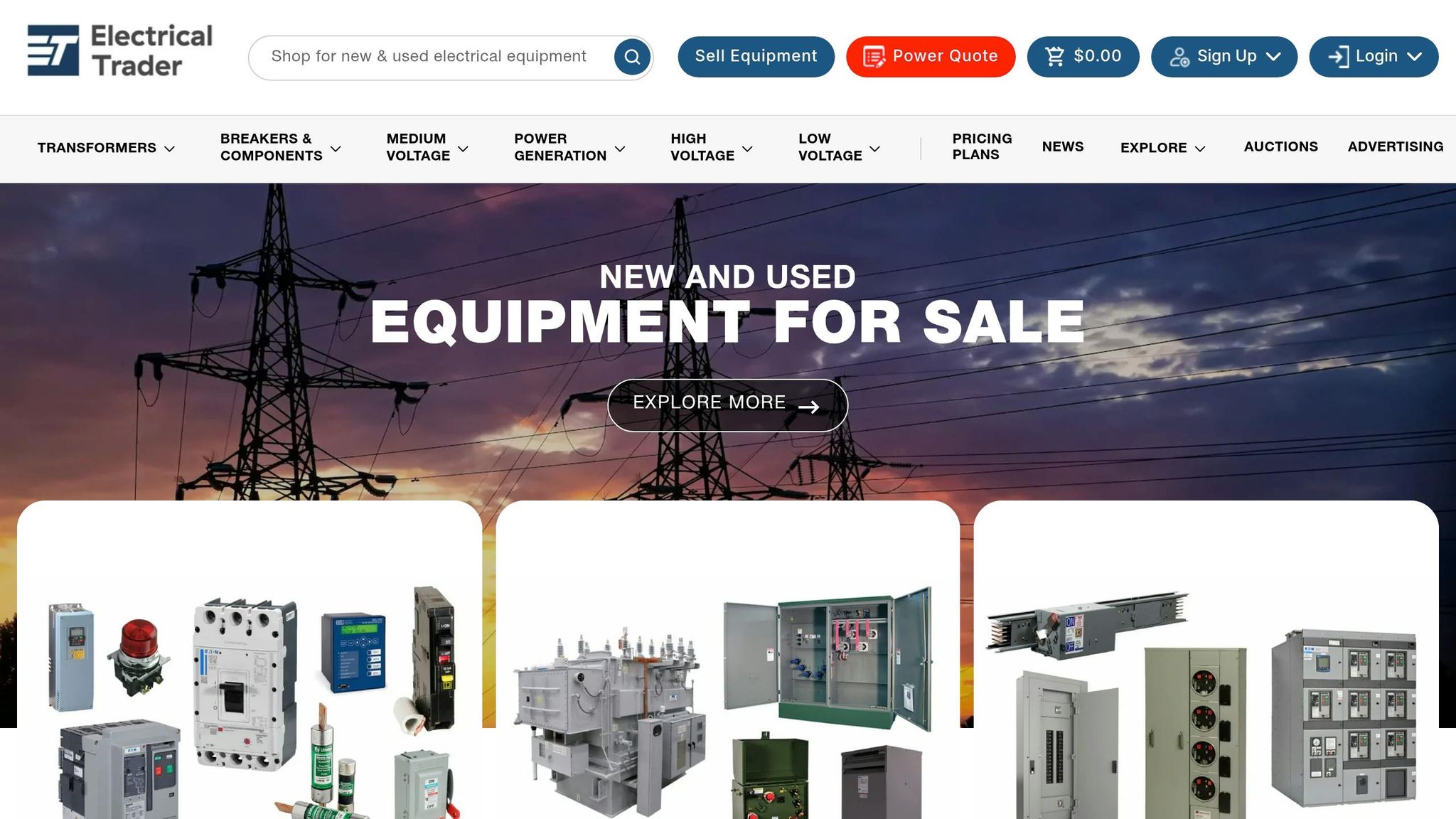
Electrical Trader is an online platform that connects buyers and sellers of new and used electrical and power distribution equipment. It caters to electricians, contractors, and end-users looking for dependable power solutions.
Key Products and Solutions in Power Distribution
The platform offers a wide range of products, including circuit breakers, transformers (spanning low to high voltage), switchgear, power generation tools, and specialized items like 3-phase and substation transformers, as well as standby diesel generators. It also features Power Distribution Units (PDUs), ranging from basic models to advanced, networked systems designed for high-density data centers. These products address the growing demand for modernized and scalable grid solutions, especially in the Asia-Pacific region, which is currently the fastest-growing market for power distribution.
Technological Innovation and Competitive Advantages
Electrical Trader's centralized online marketplace reflects a shift toward more integrated, technology-driven power distribution solutions. By offering both new and used equipment, it provides flexible, budget-friendly options to meet the needs of various projects.
The platform's categorized listings and resource center with buying guides simplify the process of understanding technical specifications, helping users make well-informed decisions. This aligns with the regional push toward IoT-enabled switchgear and smarter power systems, where careful selection of components is crucial. By supporting these advancements, Electrical Trader plays a key role in the Asia-Pacific region's growing digital and power infrastructure landscape.
Company Comparison Table
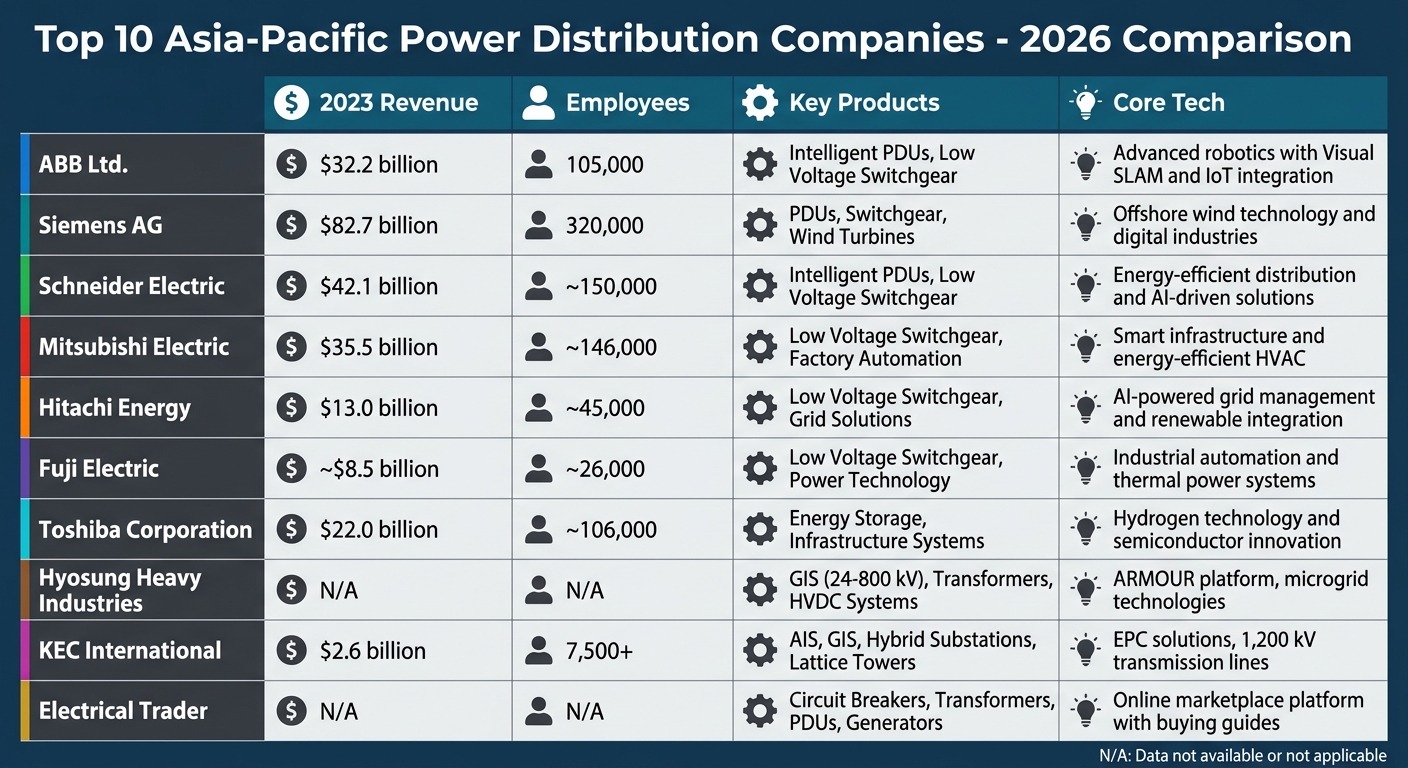
Top 10 Asia-Pacific Power Distribution Companies 2026 Comparison
This table highlights key metrics for the leading companies covered earlier. The power distribution market is expected to grow significantly, reaching 4.94 terawatts by 2026, while the transmission and distribution segment is projected to hit $170.95 billion by 2030. Below is a detailed comparison based on 2023 revenue, workforce size, product offerings, and technological focus.
| Company | 2023 Revenue | Employees | Key Product Offerings | Core Technologies and Strengths |
|---|---|---|---|---|
| ABB Ltd. | $32.2 billion | 105,000 | Intelligent PDUs, Low Voltage Switchgear | Advanced robotics with Visual SLAM and IoT integration |
| Siemens AG | $82.7 billion | 320,000 | PDUs, Switchgear, Wind Turbines | Offshore wind technology and digital industries |
| Schneider Electric | $42.1 billion | ~150,000 | Intelligent PDUs, Low Voltage Switchgear | Energy-efficient distribution and AI-driven solutions |
| Mitsubishi Electric | $35.5 billion | ~146,000 | Low Voltage Switchgear, Factory Automation | Smart infrastructure and energy-efficient HVAC |
| Hitachi Energy | $13.0 billion | ~45,000 | Low Voltage Switchgear, Grid Solutions | AI-powered grid management and renewable integration |
| Fuji Electric | ~$8.5 billion | ~26,000 | Low Voltage Switchgear, Power Technology | Industrial automation and thermal power systems |
| Toshiba Corporation | $22.0 billion | ~106,000 | Energy Storage, Infrastructure Systems | Hydrogen technology and semiconductor innovation |
| Electrical Trader | N/A | N/A | Circuit Breakers, Transformers, PDUs, Generators | Online marketplace platform with detailed buying guides |
Regional expansion is shaping market competition. For instance, Mitsubishi Electric bolstered its presence in Vietnam and Thailand with new facilities in 2024.
The companies also showcase varied innovation strategies. ABB acquired Meshmind in 2024 to enhance its AI and machine learning capabilities for automation. Similarly, Schneider Electric has focused on IoT and cloud integration to advance digital energy management. Meanwhile, Electrical Trader leverages its digital platform to cater to evolving market demands, aligning with the 10.9% CAGR in the PDU market forecasted for 2025 to 2030.
This comparison underscores the diverse strategies and strengths driving growth in the Asia-Pacific power distribution market.
Conclusion
The Asia-Pacific power distribution market is undergoing a major transformation, moving away from standalone hardware toward integrated systems. This shift combines cutting-edge hardware with software platforms, IoT automation, and AI-driven solutions to tackle challenges like improving grid reliability in crowded urban areas and managing renewable energy across vast regions.
These advancements align with the region's growing energy demands and economic momentum. Decarbonization efforts are accelerating, with companies like Hitachi Energy at the forefront of innovation. James Zhao, Executive Vice President and Region Head Greater China at Hitachi Energy, highlighted this progress:
"In recent years, building on breakthroughs such as EconiQ technologies and renewable integration, we are partnering with customers to advance China's new power system."
Currently, Asia accounts for 36% of global primary energy consumption, a figure expected to climb to 48% by 2050. Renewables are set to make up 35% of the region's energy mix by 2030.
Collaborative efforts and cross-border projects are also reshaping the market. For example, Singapore’s initiative to import 6 GW of low-carbon electricity by 2035 demonstrates how regional partnerships can drive infrastructure development. Meanwhile, digital tools like granular energy tracking and 24/7 Carbon-Free Energy frameworks in places like Taiwan and Singapore are offering new levels of transparency in clean energy use.
For businesses looking to upgrade their power distribution systems, platforms such as Electrical Trader offer essential components like circuit breakers, transformers, and PDUs to meet modern infrastructure needs. These innovations are positioning the region to reach an impressive 7.89 terawatts by 2034.
FAQs
What’s driving Asia-Pacific’s power distribution growth through 2030?
Asia-Pacific's power distribution market is expanding, driven by rapid urbanization, industrial growth, and a surge in energy demand across nations like China, India, Japan, and South Korea. Governments in the region are actively pushing for electrification and renewable energy adoption, which plays a significant role in this growth.
Additionally, smart grid technologies and automation advancements are reshaping how power is distributed, making systems more efficient and reliable. Investments in upgrading infrastructure and transitioning to sustainable energy solutions are further fueling this market's development.
Which technologies matter most for modern power distribution upgrades?
Modern power distribution is evolving with the integration of smart grid systems. These systems incorporate sensors, controls, and communication networks to boost both efficiency and reliability. IoT devices add another layer of capability by enabling real-time monitoring and predictive maintenance, helping to address issues before they become major problems. Meanwhile, AI-driven systems enhance grid stability by analyzing data and forecasting weather conditions, ensuring smoother operations.
Additionally, advanced materials and modular equipment, such as high-efficiency transformers and switchgear, are crucial in this transformation. These innovations not only support the integration of renewable energy but also play a significant role in modernizing power grids to meet today’s demands.
How do I choose the right switchgear, transformer, or PDU for my project?
When selecting equipment, start by assessing your project's electrical load, voltage requirements, and capacity needs. This ensures the equipment matches the technical demands of your setup. Prioritize options that are dependable and built to handle future advancements, such as automation features and smart grid compatibility.
It's also critical to verify that the equipment complies with safety regulations and any relevant environmental standards. While the initial cost may differ between models, look beyond the price tag. Factor in long-term efficiency and maintenance costs to determine the most cost-effective choice over time.
Lastly, keep an eye on current market trends. Features like renewable energy integration and grid modernization are becoming increasingly important for maximizing performance and staying ahead in the industry.