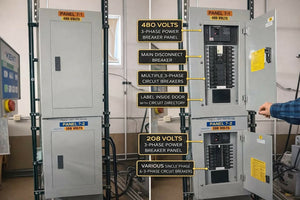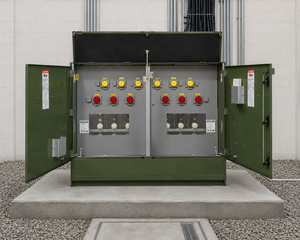


Battery Storage Codes: What Electricians Must Know
If you miss one code check on an ESS job, you can pass electrical review and still fail fire review.
I’d boil this article down to a few points:
- NEC Article 706 covers the electrical install: wiring, OCPDs, grounding, disconnects, and labels.
- NFPA 855 and the IFC cover where the system can go, spacing, room limits, ventilation, and fire protection.
- UL 9540 is the listing for the full ESS package. UL 9540A is the fire test data used for spacing, gas release, and thermal runaway review.
- The AHJ decides which code edition applies, and that can change the permit path, layout, and closeout documents.
- Common checks include 125% OCPD sizing, readily accessible disconnects, 3-foot spacing in many cases, 10-foot outdoor separation in many container cases, and 25% of LFL for gas review based on UL 9540A data.
- Starting with the 2026 NEC, commissioning is required for all ESS installs, including one- and two-family dwellings.
Here’s the short version: I’d confirm the adopted code year first, then match the design, listing, labels, fire documents, and nameplates exactly before submittal. That one step cuts down permit comments, field changes, and failed inspections.
| Item | What I’d check first |
|---|---|
| NEC 706 | Disconnect location, OCPD sizing, labeling |
| NFPA 855 | Capacity limits, spacing, room use, ventilation |
| UL 9540 | Full system listing matches installed model |
| UL 9540A | Spacing, thermal runaway, gas release data |
| IFC | Setbacks, access, bollards, fire room rules |
| Closeout | Commissioning, test reports, as-builts, labels |
If you work battery storage jobs, this is the core point: an ESS install is not just an electrical job. It is also a fire code, listing, and document-control job from permit to final sign-off.
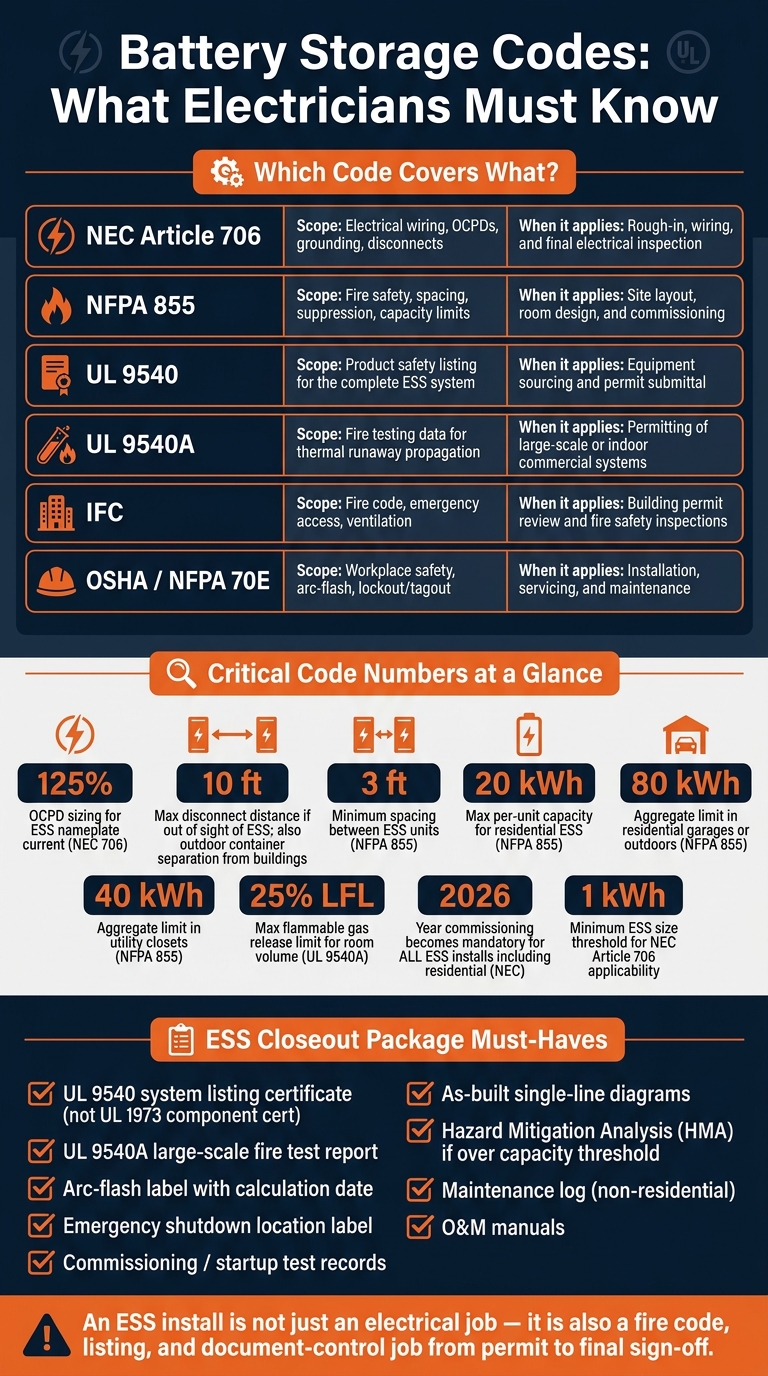
Battery Storage Codes Cheat Sheet: NEC 706, NFPA 855, UL 9540 & More
Course Preview | 2026 NEC Updates for Energy Storage Systems
sbb-itb-501186b
Which Codes Apply to Battery Storage Installations
Once you know which code edition the AHJ has adopted, you can sort the job into four buckets: electrical, fire, product listing, and worker safety. The simplest way to handle it is to start with the code that governs each call, then follow that path from equipment purchase through final inspection.
| Code/Standard | Primary Scope | When Electricians Encounter It |
|---|---|---|
| NEC Article 706 | Electrical wiring, overcurrent protection, grounding, disconnects | Rough-in, wiring, and final electrical inspection |
| NFPA 855 | Fire safety, spacing, suppression, capacity limits | Site layout, room design, and commissioning |
| UL 9540 | Product safety listing for the complete system | Equipment sourcing and permit submittal |
| UL 9540A | Fire testing data for thermal runaway propagation | Permitting of large-scale or indoor commercial systems |
| IFC | Fire code, emergency access, ventilation | Building permit review and fire safety inspections |
| OSHA / NFPA 70E | Workplace safety, arc-flash, lockout/tagout | Installation, servicing, and maintenance |
NEC Article 706 Electrical Rules for Field Work
For electricians in the field, Article 706 is usually the first place to look during rough-in and inspection. NEC Article 706 is the main electrical article for energy storage systems. It applies to ESS rated above 1 kWh and covers wiring methods, circuit sizing, overcurrent protection, grounding, and disconnecting means.
A few field checks come up again and again:
- OCPDs must generally be sized at 125% of the ESS nameplate current.
- Disconnects need to be readily accessible and within sight of the ESS. If they are out of sight, they must be within 10 feet and lockable.
- For residential installations, the emergency shutdown initiation device should be outside the building in a readily accessible location.
This is the part of the code that tends to shape conduit runs, disconnect placement, and what an inspector is going to focus on first.
NFPA 855, UL 9540, and UL 9540A System and Fire Safety Rules
NFPA 855 deals with fire safety for ESS, including siting, unit spacing, and fire suppression. A common starting point is 3 feet of spacing between ESS units, and residential systems are limited to 20 kWh per unit. Aggregate limits can apply too, including up to 80 kWh in residential garages or outdoors and 40 kWh in utility closets.
UL 9540 covers the listed system itself. UL 9540A is different. It's a test method, not a listing, and its data can support spacing decisions. That difference matters. If a project is trying to use tighter spacing, the manufacturer's UL 9540A data should be reviewed during design, not after permit submittal.
In plain terms, UL 9540 tells you the system is listed. UL 9540A helps show how that system behaves during thermal runaway testing.
IFC and OSHA Rules That Apply to Installation and Service Work

Once the layout is set and the equipment is approved, the job shifts to field safety rules. The IFC controls where an ESS can go. It restricts systems from habitable spaces and requires vehicle impact protection and ventilation in enclosed rooms. Outdoor containerized systems typically need at least 10 feet of separation from buildings and combustible materials.
Fire departments enforce these rules apart from the electrical permit. So yes, a project can pass electrical inspection and still come back for changes during fire review.
OSHA and NFPA 70E cover worker safety during installation and service. That includes arc-flash labeling, PPE selection, and lockout/tagout procedures whenever equipment is opened or serviced. These rules apply through installation, servicing, and maintenance.
What Electricians Need to Check During ESS Layout and Installation
Disconnects, Labels, and Overcurrent Protection
Once the code basis is locked in, electricians usually turn to the field items inspectors tend to check first.
Under NEC 706.15, the disconnecting means has to be readily accessible and able to isolate the ESS from the building wiring. If the disconnect is not within sight of the ESS, it has to be lockable in the open position and is often expected to be within 10 ft.
Each ESS disconnect also needs a clear label: ENERGY STORAGE SYSTEM DISCONNECT. In non-dwelling settings, that label has to do more work. It must include:
- Nominal battery voltage
- Available fault current
- An arc-flash label
- The date the arc-flash calculation was performed
If terminals on both the line and load sides can still stay energized when the switch is open, add a shock-hazard warning label.
Overcurrent protection matters too. ESS circuits are treated as continuous loads, so conductors and OCPDs need to be rated at 125% of the maximum circuit current. DC breakers must also be listed for the system voltage and the interrupting rating.
Location Limits, Clearances, and Battery Room Conditions
Next comes the layout check. Before drawings are finalized, make sure the plan still lines up with the AHJ's siting and room rules.
ESS equipment should not go in habitable spaces. During layout, check room access, detection interfaces, and suppression coordination. For indoor lithium-ion systems, make sure fire detection under NFPA 72 is built into the design. Higher-capacity installs may also need gas detection and automatic suppression. If the area has vehicle traffic, include impact protection such as barriers or bollards. Ventilation must be calculated under NFPA 855 Section 4.4 for chemistries that can produce flammable gases or carry thermal runaway risk.
Grounding, Bonding, and Switchgear Coordination
After placement is set, the next step is making sure the ESS can trip and isolate the way it should during a fault.
This is where battery systems can catch people off guard. A solid-state inverter does not behave like a generator. Its short-circuit current output is limited, and that can change whether downstream breakers trip the way you expect.
"In a microgrid powered by batteries, the inverter output sets the limit for short-circuit current and energy that can be delivered during a fault. Assessing whether coordinated breaker tripping is necessary involves comparing the inverter curve to the breakers to determine the trip points." - Richard D. Austin, PE, LEED AP, Senior Electrical Engineer, Affiliated Engineers Inc.
Before energization, verify that all switchgear and breakers have interrupting ratings at or above the available fault current marked on the ESS nameplate. For four-wire utility feeds, check transformer and neutral needs early. Also verify NEC 110.26 working clearances.
Those checks help frame the permit review and any UL 9540A questions that come next.
How Thermal Runaway Testing Affects Permitting and Approval
How UL 9540A Reports Affect Spacing and Protection
After layout and fault-current checks, the next big approval step is thermal runaway review. UL 9540A is a fire-propagation test, not a listing, and AHJs use it to decide spacing, suppression, and room limits. In plain terms, the report helps show what happens if a battery failure spreads.
UL 9540A data can support reduced spacing, but only when the tested setup matches the installed system exactly. That same report also helps set sprinkler density and maximum ceiling height for indoor installs, which makes it a key part of suppression design.
For indoor installs, inspectors also look at flammable gas release during a failure. The gas has to stay below 25% of the lower flammable limit for the room volume. That check comes straight from UL 9540A gas release data, so the room volume calculation needs to line up with the report.
The report can also shape what the AHJ will accept in the permit package. If the nameplate points to an older UL 9540A edition, check AHJ acceptance before you submit anything.
What Permit Packages and Inspections Typically Require
Prepare the HMA early. Many AHJs ask for it once a system goes over certain capacity thresholds.
Once the report is accepted, the permit package needs to match it exactly. In most cases, that package includes electrical one-line diagrams, equipment cut sheets, UL 9540 listing details, UL 9540A test summaries, a Hazard Mitigation Analysis (HMA), and emergency operations plans.
The table below shows what AHJs usually review and which document covers each item:
| AHJ Check Item | Review Item | Supporting Document |
|---|---|---|
| System Listing | UL 9540 mark; model matches site exactly | UL 9540 Listing Certificate |
| Fire Propagation | Tested spacing/energy limits (if < 3 ft) | UL 9540A Test Report |
| Energy & Spacing | NFPA 855 per-unit/aggregate limits | Site Plan + Spec Sheet |
| Disconnects | Readily accessible, correctly labeled | Signage/Labeling Plan |
| Room Gas Accumulation | Gas release below 25% LFL for room volume | UL 9540A Test Report + Room Volume Calc |
| Suppression Design Basis | Sprinkler density and ceiling height per UL 9540A data | Suppression Design Documents |
One of the most common reasons for rejection is a character-for-character mismatch between the UL 9540 certificate, the one-line diagram, and the nameplate on the installed unit. It sounds minor, but it can stop a permit cold. Before submittal, compare all three line by line. Also make sure you're submitting a UL 9540 system-level certificate, not a UL 1973 battery component certificate.
After installation, AHJs often want commissioning reports, fire-suppression acceptance test results, and maintenance logs on-site or available electronically. Starting with the 2026 NEC, commissioning is mandatory for all ESS installs, including one- and two-family dwellings.
Sourcing Compliant Equipment and Closing Out the Project
Match Breakers, Transformers, and Distribution Equipment to ESS Requirements
After plan approval, sourcing turns into a code check, not a shopping trip. Once the design is approved, buy only equipment that matches that design exactly.
- Use breakers and disconnects listed for bidirectional power flow. A standard breaker rated for one-way current may not interrupt the right way when the battery sends fault current back through the circuit.
- Match transformer impedance to the approved coordination study. Large inverters may also need a transformer to derive the neutral for a 4-wire utility feed.
- Verify the OCPD rating matches the approved ESS current and interrupting requirements before purchase. Size conductors the same way, using the manufacturer-marked continuous current.
NEC 706.3 does not allow reconditioned energy storage equipment.
Once you’ve selected the equipment, make sure the submittal set lines up with what was installed in the field.
Use Electrical Trader to Source ESS-Related Equipment
Electrical Trader can help you source listed breakers, transformers, and distribution gear that fit the approved ESS design. The platform includes breakers, transformers, low- to high-voltage equipment, and power generation tools in one place.
Keep all product data sheets with the as-built turnover file. Those records should move with the final turnover package.
Conclusion: Code Checks That Prevent Delays and Rework
After installation, the last code task is document control. Closeout starts by matching the field installation to the approved drawings. Check that all required labels are in place, including the arc-flash label with the calculation date.
Here’s what belongs in a complete closeout package:
| Document Category | What to Include |
|---|---|
| Listings | UL 9540 (system), UL 1973 (batteries), UL 1741 (inverters) |
| Fire Testing | UL 9540A large-scale fire test report |
| Safety Labels | Arc-flash label with calculation date, emergency shutdown location |
| Commissioning | Startup and test records per manufacturer instructions |
| Design Records | As-built single-line diagrams, load calculations |
| Maintenance | Written repair/replacement log (non-residential); O&M manuals |
"For 2026, commissioning is now required for all installations, including residential homes, and must be performed in accordance with manufacturer instructions." - Rebekah Hren, Solar Tech Collective
FAQs
Which code applies first on an ESS job?
First, make sure the ESS is listed to UL 9540. That’s the main compliance requirement under both NEC Article 706 and the IFC.
Here’s the simple split: the NEC covers the electrical installation. Fire codes deal with fire protection and where the system can be placed.
One more thing matters just as much: check with your local AHJ. That’s the group that decides which code editions and standards apply in your area.
What’s the difference between UL 9540 and UL 9540A?
UL 9540 is the safety standard for complete energy storage systems. It shows that the equipment is built the right way and is safe to use.
UL 9540A is a destructive test method that looks at how a battery behaves during thermal runaway. The results give fire safety data that codes like NFPA 855 use to set installation rules, including separation distances and fire suppression.
Why can an ESS pass electrical review but fail fire review?
An ESS can meet NEC Article 706 and still fail fire review.
Here’s the key difference: electrical review looks at installation and wiring. Fire review looks at added safety rules in codes like the IFC and NFPA 855.
That means a system can be electrically compliant and still get rejected by the fire side. Why? Because fire review may call for UL 9540A testing, ventilation, or separation distances that go beyond the electrical scope.
So even if the wiring, connections, and installation check out under NEC Article 706, that alone may not be enough to pass the full approval process.