Liquid Cooling & Power Build Trends 2026
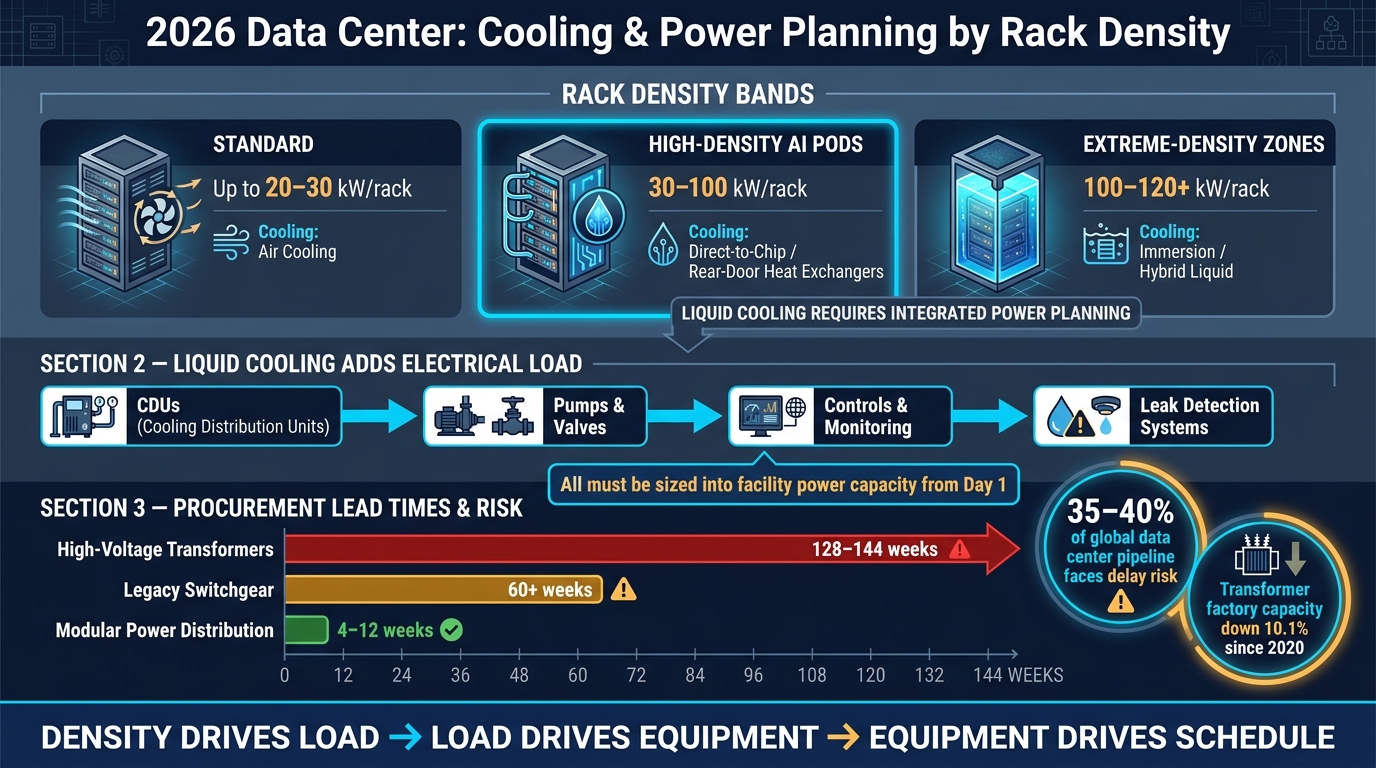
If rack density is above 30 kW, I need to plan cooling and power at the same time. That is the core point. In 2026, AI racks often run at 30–100 kW, some go to 120 kW, and that changes feeder sizing, branch circuits, UPS planning, controls, and buying schedules.
Here’s the short version:
- Air cooling tops out around 20–30 kW per rack in many cases.
- Liquid cooling adds electrical load from CDUs, pumps, valves, controls, and leak detection.
- Transformer lead times can hit 128–144 weeks, and some switchgear still runs 60+ weeks.
- 35%–40% of the global data center pipeline faces delay risk from gear shortages and grid limits.
- Many teams now use modular RPPs and multi-vendor breaker paths to cut single-source risk.
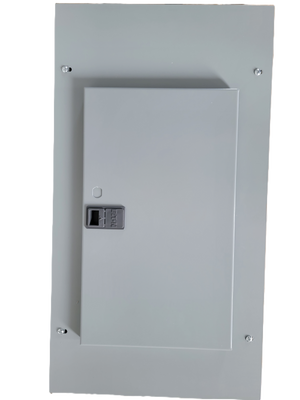
- In retrofits, I have to leave room for CDUs, pumps, and control gear early, even if the cooling layout is still being set.
This means I can’t treat thermal design and electrical design as separate jobs anymore. Density drives load, load drives equipment, and equipment drives schedule.
| Topic | What matters in 2026 |
|---|---|
| Rack density | 30–100 kW is common for AI/HPC; some racks reach 120 kW |
| Cooling limit | Air cooling often works up to about 20–30 kW/rack |
| Added electrical load | CDUs, pumps, controls, monitoring, leak detection |
| Procurement risk | Transformers: 128–144 weeks; switchgear: 60+ weeks |
| Common build response | Modular power blocks, RPPs, and mixed-density planning |
| Retrofit focus | Space, power paths, and early coordination for liquid-cooling gear |
So if I am planning a 2026 build or retrofit, the safe move is simple: set rack density, cooling method, and power path together at the start.
2026 Data Center Rack Density: Cooling & Power Planning at a Glance
Liquid Cooling Has Finally Arrived
sbb-itb-501186b
How Rising Rack Density Is Changing Power and Cooling Design
In 2026, rack density isn't just a mechanical concern anymore. It shapes feeder, busway, switchgear, and UPS sizing from day one. In plain terms: higher rack loads now push electrical and cooling design decisions across the whole facility.
Density Bands Common in 2026 Builds
Most new facilities aren't built around one flat rack-density target. They're planned in multiple density bands instead.
| Density Category | Typical Load | Typical Cooling Path |
|---|---|---|
| High-Density AI Pods | 30–100 kW+ per rack | Direct-to-chip / rear-door heat exchangers |
| Extreme-Density Zones | 100–120 kW+ per rack | Immersion / hybrid liquid cooling |
That matters because mixed-density halls don't run well on a one-size-fits-all layout. Air-cooled rows and liquid-cooled pods often need separate power paths. So mechanical and electrical planning now move in parallel, well before procurement starts.
And here's where things get more demanding: at those higher density bands, liquid cooling begins to consume a meaningful amount of facility power on its own.
Why Power and Cooling Must Be Sized Together
Designing these systems one after the other can leave capacity stranded. Utility service, switchgear, transformers, UPS systems, and cooling capacity all need to be planned in the same window. Early sizing choices shape the build path, and they can be hard to unwind later.
Once rack loads move past 30 kW, the next issue is no longer just heat removal. It becomes a power question too: how liquid cooling equipment gets powered, monitored, and protected.
How Liquid Cooling Connects to Facility Power Systems
Once rack density moves past the liquid-cooling threshold, cooling stops being just a thermal issue. It becomes part of the facility’s electrical load too.
That shift matters. Liquid cooling adds direct demand from CDUs, pumps, valves, and control systems. So power capacity, circuit protection, and redundancy need to account for that extra load from the start. If you don’t plan for it early, the power design can get boxed in fast.
Pump, CDU, and Loop Requirements
CDUs and pumps need to be built into the electrical design upfront, with redundancy planned before final load allocation. That helps teams avoid late redesigns, which can be expensive and frustrating when a project is already moving.
Monitoring, Controls, and Leak Detection
Liquid cooling also increases what teams need to watch. Flow, supply and return temperature, pressure, and leak detection all need constant visibility to help protect uptime.
This isn’t just a nice-to-have layer of oversight. If a loop has a flow issue or a leak starts small, you want to catch it right away - not after it affects equipment.
Electrical Equipment Coordination and Sourcing
After load planning and controls, the next bottleneck is often procurement. What starts as a design issue can turn into a sourcing problem in a hurry.
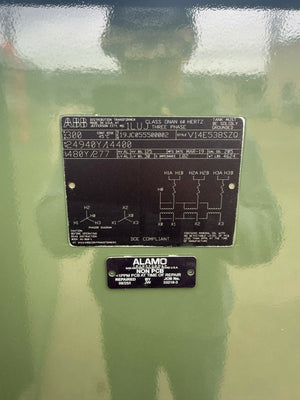
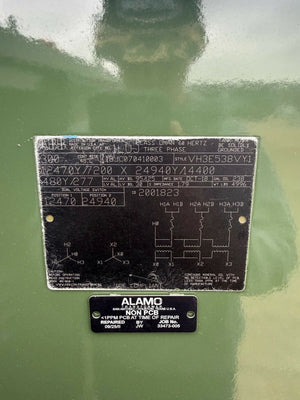
High-voltage transformers can still carry lead times of 128 to 144 weeks, while legacy switchgear often comes with 60+ week waits. On top of that, transformer shortages are tightening 2026 schedules. Factory capacity is down 10.1% since 2020.
That’s why vendor-flexible power distribution can make a big difference. Remote Power Panels (RPPs) with breaker-based distribution that accepts parts from multiple manufacturers give procurement teams more room to work. Instead of waiting on one OEM’s backlog, they can source from what’s available.
Modular power distribution assemblies can also cut delivery times to 4 to 12 weeks and reduce reliance on a single OEM queue.
When normal supply channels come up short and project timelines are already tight, Electrical Trader can help source new and used breakers, transformers, and power distribution equipment.
Retrofits, Architecture Choices, and Build Timing
Common Retrofit Patterns in Existing Sites
As long-lead gear keeps squeezing project timelines, retrofit teams are leaning into modular layouts that fit inside the space they already have. That’s why many retrofits now use modular RPPs and vendor-agnostic power blocks. They fit available floor space and help cut single-source risk.
In 2026 retrofits, electrical planning can’t wait until the cooling path is set. The design needs to leave space for CDUs, pumps, and controls before the cooling topology is locked in.
Direct-to-Chip, Rear-Door, Immersion, or Hybrid: Where Each Fits
Cooling choice now shapes the electrical backbone, not the other way around. In tight retrofits, direct-to-chip and rear-door setups work well in dense air-cooled halls. Immersion fits the highest-density zones. Hybrid layouts make sense when a site has to support mixed-density spaces.
The big decision comes down to flexibility. Can the site handle a fixed, proprietary power layout, or does it need a modular electrical backbone that can shift as cooling plans come into focus? That question now sits near the center of retrofit planning.
Lead Times and Scheduling Pressure in 2026
That flexibility matters because electrical procurement still sets the tempo for commissioning. Legacy switchgear can run past 60 weeks. Large transformers can stretch to 144 weeks. And price increases tied to older purchase orders add even more schedule pressure.
CDUs and pumps also depend on coordinated power delivery, which means electrical sourcing has to start early, well before the commissioning window. With retrofit schedules getting tighter, many teams are moving toward modular, U.S.-based power builds that can ship in 4 to 12 weeks.
What Successful 2026 Builds Get Right
By 2026, the projects that come out ahead treat electrical, mechanical, and procurement as one connected plan.
The strongest builds don’t make rack density decisions first and sort out cooling or power later. They lock rack density, liquid-cooling loads, and electrical capacity at the same time. That means rack density, CDU, pump, control, and leak-detection loads are planned in parallel, not one after another. When teams work that way, commissioning tends to bring fewer last-minute surprises.
Procurement also has to start before design freeze. And approved alternates for transformers and switchgear need to be ready early. The chain is pretty simple: density drives load, load drives equipment, and equipment drives schedule. If a team waits too long, it can get stuck waiting on gear that won’t arrive when the project needs it.
Once lead times are known, the next pressure point is sourcing flexibility. A vendor-flexible sourcing plan helps keep one factory backlog from slowing the whole job. Modular RPPs with manufacturer-agnostic breaker buses give procurement teams room to buy from manufacturers that are already on approved vendor lists, which helps protect the timeline when one supply channel falls short.
There’s also a space angle here. Modular configurations matched to the required circuit count help teams avoid overbuilding and keep unused floor space open for future density growth. The projects that move fastest usually do three things early: right-size the build, source with flexibility, and keep room for density growth.
FAQs
When should I switch from air to liquid cooling?
Switch to liquid cooling when air cooling can’t keep up with your system’s heat load or temperature targets.
In most cases, liquid cooling makes more sense for high-density or utility-scale systems above 500 kW or 1 MWh. It’s also a better fit for sites with frequent fast charging, very hot or very cold weather, or limited space.
Air cooling usually works well for lower-power or residential setups.
How much extra power does liquid cooling add?
Liquid cooling doesn’t inherently add extra power to a system. It’s simply a more efficient way to manage heat than air cooling, and it usually uses less energy to keep temperatures in check.
That said, when you plan an integration, you still need to account for the power draw of support components like pumps. You should also factor in battery charging, which can consume up to 20% of a UPS rating.
What should I lock in first for a 2026 retrofit?
First, lock in long-lead equipment. Transformer and switchgear lead times now run about 2.5 to 4 years, so it pays to finish the design, confirm redundancy requirements, and place orders as early as you can. That move helps cut exposure to pricing swings and tariff risk.
You can also use Electrical Trader to source new or refurbished components, which may help you sidestep long manufacturer wait times. Keep the architecture vendor-agnostic, and add material escalation clauses to contracts.