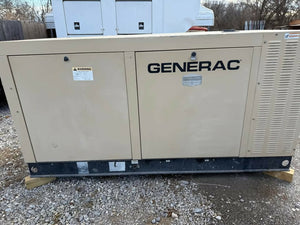
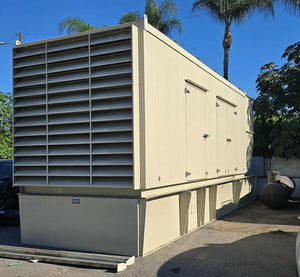
How Generator Control Panels Enable Remote Monitoring
Modern generator control panels are the cornerstone of efficient power management, allowing users to monitor and control generators from anywhere. These panels collect real-time data, such as voltage, fuel levels, and engine temperature, and transmit it via Ethernet, Wi-Fi, cellular, or satellite connections to cloud platforms. This enables facility managers to address issues remotely, perform maintenance proactively, and ensure reliable operation during emergencies.
Key Benefits:
- Real-Time Alerts: Notifications for low fuel, high temperature, or other critical issues sent instantly to devices.
- Proactive Maintenance: Early problem detection helps avoid costly repairs and downtime.
- Remote Control: Start/stop generators, manage loads, and clear alarms without being on-site.
- Regulatory Compliance: Automated reporting simplifies meeting EPA and other standards.
- Cost Savings: Reduces site visits, minimizes labor, and prevents outages.
These features make generator remote monitoring indispensable for industries like healthcare, data centers, and disaster recovery operations, ensuring uninterrupted power when it’s needed most.
Core Features That Enable Remote Monitoring
Data Collection and Sensor Integration
Modern generator control panels are designed to pull sensor data from every corner of the system. For example, engine performance sensors keep tabs on key metrics like RPM, oil pressure, coolant temperature, and ambient air temperature. On the electrical side, these panels monitor factors such as line voltage, generator output voltage, frequency, output current, and battery voltage - ensuring both power quality and dependable startup.
Fuel management has also taken a leap forward. Smart sensors, including tank depth pressure sensors, now monitor fuel levels and can handle tanks up to 20 meters tall. They can even detect sudden drops in fuel, which might signal leaks or theft, while also auditing fuel consumption and delivery data [11, 12]. In some cases, advanced telematics platforms track over 400 parameters, with databases containing over 10,000 unique parameters. These systems provide detailed fault code descriptions instead of just cryptic numeric triggers.
To enable real-time remote monitoring, these systems use a range of data interfaces, including Modbus (RTU/RS485), CAN bus (J1939), SNMP, RS-232, RS-485, and 1-Wire buses for digital temperature sensors. Advanced gateways, like the mCore SDR, can even translate proprietary generator data into industrial protocols such as Modbus RTU, SNMP, BACnet, and FTP. This allows seamless integration into building management systems (BMS) or SCADA platforms.
Connectivity Options
Once the data is collected, the next step is making sure it gets transmitted effectively. Generator control panels offer various connectivity options tailored to different environments. Ethernet (LAN) provides a fast and stable connection for units installed in facilities, while Wi-Fi offers flexibility in areas where running cables isn’t feasible [11, 12].
For generators in remote or outdoor locations, cellular networks like 4G, LTE, and GSM provide reliable communication [11, 12]. Industrial-grade controllers are built tough, capable of operating in extreme temperatures ranging from -40°F to 158°F. Many systems also feature internal battery backups and non-volatile memory to retain settings and monitoring capabilities during power outages.
The choice of connectivity often depends on the specific situation. For example, private radio systems, which can cover distances of 20 to 40 miles without monthly fees, are a great solution for sites with multiple generators in close proximity. Cellular options, typically costing around $40 or more per month, are ideal for areas with strong network coverage. For the most remote locations, satellite-based monitoring offers global reach, with data speeds ranging from 1,200 bps to 1.2 Mbps.
PowerCommand 500 Series Remote Monitoring System
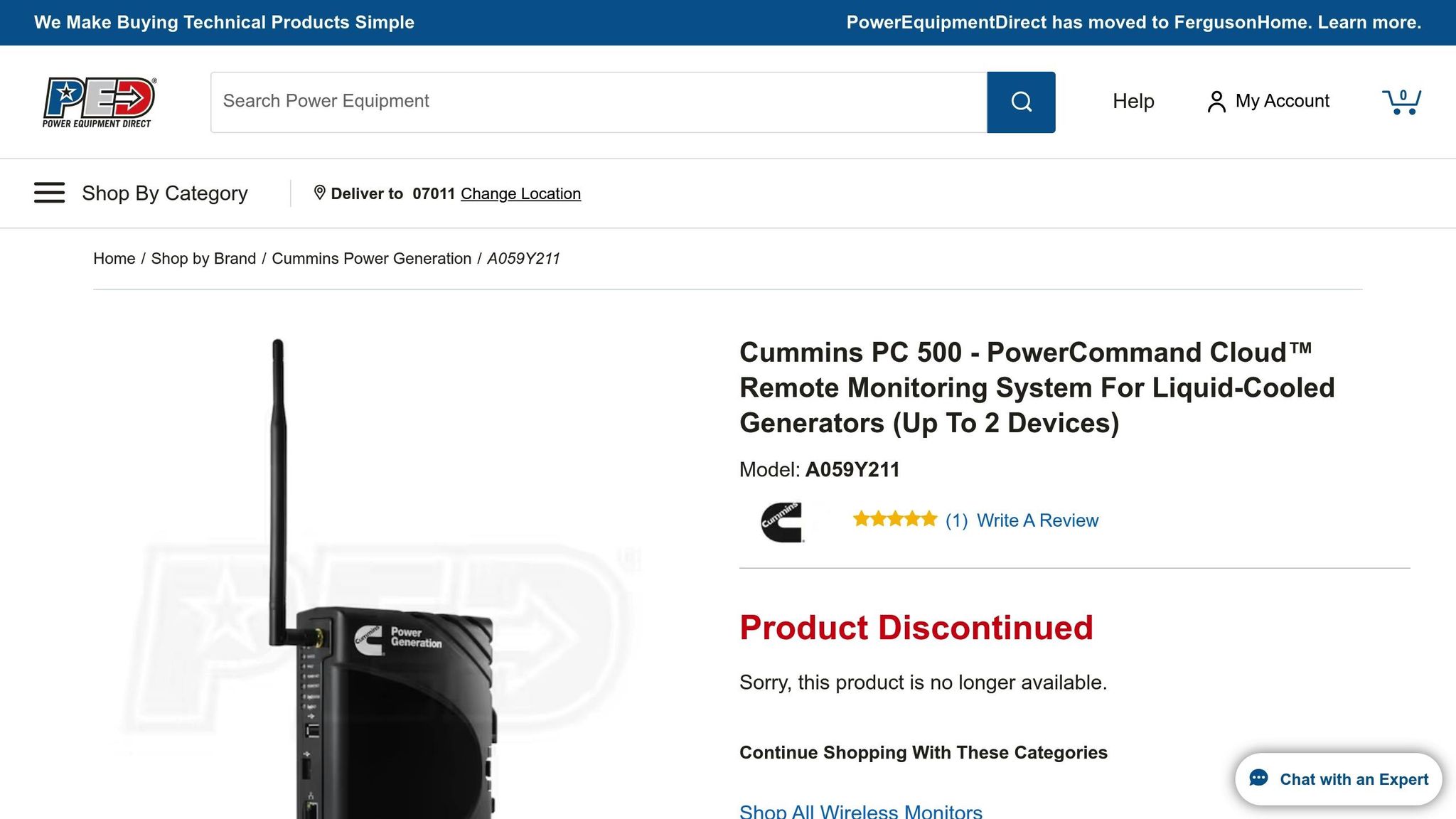
How Remote Monitoring Works
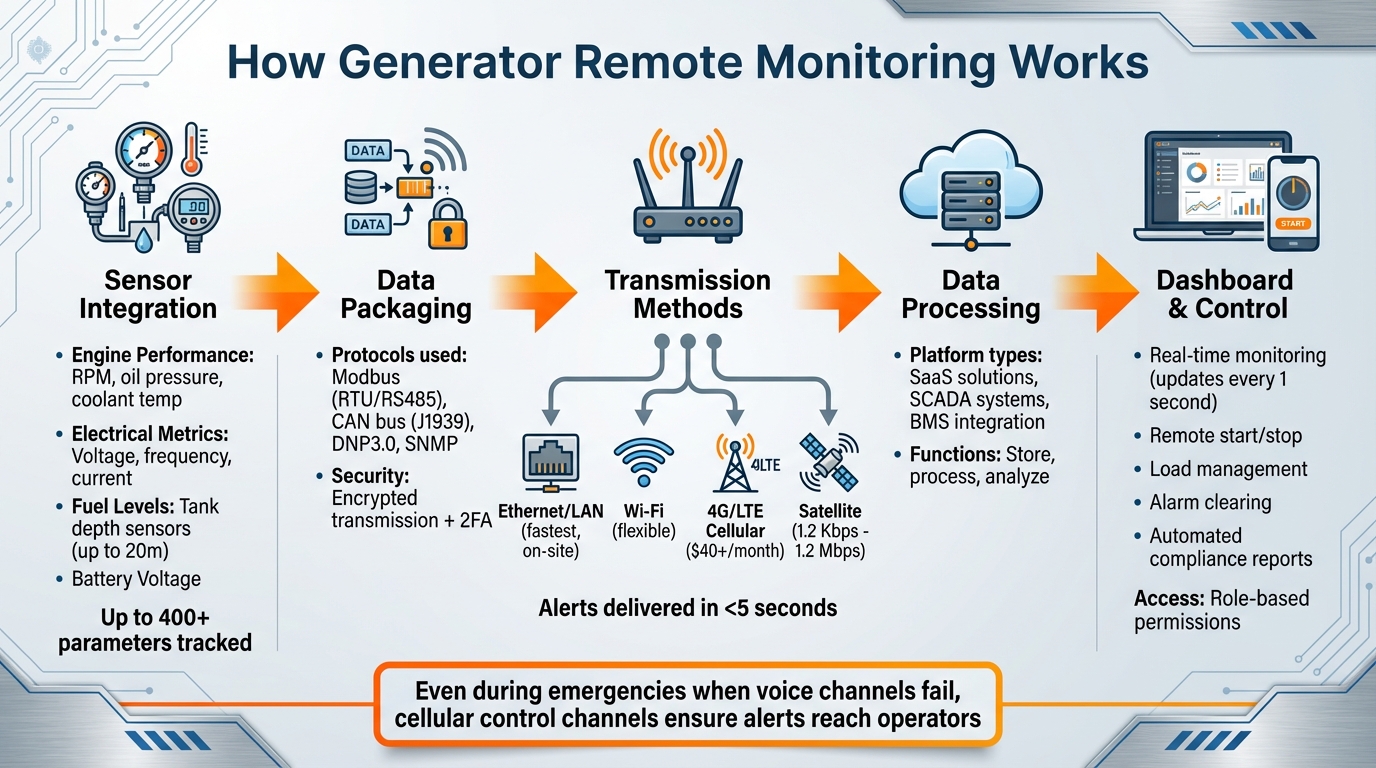
How Generator Remote Monitoring Systems Work: From Data Collection to Cloud Dashboard
Data Transmission to Cloud Platforms
Once sensors and the ECM (Engine Control Module) collect data, communication modules take over to transmit it. This data is packaged and sent using Ethernet, Wi-Fi, 4G/LTE, or even satellite connections.
The transmission relies on industrial protocols like Modbus (via RS-485), DNP3.0, or SAE J1939 CAN BUS. From there, the data reaches cloud-based platforms, such as Software-as-a-Service (SaaS) solutions or SCADA systems, where it’s processed, stored, and made accessible to users.
To ensure security during this process, encrypted data transmission and two-factor authentication (2FA) are implemented, safeguarding against unauthorized access. Even in emergencies, when voice channels might fail, cellular control channels make sure alerts still reach operators. As Curtis Power Solutions explains:
Reliable and secure messaging utilizing cellular control channel communications ensures alerts are delivered, even in an emergency when cellular voice channels are often unavailable.
Once processed, the cloud-hosted platforms present the information through user-friendly dashboards, enabling real-time management.
User Interfaces and Dashboards
Users can access this data via web portals or mobile apps, where key metrics are centralized for easy monitoring. These include fuel levels, battery voltage, oil pressure, coolant temperature, engine RPM, and AC output. Some platforms, like Generac Link Manager, even offer live updates as frequently as every second.
But monitoring is just the start. These interfaces also allow direct control. Users can remotely start or stop generators, manage loads, and clear alarms without needing to visit the site. Automated reporting tools take raw data and turn it into practical insights, helping with maintenance planning, tracking fuel efficiency, and ensuring compliance with standards like NFPA and EPA emission regulations.
Access is carefully managed through user profiles with customized permissions, giving facility managers control over who can view specific data and who has the authority to act. This layered access ensures both operational efficiency and security.
sbb-itb-501186b
Benefits of Remote Monitoring for Industrial Applications
Better Efficiency and Maintenance
Remote monitoring transforms generator maintenance by offering round-the-clock oversight of critical parameters like fuel levels, engine temperature, oil pressure, and battery voltage. With smart sensors and connectivity options, these systems provide constant supervision, helping facility managers spot potential problems early - often before they develop into costly failures. Depending on the setup, these systems can track anywhere from 10 to over 1,000 data points, giving a detailed view of generator health.
One of the standout advantages is predictive maintenance. Instead of waiting for equipment to break, these systems analyze data trends to recommend maintenance before issues arise. When a problem does occur, technicians can often diagnose it remotely, ensuring they arrive on-site with the right tools and parts, which significantly boosts first-time fix rates.
Alerts are sent via text or email, with some systems capable of delivering updates in under 5 seconds. This quick response helps prevent small issues from escalating into major failures that could lead to significant downtime and expensive repairs. The efficiency improvements extend beyond maintenance, simplifying compliance processes as well.
Compliance and Reporting
Meeting regulatory requirements becomes much easier with automated reporting features. Remote monitoring systems can generate the documentation needed for agencies like the EPA, the Joint Commission (for healthcare facilities), and other local authorities. By leveraging real-time data transmission, these systems help facilities maintain compliance with air quality standards by accurately tracking equipment runtime - a key factor for adhering to emissions regulations.
Many advanced platforms also include audit trails that log user actions, creating transparent records for compliance inspections. Facilities can even perform and document engine tests remotely, cutting down on the labor traditionally required to maintain compliance records. Beyond regulatory adherence, these features save significant time and money.
Cost and Time Savings
The financial perks of remote monitoring are hard to ignore. By reducing the need for frequent site visits, these systems cut down on travel time and labor expenses. Technicians can diagnose problems remotely, which minimizes unnecessary trips and reduces equipment downtime.
Even avoiding a single failure can make the investment worthwhile, potentially saving companies thousands of dollars by preventing just one day of lost production. Additionally, these systems offer a cost-effective alternative to traditional SCADA systems, delivering comparable functionality at a much lower price point. While there are initial hardware costs and an annual subscription fee, the savings from reduced downtime, lower maintenance expenses, and increased operational efficiency quickly offset these costs.
Use Cases and Applications
Disaster Recovery and Emergency Power
When emergencies hit, backup generators must kick in without delay. Remote monitoring plays a crucial role by keeping tabs on key failure indicators like battery voltage and fuel levels, which are the most common reasons generators fail during crises. Without proper monitoring, facilities could face the nightmare of discovering their backup power won’t activate when it’s desperately needed.
"A generator that runs out of fuel is absolutely useless." - Gen-Tech
This technology is particularly critical for healthcare facilities. Hospitals, for example, can remotely conduct engine and transfer switch tests to confirm everything is operational - without needing staff to physically check the generator room. Additionally, the system generates compliance reports automatically, meeting requirements for the Joint Commission and EPA by documenting regular testing and runtime. Even in cases where the generator fails to start, the monitoring hardware's internal backup batteries ensure that alerts and updates continue to be sent.
For disaster response teams using mobile or rental generators, GPS tracking and geo-fencing simplify asset management across multiple emergency sites. Diagnostic engineers can often resolve minor alarms or issues remotely, reducing the need for emergency technician dispatches during high-pressure situations. These capabilities ensure uninterrupted monitoring, even when infrastructure is compromised. Beyond just emergencies, remote monitoring also supports routine management for large-scale operations, adding value even in calmer times.
Facility Management in Large-Scale Operations
While remote monitoring is vital during emergencies, it’s equally effective for streamlining everyday operations across sprawling facilities. Large industrial plants, data centers, and construction sites often juggle multiple generators spread across wide areas or various locations. Remote monitoring simplifies this complexity by centralizing control. Facility managers can start or stop generators, adjust loads, or clear alarms - all from their smartphones or computers, no matter where they are.
The level of data available depends on the type of equipment. Electronic engines, for instance, can provide between 50 and 80 detailed parameters, while larger gensets with multiple Electronic Control Modules deliver up to 220 parameters. On the other hand, basic mechanical engines with standard controllers offer a more limited view, typically just 8 to 10 monitoring parameters. This detailed data can help detect issues like fuel leaks, declining engine performance, or coolant problems early - before they turn into costly failures.
OEM-agnostic systems take this a step further by consolidating data from different manufacturers into a single dashboard. They also enable participation in utility Demand Response programs, offering additional operational benefits. Integration with platforms like Building Management Systems (BMS), SCADA, or cloud-based solutions such as AVEVA PI provides a unified view of operations, making it easier to manage complex facilities efficiently.
Conclusion
Summary of Benefits
Remote monitoring in generator control panels has reshaped how industrial facilities manage backup power. These panels provide real-time updates on critical metrics like oil pressure, coolant temperature, battery voltage, and fuel levels - delivering data to devices in under 5 seconds. With this constant stream of information, operators can maintain round-the-clock supervision without being physically present at the generator site.
One of the standout advantages is the ability to address potential problems early. For example, issues like low battery voltage or minor leaks can be identified and resolved before they lead to expensive breakdowns. Users with proper authorization can even troubleshoot and control systems remotely using smartphones or laptops, often eliminating the need to send technicians on-site. As Patrick Paden, Generator Specialist at Central States Diesel Generators, puts it:
Remote monitoring systems give real-time information about the generators besides the ability to audit, ensuring continuous operation and extending the life cycle.
The financial benefits are hard to ignore. A single day of power outage can result in thousands of dollars in lost revenue, making remote monitoring a smart investment for many facilities. On top of that, automated reporting simplifies compliance with EPA and Joint Commission standards by tracking exercise intervals and runtimes. Modern systems also enable participation in utility Demand Response programs, which can reduce costs further through automated load management.
These features collectively create a more efficient and resilient approach to power management.
Final Thoughts
Remote monitoring has become an essential tool for managing both emergency backup systems and day-to-day operations. Whether you're in charge of keeping healthcare facilities powered during outages or managing multiple generators across a sprawling industrial site, advanced control panels with remote monitoring capabilities bring noticeable improvements in efficiency, reliability, and cost savings. Transitioning from outdated analog gauges to digital, networked systems means access to detailed diagnostics and instant alerts. This integration ensures backup power systems remain dependable and ready to perform in diverse industrial applications.
If you're considering upgrading your power generation systems, Electrical Trader (https://electricaltrader.com) offers a carefully selected range of advanced control panels and related electrical components. Investing in these modern systems today can help you avoid unexpected failures, reduce maintenance costs, and gain the confidence that your backup power will be ready when it matters most.
FAQs
How do generator control panels enhance maintenance efficiency?
Generator control panels with remote monitoring offer real-time performance updates and automated alerts, making it easier to spot issues before they escalate. This approach supports predictive maintenance, cutting down on frequent site visits and helping to avoid unexpected downtime.
By simplifying maintenance routines, remote monitoring not only reduces labor expenses but also boosts operational efficiency. With fewer service trips and quicker response times, businesses can count on their generators to stay dependable and ready to handle critical demands.
What are the best connectivity options for monitoring generators in remote areas?
For areas where wired infrastructure is unreliable or unavailable, cellular-based connections - such as 4G LTE or 5G - combined with a satellite backup offer a solid solution. Cellular modems can be installed directly on generator control panels, enabling real-time data transmission over mobile networks. If cellular coverage drops, satellite modems ensure uninterrupted monitoring.
Another effective choice is wireless radio modules, like rugged RTUs. These devices use licensed or unlicensed radio frequencies to link generators to nearby gateways, providing low-latency communication without depending on public networks.
When selecting equipment, prioritize generator control panels that offer both Ethernet for local networking and wireless capabilities. Devices supporting standard protocols like Modbus or CAN-Bus simplify integration with cloud-based monitoring systems. Companies like Electrical Trader provide a range of communication modules and industrial-grade radio RTUs designed to keep remote generators under reliable supervision.
How does remote monitoring help ensure compliance with regulations?
Remote monitoring is essential for businesses aiming to stay compliant with regulations. By delivering real-time data on generator performance, it enables operators to keep an eye on crucial metrics like emissions levels, runtime hours, and maintenance schedules. This ensures adherence to industry standards and environmental laws.
These systems also simplify compliance by generating automated reports. This makes documenting adherence straightforward and helps businesses address potential issues before they escalate. As a result, companies can avoid fines while keeping operations running smoothly.