Gas vs. Diesel Generators: Key Differences
When choosing between gas and diesel generators, the decision boils down to your specific needs. Diesel generators are more fuel-efficient, last longer, and handle heavy, continuous loads better, making them ideal for industrial or critical applications. Gas generators, on the other hand, are cheaper upfront, lighter, and better suited for occasional residential use or portable applications.
Key Differences:
- Fuel Efficiency: Diesel is 30–50% more efficient than gas for the same power output.
- Lifespan: Diesel generators last 15,000–30,000 hours, compared to 2,000–5,000 hours for gas.
- Cost: Gas generators are cheaper upfront, but diesel offers better long-term value.
- Maintenance: Diesel requires less frequent servicing but needs proper fuel storage.
- Applications: Diesel excels for industrial use, while gas is better for homes and small-scale needs.
Quick Comparison Table:
| Feature | Diesel Generators | Gas Generators |
|---|---|---|
| Fuel Efficiency | 30–50% better | Lower |
| Lifespan | 15,000–30,000 hours | 2,000–5,000 hours |
| Upfront Cost | Higher | Lower |
| Maintenance | Moderate (fuel polishing) | High (frequent servicing) |
| Best Use | Industrial, heavy-duty loads | Residential, portable needs |
Your choice should align with your power needs, budget, and how often you expect to use the generator.
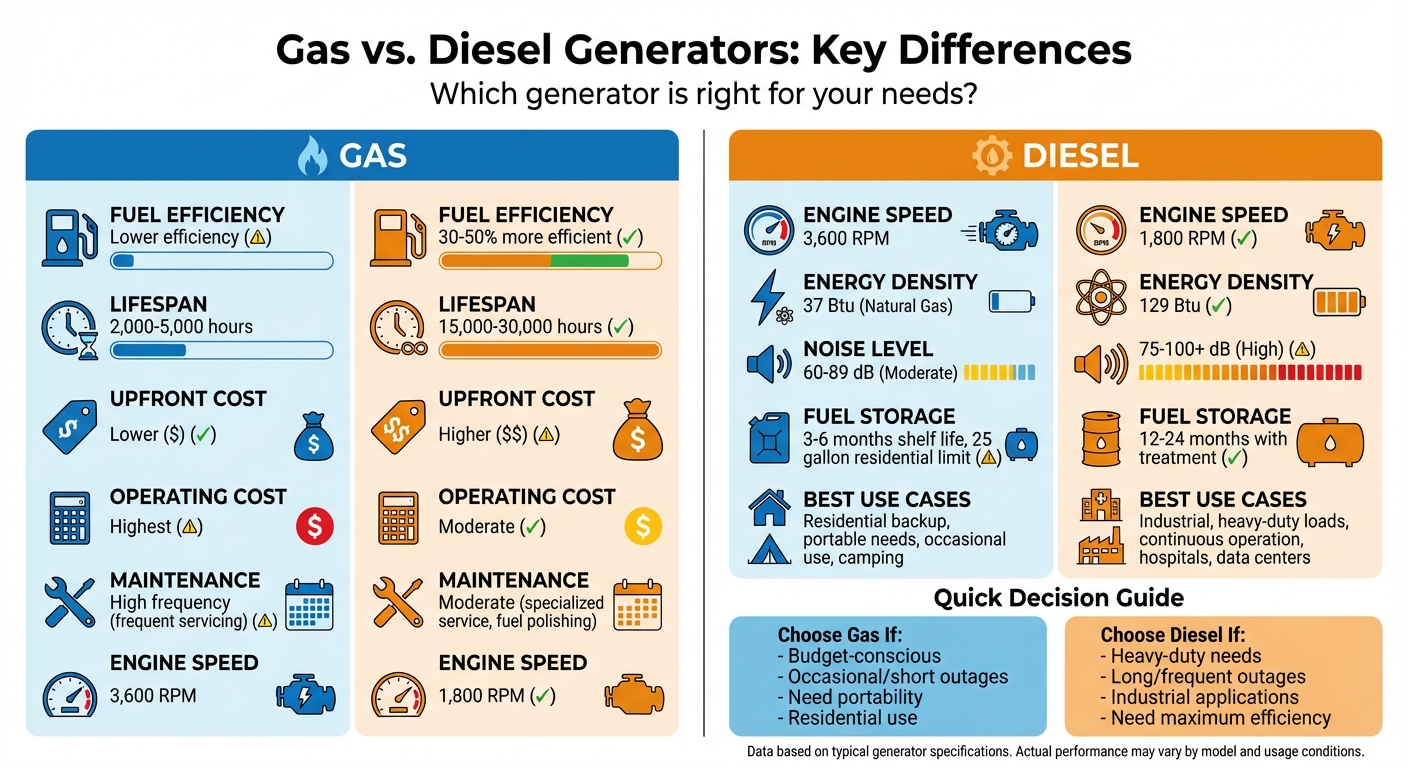
Gas vs Diesel Generators: Complete Comparison Chart
Fuel Efficiency and Energy Density
Fuel Consumption Rates
Diesel generators rely on compression ignition, which allows them to convert more of their fuel's energy into usable work. This means they burn less fuel than gas generators when producing the same amount of power. The advantage becomes even more apparent under heavy or fluctuating loads. Diesel engines are better equipped to handle sudden power demands, such as starting up large pieces of equipment, compared to gas generators.
In terms of operation, industrial diesel generators typically run at 1,800 RPM, while smaller gas generators often need to run at 3,600 RPM to make up for less durable alternator designs. The slower speed of diesel units not only helps conserve fuel but also reduces engine wear over time. However, running a diesel generator at less than 30% load can harm efficiency and lead to wet-stacking, a condition caused by unburned fuel accumulating in the exhaust system.
Now, let’s examine the energy content of these fuels, which plays a significant role in their efficiency.
Energy Content: Natural Gas vs. Diesel
Beyond fuel consumption, the energy content of the fuel itself is a critical factor in generator performance. Diesel fuel has an energy density of about 129 Btu, which is significantly higher than natural gas at just 37 Btu. This means diesel fuel packs more energy per unit, resulting in longer runtime and more power per gallon.
"Diesel's compression ignition and higher fuel energy density mean you get serious torque and dependable response when someone yells, 'Pick up the line. Now.'" - PowerSecure
This higher energy density gives diesel generators an edge, especially in demanding scenarios. While natural gas generators are a good choice for steady, predictable loads, diesel generators excel when rapid load changes or extended runtime without refueling is required.
Comparison Table: Fuel Efficiency and Energy Density
| Factor | Diesel | Gas (Natural Gas) |
|---|---|---|
| Energy Density | ~129 Btu | ~37 Btu |
| RPM | 1,800 | 3,600 |
| CO₂ Emissions | 163.45 lbs/million Btu | 116.65 lbs/million Btu |
| Best Load Range | 60-80% capacity | Steady-state operation |
| Fuel Consumption | Lower per kWh produced | Higher per kWh produced |
sbb-itb-501186b
Cost Comparison: Purchase Price, Fuel, and Maintenance
Purchase Price
When it comes to upfront costs, gasoline generators are the most budget-friendly option, which makes them appealing for homeowners who only need backup power occasionally. However, as generator capacity increases, the price differences become more pronounced. For models under 150kW, natural gas and diesel generators are priced similarly. But once you exceed 150kW, natural gas generators can cost 60% to 100% more than comparable diesel options.
Installation costs also vary. Natural gas systems require professional installation, including utility hookups and dedicated gas lines, which significantly raises the initial expense. Diesel generators, on the other hand, need a concrete pad and a fuel storage tank, which are generally less costly than setting up new utility connections. If you're thinking about a dual-fuel model (which can switch between gasoline and propane), expect to pay 15% to 25% more compared to single-fuel systems.
Once you've considered purchase and installation costs, it's important to evaluate fuel expenses and consumption.
Fuel Costs and Consumption
Natural gas is cheaper per unit compared to diesel, which can help offset the higher initial cost of natural gas generators over time. However, diesel fuel has a higher energy density, meaning you need less of it to generate the same amount of power. According to a 2019 Department of Energy report, while natural gas generators often generate higher revenue per kilowatt-hour due to lower fuel costs, diesel generators can be more cost-effective in the long run because of their lower upfront costs.
Regional differences also play a big role in fuel economics. For instance, in Texas, natural gas generators provided $1,091 in revenue or savings per kW compared to $968 for diesel. But diesel's lower net present cost (-$425 vs. -$513) made it the better financial choice overall. Similar trends were observed in Florida, while New Jersey's higher electricity rates made both options profitable, with natural gas slightly outperforming diesel in terms of net present value.
After fuel costs, maintenance requirements and durability are key factors to consider.
Maintenance Requirements and Longevity
Diesel generators are relatively simple machines, as they lack spark plugs or carburetors, which means fewer components require regular replacement. However, maintaining diesel fuel itself can be a challenge. If you're storing diesel for more than a year, you'll need to add stabilizers, and fuel polishing (removing water and contaminants) should be done every one to four years.
Another factor is operational speed. Industrial diesel generators typically run at 1,800 RPM, while smaller gas generators operate at 3,600 RPM. The slower speed of diesel units reduces wear and tear on internal parts, contributing to a longer lifespan.
Comparison Table: Cost Factors
| Factor | Gasoline | Diesel | Natural Gas |
|---|---|---|---|
| Initial Cost | Lowest | High | Highest* |
| Operating Cost | Highest | Moderate | Lowest |
| Maintenance Frequency | High | Moderate | Lowest (annual) |
| Expected Lifespan | 2,000–5,000 hrs | 15,000–30,000 hrs | 8,000–15,000 hrs |
| Fuel Efficiency | Lower | 30–50% better than gas | Lower than diesel |
*Includes installation costs
Durability, Lifespan, and Engine Design
Engine Speed and Lifespan
Diesel generators stand out for their ability to operate at much lower RPMs compared to gas-powered units, which has a direct impact on their longevity. Higher speeds in gas engines lead to increased friction and heat, which accelerates the wear and tear on internal components.
"The slower speed of an industrial diesel generator not only helps conserve fuel, it reduces wear on parts over the long term." – Worldwide Power Products
With proper maintenance, diesel generators can deliver between 10,000 and 50,000 hours of service, translating into 20 to 30 years of use. On the other hand, gas generators tend to have shorter lifespans due to their higher operating speeds and simpler designs. This makes diesel generators ideal for continuous use in critical applications like hospitals and data centers. Their slower operating speeds, combined with thoughtful design features, further enhance their durability.
Design Features That Affect Durability
Beyond the benefits of lower operating speeds, the design of diesel generators plays a major role in their durability. Diesel engines rely on compression ignition, which reduces the number of moving parts and, in turn, minimizes maintenance needs.
Cooling systems are another factor that contributes to durability. Industrial diesel generators typically use liquid cooling, which is far more effective at regulating engine temperature than the air-cooling systems found in most portable gas generators.
"Liquid cooling is more effective and reduces the wear on equipment and helps it last longer." – Worldwide Power Products
Moreover, diesel engines are built with heavy-duty components designed to handle the high compression ratios required for ignition. This robust construction makes them better suited for demanding environments where reliability is a must. These features not only extend the operational life of diesel generators but also reduce long-term maintenance expenses, making them a practical choice for those seeking durability and efficiency.
Power Output, Performance, and Applications
Performance Under Different Loads
After exploring fuel efficiency and durability, let’s dive into how these generators handle different workloads. Diesel generators are champions when it comes to managing heavy loads and sudden power surges. For example, when industrial equipment like chillers or production lines start up, diesel units react quickly, efficiently converting fuel into usable power - even at higher load levels.
"Diesel engines are similar - built for heavy work. They manage big power loads without breaking a sweat." – PowerSmart USA
On the other hand, gas generators shine when the load is light and steady. However, they often struggle with fluctuating power demands. Natural gas units, in particular, are less responsive to sudden load changes but deliver consistent performance when the power draw remains stable. For diesel generators, running them at 60% to 80% of their rated capacity is ideal for longevity, while operating below 30% can cause soot buildup and potential engine damage. Gas generators, by contrast, perform best in scenarios where the load is predictable and doesn’t push the unit too hard for extended periods.
Now, let’s explore which specific scenarios each generator type is best suited for.
Best Uses for Gas Generators
Gas generators are a great fit for scenarios where portability and ease of use are top priorities. Thanks to their lighter weight and the widespread availability of gasoline, these units are perfect for residential and recreational needs. For example, homeowners dealing with occasional power outages can rely on gas generators for a practical backup solution. They’re also a popular choice for light commercial applications where power demands are moderate. However, keep in mind that gasoline engines can struggle to start in extremely cold weather, which can impact reliability in certain climates.
Best Uses for Diesel Generators
Diesel generators are the clear choice for critical operations where power interruptions are simply not an option. Their ability to handle continuous heavy loads and the convenience of on-site fuel storage make them ideal for hospitals, data centers, construction sites, and industrial facilities.
"At high, spiking loads, diesel usually wins for responsiveness and fuel use per kWh. For steady duty with good pipeline access, natural gas can be a strong, predictable performer." – PowerSecure
Diesel generators are also well-suited for remote locations without access to natural gas pipelines. While diesel fuel does require periodic polishing - every one to four years - to remove contaminants, these generators don’t rely on pipeline infrastructure. For continuous power needs above 150 kW, diesel units deliver unmatched reliability and efficiency. This makes them a top choice for demanding, around-the-clock applications.
Comparison Table: Power and Applications
| Feature | Gas Generators | Diesel Generators |
|---|---|---|
| Best Load Profile | Light to moderate, steady loads | High loads with power surges |
| Engine Speed | 3,600 RPM (typical portable) | 1,800 RPM (industrial) |
| Energy Density | ~37 Btu (natural gas) | ~129 Btu |
| Continuous Operation | Short-term/emergency use | Excellent for prime power |
| Applications | Residential backup, camping, light retail | Hospitals, data centers, construction, industrial sites |
| Portability | High (lighter weight) | Low (heavier, bulkier) |
| Fuel Supply Reliability | 97.3% (natural gas, U.S. average) | 94.7% (diesel, U.S. average) |
Gas vs Diesel Generators
Safety, Noise, and Environmental Considerations
When choosing a generator, factors like safety, noise, and environmental impact are just as important as performance and cost. Here's a closer look at how these considerations can influence your decision.
Safety Features and Risks
Diesel fuel is safer to store and handle due to its higher flash point and lower volatility. This makes diesel generators a reliable option for mobile or rental applications where fuel safety during transport is a priority. On the other hand, natural gas systems, while convenient, come with risks such as fire or explosions caused by pipeline failures. This vulnerability is particularly concerning during natural disasters when pipeline infrastructure might be compromised.
Diesel generators, however, require proper loading to avoid issues like wet stacking, which occurs when unburned fuel accumulates in the exhaust system. Natural gas units bypass this problem but depend heavily on pipeline availability, which can be a disadvantage in certain situations.
Noise Levels
Noise is another key factor, especially for installations in residential or noise-sensitive areas. Diesel generators are generally louder, producing between 75 and over 100 decibels. This higher noise level is due to the intense combustion pressures and the large moving parts within diesel engines. In comparison, gasoline generators operate at 64–89 decibels, while natural gas models are quieter, ranging from 60–80 decibels.
For those seeking quieter options, inverter generators stand out. These models can operate at just 50 to 60 decibels at 25% load - similar to the sound of a normal conversation. To minimize noise further, placing generators in open areas and directing exhaust away from living spaces can make a significant difference.
Environmental Impact and Emissions
Natural gas is often seen as a cleaner-burning fuel because it releases fewer pollutants and lacks the distinct exhaust odor associated with diesel. However, it produces more carbon dioxide (CO₂) than diesel fuel. Diesel generators, while known for their exhaust odor, have made strides in reducing emissions. Modern Tier 4 diesel technology significantly cuts down particulate matter (PM) and nitrogen oxides (NOₓ), meeting stricter environmental standards while maintaining efficiency.
Comparison Table: Safety, Noise, and Emissions
| Feature | Gas Generators (Gasoline/Natural Gas) | Diesel Generators |
|---|---|---|
| Fuel Flammability | Higher; risk of explosion (especially natural gas) | Lower; less explosive |
| Noise Level | 60–89 dB | 75–100+ dB |
| CO₂ Emissions | Higher (natural gas) | Lower |
| Other Emissions | Burns cleaner; no distinct odor | Tier 4 models reduce NOₓ and PM |
| Primary Safety Risk | Pipeline bursts and fire hazards | Wet stacking/engine failure if underloaded |
| Odor | No distinct odor | Distinct exhaust odor |
This comparison, based on data from and, highlights the trade-offs between gas and diesel generators, helping you choose the best option for your specific needs.
Complete Comparison Table
Gas vs. Diesel Generator Comparison
Here's a quick overview of how gasoline, diesel, and natural gas generators stack up against each other in various categories:
| Feature | Gasoline Generator | Diesel Generator | Natural Gas Generator |
|---|---|---|---|
| Fuel Efficiency | Fair | Best (30–50% more efficient) | Good |
| Energy Density | Moderate | 129 Btu | 37 Btu |
| Upfront Cost | Lowest | High | Moderate to High (60–100% more for units over 150 kW) |
| Operating Cost | Highest | Moderate | Lowest |
| Maintenance Frequency | High (frequent carburetor/spark plug service) | Moderate (specialized service, fuel polishing) | Low (annual service) |
| Lifespan | 2,000–5,000 hours | 15,000–30,000 hours | 8,000–15,000 hours |
| Engine Speed | 3,600 RPM | 1,800 RPM | Varies |
| Fuel Shelf Life | 3–6 months | 12–24 months (with treatment) | Indefinite |
| Fuel Storage Limit | 25 gallons (residential fire codes) | Varies by local codes | Pipeline connection (no storage) |
| Noise Level | Moderate | High | Low |
| Fuel Flammability | High fire risk | Lower fire risk, less explosive | Potential risk if a pipeline burst |
| CO₂ Emissions | Moderate | 163.45 lbs per million Btus | 116.65 lbs per million Btus |
| Other Emissions | Higher pollutants | Tier 4 models reduce NOₓ and PM | Cleanest burning; no odor |
| Cold Weather Performance | Good | Risk of gelling below 20°F (requires additives) | Largely unaffected |
| Primary Safety Risk | Fire hazards | Wet stacking if underloaded | Risk of pipeline bursts during disasters |
| Best Use Case | Budget-conscious; rare outages | Heavy-duty; long outages; industrial | Continuous fuel supply |
| Size for Same Power | Moderate | Smaller | Larger; takes up more space |
Each generator type has its strengths: diesel excels in efficiency and durability, gasoline offers affordability but requires more maintenance, and natural gas provides a clean, low-cost option with a steady fuel supply. The choice ultimately depends on your specific needs, whether it's budget, runtime, or space constraints.
Conclusion: Choosing the Right Generator
When selecting a generator, consider factors like how often you'll use it, the typical duration of outages in your area, and your overall budget. Gasoline generators are a practical choice if you're working with a tight budget and only face occasional, short power outages. They’re cheaper upfront but demand more frequent maintenance and have a shorter lifespan. On the other hand, diesel generators are built for longer service and greater reliability, making them a better option for extended or frequent outages.
For heavy-duty needs or industrial applications, diesel generators stand out. If you have a large home (over 3,000 square feet), need to power construction equipment, or live in an area prone to week-long blackouts, diesel's fuel efficiency can offset its higher initial cost. In fact, diesel generators typically last two to three times longer than their gasoline counterparts and operate more efficiently over time.
To ensure you choose the right generator size, use a sizing calculator to determine your kilowatt requirements. Keep in mind that residential fire codes limit gasoline storage to 25 gallons, which might influence your choice.
For a wide range of options, Electrical Trader provides both new and used generators tailored to residential and industrial needs. Their marketplace allows you to browse by voltage, capacity, and price, making it easy to find a generator that matches your specific power demands. Whether you go with gas or diesel, the right generator can keep your home or business running smoothly during outages.
FAQs
How do I size a generator for my home or jobsite?
To figure out the right size for a generator, start by adding up the total wattage of all the appliances and equipment you plan to run. Once you have that number, add an extra 20-25% as a safety buffer to account for any future increases in load. For instance, if your total wattage comes to 4,000 watts, you should look for a generator with a capacity of at least 5,000 watts. If you're unsure, you can always consult a professional or use an online sizing calculator for more precise guidance.
Is diesel worth the higher upfront price for my use?
When deciding if a diesel generator is worth the higher upfront cost, it comes down to your specific needs. Diesel generators are known for their durability, reliability, and fuel efficiency. They typically last longer and have lower maintenance costs, making them a solid choice for heavy-duty or mobile applications. On the other hand, if your needs are lighter or you’re working with a tighter budget, a gas generator might make more sense. Weigh your budget, how you plan to use it, and potential long-term savings to determine the best fit for you.
What fuel storage issues should I plan for?
When planning to store fuel for generators, it's important to think about both the type of fuel and how much storage you'll need. For instance, propane requires a larger tank, and you'll need to refill it regularly depending on how much you use.
If you're storing gasoline or diesel, you'll need to factor in fuel consumption, safety precautions, and regulatory requirements. Diesel, in particular, is more efficient and needs less frequent refueling, but it comes with its own set of considerations. Make sure the tank size is appropriate, schedule regular inspections, and follow safety standards closely to avoid leaks, spills, or potential fire risks.