

Top EMS Tools for Smart Buildings
Energy Management Systems (EMS) optimize energy use in buildings by monitoring, analyzing, and automating energy consumption. With rising energy costs and stricter regulations, EMS tools are crucial for reducing waste, ensuring compliance, and meeting sustainability goals. Here's a quick overview:
- Enersee: AI-powered virtual energy manager, ideal for multi-site portfolios with flat-fee pricing.
- C3 AI Energy Management: Customizable for large facilities, focusing on reducing peak demand charges.
- BuildingOS: Simplifies energy data aggregation and compliance reporting for building owners.
Key Features to Look For:
- Integration: Supports open protocols like BACnet and Modbus for seamless device communication.
- Advanced Analytics: AI-driven insights for anomaly detection and predictive operations.
- Scalability: Cloud-based systems that grow with your building portfolio.
EMS tools work best with compatible hardware like smart meters and IoT sensors. Aligning EMS deployment with electrical upgrades can save costs and improve performance. Platforms like Electrical Trader simplify sourcing necessary equipment, ensuring smooth implementation.
Smart Building building automation overview
sbb-itb-501186b
Key Features to Look for in Smart Building EMS Tools
EMS platforms come in many forms, but there are three critical features to prioritize if you're aiming for real operational benefits.
Integration and Interoperability
The effectiveness of an EMS depends on the data it can access. Look for a system that is vendor-agnostic and supports open protocols like BACnet, Modbus, MQTT, and OPC UA. These protocols allow seamless communication between devices, regardless of the manufacturer.
As ECAM Technology explains:
"The real goal of smart building integration is not simply connectivity. It is coordinated intelligence."
A strong EMS should consolidate data from various systems into a single, user-friendly dashboard while enabling responsive actions. For instance, if a chiller starts consuming abnormal amounts of energy, an integrated EMS could automatically generate a maintenance work order instead of waiting for manual intervention.
Additionally, verify that the system supports bi-directional control. This means it can not only collect data but also make real-time adjustments to systems. Combined with advanced analytics, this feature turns raw data into actionable insights.
Advanced Analytics and AI Capabilities
Once your EMS has access to quality data, the next step is leveraging advanced analytics and AI to maximize efficiency. While real-time dashboards are helpful, the real advantage lies in deeper analytics. Features like Fault Detection and Diagnostics (FDD), predictive load forecasting, and autonomous control can significantly reduce energy waste.
For example, AI-powered anomaly detection can identify issues in about 4.7% of utility bills monthly. A standout case is the University of California San Diego, which used EnergyCAP's analytics to uncover a $1 million utility billing error and cut labor costs tied to billing by over 95%. This shift from reactive to predictive operations is a game-changer for energy management.
For larger portfolios, autonomous control is invaluable. These "autopilot" features allow the system to adjust HVAC settings and lighting schedules automatically, based on factors like occupancy patterns and weather forecasts. This reduces the need for constant manual adjustments, saving both time and energy.
Scalability for Single and Multi-Site Buildings
As your operations grow, scalability becomes essential. A good EMS should adapt effortlessly, whether you're managing a single 50,000-square-foot office or a network of 30 properties. Cloud-native architectures make this flexibility possible, enabling new sites to be added without requiring major infrastructure changes.
Take Dominion Energy as an example. They used a centralized cloud model to monitor 28,000 assets across their portfolio, preventing 42 potential equipment failures in just one year. For smaller operations, this same flexibility means you can start small - perhaps with one building - and expand as needed, all without switching platforms or renegotiating contracts.
Top EMS Tools for Smart Buildings
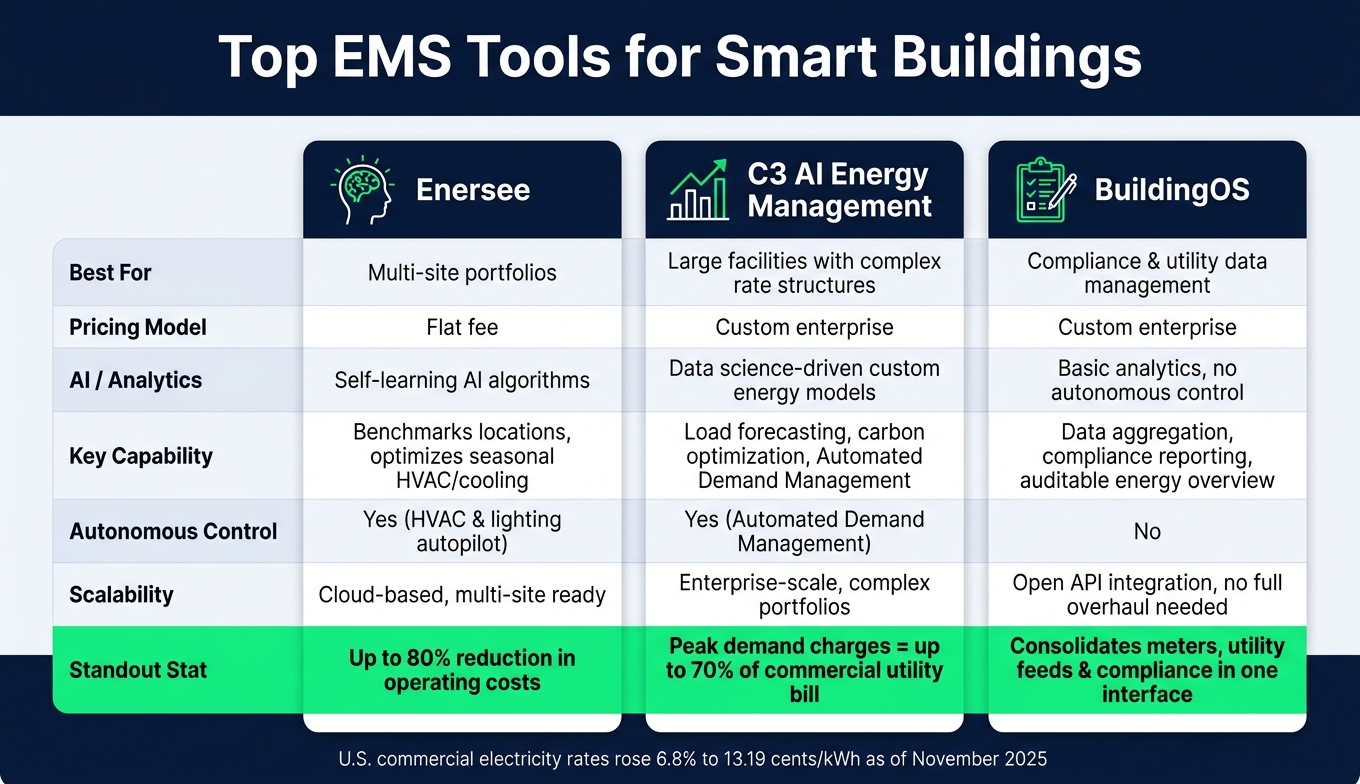
Top EMS Tools for Smart Buildings: Feature & Pricing Comparison
The EMS market has evolved rapidly, with a few standout platforms addressing real operational issues rather than just providing data. Below, we highlight three tools that excel at solving energy management challenges in smart buildings.
Enersee
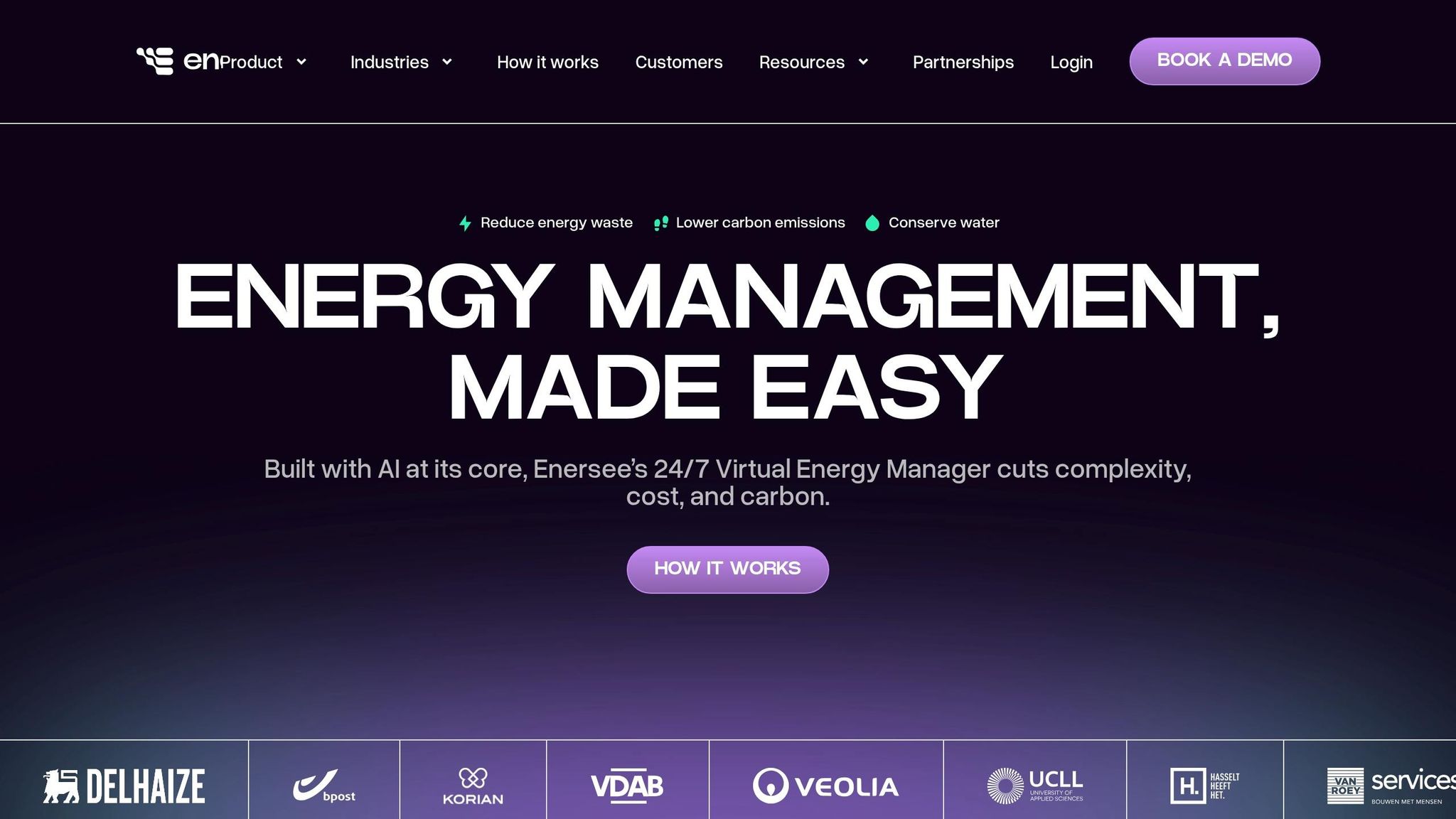
Enersee functions as a virtual energy manager, powered by AI. It continuously monitors buildings, identifies inefficiencies, and prioritizes maintenance tasks. Its self-learning algorithms adapt over time, improving accuracy without requiring manual updates. According to Enersee, its technology can reduce operating costs by up to 80% on average.
This platform is particularly effective for multi-site portfolios, where comparing performance across different locations is essential. For example, in 2026, the Belgian supermarket chain Delhaize implemented Enersee across 700 stores and affiliates. The goal? To benchmark locations and optimize seasonal cooling and heating efficiency.
"We selected Enersee to roll it out across 700 Delhaize supermarkets and affiliates because it's an innovative energy platform that offers immediate gains." - Ruben De Vos, Energy & Engineering Manager, Delhaize Belgium
Enersee also offers a flat-fee pricing model, making it easy to budget for large-scale deployments.
C3 AI Energy Management

C3 AI emphasizes a data science-driven approach to energy management. Unlike generic dashboards, it creates tailored energy models based on a facility’s specific systems, usage patterns, and utility rates. This customization enhances scalability and supports advanced features like load forecasting, carbon optimization, and Automated Demand Management to reduce peak demand charges.
Why does this matter? Peak demand charges can account for as much as 70% of a commercial utility bill. C3 AI’s tools are designed to tackle those costs directly, making it a strong choice for large, complex facilities or portfolios with high energy expenditures. Its enterprise-level pricing reflects the custom nature of its solutions.
BuildingOS
BuildingOS focuses on data aggregation and compliance, addressing the challenges of regulatory reporting and data clarity. It consolidates energy data, utility bills, and compliance reporting into one interface, making it invaluable for building owners navigating benchmarking ordinances or sustainability disclosure requirements.
The platform integrates with smart meters, utility feeds, and existing building systems via open APIs. This makes it easy to implement without needing a complete overhaul of a building’s management system. While it doesn’t offer autonomous control, it excels at providing facility managers with a clear, auditable overview of energy usage and target compliance.
These platforms showcase how advanced EMS tools can address various energy management needs across different building environments.
| Platform | Best For | Pricing Model |
|---|---|---|
| Enersee | Multi-site portfolios | Flat fee |
| C3 AI Energy Management | Large facilities with complex rate structures | Custom enterprise |
| BuildingOS | Compliance and utility data management | Custom enterprise |
How EMS Tools Connect to Electrical Infrastructure Procurement
To maximize the potential of advanced EMS features, having a solid electrical infrastructure is essential. This foundation enables effective real-time monitoring and smooth integration.
Sourcing Electrical Equipment for EMS Projects
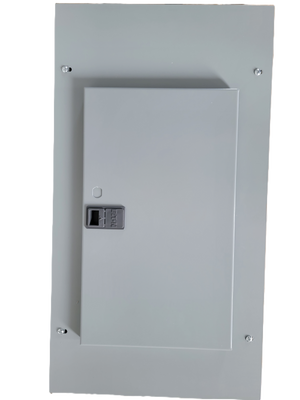
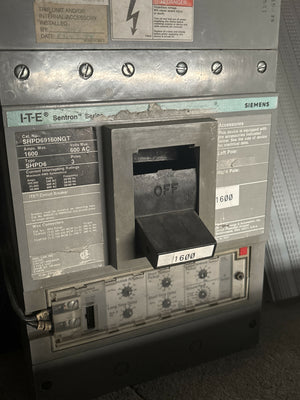
The performance of an EMS heavily depends on having reliable hardware in place. Before software can analyze or optimize energy usage, critical components like smart meters, submeters, circuit breakers, transformers, and IoT sensors must be installed. These tools enable the real-time monitoring that EMS systems rely on. For instance, circuit-level monitoring requires smart breakers and submeters to provide detailed load data, ensuring the EMS operates with accurate and complete information.
Another key consideration is ensuring compatibility with communication protocols. Many EMS tools rely on open standards like BACnet, Modbus TCP, or OPC UA to communicate with electrical distribution equipment. Choosing hardware that supports these protocols is crucial to avoid costly retrofits down the line.
"Mismatched tools deliver negligible ROI - choosing based on your operational context (not feature count) is what separates effective deployments from expensive ones." - Innovus Power
Aligning EMS Rollouts with Electrical Equipment Upgrades
One way to manage EMS deployment costs effectively is by aligning software rollouts with planned electrical equipment upgrades. For example, if a building’s switchgear or transformer is nearing the end of its lifecycle, it’s an ideal time to install EMS-compatible metering hardware. This approach reduces labor costs and minimizes downtime.
Strategically timing these upgrades can also enhance long-term returns. Studies show that pairing comprehensive EMS monitoring with updated infrastructure can lower energy costs by up to 10% within the first 18 months. This coordination simplifies both procurement and implementation, making the process more efficient.
How Electrical Trader Supports EMS Implementation

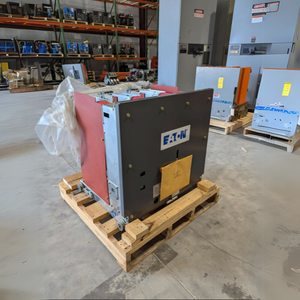
Sourcing the right components for an EMS project, particularly across multiple sites, can be a logistical challenge. Electrical Trader offers a solution for U.S.-based buyers, providing access to both new and used electrical equipment. Their marketplace includes breakers, transformers, low-to-high voltage gear, and power generation tools.
For teams managing EMS rollouts on tight budgets, quality used equipment can significantly reduce upfront costs while maintaining compatibility with modern systems. Whether the project needs substation transformers, distribution breakers, or standby generators, having a centralized platform like Electrical Trader simplifies procurement and helps projects stay on track.
Conclusion
When evaluating an Energy Management System (EMS), it's essential to weigh its functionality, ability to grow with your needs, and compliance with industry standards. These factors will guide you toward the right choice.
Start by identifying your building's monitoring requirements, the potential for portfolio expansion, and the capabilities of your current electrical infrastructure. Tools like Enersee, C3 AI Energy Management, and BuildingOS cater to different types of operations, whether you're managing a single site or multiple locations. Look for features such as cloud-based scalability, compatibility with open protocols like BACnet and Modbus, and advanced AI-driven analytics, which go beyond basic dashboards to improve both performance and cost efficiency.
Don't overlook the regulatory environment. With U.S. commercial electricity rates rising by 6.8% to 13.19 cents per kWh as of November 2025, and compliance requirements becoming more stringent, choosing an EMS that can automate reporting and optimize energy usage can yield significant long-term benefits.
Lastly, consider your hardware. Ensure your EMS integrates seamlessly with planned upgrades to your electrical equipment. Partnering with suppliers like Electrical Trader can simplify procurement and help you achieve tangible results.
FAQs
Do I need new meters or sensors before installing an EMS?
Many energy management systems are designed to integrate with the meters and sensors you already have in place. That said, upgrading or installing additional sensors can boost data accuracy and help the system perform more efficiently.
How do I know if an EMS will work with my existing BAS protocols?
To make sure everything works smoothly, confirm that the EMS aligns with your building's BAS protocols. While common EMS versions like EMS, EMS2, EMS+, and Heatronic 3/4 share the same physical bus, their protocols can vary slightly. Older systems might rely on iRT or OpenTherm, which aren't always compatible with certain EMS setups. Review the EMS device support list and ensure your firmware matches your system's requirements. If you're unsure, reaching out to support can help clarify any issues.
What’s the best way to roll out an EMS across multiple buildings?
To implement an Energy Management System (EMS) across several buildings, it’s best to take it step by step for a seamless process. Begin by evaluating the specific systems and energy requirements of each building. From there, choose an EMS platform that allows for centralized control and can grow with your needs.
Start small with a pilot program. This lets you test the system, identify any issues, and make adjustments before rolling it out on a larger scale. Once the pilot is successful, deploy the EMS gradually across all buildings. Centralized monitoring will be key to overseeing operations across sites, ensuring everything runs smoothly. Don’t forget to regularly fine-tune the system to maximize energy savings and boost efficiency.