Ultimate Guide to Solar Battery Brand Reviews 2025
Looking for the best solar battery for your home? This guide breaks down 2025's top solar battery options, covering key specs like capacity, efficiency, and warranty. Here's what you need to know:
- Lithium Iron Phosphate (LFP) batteries dominate the market for their safety, long lifespan (15–20 years), and high cycle life (6,000–10,000 cycles).
- Costs: Solar battery systems range from $7,000 to $15,000 before incentives. Installing a 10 kWh system typically costs $10,000–$20,000, dropping to $6,600 after the 30% federal tax credit.
- Efficiency: Top-performing batteries achieve up to 98.5% round-trip efficiency, meaning minimal energy loss during use.
- Warranties: Most brands guarantee 70% capacity retention after 10–15 years, with some offering extended coverage for throughput or cycles.
- Top Picks: Tesla Powerwall 3, Enphase IQ 5P, and Villara VillaGrid stand out for their performance, power output, and warranties.
Quick Comparison
| Brand/Model | Chemistry | Capacity | Efficiency | Warranty | Price/kWh | Power Output | Key Feature |
|---|---|---|---|---|---|---|---|
| Tesla Powerwall 3 | LFP | 13.5 kWh | 97.5% | 10 years | $851–$1,111 | 11.5 kW | High efficiency, whole-home backup |
| Enphase IQ Battery 5P | LFP | 5–100 kWh | N/A | 15 years (6,000 cycles) | $1,400–$1,800 | 3.84 kW/unit | Modular design, long warranty |
| Villara VillaGrid | LTO | 11.5 kWh | 98.5% | 20 years | Premium (custom) | 10 kW | Exceptional efficiency, longest warranty |
| FranklinWH aPower 2 | LFP | 13.6–15 kWh | N/A | 12–15 years | $845–$1,220 | 10 kW | Reliable backup, smart circuits |
| Sungrow SBR | LFP | 9.6–25.6 kWh | High (DC-coupled) | 10 years | ~$750 | 5–6 kW | Affordable, scalable design |
| Anker Solix X1 | LFP | 15 kWh | N/A | 10 years (3,290 cycles) | ~$650 | 6 kW | Budget-friendly, sleek design |
| Alpha ESS SMILE | LFP | Modular | N/A | 10 years | N/A | Varies | Flexible setup, inverter compatibility |
Whether you need backup for essential appliances or whole-home power, this guide helps you weigh costs, features, and warranties to find the right solution for your energy needs.
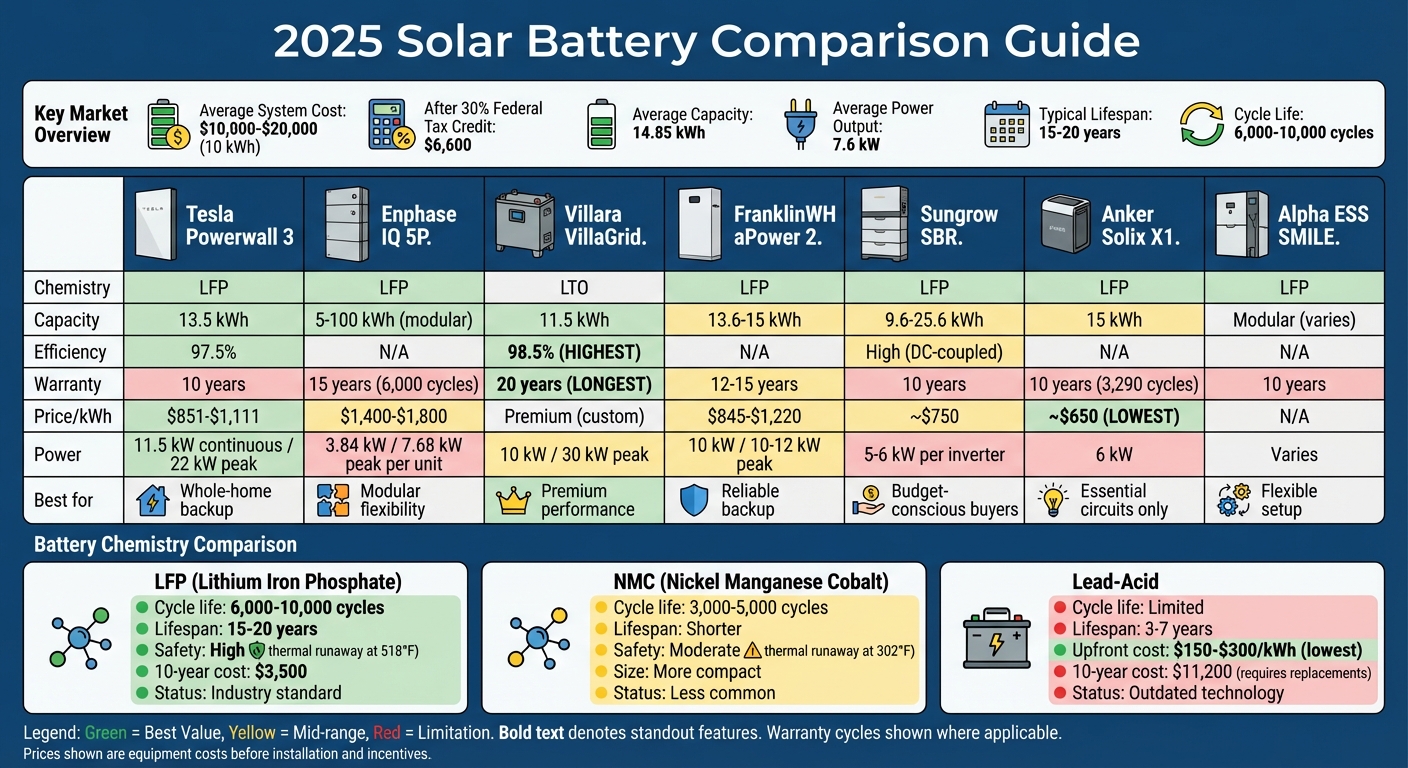
2025 Solar Battery Comparison: Top 7 Brands Specs and Pricing
2025 Best Solar Batteries Compared. Tesla Powerwall 3 vs Enphase 5P vs Franklin vs SolarEdge
sbb-itb-501186b
How to Evaluate Solar Batteries
Picking the right solar battery goes beyond just picking a popular brand. Factors like battery chemistry, capacity, and warranty play a big role in determining how much value you’ll get over time. With installation costs ranging from $1,000 to $2,000 per kWh before incentives, knowing these technical details can help you save money and extend the life of your system. These considerations set the stage for our upcoming brand comparisons.
Battery Chemistry Types
Lithium Iron Phosphate (LFP) is now the go-to choice for residential solar systems. These batteries can handle 6,000 to 10,000 cycles and last 15 to 20 years without needing replacement. They’re also safer, with a thermal runaway temperature of over 518°F, compared to 302°F for other lithium chemistries. Plus, they avoid reliance on cobalt or nickel, which are tied to unstable supply chains.
Nickel Manganese Cobalt (NMC) batteries are smaller due to their higher energy density, but they typically last only 3,000 to 5,000 cycles and are more prone to overheating. Meanwhile, lead-acid batteries are the cheapest upfront option, costing $150 to $300 per kWh, but their short lifespan of 3 to 7 years and limited 50% depth of discharge make them a poor long-term investment. Over 10 years, LFP batteries cost about $3,500, while lead-acid systems - requiring multiple replacements - can total $11,200.
Capacity, Efficiency, and Lifespan
Usable capacity measures how much energy a battery can store, expressed in kilowatt-hours (kWh). By 2025, the industry average is expected to hit 14.85 kWh. Along with capacity, check the continuous power output (measured in kW), which dictates how many appliances the battery can power at once. The average continuous power output is 7.6 kW, enough to run essentials like a refrigerator, lights, and a few other devices during a power outage.
Round-trip efficiency tells you how much energy is lost during charging and discharging. High-performing lithium batteries now achieve 95% to 98% efficiency, meaning only 2% to 5% of stored energy is lost. DC-coupled systems are even more efficient, reaching up to 97.5%, thanks to fewer power conversions. On the other hand, AC-coupled systems are easier to add to existing setups but operate at a lower efficiency of 85% to 90%.
Cycle life determines how long a battery will last. A cycle refers to one full charge and discharge. To figure out cost-effectiveness, divide the upfront cost by the total energy throughput (usable kWh × cycle life). This gives you a clearer picture of value beyond just the initial price tag.
Warranty and Cost Analysis
Most solar battery warranties now last 10 to 15 years, guaranteeing the battery will retain 70% of its original capacity by the end of the term. However, it’s crucial to read the fine print - many warranties include a throughput limit, which is measured in megawatt-hours (MWh) or total cycles. As the EnergySage Editorial Team explains:
"A 20,000 kWh throughput warranty on a 10 kWh battery means 2,000 expected cycles, or a cycle per day for 5.5 years." - EnergySage Editorial Team
Exceeding this limit could void your warranty, even if the battery hasn’t reached its promised years.
Installation costs also need to be factored in, typically adding 5% to 10% to the total project cost. A 10 kWh system generally costs between $10,000 and $20,000 fully installed. After applying the 30% federal Investment Tax Credit (ITC), the cost drops to about $6,600. If you live in an area with high electricity rates - $0.30 per kWh or more - you could see a payback period of just 6 to 8 years. In areas with average rates, the payback takes longer. To calculate your payback period, divide the total system cost by your annual utility savings to see if the investment makes financial sense for you.
Solar Battery Brand Reviews
Let's dive into the performance of some top solar battery brands. Each of these seven systems offers specific strengths, whether it's high power output, modular installation options, or outstanding efficiency. These reviews build on the technical details already discussed, helping you choose the best fit for your energy needs.
Tesla Powerwall 3
The Tesla Powerwall 3 is a standout option for whole-home backup systems. It delivers 13.5 kWh of usable capacity and 11.5 kW of continuous power output, paired with an impressive 97.5% round-trip efficiency. Tesla backs this system with a 10-year warranty, ensuring 70% capacity retention over time. The Powerwall 3 uses LFP (Lithium Iron Phosphate) chemistry, which enhances safety and extends the battery's lifespan.
Enphase IQ Battery
The Enphase IQ Battery 5P shines with its modular design, making it adaptable to various setups. Each unit provides 5 kWh of storage, and you can stack up to 20 units for a total of 100 kWh. Its AC-coupled design allows seamless integration with existing solar systems. Notably, 74% of solar installers now work with Enphase batteries. It comes with a 10-year warranty or 4,000 cycles, whichever occurs first.
FranklinWH aPower 2
The FranklinWH aPower 2 is tailored for homeowners needing a reliable backup power solution. It offers 13.6 kWh of storage and 10 kW of continuous output, expandable up to 68 kWh. The battery uses LFP chemistry for durability and supports both AC and DC coupling. A 10-year warranty guarantees 70% capacity retention, adding to its reliability.
Sungrow Battery

The Sungrow SBR series features modular units ranging from 5 to 8 kWh, scalable up to 25.6 kWh. It pairs with hybrid inverter technology and includes a 10-year warranty. Priced at $700 to $800 per kWh, the system is designed to last 8 to 15 years. With a continuous power output of 5 to 6 kW per inverter, it's ideal for essential load backup needs.
Alpha ESS SMILE
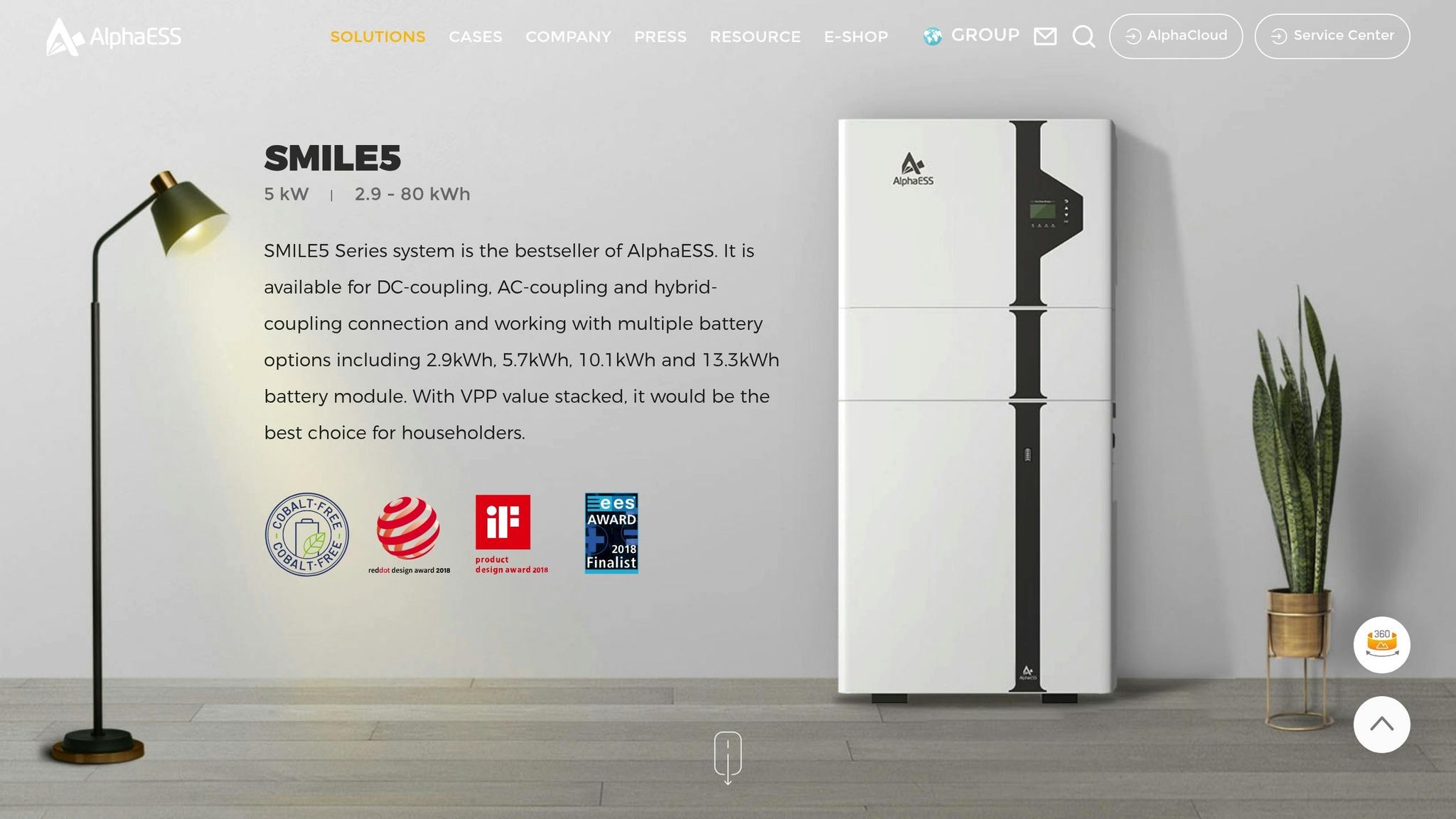
The Alpha ESS SMILE series focuses on larger residential and commercial applications. While detailed performance data is limited, its modular design and compatibility with various inverters make it a flexible choice. It also comes with a 10-year warranty for added peace of mind.
Anker Solix
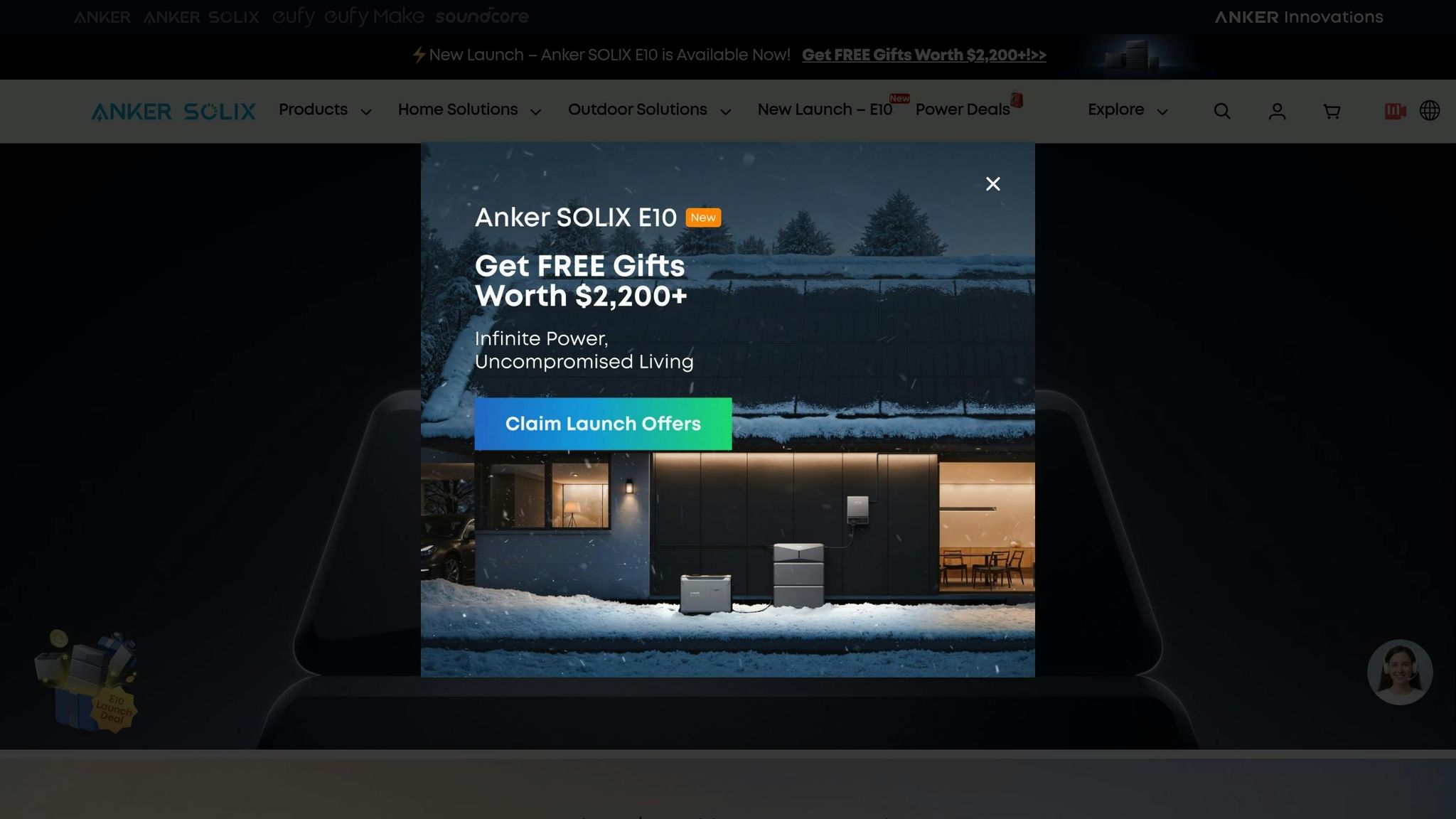
The Anker Solix X1 offers a sleek and user-friendly design. A three-module setup provides 15 kWh of storage using LFP chemistry, with a continuous power output of 6 kW. At $650 per kWh (equipment only), it’s more affordable than the industry average of $855 per kWh. Ranked #5 by SolarReviews with an "Excellent" rating, it’s noted for its competitive pricing and strong presence in the market. Backed by a 10-year warranty or 3,290 cycles, its lower continuous output makes it better suited for essential circuits rather than whole-home backup.
Villara VillaGrid
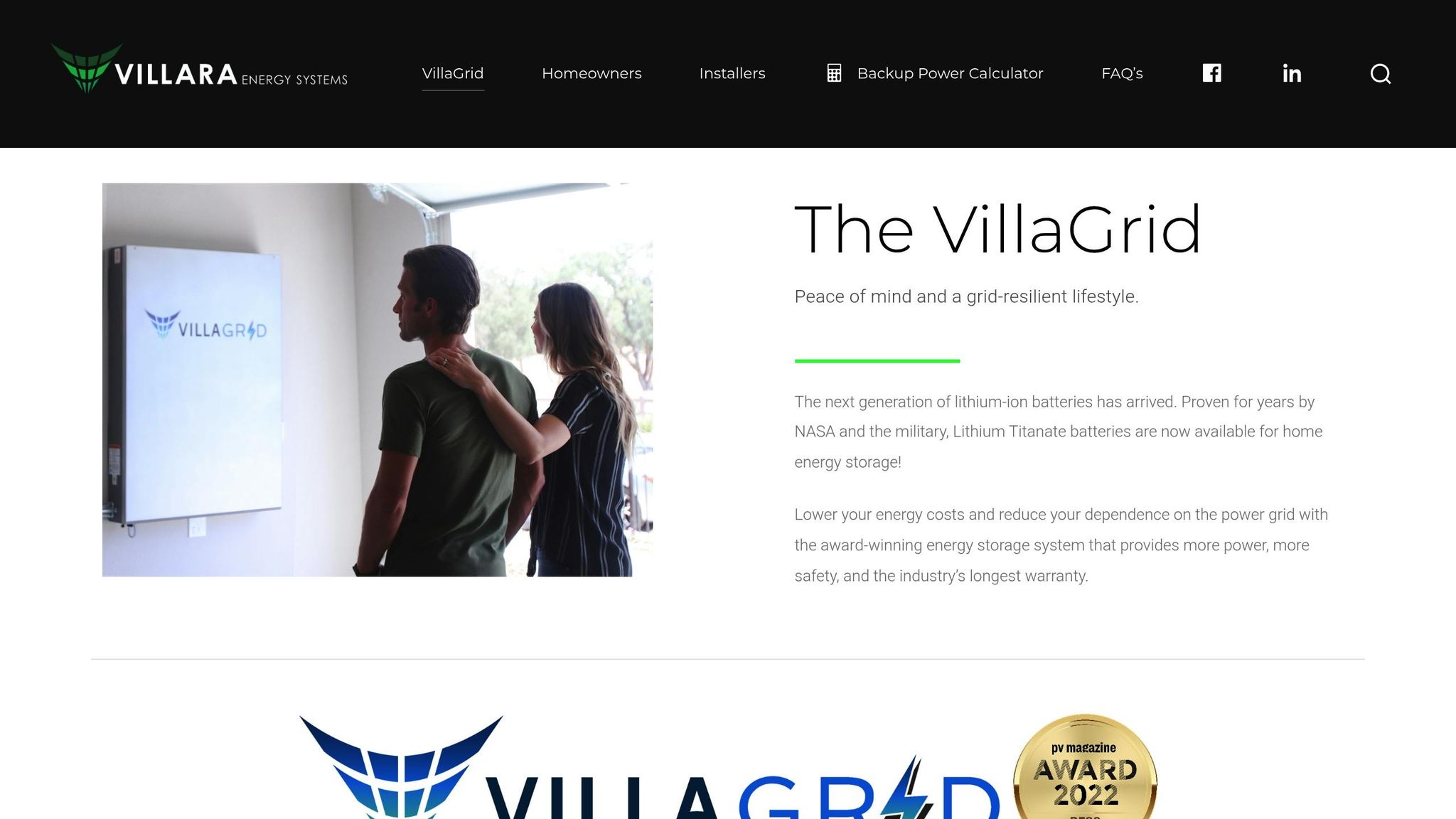
The Villara VillaGrid leads the pack in efficiency and warranty, boasting a 98.5% round-trip efficiency and a 20-year warranty. It uses Lithium Titanium Oxide (LTO) chemistry, which eliminates carbon and ensures safety, even under extreme conditions. EnergySage rates this battery 100/100, highlighting its exceptional performance. With 11.5 kWh of usable capacity, 10 kW of continuous output, and a peak power of 30 kW, it’s perfect for high-demand appliances like sump pumps. The system supports both AC and DC coupling but requires a custom quote for pricing, placing it in the premium category. One downside is that its 11.5 kWh capacity might drain quickly during extended outages.
Brand Comparison Table
Complete Specifications Comparison
Here's a side-by-side look at seven solar battery brands, comparing essential specs like battery chemistry, usable capacity, efficiency, warranty terms, cost per kWh, power outputs, and each model's standout features and drawbacks. Below the table, you'll find additional highlights to help you understand these comparisons better.
| Brand/Model | Battery Chemistry | Usable Capacity | Round-Trip Efficiency | Warranty | Price per kWh | Continuous Power | Peak Power | Key Advantages | Main Drawbacks |
|---|---|---|---|---|---|---|---|---|---|
| Tesla Powerwall 3 | LFP | 13.5 kWh | 97.5% | 10 years (unlimited cycles) | $851–$1,111 | 11.5 kW | 22 kW | High efficiency; powerful output; hybrid inverter | Standard 10-year warranty versus 15-year options |
| Enphase IQ 5P | LFP | 5 kWh (modular, up to 100 kWh) | N/A | 15 years (6,000 cycles) | $1,400–$1,800 | 3.84 kW per unit | 7.68 kW | Long warranty; modular design; widely adopted | Higher cost per kWh; lower power per unit |
| FranklinWH aPower 2 | LFP | 13.6–15 kWh | N/A | 12–15 years (6,000 cycles) | $845–$1,220 | 10 kW | 10–12 kW | Extended warranty; flood-resistant; smart circuits | Moderate efficiency; custom quote needed |
| Sungrow SBR | LFP | 9.6–25.6 kWh | High (DC-coupled) | 10 years (70% retention) | ~$750 | 5–6 kW per inverter | N/A | Affordable; scalable design; strong DC efficiency | Needs dedicated inverter; lower power output |
| Alpha ESS SMILE | LFP | Modular (varies) | N/A | 10 years | N/A | Varies | N/A | Flexible setup; works with many inverters | Limited performance data |
| Anker Solix X1 | LFP | 15 kWh (3-module setup) | N/A | 10 years (3,290 cycles) | ~$650 | 6 kW | N/A | Lowest cost; sleek design; user-friendly | Lower output; best for essential circuits only |
| Villara VillaGrid | LTO | 11.5 kWh | 98.5% | 20 years | Premium (custom quote) | 10 kW | 30 kW | Exceptional efficiency; longest warranty; safe | Smaller capacity; premium pricing |
Tesla Powerwall 3 stands out with its 97.5% efficiency and 11.5 kW continuous power, making it a solid choice for whole-home backup systems. Villara VillaGrid takes it a step further with 98.5% efficiency and an unmatched 20-year warranty, thanks to its Lithium Titanium Oxide (LTO) chemistry. For budget-conscious buyers, the Anker Solix X1 offers the lowest price per kWh at ~$650, while the Enphase IQ 5P impresses with its modular design and 15-year warranty.
When it comes to powering high-demand appliances like central air conditioning or well pumps during outages, some models excel. Tesla Powerwall 3’s 11.5 kW and FranklinWH aPower 2’s 10 kW outputs can handle these loads. On the other hand, the Anker Solix X1, with its 6 kW, is more suited for powering essential circuits only. The Sungrow SBR offers great value at ~$750 per kWh, but it does require a dedicated Sungrow inverter, which might limit flexibility.
Other factors to consider include battery performance and warranty details. Most models use Lithium Iron Phosphate (LFP) for durability and safety, but Villara VillaGrid’s LTO chemistry performs better in extreme conditions. Warranties also vary - while many brands guarantee 70% capacity retention after 10 years, Enphase and FranklinWH extend coverage to 15 years with 6,000 cycle guarantees.
Buying Solar Batteries on Electrical Trader
How to Search for Solar Batteries
To find the right solar battery on Electrical Trader, head to their Solar Battery Storage Systems collection. Here, you can filter by brand, price, and type. You can also sort the products by Best Selling, price, alphabetical order, or the newest arrivals to zero in on options that match your budget and needs.
Understanding the product categories is key:
- Battery Modules are individual units.
- Battery Systems come with modules and a Battery Management System (BMS).
- Battery Bundles include complete kits with inverters and accessories.
You can also refine your search by battery chemistry (e.g., LFP, NMC, or LTO), capacity (measured in kWh), and voltage (V). For outdoor setups, look for batteries with an IP65 rating or higher to ensure they can handle the elements.
Compatibility between the battery and inverter is crucial:
- AC-coupled batteries are ideal for retrofitting into existing systems.
- DC-coupled batteries are more efficient for new installations.
As a general guideline, a household of four people usually needs a storage capacity between 5 and 10 kWh, while commercial setups often start at 15 kWh. These filtering tools, combined with Electrical Trader's detailed resources, make it easier to find the right battery for your needs.
Electrical Trader Resources
Electrical Trader goes beyond just filtering tools - they offer a range of resources to guide you through the buying process. Their technical guides expand on crucial aspects like battery chemistry, capacity, and warranties. You’ll find detailed technical data sheets, installation guides, and specifications for Battery Management Systems (BMS), all designed to help you evaluate safety and performance before making a purchase. These resources simplify complex details and clarify warranty terms, which often go beyond just the coverage duration.
When reviewing warranties, pay attention to the "end of warranty capacity." Most manufacturers guarantee that the battery will retain 60% to 70% of its capacity by the end of the warranty period. Also, check for throughput or cycle limits, as these may influence the warranty coverage. The platform’s buying guides also explain important terms like depth of discharge (DoD) and how local utility rate structures can affect the economics of using a battery. This helps you estimate your potential ROI based on your unique energy consumption.
Modern lithium-ion batteries typically last 10 to 15 years and support 5,000 to 6,000 charging cycles. With Electrical Trader's resources, you'll have the tools and knowledge to make a well-informed investment.
Conclusion
Making Your Solar Battery Decision
Choosing the right solar battery involves balancing technical specifications with your household's energy requirements. Start by considering the battery's chemistry, capacity, coupling type, and warranty. For 2025–2026, Lithium Iron Phosphate (LFP) stands out for its safety and durability, offering over 6,000 cycles and a lifespan of 15–20 years. If you're retrofitting an existing system, an AC-coupled battery is ideal, while DC-coupled systems are more efficient for new installations.
Think about what you'll need to power during an outage. For a family of four, essential backup - like keeping the refrigerator running, lights on, or medical devices operational - typically requires 5–10 kWh. For whole-home coverage, you might need anywhere from 15–35 kWh, depending on energy-intensive appliances like HVAC systems or well pumps. To pinpoint your backup capacity, calculate your daily energy usage based on the wattage of key appliances.
When comparing warranties, ensure they promise 60–70% capacity retention, and pay attention to any throughput limits. Don’t forget about cost-saving incentives: the 30% federal ITC is available through 2032, and Virtual Power Plant (VPP) programs might add $2–$5 per kWh in monthly savings.
To simplify your search, Electrical Trader offers tools to filter solar batteries by brand, chemistry, capacity, and voltage. Their resources, like technical guides, explain important concepts such as depth of discharge (DoD) and how Time-of-Use (TOU) pricing can impact your return on investment. Whether you're looking at a 10 kWh system priced between $12,000–$18,000 or a larger 30 kWh system costing $28,000–$45,000, Electrical Trader provides detailed data sheets and installation guides to help you evaluate safety certifications, battery management system (BMS) features, and system compatibility.
FAQs
How many kWh of battery storage do I need for my home?
For an emergency backup, you’ll generally require 10–20 kWh of storage. If you’re looking to cut down on energy bills, consider planning for 20–40 kWh. For those aiming for energy independence, you’ll need 50+ kWh, tailored to your energy consumption and usage habits.
How do I know if I need an AC-coupled or DC-coupled battery?
When deciding between an AC-coupled and DC-coupled battery, it largely comes down to your installation type and efficiency goals.
- DC-coupled systems are the go-to choice for new installations because they offer higher efficiency.
- AC-coupled systems, on the other hand, are simpler to install and often more budget-friendly when upgrading an existing setup.
Your decision should align with your specific priorities and the requirements of your system.
What warranty fine print should I check before buying a solar battery?
When reviewing a warranty, pay close attention to details like capacity retention, the duration of coverage, and the cycle life guaranteed. Also, check if labor costs are included for repairs or replacements. Look out for exclusions, such as restrictions due to environmental factors or improper use of the product. It's essential to understand exactly what the warranty covers, how long the coverage lasts, and any conditions or limitations hidden in the fine print.