Bulk Buying vs. Single Purchases: Cost Comparison
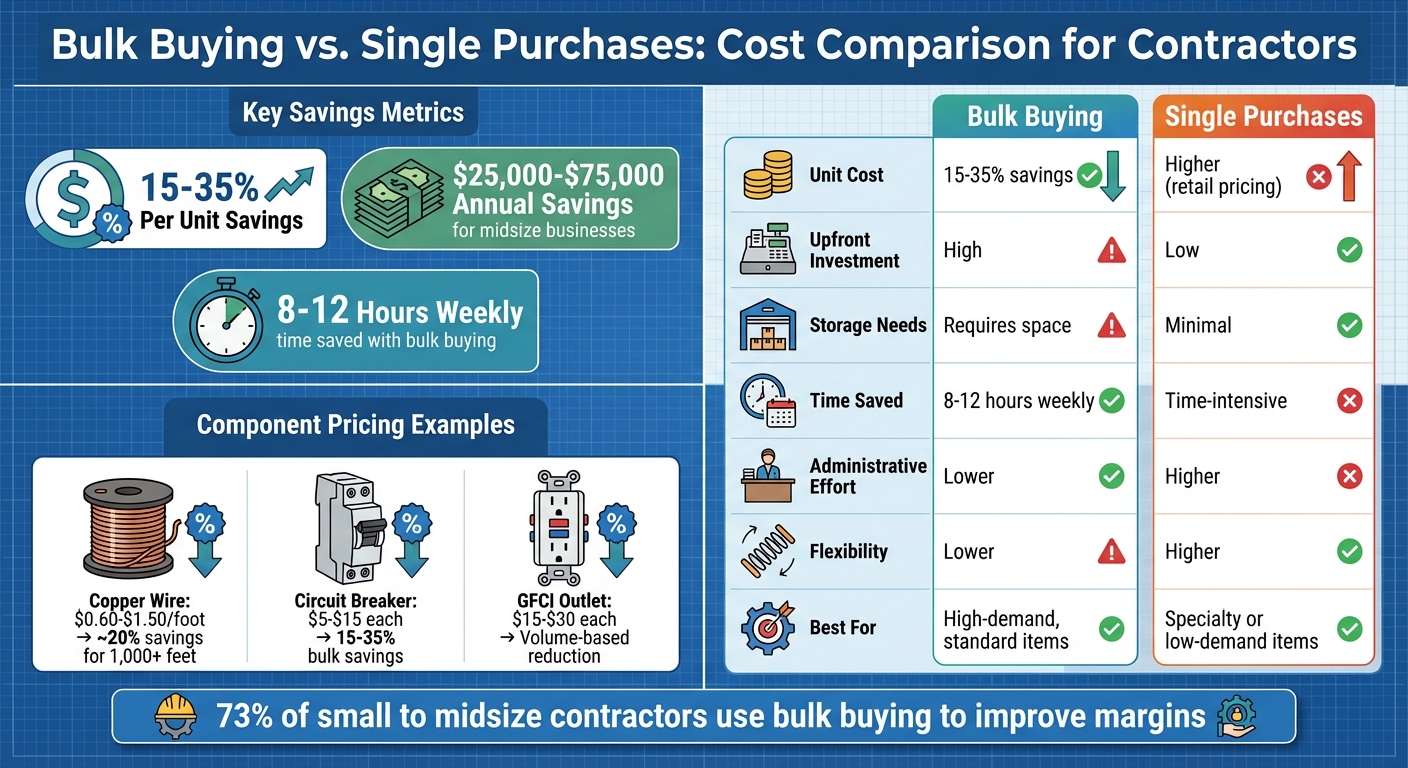
Bulk buying can save contractors 15–35% per unit, translating to annual savings of $25,000–$75,000 for midsize businesses. It also reduces procurement time by 8–12 hours weekly and helps lock in prices for up to a year. However, it requires significant upfront investment, storage space, and careful planning to avoid overstocking or waste.
Single purchases, while more flexible and cash-flow-friendly, come with higher per-unit costs and increased procurement time. This approach works best for specialty or low-demand items.
Quick Overview:
- Bulk Buying: Lower costs, reduced time, but needs storage and upfront cash.
- Single Purchases: Higher costs, more flexible, no storage needed.
Quick Comparison:
| Factor | Bulk Buying | Single Purchases |
|---|---|---|
| Unit Cost | 15–35% savings | Higher (retail pricing) |
| Upfront Investment | High | Low |
| Storage Needs | Requires space | Minimal |
| Time Saved | 8–12 hours weekly | Time-intensive |
| Best For | High-demand, standard items | Specialty or low-demand items |
If you manage multiple projects and have consistent material needs, bulk buying is a great way to cut costs. For one-off or unpredictable needs, single purchases are more practical.
Bulk Buying vs Single Purchases Cost Comparison for Contractors
Cost Per Unit: Bulk vs. Single Item Pricing
Bulk pricing works because distributors reduce their margins as order quantities increase - 50% for single units, 40% for 10 units, and 30% for 100 units. This margin reduction is the key to the savings you see.
Everett Frank, a writer at Cofactr, breaks down how this pricing model functions:
"Disty's apply margin (not markup) to the book cost to determine the 'book price'... volume matters because Disty's will want something like 50% margin if you buy 1 unit, 40% if you buy 10, 30% at 100, etc."
Most online prices reflect "book prices", which include these high margins. However, for production-level purchases, you can request "special", "broken", or "contract" pricing directly from distributors. These negotiated rates can provide savings that go beyond the usual 15% to 35% bulk discounts.
Price Comparisons for Common Electrical Components
To illustrate, here’s a look at some typical pricing for electrical components. A single-pole circuit breaker might cost anywhere from $5 to $15 at retail, but bulk orders can lower the price per unit by 15% to 35%. Similarly, copper wire, priced between $0.60 and $1.50 per foot individually, sees around a 20% discount when purchased in quantities of 1,000 feet or more. GFCI outlets, which retail for $15 to $30 each, also benefit from volume-based pricing reductions.
| Component Type | Single-Unit Price | Bulk Savings Potential |
|---|---|---|
| Copper Wire | $0.60 - $1.50 per foot | ~20% for 1,000+ feet |
| Single-Pole Circuit Breaker | $5 - $15 each | 15% - 35% |
| Double-Pole Circuit Breaker | $15 - $40 each | 15% - 35% |
| GFCI Outlet | $15 - $30 each | Volume-based margin reduction |
| Standard Outlet | $1 - $5 each | Volume-based margin reduction |
When planning purchases, prioritize high-volume components that make up the bulk of your bill of materials. Avoid buying rarely used specialty items in bulk, as this ties up capital unnecessarily. Focusing on these strategies can lead to meaningful cost reductions over time.
Long-Term Savings from Volume Discounts
The benefits of bulk buying extend beyond immediate unit price reductions. Over time, these savings can significantly impact the bottom line. For example, midsize contractors can save between $25,000 and $75,000 annually by consistently applying bulk purchasing strategies to commonly used items like wire, conduit, and standard breakers.
Take Martinez Electric, a contractor in Phoenix, as an example. By joining forces with three other local contractors, they pooled their orders for electrical control devices on a quarterly basis. This collaboration allowed the group to secure 30% volume discounts typically reserved for large regional distributors. Each contractor managed its own inventory but benefited from the collective purchasing power, improving margins without sacrificing operational independence.
In fact, 73% of small to midsize contractors report using bulk buying to improve their margins. For smaller shops, transitioning from retail to wholesale pricing unlocks even greater savings by capturing the full difference between retail and contract costs. This shift can be a game-changer for businesses looking to maintain competitiveness in a cost-sensitive market.
Total Cost Analysis: Shipping and Storage
After reviewing unit prices and volume discounts, it’s time to dive into two other critical cost factors: shipping and storage. These elements can significantly influence the total expense of bulk purchases and should be carefully considered when making buying decisions.
Shipping Costs: Bulk Orders vs. Single Purchases
Shipping costs often make single-item purchases less economical. When ordering individual items, fixed delivery fees can increase the per-unit cost. Bulk orders, however, spread these fees across multiple units, reducing the cost per unit.
For instance, USPS Ground Advantage rates start at $7.20 for packages weighing up to 70 lbs, while Priority Mail begins at $10.45. Items like conduit, wire spools, and fixtures may also face DIM weight pricing when packages exceed one cubic foot, or additional fees for oversized items. In these cases, carriers charge based on volume rather than weight. Consolidating shipments through bulk orders can help reduce how often these extra charges apply.
Another advantage of bulk buying is avoiding the high costs of expedited shipping. Emergency "rush" orders for individual items can add $0.50 or more per unit in shipping fees, significantly raising costs.
While bulk orders can reduce shipping costs, they often introduce another expense: storage.
Storage Requirements and Costs for Bulk Orders
Bulk orders come with the challenge of storage. Globally, warehousing costs amount to approximately $300 billion annually. Before committing to bulk purchases, it’s important to evaluate whether the savings on shipping outweigh the costs of storing the items.
Storage needs depend on the size and volume of the inventory, as well as the equipment required to manage it. The average warehouse is about 17,400 square feet, with 44% of facilities falling between 1,001 and 5,000 square feet. Storage costs include rent, operating expenses, equipment, and energy usage, all of which can cut into the savings from bulk buying. For items like batteries or electronics that require temperature-controlled environments, storage costs can climb even higher.
A McKinsey analysis found that warehousing costs are often underestimated. By conducting cleansheet analyses, companies have identified potential efficiency gains of 15% to 20%. These insights are crucial because leasing extra space or shifting essential inventory to make room for bulk purchases can negate shipping cost savings.
For components with steady and predictable demand - like wire, conduit, and standard breakers - the savings from bulk buying and reduced shipping fees usually outweigh storage costs. However, specialty items with seasonal or irregular demand pose a different challenge. The risk of obsolescence can completely wipe out savings. One industrial buyer experienced this firsthand when storage fees and disposal costs entirely canceled out their bulk discount.
Breakeven Point Analysis for Electrical Equipment
When it comes to bulk purchasing, breakeven analysis helps determine the point where buying in larger quantities starts saving money. To calculate this, divide your fixed costs - such as storage, insurance, and management - by the per-unit savings, which is the difference between the cost of buying items individually versus in bulk. This formula reveals how many units you need to consume before bulk buying becomes cost-effective.
The breakeven point isn’t the same for all items. Common components like NM-B wire, conduit, and standard circuit breakers tend to reach breakeven faster compared to specialty items, which often come with higher risks and irregular usage patterns.
Let’s dive into some practical examples to see how breakeven analysis plays out in real-world scenarios.
Breakeven Scenarios for Contractors
Bulk purchasing can slash material costs by 15–35%, and midsize contractors often report saving anywhere from $25,000 to $75,000 annually by adopting strategic buying practices. Beyond material savings, contractors can also cut down procurement trips by 60–75% and save 8–12 hours of labor per week, further speeding up the breakeven process.
Factors That Affect Breakeven Calculations
Several factors influence when bulk buying becomes a smart financial move. For example, project size plays a big role - contractors working on large-scale commercial projects are likely to use inventory faster and hit breakeven sooner than those handling smaller residential jobs. Available capital is another critical factor; the upfront cost of bulk purchases can strain cash flow, and if financing is involved, interest costs could eat into the savings from bulk discounts, which typically range from 10–15%.
Storage capacity is equally important. If you don’t have enough space, you might need to lease additional storage or reorganize existing inventory, which can reduce your overall savings. Similarly, usage frequency matters - items that are used daily, like conduit or wire, are better suited for bulk buying, whereas specialty or seasonal items carry a higher risk of becoming obsolete.
Market factors also come into play. Fluctuations in commodity prices, such as copper and steel, can affect breakeven calculations. Timing your bulk purchases when prices are low can maximize savings. Additionally, you need to account for potential losses - waste and theft on jobsites are often estimated at 5%, with miscellaneous material losses adding another 10% to your costs. These variables should be factored into any accurate breakeven analysis.
| Factor | Impact on Breakeven | Recommended Strategy |
|---|---|---|
| Storage Space | Leasing costs or risk of damage | Consider supplier-managed inventory or staggered releases |
| Cash Flow | Upfront investment ties up capital | Negotiate payment terms like "2/10 Net 45" |
| Usage Frequency | Frequent use speeds up breakeven | Prioritize standardized items like wire and conduit |
| Procurement Time | Saves 8–12 labor hours weekly | Consolidate orders to cut vendor visits by 60–75% |
sbb-itb-501186b
Pros and Cons: Bulk Buying vs. Single Purchases
When comparing bulk buying to single-item purchases, the advantages and drawbacks of each approach become clear, especially when factoring in cost analysis and breakeven points.
Bulk buying offers per-unit savings ranging from 15% to 35%, which can mean annual savings of $25,000 to $75,000 for midsize contractors. It also reduces administrative work by 8 to 12 hours weekly. Additionally, buying in bulk often gives businesses leverage to negotiate better terms with suppliers, such as priority service and flexible payment options.
On the flip side, bulk buying demands a significant upfront investment, which can strain cash flow for smaller companies. Storage becomes another challenge - adequate space is essential, and renting extra warehouse capacity can eat into your savings. There's also the risk of ending up with unused inventory if project requirements change or if technology advances.
Single-item purchases, meanwhile, help preserve working capital since they require minimal upfront spending. They also reduce the need for storage and eliminate the risk of overstocking. This approach offers flexibility, allowing you to adapt to changing project specifications or switch brands as needed. For emergency repairs, single purchases provide quick access with minimal administrative hassle.
However, single-item buying comes with higher retail prices and increased time spent on procurement tasks. Frequent trips to supply houses and missed opportunities for volume discounts can add up.
Comparison Table: Bulk Buying vs. Single Purchases
Here's a side-by-side comparison of the two purchasing strategies:
| Factor | Bulk Buying | Single-Item Purchases |
|---|---|---|
| Unit Cost | Lower (15–35% savings) | Higher (retail pricing) |
| Upfront Investment | High; ties up capital | Low; pay-as-you-go |
| Storage Requirements | High; requires warehouse space | Minimal; just-in-time |
| Administrative Effort | Lower; fewer orders and invoices | Higher; more frequent ordering |
| Risk of Obsolescence | Higher; potential for waste | Lower; buy only what's needed |
| Flexibility | Lower; locked into inventory | Higher; easy to pivot |
| Procurement Time | Saves 8–12 hours weekly | More time-intensive |
| Best For | Standardized, high-volume items | Specialty, custom, or emergency items |
When to Choose Bulk Buying on Platforms Like Electrical Trader
Bulk buying works best when you're dealing with standardized components that are consistently needed across various projects. Items like circuit breakers, transformers, wire, and conduit fit the bill perfectly since their specifications and demand remain steady. For contractors managing a steady flow of projects, platforms like Electrical Trader offer access to both new and surplus equipment at volume discounts - often 40% to 60% below retail prices for surplus items.
Timing plays a crucial role too. If prices for materials like copper or steel drop, placing bulk orders can protect you from future price fluctuations. However, before committing to a large order, ensure you have enough storage space, as highlighted in the storage cost analysis mentioned earlier. For high-value items such as transformers, it's also essential to calculate the Total Owning Cost (TOC). This includes not only the purchase price but also energy losses over their 20- to 30-year lifespan. A lower initial cost doesn't always translate to better long-term savings. Market timing can further amplify these benefits.
Bulk Buying Strategies on Electrical Trader
To maximize savings, consider some practical strategies when buying in bulk on Electrical Trader. Start with a pilot program by selecting three to five high-demand items - like specific circuit breaker models or common wire gauges - and test the cost-effectiveness of buying in bulk. This lets you gauge savings against storage and handling expenses without tying up too much capital.
Another effective tactic is negotiating tiered pricing for quarterly or annual purchase volumes with sellers. Alternatively, you can use blanket orders to lock in bulk pricing while scheduling deliveries to align with your project needs. This approach helps maintain cash flow and minimizes storage requirements. You might also consider teaming up with other contractors to pool purchases. While each business keeps its inventory separate, combining orders can unlock discounts typically reserved for large distributors.
Bulk Purchase Options Available on Electrical Trader
Electrical Trader offers an extensive range of products, including breakers, transformers, low- to high-voltage equipment, and power generation tools - categories where bulk buying can lead to substantial savings.
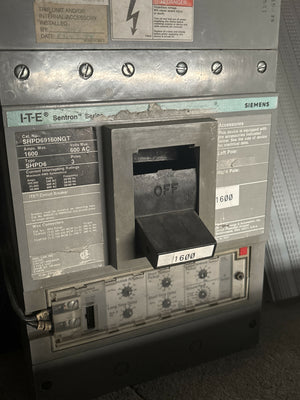
Circuit breakers are a prime candidate for bulk purchases since they’re standardized and used in nearly every project. Reconditioned breakers on the platform are priced between $18.67 and $39.57, depending on amperage and pole configuration. New surplus breakers, such as a 1-pole, 30-amp unit, are available for about $37.00.
Transformers, on the other hand, require a larger upfront investment but can deliver significant long-term value. Units in the 50 to 500 kVA range typically cost between $2,000 and $20,000, while larger models, like 3 to 10 MVA transformers, can range from $30,000 to $300,000. For contractors managing multiple commercial or industrial projects, buying transformers in bulk not only reduces per-unit costs but also ensures a steady supply during shortages. Keep in mind that additional costs for transport, rigging, and installation can add 20% to 50% to the total price.
Conclusion: Final Cost Comparison and Recommendations
After analyzing pricing, shipping, and breakeven points, here’s the takeaway: bulk buying can reduce material costs by 15–35% per unit - and for surplus items, savings can climb to 40–60%. For midsize contractors, this translates to annual savings of $25,000 to $75,000. Beyond cost, bulk orders also save 8 to 12 hours per week by cutting down on vendor visits and simplifying administrative work.
That said, single-item purchases still make sense for specialty components, one-off projects, or items with unpredictable demand. This approach helps maintain cash flow and avoids the hassle of storage. But when it comes to standardized, high-volume materials like circuit breakers, wire, or conduit, bulk buying is the clear winner. Lower shipping costs and streamlined logistics amplify the benefits.
Here’s the bottom line: bulk buying works best for steady project pipelines, adequate storage space, and predictable, high-demand items. On the other hand, single-item purchases are ideal for specialty or seasonal needs and situations where cash flow is tight. For contractors juggling multiple projects, platforms like Electrical Trader offer a flexible solution. They provide volume discounts for items like breakers and transformers while also allowing single-item purchases when needed.
To get started, consider running a pilot program with three to five high-demand items. Monitor the results - track unit costs, time saved, and any hidden expenses. This data will help you refine your purchasing strategy and scale up effectively. Ultimately, the right approach depends on your business model, storage capacity, and financial priorities.
FAQs
How can I decide if buying in bulk is the right choice for my business?
To figure out if bulk buying makes sense for your business, start by assessing your specific requirements and how well your operations can handle larger orders. While buying in bulk often means lower per-unit costs, reduced shipping fees, and fewer purchase orders, it also demands strategic planning to ensure the advantages outweigh any potential downsides.
Here are some key factors to weigh:
- Demand predictability: Bulk buying is ideal for items you use frequently and can accurately forecast, like circuit breakers or connectors.
- Storage space: Make sure you have enough room to store larger quantities without driving up storage costs.
- Cash flow: Evaluate the upfront cost to ensure it won’t put unnecessary strain on your working capital.
- Shelf-life: Focus on items with long shelf lives to avoid waste or the risk of products becoming obsolete.
- Supplier reliability: Work with dependable vendors who provide consistent deliveries and clear return policies.
If these considerations align with your business model, bulk buying can be a great way to cut costs and streamline operations. For electricians and contractors in the U.S., Electrical Trader offers a dependable platform to compare bulk pricing and coordinate deliveries, making it easier to make informed purchasing decisions.
What should I consider about hidden costs when buying in bulk?
Buying in bulk often seems like a smart way to cut costs, but it’s essential to consider the hidden expenses that can come with it. For instance, storage and handling fees can add up quickly, especially if you don’t have sufficient space to store the extra inventory. There’s also the risk of tying up your cash in stock that might not move as quickly as anticipated, leading to waste or even obsolescence if products expire or become outdated.
On top of that, you might need to pay for extra warehouse space or invest in logistics to manage the larger quantities, which can eat into your savings. Before committing to bulk purchases, take a close look at these factors to make sure it’s the right move for your budget and needs.
What are the best ways to handle storage challenges when buying electrical components in bulk?
Managing storage for bulk electrical components starts with evaluating your space and setting up a system that works. Use sturdy shelving or racks to keep items safe and organized, and make sure to label bins or shelves for easy identification. It’s also crucial to store components in a climate-controlled environment to protect them from moisture, corrosion, and temperature swings.
To keep inventory in check, implementing a first-in, first-out (FIFO) system is a smart move. This ensures older stock is used before newer deliveries, helping to minimize waste from parts that may expire or deteriorate. If you’re short on space, leasing a nearby storage unit or using a shared warehouse could be a good solution. Often, the savings from bulk purchases can help offset these additional costs.
For purchasing efficiency, consider using tools like the Economic Order Quantity (EOQ) model. This helps you figure out the ideal order size that balances storage costs with the savings from buying in bulk. When ordering from Electrical Trader, consolidating shipments into a single delivery can simplify storage and inventory management, making bulk buying a more practical and cost-effective option.