

How to Test Surge Protection Devices for Performance
Testing surge protection devices (SPDs) ensures they continue protecting electrical systems from voltage spikes caused by events like lightning or power surges. Here's what you need to know:
- Why Test SPDs? Over time, SPDs can degrade and lose effectiveness, leaving your equipment vulnerable. Regular testing prevents damage, costly repairs, and downtime.
- When to Test? Test during routine maintenance, after known surge events, or when installing new systems. Frequency depends on the environment: monthly for industrial settings, annually for residential.
- Basic Tools: Use a digital multimeter for voltage and continuity checks, and an insulation resistance tester to assess internal integrity.
- Advanced Tools: Portable SPD testers and surge generators measure critical parameters like clamping voltage and response time, offering deeper diagnostics.
- Standards to Follow: UL 1449 and IEC 61643 guide SPD testing, ensuring safety and performance compliance.
Quick Tip: Start with a visual inspection for physical damage, then proceed to electrical tests. Replace SPDs showing faults or failing compliance standards. Document all tests and results for future reference.
Tools and Equipment for SPD Testing
Basic Testing Tools
Accurately testing SPD (Surge Protective Device) performance starts with the right tools. Some basic yet essential equipment can handle straightforward diagnostics effectively.
A digital multimeter is a staple for SPD testing. It measures voltage, resistance, and continuity across the device's terminals. Basic models are priced between $20 and $50, while professional-grade versions can cost over $100. When testing a working SPD, you should see high resistance or an "OL" (open loop) reading, with 0V across the terminals when powered. If the readings show near-zero ohms or significant voltage, the SPD might be faulty. However, multimeters are limited - they can't simulate surge conditions or measure dynamic parameters like clamping voltage or response time.
Visual inspections are a simple but crucial step. Using a flashlight and magnifier, you can check for physical damage such as overheating, discoloration, burn marks, or degraded components on the SPD's housing and connections. This should always be done before any electrical testing.
For more detailed evaluations, insulation resistance testers (megohmmeters) come into play. These devices, priced between $100 and $500+, apply high DC voltage (commonly 500V or 1,000V) to assess insulation resistance. Healthy insulation typically shows resistance in the megohm range, while lower readings might indicate internal damage or moisture intrusion.
When basic tools fall short in identifying subtle issues, advanced equipment becomes necessary.
Advanced Testing Equipment
Portable SPD testers provide in-depth diagnostics beyond what a multimeter can offer. These devices measure critical parameters like clamping voltage, leakage current, and overall health of the SPD components. For example, using a portable tester might reveal increased leakage current or reduced clamping voltage in a Type 2 SPD - early warning signs of failure. Acting on this information can prevent downtime and protect sensitive equipment. These testers typically cost between $500 and several thousand dollars.
Surge generators simulate real surge events, such as lightning strikes or electrical switching surges. These devices produce high-voltage impulses using standardized waveforms - like 8/20 μs for Class II devices or 10/350 μs for Class I devices - to dynamically evaluate SPD performance. Prices for professional-grade surge generators range from $2,000 to over $10,000.
For those with technical expertise, oscilloscopes are invaluable. They visualize surge waveforms and the SPD's real-time response, helping detect performance issues that might otherwise go unnoticed. Oscilloscopes suitable for SPD testing are typically priced between $2,000 and $10,000+.
Advanced tools are often necessary to meet compliance standards such as UL 1449, as they simulate high-energy surges to ensure the SPD can withstand real-world conditions.
Selecting the Right Equipment
The choice of testing tools depends on the type of SPD, its location, and the specific diagnostics needed. For instance, Type 1 SPDs installed at main service entrances may require more robust tools compared to Type 3 devices used at points of use. In industrial settings, portable SPD testers are often the go-to option for comprehensive diagnostics, while residential applications might only require basic tools like a multimeter and visual checks.
Another key factor is whether testing will be conducted online (with the SPD connected to a live circuit) or offline (with the device isolated). Online testing requires tools designed for safe use on energized circuits, while offline testing allows for more thorough diagnostics. This distinction directly impacts the choice of equipment.
Here's a quick overview of common tools:
| Equipment Type | Use Case | Limitations |
|---|---|---|
| Digital Multimeter | Basic voltage and continuity checks | Cannot simulate surges; limited scope |
| Insulation Tester | Insulation integrity assessments | General-purpose; not SPD-specific |
| Portable SPD Tester | Field diagnostics and compliance | Higher cost; requires technical skills |
| Surge Generator | Simulating surge conditions | Expensive; specialized applications |
For routine maintenance, visual inspections and multimeter checks are often sufficient. However, compliance testing or diagnosing suspected failures might call for advanced tools capable of measuring clamping voltage, response time, and surge endurance.
Professionals looking for reliable testing tools and replacement parts can explore Electrical Trader, a marketplace offering a wide range of new and used equipment tailored for SPD testing and maintenance across the United States.
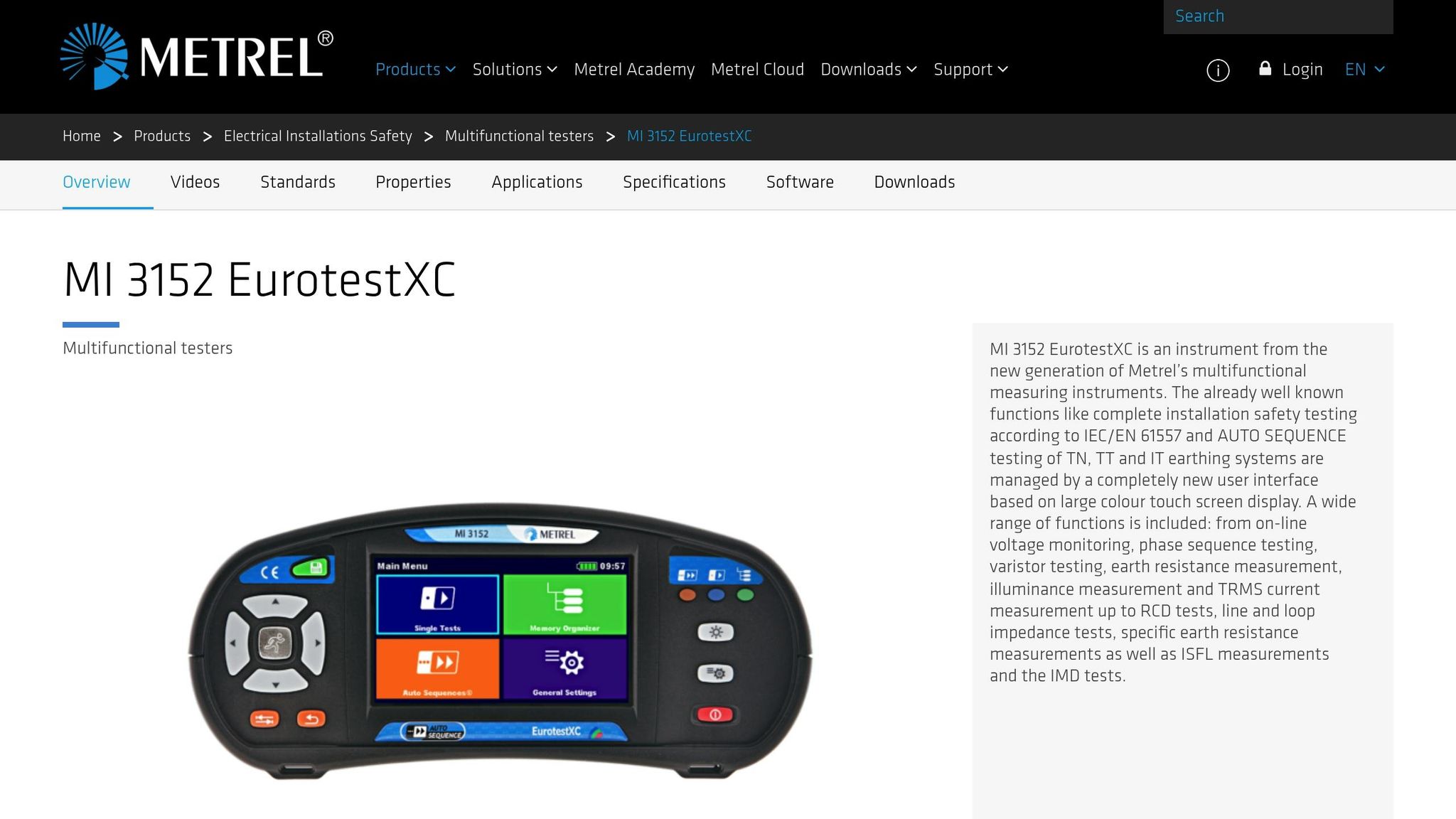
How to test a surge protector (SPD) using a Metrel Mi 3152
How to Test SPDs Step by Step
To ensure surge protection devices (SPDs) are functioning properly, follow a systematic approach that starts with basic checks and progresses to more detailed diagnostics. Each step will help identify potential issues that could compromise the device's performance.
Visual Inspection and Basic Checks
Start with a thorough visual inspection to spot any obvious problems. Look for signs of damage like burn marks, melted plastic, or discoloration on the device housing - these could indicate overheating from past surge events. Check the connections for corrosion, loose terminals, or evidence of arcing, as these can lead to electrical failures.
Examine the mounting area and nearby components for heat damage, unusual odors, or discolored wiring. These signs might suggest the SPD has been pushed beyond its limits. If you notice any of these issues, replace the SPD before conducting further tests.
Document your observations with photos and notes. This creates a record for future inspections and helps monitor any gradual wear or damage. Once the physical condition is confirmed, move on to electrical testing with a multimeter.
Testing with a Multimeter
Before testing, disconnect the SPD and follow lockout/tagout safety protocols. Set your multimeter to resistance (Ω) mode and test between line-neutral and line-ground. A functioning SPD should show high resistance or an "OL" (open line) reading, which indicates intact metal-oxide varistors (MOVs). If the reading is near zero, the MOVs have failed, and the SPD needs to be replaced.
Next, use the continuity setting to check the grounding. Test between the SPD's ground terminal and the electrical panel's ground bus. A low resistance reading confirms a solid ground connection, which is critical for effective surge protection.
If these tests don't provide clear results, move on to more advanced diagnostic methods.
Advanced Testing Methods
When basic checks aren't enough or you need a more in-depth analysis, advanced testing methods can offer a clearer picture of an SPD's condition.
Insulation Resistance Testing:
Use a megohmmeter to apply 500V or 1,000V DC. This test can detect insulation breakdown, moisture intrusion, or internal contamination that a standard multimeter might miss. High resistance readings indicate the insulation is in good condition, while low readings suggest internal damage and the need for replacement.
Leakage Current Measurement:
This test identifies internal faults by measuring the small currents that flow through the SPD under normal conditions. Higher-than-expected leakage current could mean the MOVs or other components are deteriorating, reducing the SPD's ability to handle surges.
Surge Generator Testing:
For the most comprehensive evaluation, use a surge generator to apply controlled high-voltage pulses. This method measures critical parameters like clamping voltage, let-through energy, and response time. It’s especially useful after significant events like lightning strikes or to verify compliance with performance standards. Class II SPDs are tested with an 8/20 microsecond waveform, while Class I SPDs use a 10/350 microsecond waveform.
Professional SPD testers, which combine multiple diagnostic functions, can measure clamping voltage, leakage current, and overall health. Though these devices can be expensive, they provide detailed insights, making them invaluable for critical installations or facilities requiring high reliability.
For facilities with sensitive equipment or strict uptime requirements, scheduling periodic advanced tests can help catch performance issues early, preventing costly downtime or equipment damage.
| Testing Method | Key Parameters Measured | When to Use |
|---|---|---|
| Insulation Resistance | Insulation integrity at 500V–1,000V DC | Suspected moisture or contamination issues |
| Leakage Current | Internal component degradation | Routine maintenance on critical systems |
| Surge Generator | Clamping voltage, response time, let‐through energy | Post‐surge events, compliance verification |
For those in need of advanced testing tools, Electrical Trader offers a range of SPD testers and diagnostic devices designed for various applications, ensuring thorough performance evaluations.
sbb-itb-501186b
SPD Testing Standards and Requirements
When it comes to ensuring the safety and reliability of surge protection devices (SPDs), adhering to established standards like UL 1449 and IEC 61643 is essential. These guidelines not only help maintain compliance with legal and safety requirements but also ensure SPDs perform effectively in real-world conditions.
Industry Standards for SPDs
UL 1449, the primary standard for SPDs in North America, emphasizes both safety and performance. This standard requires SPDs to handle nominal discharge currents ranging from 3 kA to 20 kA, depending on their type and intended use. Key testing parameters include maximum continuous operating voltage (MCOV), nominal discharge current, and let-through voltage. The 4th Edition of UL 1449 introduced stricter safety measures, such as enhanced testing for abnormal overvoltage conditions and end-of-life scenarios, ensuring SPDs fail safely without posing fire risks.
Meanwhile, IEC 61643 serves as the global standard for SPD classification and testing. It categorizes SPDs into Type 1, Type 2, and Type 3, based on their installation location and expected surge exposure. For instance, the IEC 61643-11 standard outlines a "work test" that mimics real surge events, assessing how SPDs perform under operational conditions. While UL 1449 prioritizes safety for U.S. compliance, IEC 61643 focuses on performance classification for broader, international applications.
Key distinctions between these standards include the test waveforms and current ranges used. For example:
- Type 1 SPDs under IEC standards are tested with a 10/350 microsecond waveform, simulating direct lightning strikes with currents between 10 kA and 100 kA.
- Type 2 SPDs require an 8/20 microsecond waveform, with typical test currents ranging from 5 kA to 40 kA.
| Standard | Test Waveform | Current Range | Key Focus |
|---|---|---|---|
| UL 1449 Type 2 | 8/20 μs | 3–20 kA | Safety compliance |
| IEC 61643 Type 1 | 10/350 μs | 10–100 kA | Lightning protection |
| IEC 61643 Type 2 | 8/20 μs | 5–40 kA | Switching surge protection |
These standards form the backbone of SPD testing, ensuring devices meet safety and performance benchmarks.
Meeting Compliance Requirements
Compliance testing goes beyond routine checks, requiring detailed documentation and adherence to strict procedures. For example, impulse current testing evaluates clamping voltage and device response under high-current surges. Additionally, thermal stability checks and endurance testing simulate years of operational wear by exposing devices to repeated surges. During these tests, it's crucial to monitor for degradation, overheating, or failure, as the SPD must retain its protective capabilities throughout the process.
To meet compliance standards, document every aspect of the testing process. This includes recording test conditions, equipment specifications, and key metrics like clamping voltage and leakage current. Calibration certificates for testing equipment should also be included. Proper documentation is essential for regulatory reviews and audits.
Failure to comply with UL 1449 or IEC 61643 standards can have serious consequences, such as product recalls, penalties, or even the denial of insurance claims if non-compliant devices are involved in an incident. Always verify certification on SPD labels, and for critical installations, use professional SPD testers capable of simulating real surge events instead of relying on basic tools like multimeters.
When replacing SPDs or sourcing testing equipment, platforms like Electrical Trader provide access to certified devices that meet both UL 1449 and IEC 61643 standards, along with specialized tools for compliance verification. Ensuring proper compliance not only protects your equipment but also provides peace of mind for long-term safety and reliability.
Understanding Test Results and Next Actions
Once you've completed testing, the next step is to interpret the results and determine the status of your system's protection. These measurements, combined with previous diagnostics, help guide your next steps.
Reading Test Results
The LED indicator lights on your SPD are your go-to for a quick health check. A green light means everything is working as it should, while an off or flickering light points to internal component failure. These visual cues provide a straightforward way to assess the device's current state.
Another key metric is the clamping voltage. Compare your test results to the manufacturer's specifications - any significant differences can indicate degradation. For instance, if your SPD is rated for 330V but your readings consistently fall more than 20% below that, it’s a sign the internal Metal Oxide Varistors (MOVs) have deteriorated and may no longer provide adequate protection.
Insulation resistance measurements are another important tool. High readings suggest the internal components are in good shape, while low readings could point to issues like moisture, contamination, or internal wear and tear. A sudden drop in insulation resistance is often a warning sign of impending failure.
Varistor voltage testing is also essential for evaluating SPD performance. By applying a controlled DC current of 1mA, this test measures the MOV’s clamping voltage. If the readings fall outside the manufacturer's specified range, the SPD’s ability to protect against surges is compromised.
Finally, verify the standard voltage levels - 110–120V or 220–240V, depending on your setup - to ensure your system is functioning correctly.
These results will help you decide whether to replace the SPD or take other corrective actions.
When to Replace SPDs
Certain signs make it clear that an SPD needs to be replaced immediately. Physical damage - like burn marks, melted plastic, loose connections, or unusual odors - combined with indicator light issues (off, red, or flickering) signals failure and poses safety risks.
Even if everything looks fine externally, electrical test failures are a red flag. Replace the SPD if clamping voltage falls outside the specified range, insulation resistance drops significantly, or the device fails a surge simulation test. For example, after a major power surge, one facility found an SPD with clamping voltage 20% below the rated value and low insulation resistance. Despite the green indicator light, the device was replaced to maintain protection and meet UL compliance requirements.
Post-event testing is critical after major power surges. Events like lightning strikes or utility switching can damage internal components without triggering visible indicators. Detailed electrical testing can uncover hidden damage before it leads to failure during the next surge.
SPD Maintenance After Testing
Once you've determined the necessary actions, ongoing maintenance becomes key to ensuring your SPDs continue to perform. Start by documenting every test. Record the date and time (e.g., 11/25/2025) and include specific measurements like clamping voltage and insulation resistance in volts and ohms. Note the status of the indicator lights, any visible damage, and any actions taken, such as cleaning or replacement. This record-keeping supports compliance and helps you monitor performance trends over time.
Regular inspections and testing can prevent unexpected failures and extend the lifespan of your SPDs. For standard installations, conduct visual and functional tests quarterly. In high-risk environments or critical applications, increase the frequency. After severe weather or power disturbances, perform immediate post-event testing to confirm the SPD's integrity.
Consider integrating professional testing services into your maintenance routine. While basic multimeter tests can catch obvious issues, specialized SPD testers can measure critical parameters and simulate surge events to assess the device’s response. Professional electricians with access to this equipment can identify subtle signs of degradation that might otherwise go unnoticed.
Don’t overlook the basics - regularly clean and secure connections. Ensure grounding connections are tight and free from corrosion, as poor grounding can undermine the entire protection system. Clean SPD housings to prevent dust and debris buildup, which can impact heat dissipation and obscure indicator lights.
It's also smart to plan for replacements before SPDs fail entirely. Use your documented test results to track performance trends and establish replacement schedules based on manufacturer guidelines and observed wear. For critical setups, keep spare SPDs on hand to minimize downtime during replacements.
When it's time to replace devices or upgrade your testing equipment, platforms like Electrical Trader can simplify the process. They offer a range of new and used SPDs, multimeters, and surge testers, making it easier to maintain and improve your protection system as your needs evolve.
Summary and Key Points
Testing surge protection devices (SPDs) is more than just a routine task - it's your best defense against expensive equipment damage and unexpected system failures. By combining visual inspections, electrical assessments, and maintenance checks, you can ensure your SPDs are ready to shield your electrical systems when surges strike.
To get accurate results, rely on three essential tools: a digital multimeter, an insulation resistance tester, and a portable SPD tester. The multimeter handles basic continuity and voltage checks, while the insulation tester evaluates the integrity of internal components. For a deeper analysis, a portable SPD tester can simulate surge events, such as the 8/20 microsecond waveform for Class II devices, offering a more comprehensive diagnostic approach.
Start with a visual inspection. Look for signs of damage like burn marks, loose connections, or discoloration. Follow this up with electrical testing using a multimeter and insulation tester. For a detailed evaluation, professional SPD testers can measure critical parameters like clamping voltage and leakage current under simulated surge conditions.
Compare your findings to UL 1449 and IEC 61643 standards. Any deviations, such as unusually low resistance or abnormal voltage readings, could signal that the SPD is degrading. Ensure your measurements match the manufacturer's specifications to confirm the device's performance and reliability.
Keep thorough records of test dates, measurements, and any corrective actions taken. This not only helps track SPD performance over time but also ensures compliance with safety standards. Make SPD testing a regular part of your maintenance routine, especially after severe weather or known surge events.
Investing in high-quality testing tools is crucial. Reliable equipment ensures accurate readings, helping you identify and replace failing SPDs before they compromise your system. Degraded SPDs leave your equipment exposed, leading to costly repairs and downtime. If you're looking for dependable tools or replacement SPDs, consider suppliers like Electrical Trader for affordable and trustworthy options.
FAQs
How often should surge protection devices be tested, and what factors influence the testing frequency?
Surge protection devices (SPDs) generally need to be tested at least once a year to confirm they’re working as they should. However, how often you should test them can depend on a few factors, like the environment they’re in and how they’re used. For instance, SPDs installed in areas with frequent lightning or power surges might need more regular checkups.
The manufacturer’s guidelines and the importance of the equipment being protected also play a role in determining the testing schedule. Routine testing is essential - it helps spot any wear or damage that could affect performance, ensuring your electrical systems stay protected when it matters most.
What are the warning signs that a surge protection device might need replacement, even if it appears to be working?
A surge protection device (SPD) might need replacing even if it looks fine on the outside. Some telltale signs include a tripped breaker or frequent power disruptions, which can hint at internal damage. If the device's status indicator light is off or showing a fault, that’s a clear signal it’s no longer doing its job.
You should also consider the age and usage history of the SPD. These devices are built to handle only a certain number of surges. If it’s been in service for years or has weathered multiple surges, it could be nearing the end of its useful life. Routine inspections and testing are essential to ensure your SPD continues to protect your equipment effectively.
Why is it important to follow standards like UL 1449 and IEC 61643 when testing surge protection devices?
Adhering to standards such as UL 1449 and IEC 61643 ensures surge protection devices are evaluated for safety, reliability, and performance under globally recognized guidelines. These standards confirm that the devices are capable of safeguarding electrical systems from voltage spikes while meeting essential safety criteria.
Following these standards helps ensure compliance with industry regulations, minimizes the risk of equipment damage, and strengthens trust with customers and stakeholders. Plus, testing against these specifications simplifies product comparisons, making it easier to choose the right surge protection device for your specific requirements.