

UL-142 vs. UL-2085: Fuel Tank Standards Explained
UL-142 and UL-2085 fuel tank standards serve different safety and compliance needs.
- UL-142: Designed for basic aboveground fuel storage, these steel tanks are cost-effective and suitable for controlled environments like farms, construction sites, and private facilities. They lack built-in fire resistance but may include optional secondary containment.
- UL-2085: Built for high-risk environments, these tanks include a 2-hour fire rating, secondary containment, and protection against impacts and projectiles. They are ideal for public locations, urban areas, and critical infrastructure like hospitals and airports.
Quick Comparison
| Feature | UL-142 | UL-2085 |
|---|---|---|
| Fire Resistance | None | 2-hour fire-rated thermal protection |
| Secondary Containment | Optional | Mandatory |
| Impact Resistance | Not required | Required (vehicle and projectile) |
| Mobility | Lighter, easier to relocate | Heavier, less mobile |
| Common Use | Farms, private sites | Gas stations, hospitals, urban areas |
Key takeaway: Choose UL-142 for general-purpose storage in low-risk areas and UL-2085 for high-safety requirements in public or high-traffic zones. Always consult local fire codes and regulations to ensure compliance.
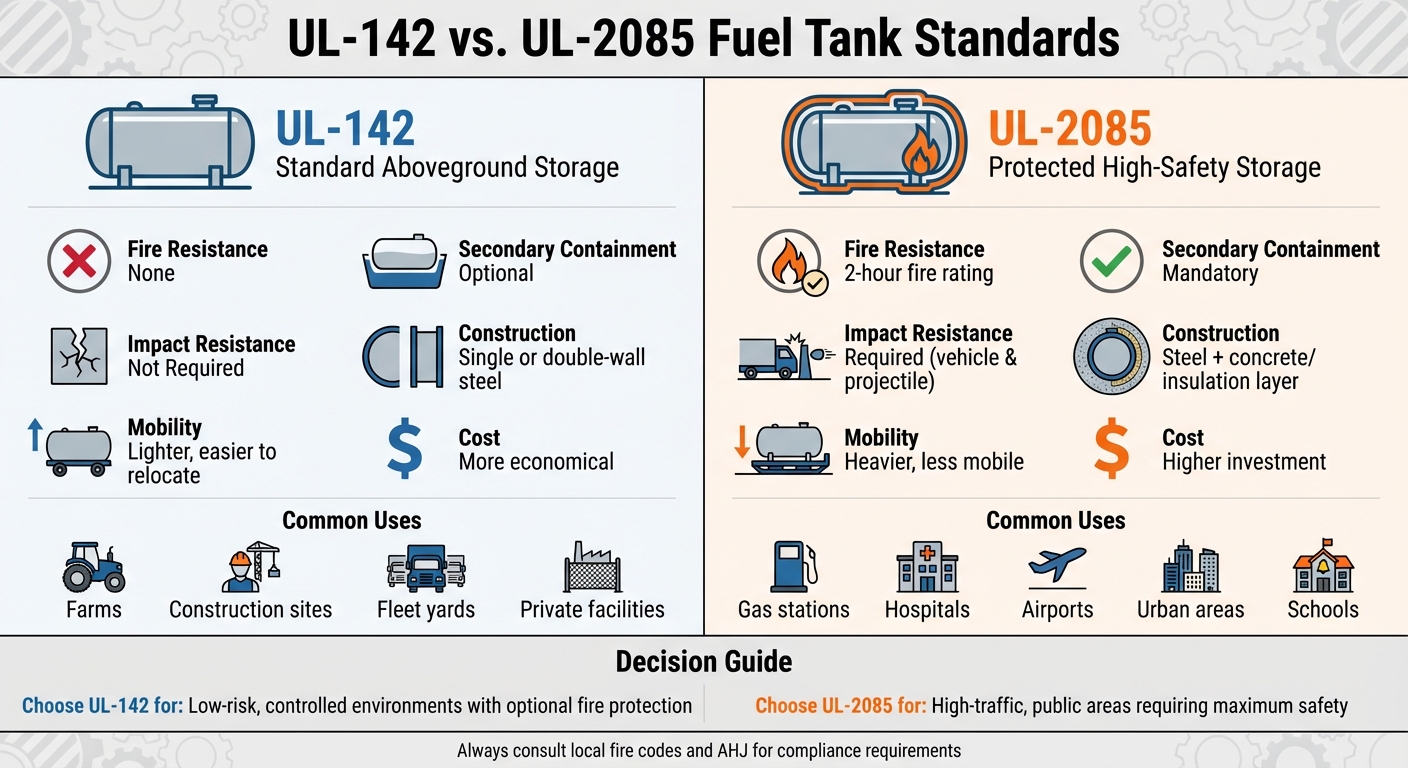
UL-142 vs UL-2085 Fuel Tank Standards Comparison Chart
UL-142 Fuel Tank Standards
Construction and Design Features
UL-142 tanks are steel atmospheric tanks built in controlled environments to ensure consistent welding quality and reliability. These tanks are designed for storing noncorrosive flammable liquids with a specific gravity of up to 1.0.
The standard includes single-wall, double-wall (with secondary containment), and diked construction options. Double-wall tanks feature an interstitial space with leak-detection openings - an important feature for indoor generator setups. Every UL-142 tank undergoes thorough leak testing to ensure it is structurally sound and watertight.
For power generation, there’s a specialized sub-category under UL-142 called "Special-purpose tanks" (Product Category EFVT). This category includes generator base tanks, day tanks, and utility tanks specifically designed to handle the weight of generator sets. These tanks are rigorously tested for load-bearing capabilities, including tank support and top-loading tests, to confirm their durability in such applications.
The tanks are equipped with normal and emergency vent openings in their primary compartments, as well as emergency venting for secondary containment spaces. Additional built-in features include lifting lugs, heating coils, and gauging ports, which simplify installation and maintenance. They are available in sizes ranging from 150 to 20,000 gallons.
"UL 142 includes requirements for tanks fabricated in a combination of various shapes (cylindrical, rectangular or round) and orientations (horizontal, vertical) with or without multiple compartments." - UL Solutions
These design features ensure compliance with SPCC and fire safety regulations. Their sturdy construction makes them a reliable choice for power generation applications.
Where UL-142 Tanks Are Used
Thanks to their practical design, UL-142 tanks are widely used across industries, particularly in power generation and industrial settings. They are commonly found on construction sites, farms, fleet fueling yards, and other facilities where fire risks are managed, and proper containment systems are in place.
These tanks are especially valued in generator base applications, where they provide integrated fuel storage and structural support for generator sets. They are a common choice for hospitals, data centers, and manufacturing plants that require dependable backup power. UL-142 tanks are well-suited for indoor settings and non-public areas, provided there is enough distance from property lines and buildings.
When configured with double-wall construction, these tanks meet EPA Spill Prevention, Control, and Countermeasure (SPCC) requirements by offering secondary containment. However, they do not include built-in fire protection, such as thermal insulation or fire-rated enclosures, which are features of UL-2085 tanks. This makes UL-142 tanks a more economical option but less suitable for high-risk urban areas or public-access locations where enhanced fire protection is necessary.
"UL-142 tanks are widely used across industries and are ideal for general-purpose fuel storage in locations where fire risk is controlled and containment systems are in place." - Mills Equipment
sbb-itb-501186b
UL-2085 Fuel Tank Standards
Advanced Safety Features
UL-2085 tanks are built to handle extreme conditions that would compromise standard fuel storage systems. A standout feature is their 2-hour fire rating, meaning they can endure a liquid hydrocarbon pool fire and furnace fire test for two hours without the primary tank failing. This durability is achieved through a thermal insulation layer - usually made of reinforced concrete or specialized fire-resistant material - placed between the tank's inner and outer steel walls to reduce heat transfer.
These tanks also undergo rigorous testing for ballistic resistance against projectiles and impact resistance to withstand collisions, such as those caused by vehicles.
"A UL 2085 tank is intended to limit the heat transferred to the primary tank during a fire and to protect the tank from physical damage." - Core Engineered Solutions
Unlike UL-142 tanks, which may include secondary containment, UL-2085 tanks require secondary containment as an integral feature. Every tank undergoes 100% leakage testing on both its primary and secondary containment systems before leaving the manufacturing facility. These safety measures add to the tank’s weight, with larger models being particularly heavy. Thanks to these built-in protections, UL-2085 tanks are often the top choice for environments with high safety demands.
Where UL-2085 Tanks Are Used
UL-2085 tanks are commonly found in high-risk or high-traffic areas where safety is a priority. Their advanced features make them suitable for locations like retail gas stations, airports, schools, and hospitals, where the risks of fire or physical damage are significant. In regions prone to wildfires - such as California, Colorado, and Arizona - these tanks are especially valued for their ability to help prevent fuel ignition during natural disasters.
In metropolitan and coastal areas, where buildings and property lines are closer together, local regulations often require UL-2085 tanks due to their enhanced safety features. Facilities with critical infrastructure, such as hospitals and government buildings, depend on these tanks to ensure fuel remains secure during emergencies. Military bases and urban sites with strict zoning or security standards also favor UL-2085 tanks for their ballistic protection.
"UL-2085 tanks are typically required for permanent installations in areas with stricter regulations, such as California, metro city areas, and some coastal markets." - Mansfield Energy
Although UL-2085 tanks come with a higher upfront cost, their built-in safety features often eliminate the need for additional protective barriers or external fire walls. Before installation, it’s essential to consult your local fire marshal to ensure compliance with specific regulations, especially in urban or high-traffic areas.
UL-142 vs. UL-2085: Main Differences
Construction and Safety Feature Comparison
The construction and safety features of UL-142 and UL-2085 tanks set them apart. UL-142 tanks are made from single or double-wall steel and are designed for basic fuel storage without fire-resistant features. On the other hand, UL-2085 tanks include a steel inner tank surrounded by a layer of thermal insulation, often reinforced concrete or fire-resistant material, offering an added layer of protection.
Fire and impact protection are where UL-2085 tanks shine. Unlike UL-142 tanks, which lack fire resistance, UL-2085 tanks are designed to handle a two-hour hydrocarbon pool fire while minimizing heat transfer to the inner tank. Moreover, UL-2085 tanks undergo rigorous testing for ballistic resistance (against projectiles) and vehicle impact - requirements that UL-142 tanks do not meet.
"UL-2085 enhances the fire and impact protection features found in UL-2080 by adding stricter requirements. It mandates that the tank construction must further reduce heat transfer to the primary tank during a two-hour hydrocarbon pool fire." - Brian Orr, Principal Engineer, and Kelly Nicolello, Senior Regulatory Engineer, UL Solutions
Secondary containment is another critical distinction. While UL-142 tanks may offer optional double-wall construction, UL-2085 tanks come with mandatory built-in secondary containment. Both standards require leak testing, but UL-2085's secondary containment is a required feature.
| Feature | UL-142 | UL-2085 |
|---|---|---|
| Fire Rating | No built-in protection | 2-hour fire-rated thermal protection |
| Construction | Steel (single or double wall) | Steel inner tank + external insulation/concrete |
| Secondary Containment | Optional or site-built | Built-in (Mandatory) |
| Impact/Ballistic Resistance | Not required | Required (Vehicle & projectile protection) |
| Mobility | Easier to relocate; lighter | Heavier; less mobile |
| Common Use | Farms, construction, fleet yards | Public gas stations, hospitals, airports |
These differences in structure and safety features also influence cost and mobility, as discussed below.
Cost and Mobility Differences
The added insulation, reinforcement, and testing requirements of UL-2085 tanks make them more expensive compared to UL-142 tanks. UL-142 tanks are generally more budget-friendly and widely used for general-purpose fuel storage.
Mobility is another factor to consider. UL-2085 tanks are heavier due to their concrete or insulation layers, making them harder to move. If your operation involves frequent relocation, such as on temporary construction sites, UL-142 tanks are a better fit because they are lighter and easier to transport.
How to Choose the Right Standard
Choosing between UL-142 and UL-2085 tanks depends on balancing safety needs with operational requirements. Start by consulting your local fire marshal or Authority Having Jurisdiction (AHJ), as regional codes often dictate which standard applies and whether additional safety measures are required. For instance, some areas, like California and major metropolitan regions, mandate UL-2085 tanks for permanent installations.
The tank's location relative to buildings and property lines is another key factor. UL-2085 tanks, with their fire-resistant design, often allow for reduced setback distances, making them ideal for sites with limited space. For controlled environments like farms, fleet yards, or construction sites, where fire risk is minimal and public access is restricted, UL-142 tanks are typically sufficient.
In high-traffic areas or locations where vehicle impact is a concern - such as gas stations or busy construction zones - UL-2085 tanks offer the added protection needed. Facilities that house critical infrastructure, like hospitals, schools, and airports, also benefit from UL-2085 tanks, ensuring fuel security during emergencies and reliable power generation.
Compliance and Regulations
Standards and Codes
In the United States, UL-142 and UL-2085 fuel tanks are widely recognized by major national fire codes. For instance, NFPA 30 (Flammable and Combustible Liquids Code) and NFPA 30A (Code for Motor Fuel Dispensing Facilities) validate these standards for atmospheric tank design. Additionally, the International Fire Code (IFC) and NFPA 1 emphasize that tanks must be designed, constructed, and installed in line with these standards.
For power generation applications, compliance with NFPA 37 (Standard for the Installation and Use of Stationary Combustion Engines and Gas Turbines) is necessary. This ensures that fuel storage systems for stationary engines meet critical safety benchmarks. Facilities using these tanks also need to follow the EPA's Spill Prevention, Control, and Countermeasure (SPCC) rule, which requires a documented plan to prevent and respond to oil spills.
"Professional engineers, contractors and fire code officials who are designing, installing and approving systems that include aboveground flammable liquid tanks require a strong understanding of fire code requirements and certification standards." - Brian Orr, Principal Engineer, and Kelly Nicolello, Senior Engineer, UL Solutions
By understanding these compliance requirements, organizations can make informed decisions about selecting the right tank standard for power generation applications, ensuring both safety and regulatory compliance.
Working with Local Authorities
These standards provide the framework for navigating local approval processes. However, the final authority lies with the Authority Having Jurisdiction (AHJ) - often the local fire marshal or building official. Even if a tank has UL certification, any external accessories or site-specific configurations not included in the factory UL listing must receive separate approval from the AHJ. This includes components like pumps, external piping, and venting systems installed on-site.
Engaging with your AHJ early in the planning process is essential to determine which standard applies in your area. For example, jurisdictions such as California and major metropolitan regions often require UL-2085 "Protected" tanks for permanent installations due to stricter fire safety regulations. The tank's location relative to buildings, property lines, and public roads can also influence the choice of standard. UL-2085 tanks, with their fire-resistant design, often allow for reduced setback distances.
It's important to note that UL listings cover only the tank and its integral accessories, such as ladders or heating coils. Any additions made on-site must receive separate approval from the AHJ. While tanks are designed with openings for normal and emergency vents, the final venting system must be tailored and installed according to local codes at the job site.
Conclusion
Summary of Differences
UL-142 tanks are designed as standard steel aboveground tanks for storing noncorrosive flammable liquids in controlled environments. In contrast, UL-2085 tanks build on the UL-142 standards by incorporating a 2-hour fire-rated system and secondary containment. Additionally, UL-2085 tanks are reinforced with concrete or specialized insulation, providing resistance to ballistic and physical impacts. These added features make them much heavier and less portable.
Jurisdictions like California, major metropolitan areas, and coastal regions often require UL-2085 tanks for permanent installations. This is largely due to their fire-resistant design, which allows for reduced setback distances from property lines and buildings. These unique features are critical in determining the right tank for specific operational needs.
Recommendations
To ensure compliance, consult your local fire marshal or Authority Having Jurisdiction regarding fire codes and zoning regulations. Choosing the right tank depends on the specific risks and requirements of your site.
For private, non-public-access locations with controlled fire risks, UL-142 tanks provide a cost-effective option while meeting basic safety standards. However, UL-2085 tanks are better suited for permanent installations near property lines, public roads, or high-traffic areas where enhanced fire protection is essential. While their upfront cost is higher, these tanks are ideal for facilities like hospitals, emergency services, and urban installations due to their advanced safety features and regulatory compliance.
If mobility is a priority for temporary sites, UL-142 tanks are a practical choice. On the other hand, UL-2085 tanks deliver the durability and protection needed for permanent, high-risk environments. For more information on compliant fuel tank solutions, visit Electrical Trader.
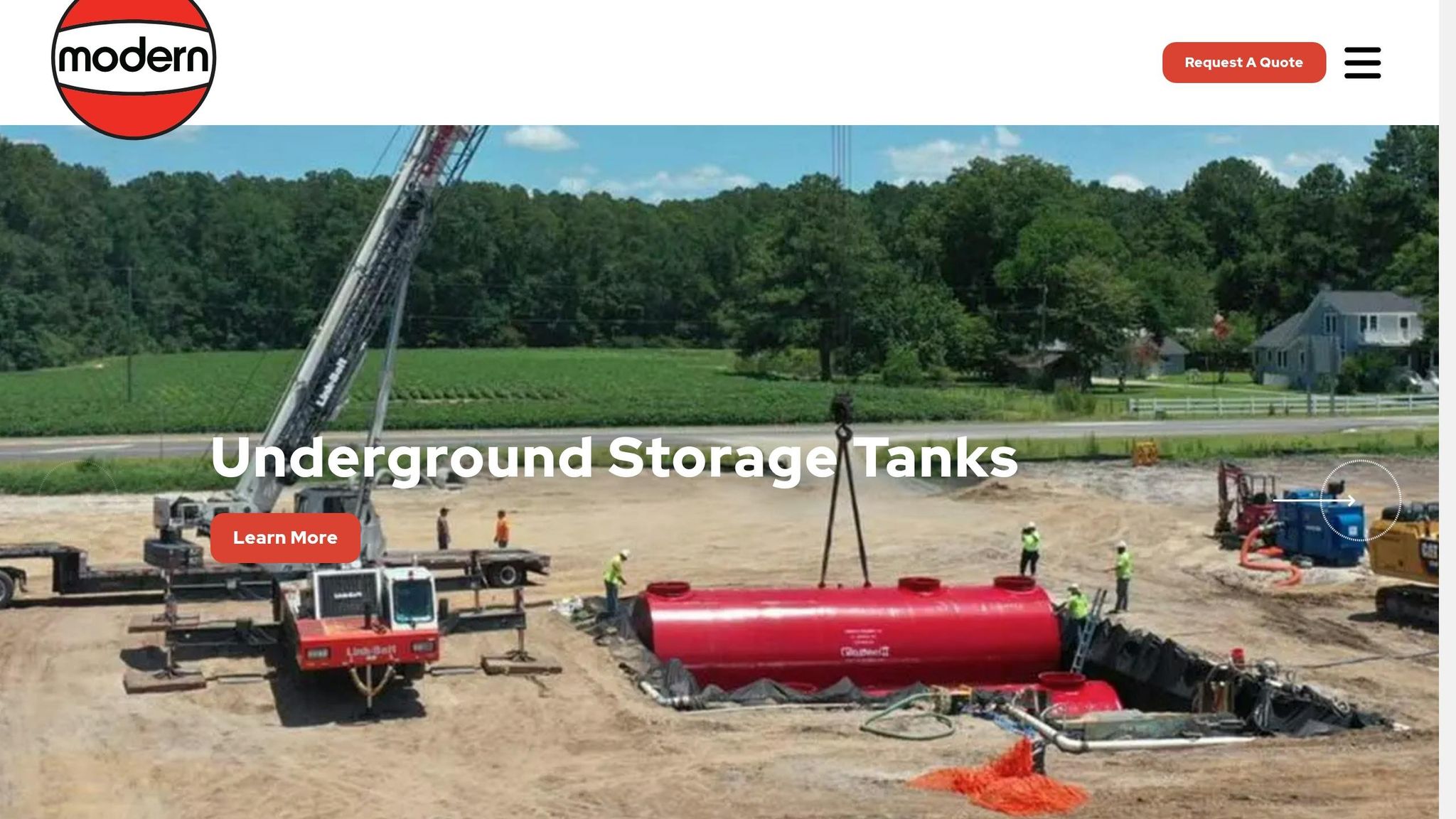
UL-2085 Fireguard Tank - Modern Welding Company
FAQs
Will my local fire marshal require UL-2085 instead of UL-142?
Your local fire marshal’s requirements will vary based on specific site regulations and the type of fuel you're storing. UL-142 tanks are designed for general fuel storage, prioritizing durability and leak prevention. On the other hand, UL-2085 tanks are built with fire-resistant properties, making them a better choice for areas with higher fire risks or stricter safety regulations. Always check with your local fire authority to ensure you're meeting the correct standards for your setup.
Can a UL-142 double-wall tank meet SPCC requirements by itself?
A UL-142 double-wall tank on its own might not satisfy all SPCC (Spill Prevention, Control, and Countermeasure) requirements. Meeting compliance involves more than just the tank's certification - it also depends on aspects like the tank's overall design, the presence of proper secondary containment systems, and strict adherence to regulatory standards. In some cases, additional measures or features beyond the UL-142 certification may be required to ensure full compliance.
Do UL-2085 tanks reduce required setback distances from buildings?
UL-2085 tanks are designed with increased fire resistance and impact durability compared to UL-142 tanks. These characteristics can make them a safer choice in certain situations. In fact, because of their robust design, UL-2085 tanks may allow for shorter setback distances from buildings or other structures. However, this depends heavily on local regulations and the specific requirements of the installation site. Always check with local codes to ensure compliance.